The message arrived early on a Sunday morning in November 2023. Tomás Froes was in Lisbon, expecting a day with his wife and daughter, when his facilities manager asked him to call urgently. Kencko's only factory was burning. It was ten months old. Inside were the machines, inventory and accumulated decisions of a food company that had only recently brought manufacturing under its own roof. The rough value of what was disappearing was $10 million.
Froes first wondered whether the call was a prank. Then the scale of it landed. He cried while telling his wife. A large Walmart expansion was already in motion, and 48 production employees depended on that building for their daily work. The inconvenient thing about a real emergency is that it allows grief and logistics the same appointment.
The factory stood 45 minutes away. During the drive, Froes called kencko's lead investor, its insurance broker and its chief financial officer. At the site he took a photograph, attached it to an email for the company and supplied a subject line with the plain rhythm of a field report: “Factory's on fire, we'll need to persevere.” Before lunch, three real-estate agents were searching for a replacement.
“Factory's on fire, we'll need to persevere.”Tomás Froes, in an email to the kencko team
The 45-minute operating system
A founder can spend years polishing the vocabulary of purpose. Fire is a merciless editor. It leaves the verbs: call, tell, photograph, search, pay, move. Froes's response did not depend on a clever slogan. It depended on sequence. Notify the people who could help. Keep the company informed. Find somewhere for the production team to go.
He was especially concerned about that team. Their pay could continue between factories, but wages were not the only point. People who make things are accustomed to the proof of a finished shift. Without a production floor, Froes feared, they might feel they had lost their purpose. The building search therefore became a form of morale: a visible promise that there would again be a place to clock in and make something.
The search moved briskly enough to make an estate agent short of breath. Kencko staff toured 30 sites in two weeks. By the third, a lease was signed for a building with a March move-in date. Froes created an email chain so that everyone could follow the progress. In his account, speed mattered because it reassured people that the company was returning to the rails. Motion was not theatre; it was evidence.
There is something usefully unromantic in his description of the day. He did not claim a management book had prepared him, or that a treasured maxim arrived like cavalry. The order of actions simply felt natural. This is often what experience looks like from the inside: less like brilliance than the next sensible phone call.
Before the powder, a hot dog
The practical instincts began far from Brooklyn. Froes grew up in Portugal in a family that operated food companies. Manufacturing and restaurant talk came to the table so regularly that business must sometimes have seemed another condiment. He studied marketing management in Lisbon, then international management through a joint program spanning Babson College, emlyon business school and Zhejiang University.
China had already charmed him on a 2007 backpacking trip. He returned in 2010 and found a country transformed by speed and energy. To remain there, he started a company. Its proposition was an artisan hot-dog chain, with sausages extending beyond the usual pork and beef into vegetarian, fish and seafood versions. The concept ran from 2011 to 2014 before executing one of the more athletic pivots in food history: from hot dogs to pastéis de nata.
The Portuguese custard tarts reached Chinese hypermarkets. Another packaged-food venture was later acquired by Dr. Oetker. On paper, the route from sausage to tart to powdered produce resembles a menu assembled by chance. In practice, each stop taught the same stubborn lessons. Food must survive production. It must travel. Someone has to understand it quickly enough to buy it. And scale is less a number than an argument with logistics.
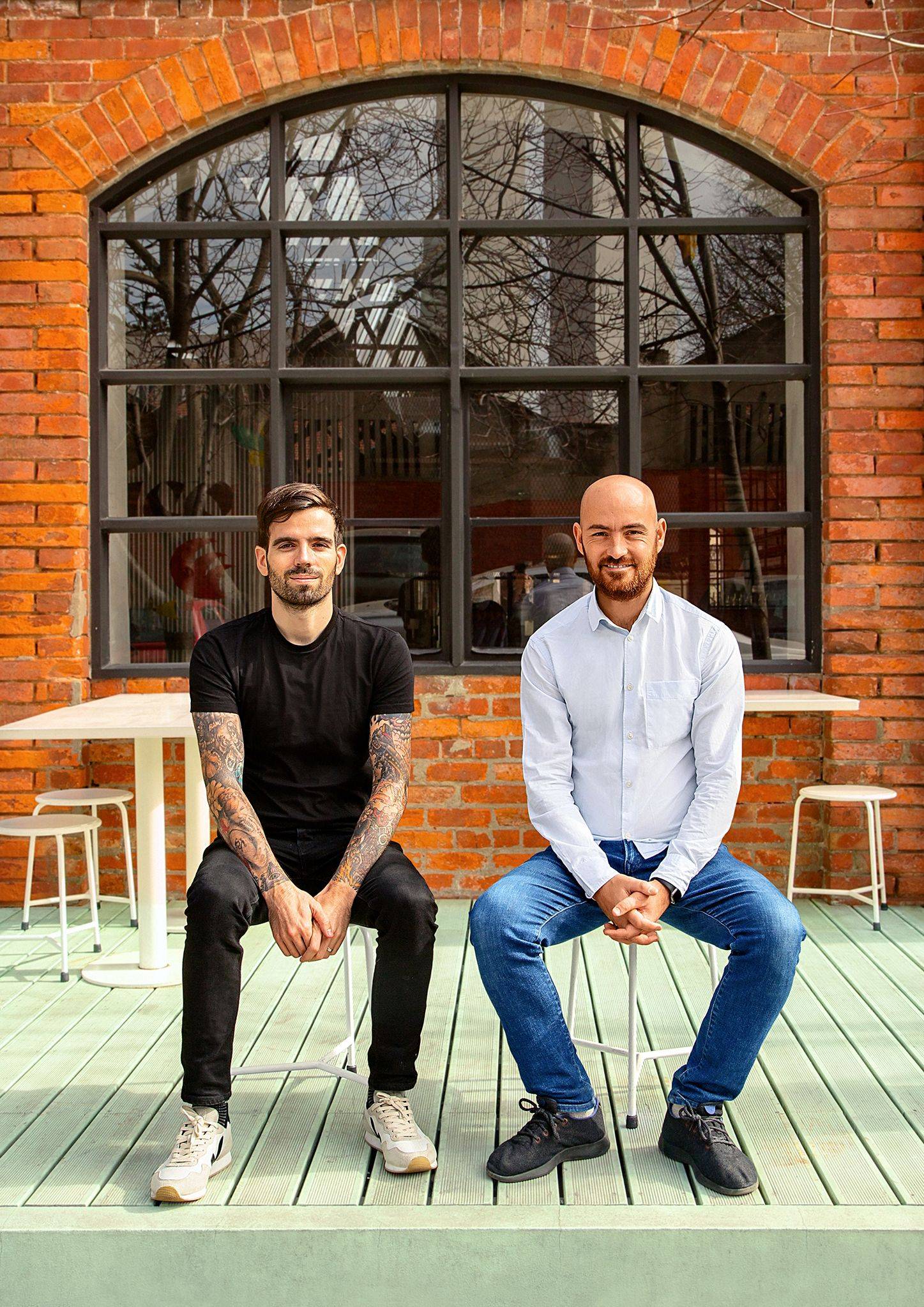
By 2015, Froes was back in Portugal experimenting with ways to make fruit and vegetables last. Early mixtures emerged from his kitchen and went to friends through the post. The questions were charmingly basic: Did the package arrive? Did it work? Would someone want it again? Between 2015 and early 2017, he studied freeze-drying and spoke with factories across the United States, Europe and Australia. The eventual product would reduce produce to a shelf-stable powder designed to be mixed without a blender.
Ricardo Vice Santos first joined as an adviser and then as co-founder. Together they made the United States the primary market, while Lisbon became an operating center. The geography was complicated; the thesis was not. Perishable food could be made convenient without becoming mysterious.
Kencko's first audience arrived before the product did. The brand gathered more than 10,000 followers while offering clues, useful content and very little revelation.
An audience before an answer
The company opened an Instagram account and spent close to a year talking around the coming product. There were posts about food and daily routines, hints of a launch, and no grand unveiling. The community passed 10,000 people before kencko showed its hand. Froes believed content could attract a community and community could attract sales. It was patient marketing for an impatient medium.
Then came listening on an industrial scale. In 2018, more than 1,000 beta testers on both American coasts weighed in on color, flavor, formulas, texture and packaging. Techstars London followed. Froes had applied unsuccessfully to Y Combinator; Techstars approached after seeing kencko on Product Hunt. The program helped the company structure its team, broaden its network and, by Froes's account, double sales month after month during the period.
This is a revealing counterpoint to the fire story. In an emergency, Froes moved before certainty. In product development, he delayed certainty until customers had spoken. Both are forms of operating judgment. One knows when to hurry. The other knows what deserves to remain unsettled.
From doorstep to store shelf
Kencko began as a subscription business, controlling the conversation from website to doorstep. But Froes never treated direct-to-consumer commerce as a religion. He observed that most food still changes hands offline. Even in 2020, when the brand's digital engine was central, he was discussing physical retail as a necessary destination rather than an ideological surrender.
Capital followed the widening ambition. A $3.4 million seed round was announced in 2019. In early 2022, kencko announced a $10 million Series A led by Siddhi Capital, with existing and new investors around the table. The company said it had shipped more than 10 million smoothies in 2021, reached nearly 360,000 members and grown its staff beyond 100. It was adding product categories, enlarging in-house manufacturing and preparing to meet shoppers in stores.
That context makes the factory fire especially cruel. Kencko had spent years becoming more physical. It had moved from outsourced production and mail-order tests toward a factory of its own, a larger team and Walmart shelves. Then the physical world asserted its oldest veto. The building burned.
Yet the response also completed the transition. Froes was no longer merely the founder with an elegant consumer proposition. He was the employer accountable to a production crew, the chief executive calling an insurer from the car, the tenant inspecting building after building. Brands are made of stories. Food companies are also made of loading bays.
“Speed matters a lot in this because the people feel reassured that things are getting back on track.”Tomás Froes on rebuilding after the fire
Perseverance with appointments
In 2025, Froes called the fire the most crucial moment in kencko's nine-year history. He described it as roughly $10 million of “effort and sweat” erased by a neighbor's blaze. His advice to aspiring founders was compact: “It's not over until it's over.” Alone, the sentence risks the fate of all founder wisdom, framed attractively and ignored. Attached to 30 factory tours and a three-week lease, it earns some weight.
His next ambition is broader distribution. Froes wants kencko to appear wherever people move through a day: online, in retail aisles, at offices, in coffee shops and in restaurants. He has named North America, Europe, South America and Asia as regions in that plan. It is an expansive map, and deliberately described as methodical expansion. The adverb matters. Someone who has watched a factory vanish understands the cost of nouns unsupported by verbs.
The likable oddness of Froes's career is that it refuses a straight line. A backpacking trip became a Chinese education. An artisan hot dog gave way to a custard tart. Kitchen packets became a transatlantic company. A fire turned a Sunday with family into a real-estate sprint. At every turn, food has been both the product and the problem: lovely, perishable, physical, complicated.
What remains consistent is his taste for making the next stage concrete. Send the sample. Ask how it arrived. Invite a thousand people to complain about the texture. Call the investor from the car. Give the staff a thread they can follow. Sign the lease.
A founder's mythology usually prefers the lightning bolt of inspiration. Froes's better story is made from follow-through. When the building was on fire, he supplied no grand metaphor. He supplied a subject line, then got to work.