The Machine That Turns a Handful of Almonds Into a Milk Habit
Almond Cow bet that people would rather make oat and almond milk on their counter than buy it in a carton. Roughly 300,000 households later, the bet is looking less strange.
Somewhere in the plant-milk aisle around 2015, the whole category quietly broke its own promise. The cartons said “almond,” but the ingredient panel read like a chemistry set - a little almond, a lot of water, and a supporting cast of gums and stabilizers. Almond Cow's founders looked at that and asked the least glamorous question in food: why are we paying premium prices for watered-down milk wrapped in plastic?
Their answer was not a better carton. It was a machine. Almond Cow, based in Atlanta, sells a countertop appliance that turns soaked nuts, grains, and seeds into fresh plant-based milk in about a minute - and skips the store entirely. The pitch fits on a magnet: your milk, your rules. Notably, the people who built it weren't even vegan. They just thought the existing system was silly.
What it actually doesA blender that knows how to strain
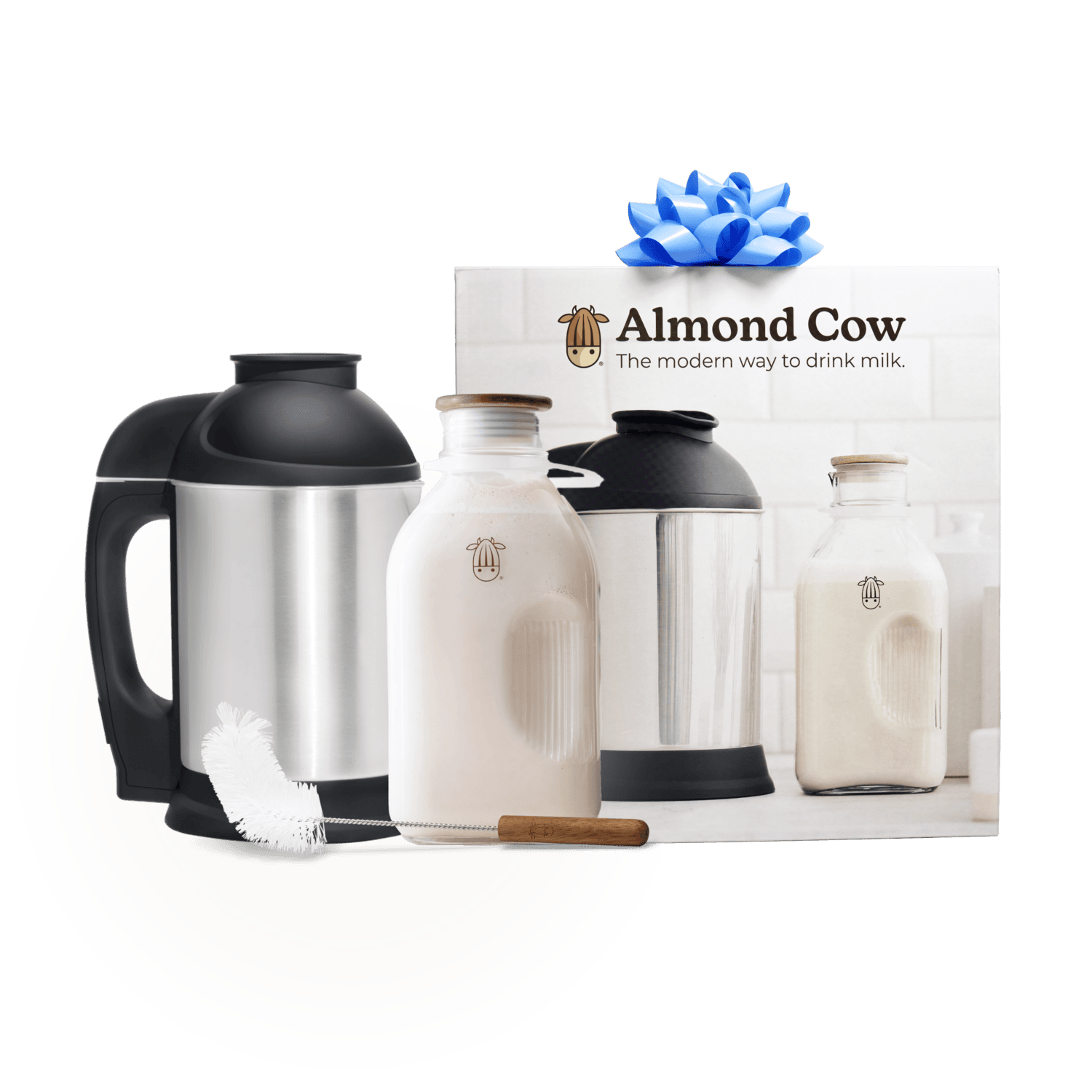
If you've ever made almond milk the traditional way, you remember the nut-milk bag: the cheesecloth, the wringing, the pulp under your fingernails, the mess in the sink. That single chore is the thing Almond Cow deleted. You soak a half cup of nuts, add water, drop them in, and press a button. Inside, a blending and filtration system does the grinding and separates the pulp automatically. Roughly 30 to 60 seconds later you have around 1.3 liters of milk and a puck of dry pulp you can bake with.
The original prototype, according to the company's own telling, took design cues from a coffee grinder. That lineage still shows: the machine is closer to a purpose-built kitchen tool than a smart gadget. There's no app to update, no subscription to forget to cancel. It does one thing, and the appeal is that it does it without a fight.
$10,000 goal, $100,000 answer
Almond Cow launched on Kickstarter in January 2017 under co-founder Peter Jin, with a modest $10,000 target. Backers had other ideas: the campaign pulled in more than $100,000, over ten times its goal, and started shipping to supporters by that April. For a category everyone assumed was a settled shelf in the grocery store, that was a loud signal that plenty of households wanted to make the stuff themselves.
The company today is led by CEO Brett Goodson, whose background is not food but automotive engineering, paired with an MBA from Georgia Tech. That matters more than it sounds. The hard part of Almond Cow isn't marketing plant milk - it's the fluid science underneath: wet emulsification, filtration that doesn't clog, a machine that produces a consistent pour batch after batch. An engineer who thinks in flow rates is a reasonable person to put in charge of milking an almond.
Sell the machine, keep the kitchen
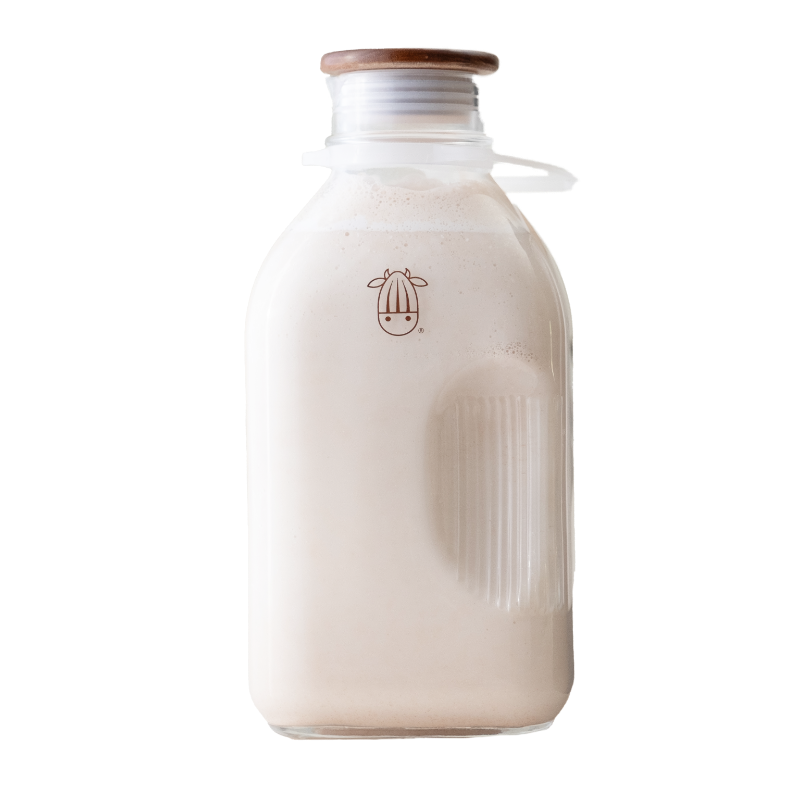
Almond Cow runs a direct-to-consumer model on Shopify. The milk maker anchors it at around $275, with an Essentials Bundle a little higher. But the interesting revenue isn't the one-time hardware sale - it's everything that orbits it: glass jugs and creamer bottles sized to the machine's output, cleaning brushes, recipe books, and curated premium ingredients like almonds, cashews, oats, and coconut sold straight from the site. It's a razor-and-blade setup where the razor happens to live on your counter and the blades are things you actually want.
The critics' favorite objection is price. Reviewers at outlets like CNN Underscored and Reviewed have done the math and pointed out that you'd have to make a lot of batches to beat a carton on pure cost. That's true, and it also misreads the buyer. People don't spend $275 to save $2 on almond milk. They spend it to control what's in the glass - freshness, no gums, no microplastics - and to stop dragging cartons home. Once you understand that, the price stops being a bug.
PositioningCompeting by not being on the shelf
On paper, Almond Cow's competitors are the giants of the aisle - Oatly, Silk, Califia Farms, Elmhurst. But it doesn't really fight them there. Its whole design is to make that shelf irrelevant for the households that buy in. The nearer rivals are other appliances: nut-milk makers like NutraMilk, Nutr, and various strainer gadgets. Against those, Almond Cow's edge is the community and the catalog - 300,000 people trading recipes for oat, cashew, hemp, pistachio, and coconut milk, all running the same machine.
Delete the supply chain
The cleanest way to understand Almond Cow is that it doesn't sell milk - it deletes the supply chain that brings you milk. A carton of oat milk is a small logistics miracle: grown, processed, stabilized, packaged, trucked, refrigerated, shelved. Move production to the counter and most of that vanishes. Freshness, ingredients, and packaging all become the buyer's call. The sustainability pitch - less plastic, less waste - falls out of that as a side effect rather than a slogan.
That's also the honest limit. This is a product for people who like the ritual of making things, who care about ingredient panels, and who have $275 and counter space to spare. If you drink milk twice a month, or you want the cheapest possible glass, the carton still wins. Almond Cow never really pretended otherwise. It built for the household that wants a small factory in the kitchen - and found several hundred thousand of them.
What you can copyThe playbook, stripped down
For anyone building consumer hardware, Almond Cow is a tidy case study. Find one specific chore people quietly hate - the nut-milk bag - and delete it with a single button. Validate demand before you build a factory; the Kickstarter did that for a fraction of the risk. Then turn the one-time sale into a relationship with accessories and ingredients people genuinely reorder. And pick a wedge where you're not fighting incumbents on their turf: don't out-carton the cartons, replace the reason to buy them.