The Recipe App That Wants to Pay the People Who Actually Cook
Bill and Hayley Staley spent a decade turning a Paleo food blog into cookbooks and a spice line. Now they are building the marketplace they wish they'd had - one where creators, brands and home cooks all get a cut of the table.
Open your phone and count the recipes rotting in your camera roll. A screenshot of a friend's chili. A blurry photo of a menu. A saved reel you will never make. FoodSocial's founders looked at that same graveyard and saw a business - and, arguably, a small tragedy. "Most people are saving recipes as screenshots in their phones," says Bill Staley, the company's CEO and co-founder. "That personal connection is being lost because big platforms are serving more ads and more AI content."
FoodSocial, based just outside Pittsburgh in the borough of Blawnox, is Staley's attempt to rebuild that connection on purpose. It is part recipe feed, part free meal planner, and part marketplace - and it calls itself the only recipe-driven marketplace built by creators. The premise is straightforward enough to fit on a napkin: put the recipe, the community, and the grocery cart in the same place, and pay the creators who make the whole thing worth showing up for.
A second act, seasoned
To understand FoodSocial, it helps to know what came before it. Bill and Hayley Staley are not first-timers who read a Medium post about the creator economy. For roughly fifteen years they ran Primal Palate, a Paleo food blog they grew into a genuine business: several best-selling cookbooks and, from 2015, a line of organic spice blends. They built an audience, shipped physical product, and learned - the hard way - what it feels like to hand your best work to a platform that keeps the upside.
"We were using our influence to make recipes that would showcase our own products and drive our own product sales," Staley has said of those years. The insight that became FoodSocial is buried in that sentence: recipes are not just content. They are the single most reliable way to get someone to try a new food product. Or, as Staley puts it, "Recipes are the #1 driver of new food product trials - and it's the Recipe Creator who shapes the trends in this market." Most creators never see a cent of the sales they set in motion.
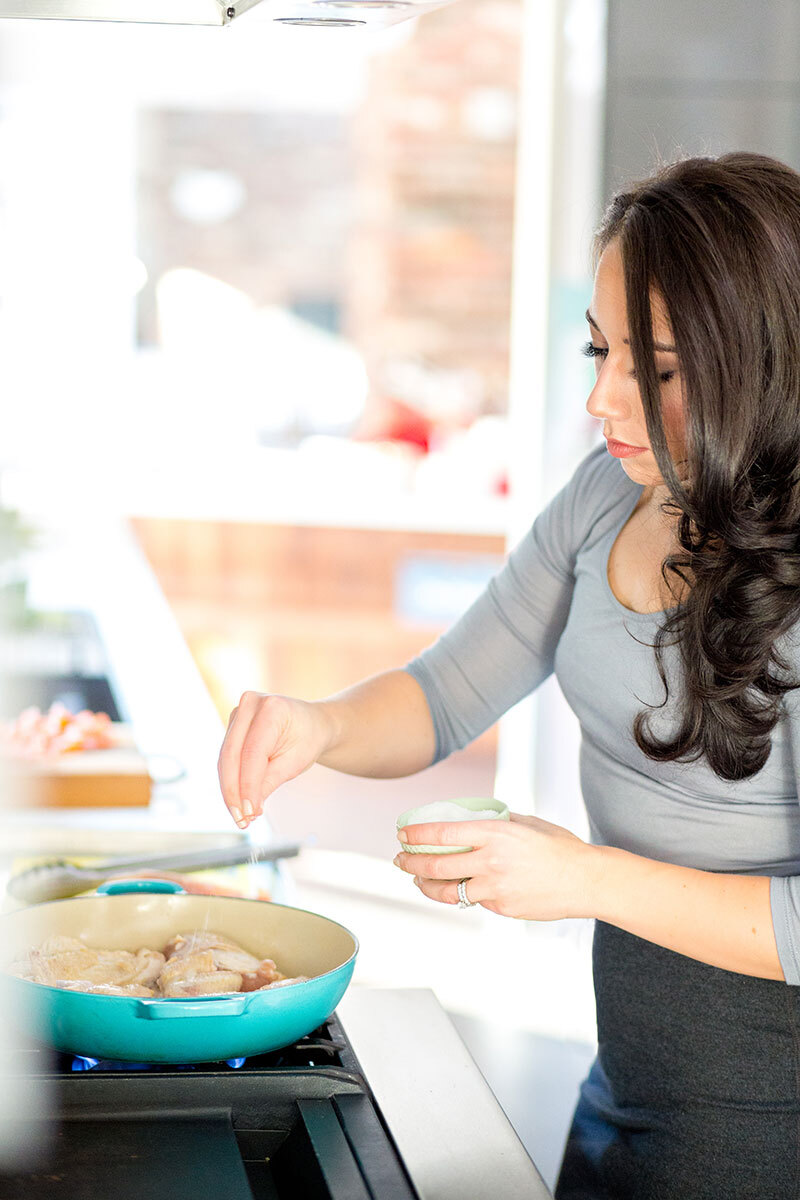
FoodSocial launched in 2020, co-founded with Tony Ryan, a finance-and-technology veteran who had been a CFO before joining the kitchen. The company came up through AlphaLab, the Pittsburgh accelerator run by Innovation Works. It is still small - roughly seven people - which makes what it is attempting slightly audacious.
That history is also the company's real edge. FoodSocial is not a group of engineers guessing at what food creators want; it is being built by two people who spent a decade being those creators, and who once debuted their own products at trade shows like the Fancy Food Show, where FoodSocial itself showed up in June 2024. They know the unglamorous parts - the recipe testing, the photography, the endless chasing of brand deals in the DMs - because they lived them. The pitch to a wary creator is therefore not theoretical. It is "we have stood where you are standing, and we built the thing we wished existed."
The three-sided table
FoodSocial is a marketplace with three kinds of guests, and it has to keep all of them happy at once. Home cooks come for the recipes, the meal planner, and the automatic grocery lists - all free. Creators come to publish and, crucially, to get paid: per view on their recipes, plus a cut when someone shops the ingredients. Brands come to sell, through tiered subscriptions and what the company calls contextual placements - their products appearing as ingredients inside recipes people are already reading.
That contextual idea is the hinge the whole model swings on. Instead of interrupting a recipe with a banner ad, the brand is the recipe - the almond milk in the smoothie, the spice blend on the roast. It is advertising that reads as an ingredient list. The marketplace itself runs on Shopify, the same checkout technology behind most of the brands it hosts, and cooks can route their ingredients to Instacart, Amazon and Whole Foods, or Thrive Market when they would rather not use FoodSocial's own market.
People say content is king, but if that's true, then community should be queen.Bill Staley, CEO and Co-founder
Why community, not just content
Plenty of companies have tried to be "the social network for food." FoodSocial's tell is how much of its energy goes into things that do not scale neatly: weekly happy hours and office hours, daily live shopping shows, quarterly town halls, a monthly newsletter called Bites, and virtual "wrap parties" after big campaigns. Staley's theory is that you cannot manufacture engagement, only the conditions for it. "Engagement is always driven by authenticity," he says. "You can't engineer it, but you can engineer the conditions for it."
His startup advice, delivered in a Pittsburgh interview, is refreshingly unglamorous: talk to your customers all the time. It shows in the product's cadence, which is closer to a neighborhood potluck than a feed optimized for watch time. Whether that is a durable moat or a charming inefficiency is the open question - but it is unmistakably the company's personality.
Does the math actually work?
The most convincing evidence so far is a campaign FoodSocial ran in spring 2025 called Spring Into Flavor. It bundled dozens of creators around a set of partner brands and produced numbers the company is happy to quote: 68 new recipes, 220 pieces of user-generated content, roughly 288,000 estimated engagements, and a 2.5x uplift in sales for the brands involved. A follow-up, "Recipe Rumble," is aimed at the Super Bowl season.
Then there is distribution. In the last stretch, FoodSocial built a Mini for Shopify's Shop app - "Recipes by FoodSocial" - that pipes more than 10,000 creator recipes to the hundreds of millions of shoppers already browsing Shop. That is the closest thing a seven-person team has to a growth machine: instead of buying attention, it borrows Shopify's.
The other number that matters is retention masquerading as growth. FoodSocial says its community grew roughly 430% in a year, and that it now hosts more than 200 brands. Those figures are self-reported and worth reading as direction rather than gospel, but the shape is consistent across the company's telling: a small base compounding fast because each creator brings an audience, and each audience gives brands a reason to list. It is the classic marketplace flywheel, tuned for people who care about whether the almond flour is blanched.
The competition, and the crowd
FoodSocial is walking into a room that is already loud. Recipe discovery has incumbents like Allrecipes, Yummly and Pinterest. Creator reach lives on Instagram and TikTok. Creator monetization has LTK and ShopMy. Recipe-tech upstarts like Fresco and DayDayCook have raised far more money. FoodSocial's bet is that none of them do all three jobs at once - discovery, community, and a checkout - inside a single recipe-native experience. Its funding is modest by the standards of that list: a little over a million dollars to date, including a small debt round in May 2025, with a larger SAFE raise in the works.
Food in its essence is communal. There's a reason dining tables seat many people.Bill Staley, CEO and Co-founder
What you can actually do with it
Strip away the strategy and FoodSocial is, day to day, a useful tool. You can browse more than 11,000 recipes filtered by how you actually eat - Keto, Paleo, Vegan, Whole30, AIP, FODMAP-free, sugar-free. You can follow the creators whose taste you trust instead of an algorithm's. You can drop a week of dinners into a meal planner and have it spit out an organized grocery list. And when you like a recipe, you can buy the ingredients without leaving it - on the web or in the iOS and Android app. If you are a creator, it is a place your recipes can earn; if you are a food brand, it is a shelf inside content people already chose to read.
The wager underneath all of it is that the screenshot graveyard was never the point. People do not save recipes because they love screenshots. They save them because they were about to cook for someone. FoodSocial is betting a whole company on the difference.