There is a peculiar moment in the life of an internet creator when the numbers become large and the choices become small. Millions of people may be watching, but the menu still looks like this: post again, take a sponsorship, hope the platform remains friendly. Currents Management was built for that moment. The West Hollywood company represents video-first creators, but its real work begins where the familiar influencer transaction ends. It asks a more durable question: what is this attention trying to become?
For one creator, the answer was a handbag. Devin Cordle worked with Andar on a bag designed for mothers, released in limited drops. For Kaci Driggers, it was a pair of custom HydroJug colorways called Honey and Mocha. For Kay Dudley, it was a jewelry collection whose pieces borrowed from her family story. Dave Ogleton's dad jokes traveled from social feeds into a book; a TikTok campaign put him on television and cinema screens. None of these ideas required abandoning content. They required seeing content as evidence.
A husband, a wife, and a missing middle
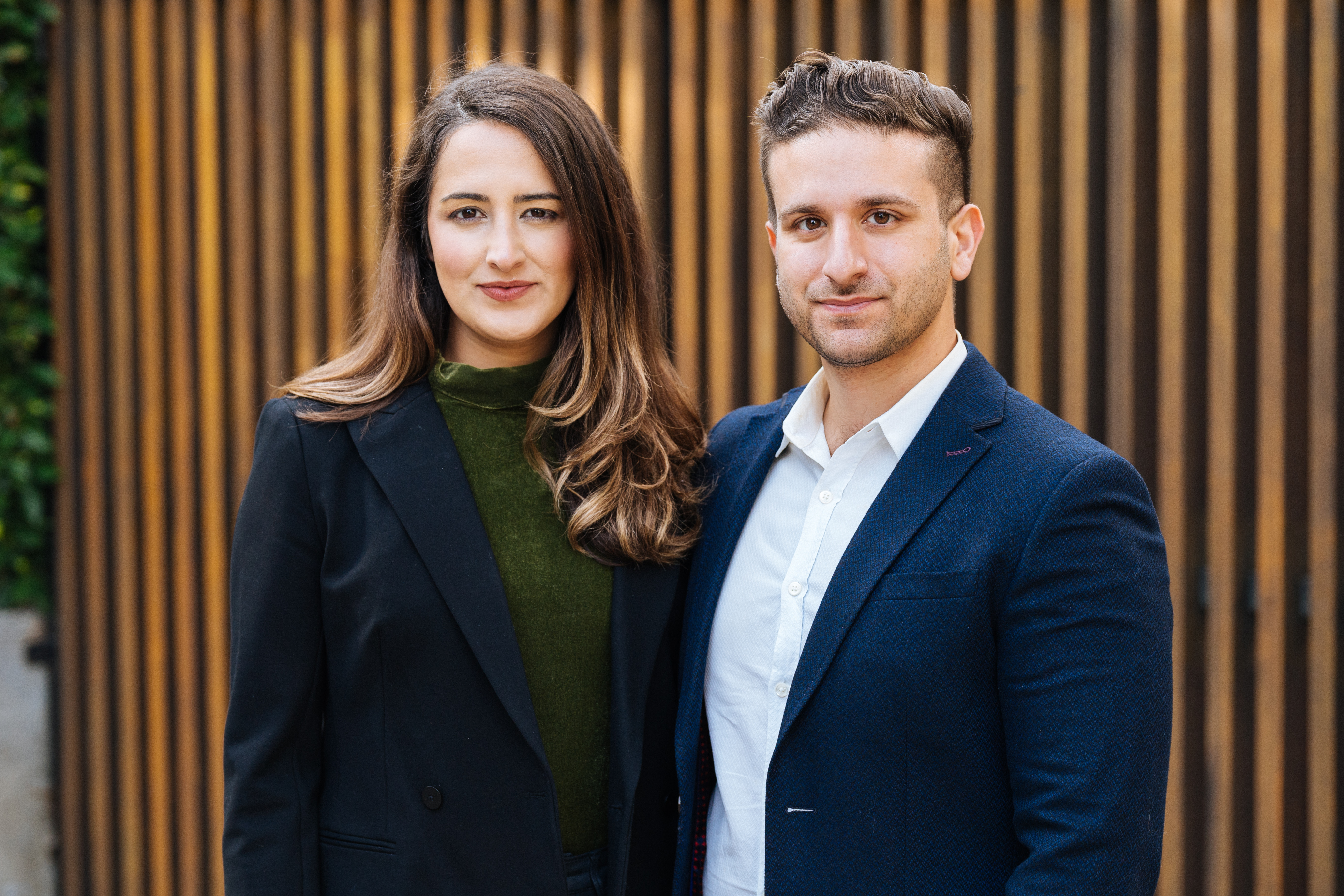
Cameron and Nilou Ajdari founded Currents in 2019 after noticing a gap between agents who could close a deal and partners who could help build a career. Nilou had managed digital talent since the early YouTube years, working with personalities including Joey Graceffa, iJustine and Matt Haag. Her résumé touched projects such as the YouTube series Escape the Night and the development of esports brand 100 Thieves. Cameron came from media strategy and business development. The pairing was unusually tidy: she understood the creator at work; he understood the businesses that might grow around that work.
For comedy couple Alex and Jon, the first thing to fail was not the content. It was the inbox. They were filming weddings, producing TikToks and recording a podcast while negotiating their own partnerships. The administrative pileup forced the decision to hire management. With Currents handling the business side and mapping the available paths, social income grew into the main business and the couple gradually retired their wedding-film company. The unglamorous bottleneck was the clue: attention had become an enterprise before its owners had built an office.
They called the approach 360-degree management. In practice, that means brand positioning, content strategy, sponsorship negotiation, production, licensing, products, publishing, podcasts, public relations and routes into television, film, touring and live events. The customer is first the creator, then the brand or agency that wants to reach the creator's audience without sanding away the reason that audience arrived.
The creator is no longer the endorser at the edge of the campaign. The creator is becoming the studio, the format and the distribution.Currents' operating thesis, in practice
The five-million-view change of mind
The most instructive Currents story may be about something that almost did not happen. Julie Sousa had built a strong business around interiors and DIY. Her manager, Emma Clarke, saw a host. Sousa was not convinced. Then her first NFL hosting video reached five million views. The experiment moved her into food, beverage, cleaning, crafting and sports partnerships; Currents later said her yearly revenue was nearly three times what it had been during her first year with the firm.
This is the small drama at the center of good management. The old identity had not failed in the ordinary sense. It had worked so well that it became a fence. The manager's job was to propose an adjacent version of the creator before the creator could quite see it, then find a cheap test with an unmistakable signal. One video changed the argument.
Julie Sousa / indexed annual revenue
The comment section is an unpaid focus group
Currents' best product lesson is almost embarrassingly available. Look at what the audience already asks for. Tyler, the cooking creator behind Tyler Growth Life, kept seeing questions about seasoning in his comments. That demand became a seasoning line, with more products and a cookbook proposal following. Ogleton spent years proving that people returned for his dad jokes before packaging them as So Dad It's Good. The book later ranked near the top of several Amazon humor categories.
The same logic applies to partnerships. Currents said the Kay Dudley and HydroJug collaboration was years in the making because Dudley was a genuine customer before it was a business conversation. The limited-edition collection sold out on launch day. That is a useful inversion of the usual pitch deck: affection first, contract second. The creator does not have to learn how to sound persuaded.
The price of high-touch
Currents does not publish its fee structure, funding or revenue. The visible cost is operational. Cameron Ajdari has described the model as lower volume and bigger projects. That means saying no to some available money, employing managers who can move between invoices and intellectual property, and carrying ideas whose payoff takes longer than a campaign cycle. The company lists roughly 20 people publicly and says it works with more than 80 creators. Its open roles ask for discretion, flexible hours, campaign analysis and an appetite for detail. White-glove service is another name for a great many spreadsheets.
The trade appears to be working. Currents ranked No. 35 on the 2026 Inc. Regionals Pacific list, which credited it with 257 percent growth over two years. The firm says its branded content earns two to three times industry benchmark engagement. Those figures come from different kinds of evidence - one external ranking, one company claim - but together they explain the positioning. Currents is not trying to be the largest roster. It is trying to increase the economic surface area of each career.
Not scaling to be the biggest, but very much scaling to be the best.Cameron Ajdari on the firm's boutique ambition
From a feed to a programming slate
In 2026, Nilou Ajdari compared social media to a new version of television. The comparison is more literal than it first sounds. Alexandra Madison and Jon Bouffard built relationship comedy around recurring dynamics, then carried their audience through pregnancy loss and new parenthood. Laura Whaley created an entire fictional office department, complete with an organization chart for viewers trying to follow the characters. A recurring bit becomes a format; a format produces return viewing; return viewing begins to resemble intellectual property.
This is where Currents sits in the market. Traditional Hollywood agencies know film, television and touring. Influencer agencies know sponsorship inventory. Creator-management companies such as Select, Underscore, DBA, Night, Trend and others occupy the widening middle. Currents' argument is that the middle is becoming the main event. In 2026 it expanded into Nashville and Toronto, hired managers with comedy and brand experience, and added reality personalities from Love Is Blind, The Bachelorette and Dancing with the Stars. Digital talent is moving toward traditional entertainment just as traditional entertainers learn to operate like creators.
Borrow the sequence, not the scale
The Currents method is copyable in miniature. Start with behavior, not a brainstorm. Identify the thing an audience repeatedly returns for. Test one adjacent format before attempting a reinvention. Choose partners the creator would plausibly use without a contract. Then build the asset that reduces dependence on the platform: an email list, a product, a book, a podcast, a live show, a licensing deal. The sequence matters because each step supplies evidence for the next.
There are conditions attached. The model needs a distinctive voice, repeat engagement and enough trust for an audience to follow beyond one platform. It is poorly suited to undifferentiated accounts built on borrowed trends, creators who want maximum short-term deal volume, or products with no organic connection to the content. High-touch management also stops feeling high-touch if the roster grows faster than the team. Currents' wager depends on selectivity remaining real.
That may be why the company is interesting now. Seven years after its founding, it has reached the awkward stage it helps creators navigate: the original thing worked, growth arrived, and the next decision is whether to repeat the hit or build the institution. Currents is choosing the institution. The creators on its roster are being asked to do the same.