In the beginning, the apparatus of influence was a spreadsheet. Beside it sat an inbox. Somewhere else was a screenshot proving that a post had appeared, and somewhere else again was the conversation explaining what the post was supposed to accomplish. The Sociable Society used this arrangement to run an influencer agency. Then the arrangement began to eat the agency.
Conversations disappeared into threads. Campaign details fell between tools. Reports demanded hours of finding, copying and reconciling. This was the first thing to fail as the company grew - not its ability to spot a magnetic creator, nor its ability to persuade a brand, but its memory. The glamour business had acquired a filing problem.
That problem is the most revealing way to understand The Sociable Society, usually shortened to TSS. The company represents creators, connects them with brands, develops their affiliate businesses and produces physical events engineered to become digital content. Yet its pitch rests on an unshowy promise: make both sides of a fickle market feel looked after, then make the results legible.
company figure
company figure
company figure
The accident before the agency
Emily Fonda did not set out to build a talent company. In 2014, she was balancing acting with PR consulting. Bloggers were becoming commercially important, although the word “influencer” still sounded less like a profession than a description applied after the fact. Fonda understood the brand’s need for attention from PR. From acting, she understood representation - including what bad representation felt like.
The two worlds collided neatly. Creators had audiences but not always contracts, negotiation experience or a sensible plan beyond the next deal. Brands had budgets but little shared language for choosing talent or measuring what happened afterward. Fonda and Jay Kent-Hume, whose background moved through advertising, marketing, recruiting and the building of digital teams, founded TSS in 2015. They were a couple solving a coordination problem from opposite sides.


“We wanted to create an agency built on protecting creators and ensuring that they are looked after.”Jay Kent-Hume, co-founder and CEO
Creator-first is a phrase with the great corporate advantage of being pleasant and hard to audit. TSS makes it more concrete. Its managers negotiate brand work and think about channel growth. A business-affairs group reviews agreements. Its creator dashboard tracks campaign pipelines, payments, performance and tax documents. The intended unit is a career, not a post.
What changed their mind
The spreadsheet years supplied the argument for a proper operating system. TSS adopted Brandwatch Influence to pull campaign work and reporting together. In the published case study, 95 percent of the agency’s creators had authenticated their social accounts, which meant brand clients could see current analytics without a manager chasing down another screenshot.
The claimed result was unusually specific: 30 percent of working time saved, 50 percent more clients taken on, and a team that doubled in size. Software did not replace the relationship. It protected time for it. That is an important distinction in a category where “scale” can become a euphemism for answering people more slowly.
Today the machine has four recognizable parts. Creator Management handles representation. Brand Partnerships plans and runs influencer programs. The Creator Growth Division works on affiliate commerce, shoppable content and the back end of a creator’s business. Events & Activations turns gatherings, dinners, launches and festival weekends into both relationships and a bank of content.
A party designed backward from the report
Consider CMA Fest in 2025. TSS assembled 28 creators whose combined following exceeded 21 million. It did not simply put them in a room with products. The itinerary moved through wellness, cocktails, denim and a live performance, each moment selected because it could carry a brand and give a creator something natural to record. Transportation, venue flow, capture and integrations were managed behind the scenes.
The agency reported more than 70 assets and nearly $130,000 in estimated earned media value, with a 4.5-times return on that measure. If the stated ratio and value use the same cost basis, the arithmetic implies production spending around $29,000. That is an inference, not a published invoice, but it turns “buzz” into a number a buyer can interrogate.
The same pattern appears elsewhere. An Omni Hotels activation around LTK Con hosted 12 creators and welcomed 28 guests, producing more than 290 pieces of content with 11.4 million reported reach. A Colleen Rothschild Beauty launch chose intimacy: 50-plus creators in a New York speakeasy, product trials, photogenic installations and a lip reader - because apparently lipstick can have an oracle. TSS reported a three-times return in estimated earned media value.
The business between talent and software
TSS occupies a useful middle. A self-service influencer platform gives a brand discovery and workflow tools but leaves judgment and execution largely in-house. A traditional talent manager advocates for the creator but may not build an entire multi-brand event or brand-side reporting program. An experiential shop can stage the party without developing the people whose audiences extend it. TSS sells the joins.
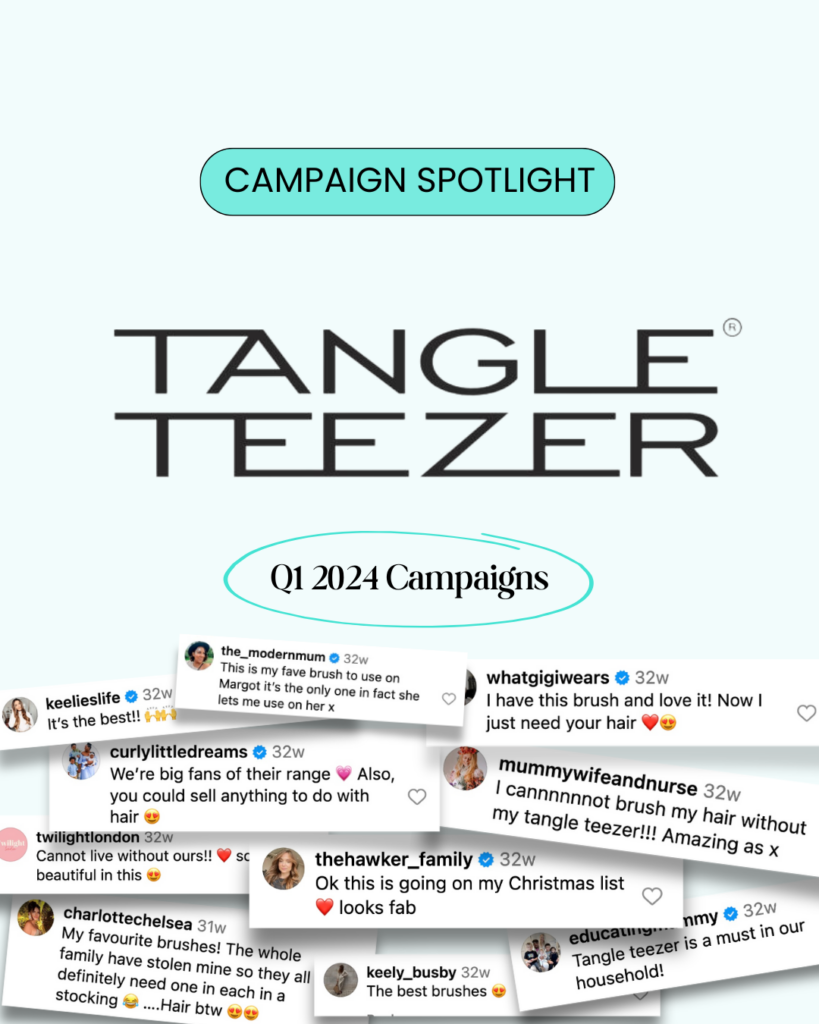
Its customers are therefore on both banks of the river. Consumer brands such as Not Your Mother’s, Revolution Beauty, Tangle Teezer, Omni and Colleen Rothschild Beauty use the company for campaigns or activations. Creators use it for representation, deals, affiliate strategy, operating support and career development. The agency does not publish a rate card or commission schedule; work is scoped through inquiries. This is not a low-touch product with an instant checkout.
There are conditions attached to the model. The event playbook needs products that invite demonstration, identity or conversation; a purely functional B2B purchase with a narrow buyer set will not behave like lipstick at Fashion Week. Earned media value is an estimate, not cash in a till. And high-touch management becomes less distinctive if roster growth outruns manager attention. TSS said in 2024 that it planned to more than double a roster then above 200. The challenge is embedded in the promise.
The proof is becoming institutional
The company’s public milestones now look less like those of a boutique side gig. It placed No. 1,375 on the 2025 Inc. 5000 after reporting 323 percent growth over three years, then moved to No. 995 in 2026 with 350 percent growth. It was named Breakthrough Agency of the Year in the first Creator Agency Awards. Its roster has also produced Webby recognition, including a 2025 community-engagement nomination for Yolanda Diaz.
Awards matter less here than the sequence. First came a hunch that creators deserved better representation. Then the manual process cracked. Better data created capacity. Capacity supported more specialized services. Those services now range from negotiating a creator’s next deal to designing a fairground where six brands can be discovered between ice cream, hair retouches and a content-friendly sign.
The feed still shows the party. The business is everything required to make the party repeatable, accountable and worth doing again.