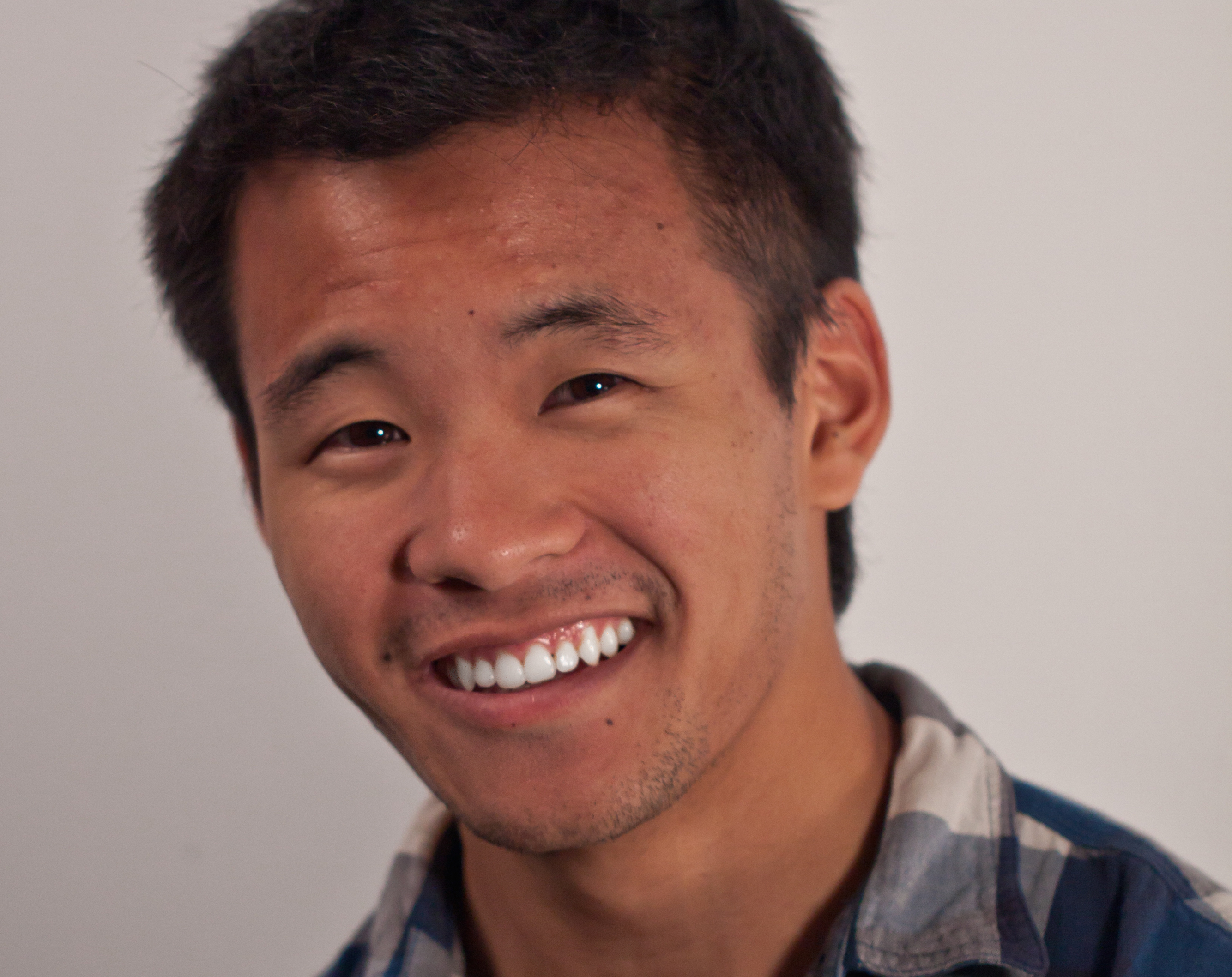
The Microbiologist Who Makes Cheese Stink on Purpose
Somewhere in Oakland, a batch of soy milk is doing something uncomfortable. It's curdling. It's acidifying. Bacteria are splitting sugars, yeast are generating esters, fungi are doing what fungi do in the dark. By the time Nathaniel Chu is done with it, the resulting block of cheddar will slice cleanly, melt under a broiler, and smell, unmistakably, like cheese.
That smell is the point. "Cheese is not a single flavor," Chu has said. "It's hundreds of different flavor molecules." Most plant-based cheese skips that complexity entirely - oils, starches, and a prayer. Chu's company, Plonts (formerly Tezza Foods), does not skip it. Plonts builds it from scratch, one microbial community at a time.
Chu's path to Oakland via coral reefs in Panama, a Brown University biology lab, and five years inside MIT's Alm Lab studying the human gut microbiome is the kind of biography that sounds improbable until you hear him describe why fermentation and cheese are, in his framework, the same problem he was already working on: how do microbial communities transform raw material into something complex, stable, and alive.
Before there was a pilot plant in Oakland, there was a rented corner of a pizza shop. Chu and co-founder Josh Moser started Tezza Foods in 2019 by commandeering space where dough was being rolled out nearby. Not a stealth lab. Not a university incubator. A pizza shop corner.
The company spent five years in genuine stealth - no press releases, no product launches, no investor parades - quietly building the microbial process that would make everything work. The $12 million seed round from Chris Sacca's Lowercarbon Capital, Peter Rahal's Litani Ventures, and a cluster of other investors closed in 2022, but the public didn't find out until August 2024, when Plonts emerged with a cheddar in loaf and slice formats and a presence in select restaurants from New York City to the San Francisco Bay Area.
Cheese is an incredible product because it's complex. Cheese is not a single flavor, it's hundreds of different flavor molecules.- Nathaniel Chu, Co-CEO & Co-Founder, Plonts
From Gut Microbiome to Soy Milk Fermentation
There's a direct line between Chu's MIT research and Plonts's manufacturing process, even if it runs through an unusual detour. At MIT's Alm Lab from 2014 to 2019, Chu studied how microbial communities in the human gut interact with the immune system - how T cell receptor repertoires shift in response to bacterial populations, how metabolic syndrome and inflammatory diseases can be tracked through gut microbiota signatures, how the gut-brain axis connects bacterial chemistry to behavior.
What he learned in that lab is precisely what Plonts now exploits at scale: bacteria, yeast, and fungi are not random. They form predictable communities. They produce predictable compounds under predictable conditions. The fermentation that makes traditional aged cheese taste like aged cheese is the work of those communities doing what they always do - and soy milk is, chemically, a workable substrate for the same transformation.
The Microbial Approach
Plonts uses live bacterial, yeast, and fungal cultures to ferment soy milk - the same biological tools traditional cheese makers have used for centuries. No isolates. No shortcuts.
Complex Flavor Chemistry
The goal is hundreds of flavor molecules, not one. Traditional plant-based cheese uses oils and starch to mimic texture. Plonts builds flavor from the fermentation up.
Complete Protein Soy
Organic soybeans provide a complete amino acid profile - about 3 grams of protein per ounce of cheese. No protein isolates added. The nutrition is built into the base ingredient.
Chu's co-founder, Josh Moser, brings a complementary perspective from materials science and mechanical engineering - useful when the question is not just whether the fermentation works chemically but whether the resulting product holds together mechanically, slices properly, and behaves under heat. The combination is unusual for a food startup: a microbiologist and a materials scientist trying to reverse-engineer one of the most chemically complicated foods humans have ever made.
The result is a plant-based cheddar that Plonts describes as genuinely stinky - a feature, not a bug. The fermentation creates volatile organic compounds, sulfur notes, and acid profiles that most plant-based dairy companies have spent years trying to avoid. Plonts leans into them. That stink is the proof of work.
Dairy Cattle Generate 15% of Global Greenhouse Gas
Chu grew up in biology long before he grew up in food. His Fulbright Fellowship took him to Panama to study how climate change was killing coral reefs. His Smithsonian fellowship extended that work - reef diseases, bleaching events, ecosystem collapse measured in real time. The pivot to food science is less a career change than a change in battlefront: the same underlying problem, just a different lever.
Dairy cattle are responsible for roughly 15% of global greenhouse gas emissions. They drive tropical deforestation for pasture. They consume extraordinary volumes of water. Plonts's soy-based process, by the company's own accounting, uses 90% less land, water, and pollution per unit than conventional dairy production. That number is central to Plonts's investor thesis - Lowercarbon Capital, Sacca's climate-focused fund, didn't back a cheese company. They backed a decarbonization play disguised as lunch.
Environmental Comparison: Plonts vs. Dairy Cheese
| Factor | Conventional Dairy Cheese | Plonts Plant-Based Cheese |
|---|---|---|
| Primary ingredient | Cow's milk (requires livestock) | Organic soybeans |
| Land use | High - pasture + feed crops | ~90% less than dairy |
| Water use | High | ~90% less than dairy |
| GHG contribution | ~15% of global emissions (sector) | Significantly lower footprint |
| Fermentation process | Yes - traditional | Yes - microbial cultures |
| Protein source | Complete (dairy) | Complete (soy - full amino acid profile) |
| Additives | Varies by product | No GMOs, protein isolates, oils, or artificial sweeteners |
The company is structured as a Public Benefit Corporation - a legal designation that builds the environmental mission into the corporate charter. That's not a marketing choice. It's a structural commitment to prioritizing ecological impact alongside profit, one that shapes everything from supply chain decisions to investor expectations.
I love cheese, but how could this be?- Nathaniel Chu, on discovering the environmental cost of conventional cheese production
From Panama's Coral Reefs to Oakland's Pilot Plant
Chu's academic biography is the kind that looks, in retrospect, like it was building toward something it couldn't have named at the time. Brown University, Biology with Honors. A Fulbright Fellowship to Panama - not for food, not for microbiomes, but for marine ecosystems under thermal stress. A Smithsonian fellowship to study reef disease in the same waters. Then MIT's biological engineering department, where he spent five years in Eric Alm's lab running some of the more intricate experiments in human gut microbiome research: tracking T cell receptor repertoires, building assays to distinguish live from dead bacteria in fecal transplant protocols, studying how mobile genetic elements drive bacterial hypermutation.
None of that is cheese. All of it is relevant. The tools Chu learned - how to work with microbial communities at scale, how to read what bacteria are producing and why, how to design experiments that distinguish signal from noise in complex biological systems - are precisely the tools Plonts deploys every day on the production floor.
After MIT, Chu did not take a faculty position. He did not join a biotech. He found a corner of a pizza shop in the Bay Area and started making cheese. That's a stranger sentence to write than it might appear - the normal exit from an MIT PhD in biological engineering is a postdoc, a startup in gene therapy or drug discovery, or a position at a company that already knows what it's doing. Chu chose a pizza shop.
The five years between the pizza shop corner and the August 2024 Plonts launch were not quiet. The team built, tested, failed, rebuilt, and refined a fermentation process complex enough to produce something that TechCrunch called "stinky" and meant it as a compliment. The $12M round closed in 2022, gave the company a pilot plant in Oakland, and bought time for the product to be genuinely ready. It emerged in August 2024 at Court Street Grocers in Brooklyn, Shuggie's in San Francisco, and a handful of other venues that understood what they were serving.
Plant-Based Cheese That Actually Ages
Plonts's flagship product is an aged plant-based cheddar available in loaf and slice format. It behaves like dairy cheddar: it slices, it melts, it has a rind of complexity that simple starches cannot produce. The base is organic soybeans processed into soy milk, then fermented with a proprietary community of bacteria, yeast, and fungi that Chu and his team have developed over five-plus years of iteration.
Before the cheese, there was a yogurt line - a dairy-free Greek yogurt from organic soybeans delivering 12 grams of complete protein per serving, with studied probiotic strains including L. bulgaricus, S. thermophilus, L. lactis, L. acidophilus, and B. lactis. That product reached Whole Foods, Sprouts, and PCC Community Markets across the western United States. The yogurt was Tezza. The cheese is Plonts. The rebrand was a signal: the company had found what it was actually building.
The Cheese
Aged plant-based cheddar in loaf and slice formats. Slices, melts, and develops complex flavor through genuine microbial fermentation - not food-tech mimicry.
The Yogurt Legacy
Tezza's original product: dairy-free Greek yogurt from organic soybeans, 12g complete protein per serving, five studied probiotic strains. Distributed in Whole Foods and Sprouts.
The Pilot Plant
Oakland, California. 29 employees. Built with the 2022 seed funding to take fermentation from pizza-shop-corner scale to commercial production.
The launch restaurants tell you something about where Plonts sits in the market. Court Street Grocers in Brooklyn. S&P Lunch. Shuggie's in San Francisco. Moongate Lounge. These are not mass-market venues. They are places where the sourcing of ingredients is part of the point - where a plant-based cheddar that genuinely ferments is an interesting ingredient, not a liability disclaimer. Plonts is building its reputation at the top of the market first, then working outward.
Five Years, Quietly Building
In 2019, when Chu and Moser were renting a corner of that pizza shop in the Bay Area, the plant-based food industry was in a different place. Impossible Burger was the story. Oat milk was becoming a verb. Every few weeks, another company announced another product that was allegedly indistinguishable from the animal version - then wasn't, when you actually ate it.
Chu looked at that landscape and did the opposite of what the market rewarded: he slowed down. He spent five years not announcing anything. He ran fermentation experiments. He failed at making cheese that worked and then made it work. He built a scientific team with genuine depth in microbiology, food science, and materials science. When Plonts finally came out in August 2024, the product was ready - not aspirational, not "give us six months," but genuinely, demonstrably ready. TechCrunch tasted it. They called it stinky. Chu was pleased.
Chris Sacca's Lowercarbon Capital led the $12M seed round. The fund backs companies attacking the root causes of climate change. For Sacca, fermented plant-based dairy isn't a niche consumer product - it's a carbon strategy. Dairy's 15% share of global GHG emissions is the target. Plonts is the weapon.
The investors are an interesting group. Peter Rahal, who founded RXBAR and sold it to Kellogg's for $600 million in 2017, came in through Litani Ventures. Rahal knows something about building a food brand that talks about what's actually in it. RXBAR's entire pitch was ingredient transparency - "3 egg whites. 6 almonds. No B.S." Plonts is a different aesthetic but a similar logic: here is what we put in, here is why it works, here is the proof. Accelr8, Pillar, and Ponderosa Ventures rounded out the round.
Things Worth Knowing
Coral Reef to Cheese Wheel
Before plant-based dairy, Chu spent time in Panama studying coral bleaching and reef disease as a Fulbright and Smithsonian fellow.
Pizza Shop Origins
Tezza Foods began not in a lab or incubator, but in a rented corner of a working pizza shop in the Bay Area.
Gut Research Pivot
His MIT PhD studied the human gut microbiome's role in inflammatory disease, metabolic syndrome, and the gut-brain axis - research that directly informed Plonts's fermentation science.
Public Benefit Corp
Plonts is structured as a PBC, embedding the environmental mission into the company's legal DNA, not just its marketing copy.