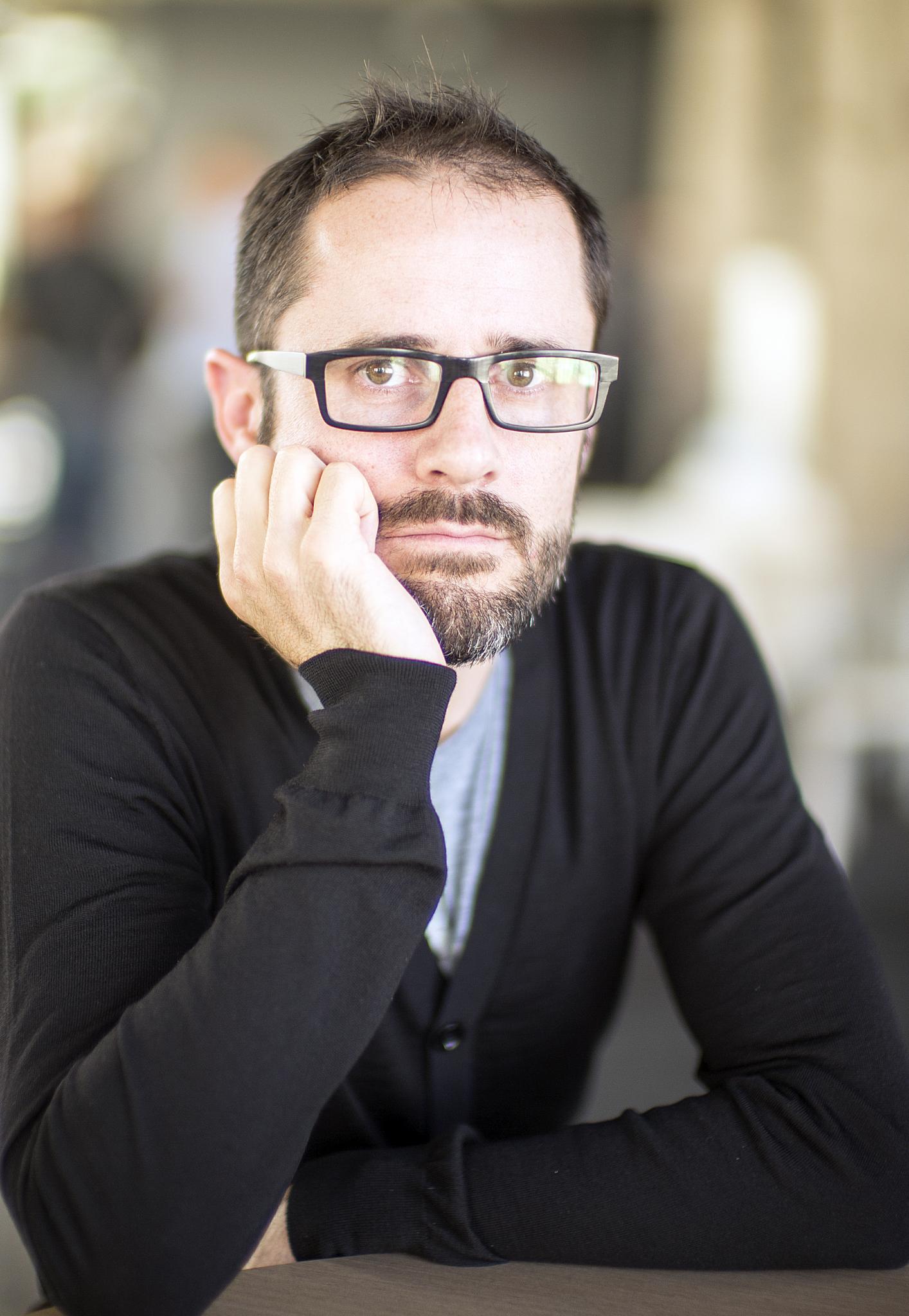
There's a town called Clarks in Nebraska. Population 372. No tech scene. No venture capital. No obvious route to becoming the person who helps coin a word that ends up in every major dictionary. That's where Evan Clark Williams grew up, on a farm, watching corn grow, before he dropped out of college and more or less invented modern internet publishing by accident.
He was not building Blogger in 1999. He was building a project management tool called Pyra. Blogger was a side feature - a note-taking widget that one of his developers, Paul Bausch, threw together internally. Williams recognized what it was before most people could see the concept. He pivoted. He shipped it. On August 23, 1999, Blogger went public, and the internet was never quite the same.
He coined the word "blogger." It sounds obvious now. At the time, it was a necessary act of naming - giving language to a phenomenon that was forming faster than vocabulary could track. Williams has a habit of doing that: building infrastructure for ideas the world doesn't yet have words for.
The internet rewards extremes.
- Ev WilliamsRunning on Empty, Alone
Here's the anecdote that tells you who Ev Williams actually is: In 2001, Pyra Labs ran out of money. Not "tight on runway" money. Gone money. Employees quit. Co-founder Meg Hourihan left. The team dispersed. Most founders would have folded. Williams kept going. He ran Blogger by himself - alone, with no salary, no staff, and a user base that kept growing regardless of whether the lights stayed on.
That particular brand of stubborn persistence is not something you perform. It's a character trait you discover under pressure. Google discovered it too, when they came calling in February 2003 and acquired Pyra Labs. Williams joined Google. Stayed through 2004. Then left to do it again.
Williams ran Blogger entirely alone - zero staff, zero salary - for a period in 2001 after Pyra Labs ran out of money. The platform kept growing anyway.
Twitter: The Accident After the Accident
After Google, Williams co-founded Odeo with Noah Glass - a podcast platform that made complete sense right up until the moment Apple announced iTunes podcast support in 2005 and destroyed the premise in a single keynote. Williams bought out his investors (an unusual move; most founders would have let it die), formed Obvious Corporation with Biz Stone and Jason Goldman, and started over.
Twitter was born in a hackathon. Jack Dorsey had the concept - a short message status update, broadcast to a circle. Williams and Biz Stone recognized it. They built it. By April 2007, Twitter Inc. was formally incorporated. By October 2008, Williams was CEO, having taken over from Dorsey. By October 2010, he stepped down and Dick Costolo came in.
What happened in between is history: Twitter became one of the most consequential communication tools ever built. Arab Spring. Breaking news. The @ symbol as cultural artifact. And then, much later: coordinated misinformation, election interference allegations, and a general societal reckoning with what an uncurated global megaphone actually does to discourse.
I thought once everybody could speak freely and exchange information and ideas, the world is automatically going to be a better place. I was wrong about that.
- Ev WilliamsThe Apology as a Data Point
Williams has said "I'm sorry" publicly, and that is worth noting - not because apologies from tech founders are rare (they're actually quite common as PR moves), but because his reads as genuine reckoning rather than managed crisis response. He has consistently linked Twitter's design incentives to real-world political harm. He has acknowledged that open platforms do not automatically make societies better. He has said this without being forced to by a Senate hearing or a shareholder letter.
In Silicon Valley, that kind of unsolicited introspection is genuinely unusual. Most founders protect their legacy the way old money protects old money. Williams seems more interested in understanding what actually happened than in polishing the version that looks best from a podium.
He left Twitter's board in February 2019. The platform was acquired by Elon Musk in October 2022 for $44 billion. Williams, as a substantial early shareholder, would have benefited significantly from that exit. He has not been vocal about what that particular transaction meant to him.
Medium and the Long-Form Bet
Williams founded Medium in August 2012 as a deliberate counter-weight to Twitter. If Twitter was brevity as a format, Medium was length as a feature. The idea: give writers a beautiful tool, give readers a clean reading experience, and see what happens when the algorithm isn't optimized for outrage.
Medium has had a complicated decade. It went through several business model iterations - advertising, then subscriptions, then a metered paywall, then a full membership model at $5/month. It laid off staff. It tried editorial curation. It backed away from editorial curation. Williams ran it for more than ten years before stepping down as CEO in July 2022, handing the reins to Tony Stubblebine and becoming Chairman.
Medium today has around 77 employees and a subscriber base that funds writer compensation. It's not Twitter-scale. It's also not Twitter-shaped, which may be the point.
Williams's Twitter handle is @ev - one of the shortest handles on the entire platform. He was using it before most people knew what Twitter was.
Obvious Ventures: Impact, Not Just Returns
In 2014, Williams co-founded Obvious Ventures with James Joaquin and Vishal Vasishth. It is a venture capital firm that is also a certified B Corporation. That combination is unusual in VC, where the typical operating assumption is that values and returns are in creative tension rather than alignment.
Obvious has raised approximately $585 million across three funds and built a portfolio organized around three themes: Human Health and Longevity, Sustainable Future and Planetary Health, and Economic Health. The exits tell part of the story: Beyond Meat went public in May 2019 in one of that year's most-watched IPOs. Blue Bottle Coffee was acquired by Nestle. Nest was acquired by Google.
Current portfolio companies include Brightside Health (mental health), Dyno Therapeutics (gene therapy), Forum Mobility (sustainable trucking), and Zanskar (geothermal energy). Williams is vegetarian, which dovetails neatly with his fund's plant-based investments - though it's worth noting that Obvious arrived at the thesis before the portfolio needed the founder's personal diet to validate it.
Mozi: One More Try at Getting It Right
In December 2024, Williams co-founded Mozi with entrepreneur Molly DeWolf Swenson. The pitch is deliberately anti-Twitter: instead of broadcasting to the world, Mozi lets users share where they are and where they're going with their actual close circles. The goal is to facilitate real-world meetups, not engagement metrics.
Mozi raised $6 million from Obvious Ventures, WndrCo, and BBG Ventures. Williams wrote a piece on Medium called "Making 'Social' Social Again" to explain the vision. It got 3,500 claps, which in Medium terms means it resonated.
The thesis is that the attention economy has degraded the word "social" - turned it into a synonym for "scrolling" rather than "gathering." Williams has now spent more than two decades building platforms for human connection. Mozi is the version built by someone who has seen what the other versions do when scaled to billions.
The Quiet Titan
Williams does not appear on magazine covers the way his contemporaries do. He does not own sports teams or launch rockets. He is not a particular fixture in the tech press gossip cycle. He's a medium-profile person who built high-profile things - and who seems to have made peace with the distinction.
What connects Blogger, Twitter, Medium, Obvious Ventures, and Mozi is a consistent preoccupation with how people communicate, share ideas, and connect with each other. The specific answer has changed repeatedly. The question hasn't. Williams keeps asking it, and keeps shipping new attempts at an answer, and occasionally apologizes when the previous attempt had unintended consequences at scale.
The Nebraska farm. The dropout. The accidental word. The platform that changed news. The platform that changed publishing. The fund that backs the planet. The app that just wants you to go meet a friend.
That's the arc. He's still mid-stride.