$500M+
Cumulative Sales
A journal made for a girlfriend became one of Etsy's top sellers - and a nine-figure leather brand built without a dollar of outside money.
In 2015, Curtis Matsko sat in a single-car garage in Portland, Oregon, and cut a piece of leather into a journal for his girlfriend. He asked her to quit her job and build a company with him. She did. The company they started, Portland Leather Goods, would go on to break records at art festivals, become one of Etsy's top all-time sellers, and cross $100 million in annual sales - all without taking a cent of outside investment.
What Portland Leather Goods does is deceptively simple: it makes handcrafted leather goods - totes, crossbody bags, wallets, journals and small accessories - and sells them directly to customers, mostly through its own online storefront and a growing set of retail stores. The catch is the price. The brand builds with full-grain leather, the toughest and most durable grade, and sells it at a fraction of what heritage luxury houses charge.
The result is a company that sits in an unusual spot in the market: too well-made to be fast fashion, too accessible to be old-world luxury. That gap - premium materials at approachable prices, sold direct - is the whole business, and it turns out a lot of people were waiting for someone to fill it.
Ten years on, the brand ships from a sunlit warehouse in South East Portland, runs an artisan workshop in Leon, Mexico, and counts a community of nearly a million followers across Facebook, Instagram and TikTok. It remains, by choice, entirely self-funded.
Portland Leather Goods sells mostly to women across the United States who want a genuinely good leather bag without a four-figure price tag. For years the choices were lopsided: cheap bags made of coated or bonded leather that cracked within a season, or luxury bags whose price reflected a logo as much as the hide.
PLG's answer was to strip out the middlemen and the markup. By designing its own products, sourcing its own leather, running its own workshop, and selling direct, it collapses the distance between the tannery and the customer. The problem it solves is a value problem - real leather, made to last, at a price that feels fair.
Double each and every year. That is not just a goal, that is what we do.Curtis Matsko - Founder & CEO, Portland Leather Goods
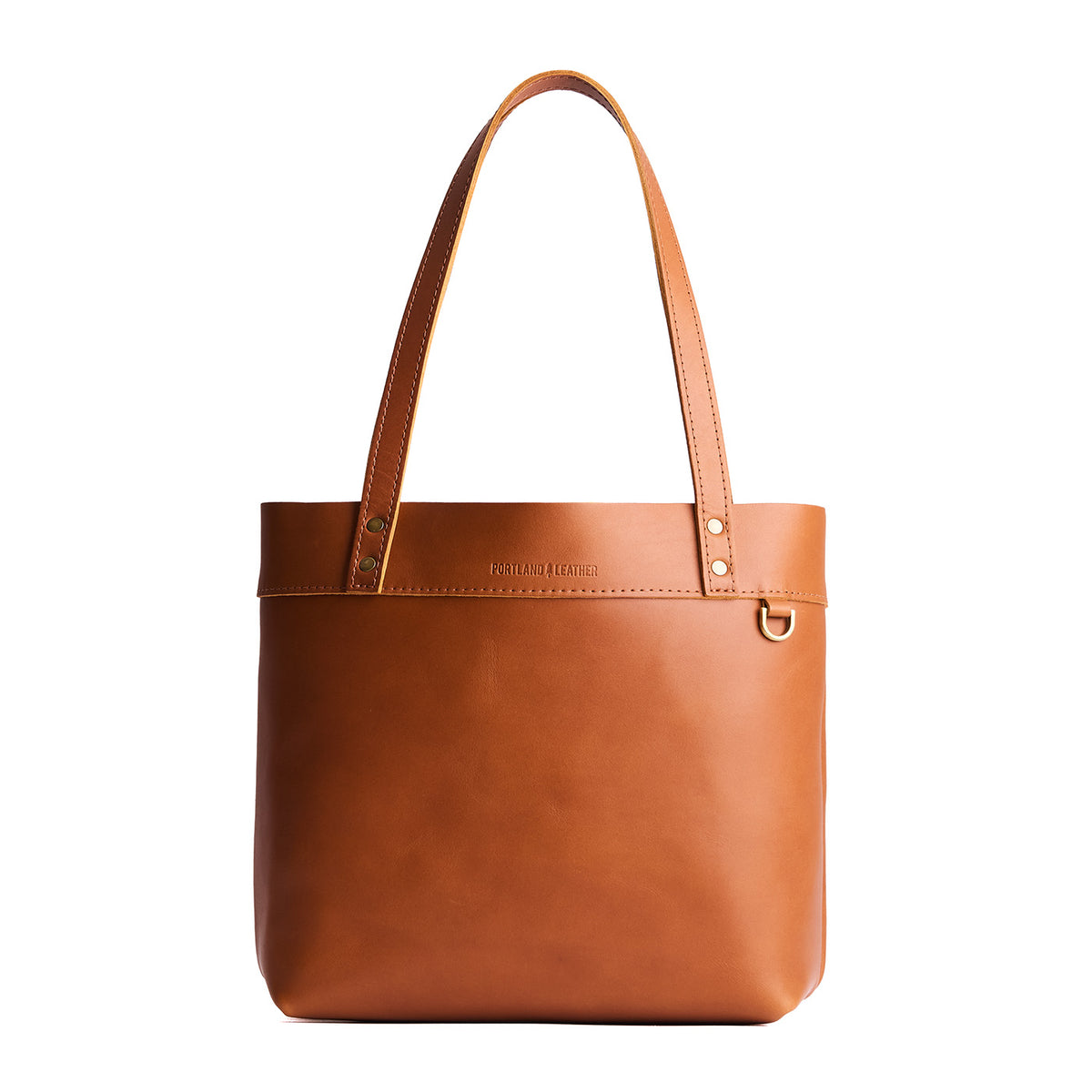
The Montana Tote and Medium Crossbody Tote anchor the lineup - roomy, full-grain, and offered in a rotating palette of seasonal colors.
Compact leather crossbodies built for daily carry, in both smooth and the brand's signature pebble texture.
Wallets, cardholders and keychains cut from the same hides as the bags - the details that turn a purchase into a set.
The handmade journal that started it all, still sold today - a nod to the company's garage roots.
Bags with tiny cosmetic marks, sold at a discount. Turning natural imperfection into one of the brand's most popular categories.
A surprise assortment of leather goods at a discount - a recurring obsession within the PLG community.
Matsko's operating rule was blunt: double revenue every year. The company followed that trajectory for roughly seven years, from a garage side project to a nine-figure brand. Figures below are approximate, illustrating the arc rather than audited results.
Three things separate Portland Leather Goods from both the fast-fashion racks and the legacy leather houses. First, the leather: its signature pebble texture is created by tumbling the hide until the grain rises naturally, not by pressing an artificial pattern into it. Second, the sourcing: hides come from US beef-industry byproducts, which the company frames as a sustainable use of material that already exists. Third, the go-to-market: PLG grew on Etsy, then on Facebook Groups, Instagram and TikTok, turning customers into a community that does much of the marketing for it.
Portland Leather Goods is a direct-to-consumer operation at its core. The primary storefront runs on Shopify Plus; the brand layers on TikTok Shop and a growing footprint of physical stores. Because it designs, sources and manufactures its own goods, PLG controls margin from hide to checkout - the reason it can price full-grain leather the way it does.
Profitability came early and stayed. The company has been self-funded from the beginning, reinvesting earnings rather than raising rounds. That independence shapes everything downstream: pricing, product decisions, and a willingness to move fast and iterate without a board to answer to.
Retention is the engine. With hundreds of thousands of reviews and a community approaching a million people, PLG leans on email and SMS marketing, Facebook Groups and seasonal color drops to bring customers back. The "Almost Perfect" line and Mystery Box are as much community rituals as they are products.
The expertise is split cleanly. Matsko brings a digital-marketing background and a relentless growth philosophy; the craft side lives in The Studio in Leon, Mexico, positioned beside two of North America's award-winning tanneries. Marketing sensibility plus manufacturing control is the combination the whole company rests on.
PLG occupies the "affordable premium" lane of the leather-goods market, competing with brands like Cuyana, Madewell, Dagne Dover, Parker Clay and Lo & Sons on one side, and reaching up toward heritage names like Coach and Fossil on the other. Its edge is not being the cheapest or the most prestigious - it is being the most direct, offering full-grain leather and a devoted community that neither the discount racks nor the luxury counters can easily replicate.
Love failure. Cheer on mistakes. Then evaluate and hit it again.Curtis Matsko - on the company's operating philosophy
Curtis Matsko makes a leather journal for his girlfriend and launches PLG from a single-car garage with a ~$5,000 loan.
The company formalizes and expands from journals into bags and accessories.
PLG breaks records at art festivals and becomes one of Etsy's top all-time sellers.
Operations grow, including The Studio in Leon, Mexico, near award-winning tanneries.
The company crosses nine figures in annual sales - still fully self-funded.
PLG reports its first $1,000,000 month in retail and adopts AI to speed social-media responses.
The brand expands its physical store footprint, leaning on its Facebook Group community for growth.