The Yay Company
Modern school dining that works. Yes, really.
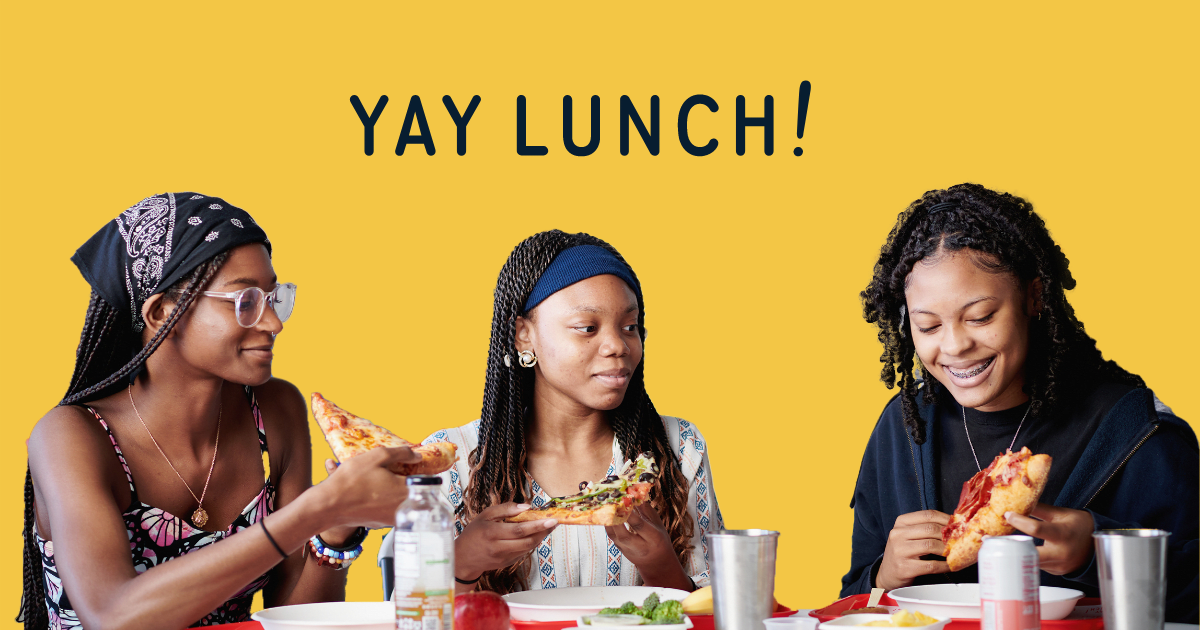
Exhibit A: the cafeteria tray, reformed. The Charlottesville startup parents quietly text each other about.
It is 11:40 on a Tuesday in a school somewhere between Atlanta and New York. A tray slides out. On it: a meal a kid will actually eat, made that morning by a chef who lives a few miles away, ordered weeks ago by a parent who paid for it in under a minute on their phone. Nobody is surprised. That is the strange and quiet achievement of The Yay Company.
Operating under the friendlier name Yay Lunch, the company runs a marketplace that sits between three groups who almost never agree on anything: parents, schools, and the people who cook. Parents want food their children will eat and they can trust. Schools want the headache to disappear. Local kitchens want steady work. The Yay Company is the connective tissue that makes all three happen at once, every school day.
Today it serves more than 100 schools across several metro markets, from central Virginia and metro Washington, D.C. up through Philadelphia and New York, and out to Atlanta and Chicago. It has raised $15.5 million. And it has done the rarest thing in school food: made it boring, in the best possible sense, for a kid to like lunch.
School lunch is the kind of problem everyone has opinions about and almost no one has fixed. The food is often highly processed. The choices are thin. The logistics - who ordered what, who paid, who is allergic to what, who is getting it to the right classroom by noon - are a quiet operational nightmare that schools were never built to solve.
The result is a tray that satisfies a spreadsheet and disappoints a seven-year-old. Calories accounted for, appetite ignored. For years the consensus was that this was simply the price of feeding a lot of children quickly and cheaply. The Yay Company never accepted that the trade was real.
The deeper problem was never just the food. It was that no single party owned the whole experience. Schools handled space, caterers handled cooking, parents handled the worry, and the gaps between them swallowed quality whole. Yay's insight was to own the gaps.
Christina Liva Diiorio is a mother of three with a background in the food industry. The company exists because of a small, specific frustration: her son was not happy with the lunch he was being served, and he was not eating it. She noticed she was not alone - plenty of parents felt the same way and assumed nothing could be done.
She made a different assumption. In the spring of 2018 she ran a pilot. The bet was simple to state and hard to pull off: if you let local chefs cook, gave kids real choice, and absorbed all the messy logistics into one platform, families would pay directly and gladly. She brought on Derek Mansfield, whose background runs through Relay Foods and Boston Consulting Group, to help turn a good idea into a working supply chain.
Founder & CEO. Came for her own kid's lunch, stayed to rebuild the category. The skeptic who became the operator.
Co-founder & COO. Relay Foods and BCG alum. The person who makes "fresh meals by noon" an actual logistics plan.
The wager paid in a currency startups rarely fake: repeat orders. Parents who tried it came back, by the week, the month, and eventually the whole school year. That is not marketing. That is a kid who finished their lunch.
Yay Lunch launches in Charlottesville, Virginia. One market, one stubborn idea: school food kids will actually eat.
Early backing from FJ Labs, Alpaca VC, Table Mountain Ventures and TMV. The model travels up and down the East Coast.
Yay brings healthy, safely delivered midday meals to more schools as families rethink what "safe" lunch means.
Round led by Valor Siren Ventures, with Animo Ventures, Reach Capital, Alpaca, Pritzker Group and TMV. 100+ schools, 200%+ YoY growth.
The brand widens from lunch into breakfast, snacks and grab-and-go marketplaces at its school clients.
From a parent's side it looks deceptively plain. Open the marketplace, browse a menu that changes monthly, pick from six to eight options each day including a daily special, and order by the week, month, or full year. Pay once. Done.
Underneath, Yay is doing the unglamorous work the simplicity hides: vetting local caterers against nutrition standards, managing quality assurance, running payments, and choreographing delivery so the right meal reaches the right classroom on time. The platform is the product; the logistics are the moat.
Monthly menus, daily specials, flexible ordering windows. Built for a parent with ninety free seconds.
A turnkey dining program. Yay absorbs menus, QA, payments and delivery so schools don't have to.
Breakfast, snacks and grab-and-go - the reason "Lunch" eventually became "Company."
Vetted regional kitchens cook the food. Less processing, less sugar, more neighborhood.
Conviction is cheap. Yay's case is built on the things that are hard to fake: schools that keep the contract, parents who keep ordering, and investors who keep wiring money. The Series A in November 2021 added $12 million to a total of $15.5 million, led by Valor Siren Ventures and joined by Reach Capital, Animo Ventures, Alpaca, Pritzker Group and TMV.
The market footprint tells the same story from a different angle. What started as one pilot in Charlottesville now spans central Virginia, metro Washington, D.C., Philadelphia, metro New York, Atlanta, Raleigh-Durham and Chicago. Each new market is a wager that the logistics travel - and so far, they have.
Yay's stated goal is to remove the obstacles for everyone involved in getting kids better-for-you meals. It is a modest-sounding mission that hides a large ambition: to make modern, nutritious school dining the default rather than the exception across K-12.
There is a second beneficiary that rarely makes the headline. Every meal Yay sells is cooked by a local kitchen, which means the model quietly routes money back into the communities its schools sit in. Good for the kid, good for the chef down the street. The rare arrangement where doing the right thing and running the business point in the same direction.
The name change is the whole strategy in two words. If you can be trusted to get lunch right - the nutrition, the logistics, the kid's actual appetite - you can be trusted with breakfast, with snacks, with the grab-and-go cooler by the gym. Each adjacency uses the same chef network and the same delivery muscle. The company is no longer selling a meal. It is selling a relationship with how a school feeds its day.
The competition is formidable and old: the Aramarks and Sodexos of the world, plus the inertia of in-house cafeterias. Yay's answer is not to be bigger. It is to be the one that the parent and the kid both choose, repeatedly, until choosing it is just what you do.
Return to that Tuesday cafeteria. The thing that changed is not visible on the tray. It is everything behind it: a chef who got the order, a parent who stopped worrying, a school that stopped firefighting, and a company that decided the dreaded question - "what's for lunch?" - deserved a good answer. The Yay Company built the boring, working machinery to give one. Lunch, finally, on the kids' side.