In August 2024, Nespresso put an unfamiliar product beside its familiar coffee: honey. The bees making it lived on Colombian coffee farms. They visited flowers, helped pollinate crops, and produced something the farmers could sell separately. A bottle cost $18 at launch. The small extravagance contained a rather practical idea: a farm supplying one product might earn money from two.
- Ubees combines pollination services, connected hives, and farmer training.
- Brands can support their supplying farms and develop traceable bee products.
- The test is whether field results and farmer earnings justify the investment.
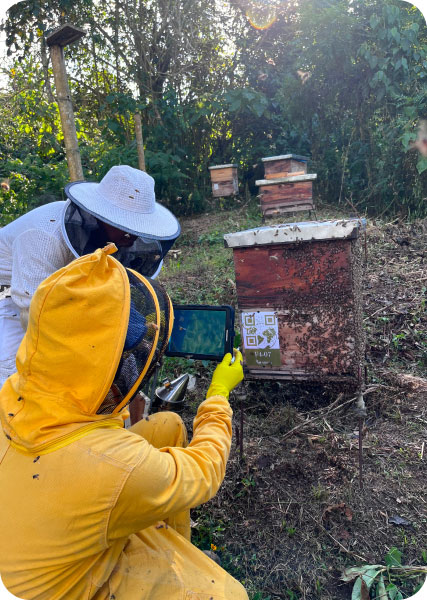
The company helping arrange that relationship was Ubees. Its Bees for Coffee work with Nespresso brings monitored hives onto farms in the AAA sourcing program. The honey makes the arrangement visible to shoppers. The less visible proposition concerns the person tending the plants: another source of income, with pollination contributing to the original crop.
The honey in your coffee has a business plan
Nespresso’s own reporting places the project in Colombia’s Jardín, Caldas, and Huila regions. In 2024, it announced a $1 million loan supporting Ubees, in partnership with the International Finance Corporation. That is a useful detail. This relationship involves financing farm operations as well as putting a sustainability story on a bottle.
Consider the incentives. A farmer wants a worthwhile harvest and a buyer. A coffee brand wants dependable supplies. Ubees brings colonies, monitoring, and beekeeping support into that exchange. Selling the honey adds another commercial reason to maintain the hives. The arrangement gives an environmental project a route into ordinary purchasing decisions.
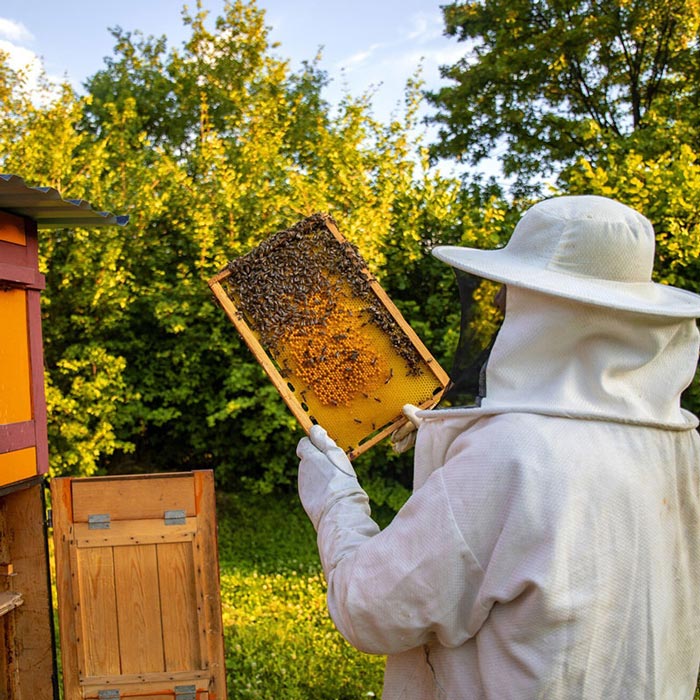
A sensor cannot wear a veil
Ubees offers non-invasive hive sensors, applications, and a monitoring dashboard. Its technology page describes measurements of bee populations and temperature at five points. The Beekeeping Companion app supplies metrics, alerts, recommendations, and learning material. The dashboard brings hive information together with production and project-impact reporting.
The logic is straightforward: a box in a field tells you little about the strength of the colony inside it. Remote readings give the beekeeper another way to decide where attention belongs. Ubees’s modelling includes Frames of Bees, a measure used to assess colony strength and anticipate pollination performance.
But someone must act on the information. Hives need care; farmers need instruction; flowering arrives on its own schedule. Technology is useful here because it informs fieldwork. The company puts it neatly in its funding announcement: “Pollination happens in the field, not in dashboards.”
The customer moved upstream
Ubees began in 2017 with American almond pollination. Arnaud Lacourt, Jean-Charles Morisseau, and Maximilian Ebrard founded the company. The US offered an established market for paying to rent hives during flowering. By 2021, Ubees reported more than 50 customers and secured $8 million in growth capital led by WindSail.
Its own timeline records a shift toward working with brands on sustainability initiatives in 2023. That widened the conversation. Alongside the grower buying pollination stood a company buying crops, interested in what happened across its supplying farms. Ubees now works across beekeeping, agricultural services, connected hardware, and bee-product sourcing.
Nespresso is one example. Genomma Lab’s 2024 report describes Ubees-linked Bee Labs in Antioquia and Cape Canaveral, supported through Tío Nacho and Tukol. Its Colombian initiative included entrepreneurship and beekeeping training for women. These are specific programs, with places and participants, rather than a vague invitation to feel fond of bees.
The market has other approaches. Beeflow combines pollination management with proprietary bee-feeding technologies. Beewise uses robotic BeeHomes in its pollination services. Ubees’s recognizable combination is conventional connected hives, farmer support, and brand-linked routes to market for bee products.
Field data follows the project. Buyers give its products somewhere to go.
Thirty hives, one useful comparison
In March 2026, Ubees published a case from an 8.9-hectare Hass avocado farm in Antioquia. Thirty hives were introduced in 2024. The following year, the orchard produced 123.5 tonnes, or 13.9 tonnes per hectare. Ubees says that was 39% above neighboring farms and 16% above the orchard’s forecast.
Reported by Ubees. A forecast comparison, not a controlled trial.
The distinction matters. Neighboring orchards are a comparison, not a randomized experiment. Weather, management, and orchard differences can also affect harvests. The figures make a case for investigating pollination, without promising every grower the same improvement. Copy the measurement discipline before copying the percentage.
Coffee supplies another wrinkle. Arabica can fertilize itself, yet insect visits can improve productivity. Ubees reports gains of up to 16% on partner farms. Its March coffee article describes flowers remaining open for only one to three days. A service built around that window needs preparation long before anyone admires the honey jar.
Pay for the fieldwork
In February 2026, Ubees announced an €8 million Series A co-led by Starquest and Capagro, with Newtree Impact participating. It earmarked the money for technology, impact measurement, farmer support, and international expansion. The company said it was active in more than 15 countries, with Latin America and Africa prominent in its plans.
For a prospective customer, the useful starting point is a defined project: crop, flowering calendar, hive placement, local operators, and outcomes to measure. Ubees invites quotations. The $18 honey bottle describes a consumer product; it does not describe the cost of installing and maintaining a farm’s pollination program.
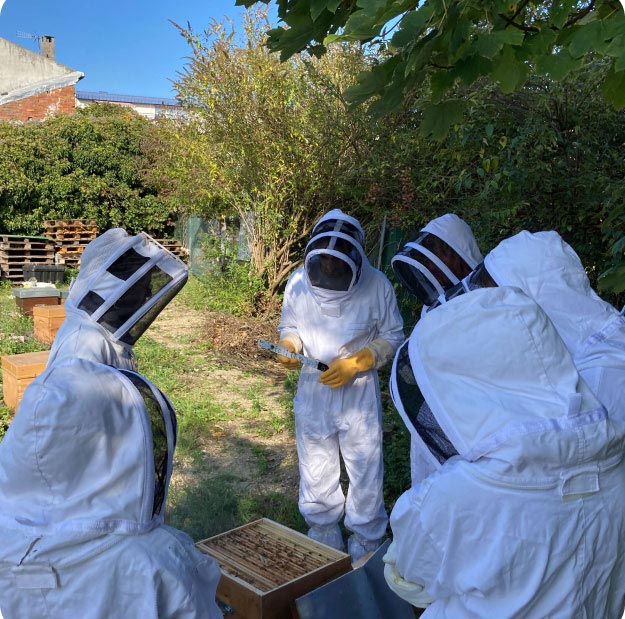
The repeatable idea is to line up the operator, buyer, and evidence together. Start small enough to compare results. Include maintenance and training in the budget. A hive count alone cannot settle whether the project worked. Yield, saleable honey, farmer earnings, and ecological outcomes deserve separate attention.
Nor can a sensor manufacture suitable growing conditions. Hive placement must fit the crop and local ecosystem; the CEO has stressed avoiding ecological saturation. If pollination is already sufficient, another colony may offer little additional crop value. The business becomes persuasive when the field benefits, the farmer gets paid, and the buyer has a reason to return.