The machine looks like something a determined neighbor might pull from the back of a pickup: a large hand drill, a long shaft, a case perched above it. The sophisticated bit is underground. Behind a sapphire window, a sensor shines light into the soil and watches what returns. Violet, visible, near-infrared - the reflected spectrum becomes evidence about the carbon held below the boots of the operator.
This is where Chris Tolles has placed his bet. Not on a more stirring promise about dirt, but on a better way to count what is in it. His company, Yard Stick PBC, combines field spectroscopy, sampling design and software to measure soil organic carbon. Carbon-project developers need those numbers. Food companies trying to understand agricultural supply chains need them. The models peering down from satellites need trustworthy points on the ground. Before any of those systems can claim improvement, somebody has to establish what changed.
Tolles makes an improbable guide to this patch of climate technology. He is not a soil scientist and does not pretend to be one. His bachelor’s degree is in furniture design from the Rhode Island School of Design. His route to the farm passed through humanitarian and impact work, business school, management consulting and a consumer startup. Yet the apparent zigzag contains a straight line: he likes taking real science and designing the machinery around it so that people can use it.
Chapter oneThe cabinetmaker’s business model
At RISD, Tolles learned to make furniture. The training gave him a feel for objects and a confidence that problems could be attacked through design. But an early job with a solar-cooker startup taught him the limit of the beautiful thing. The cooker concentrated sunlight into heat. The product worked. Around it, however, sat another object that had not been designed with equal care: the business.
That lesson sent him to Boston University for an MBA. Afterward, he joined Innosight, the consultancy associated with Harvard Business School professor Clay Christensen, and worked on innovation projects for large companies. He valued the structured thinking and disliked the distance from the decision. Consulting meant handing someone a recommendation and waiting to see whether it lived. Tolles wanted to be the person responsible for making it live. His preferred description of himself now is “a recovering management consultant.”
“If I really cared about making a difference in people’s lives, I needed to be as comfortable designing the business model as the object itself.”Chris Tolles
His first turn as a founding CEO came with Sundaily, a science-led consumer company he started with researcher Emilia Javorsky. It was a lesson in translation: research had to become a product, a brand, a subscription and a reason to reorder. It was also a lesson in corporate improvisation. The young company began under another name, then changed it after a trademark threat. In 2020, Grove Collaborative acquired Sundaily.
Tolles came away with a crisp preference. He wanted to build beside a scientist again. He did not want to build another consumer brand. And he wanted the next problem to be climate.
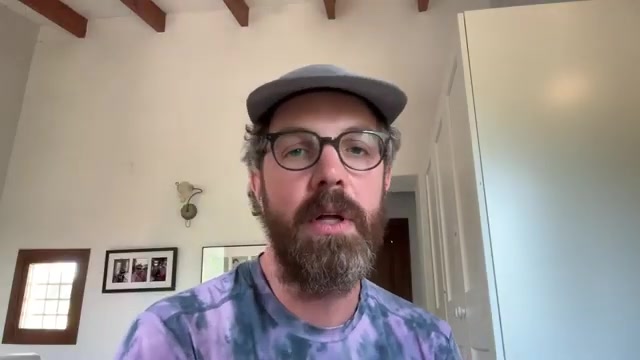
Chapter twoA founding team assembled online
The timing was the strange summer of 2020. Climate people were gathering online, including in the community around My Climate Journey. Tolles enjoyed the networking. He says he calls it making friends. Through that network, he met engineer Kevin Meissner, previously a co-founder of carbon-removal company Charm Industrial. Soil scientist Cristine Morgan had spent years working on spectral methods for characterizing soil. The group began what Tolles has cheerfully called co-founder dating.
A Department of Energy award helped turn the conversations into a company. Relationally, Yard Stick began in 2020; legally, Tolles says, it began on January 1, 2021. The problem was both vast and awkward. Agricultural soils can hold enormous amounts of carbon, but carbon is distributed unevenly across a field and down through its profile. Conventional measurement requires taking physical cores, sending them to a laboratory and paying for analysis. A few samples can miss the variability. Enough samples can punish a budget.
How to turn dirt into a data point
Tolles explains the spatial problem with a stadium. If every person in the seats looked alike, a handful might describe the crowd. If the crowd contained every imaginable variation, five people would tell you almost nothing about the whole. Soil carbon is the second stadium. A laboratory can produce an excellent answer about the soil placed inside it. The harder question is whether the field team collected enough points, in the right places, to describe the land.
Yard Stick’s probe aims to make each point quicker and less expensive. It records what Tolles calls a movie of the soil profile rather than a single snapshot. The company’s ambition is not simply to build an intriguing instrument. It is to deliver a service: decide where to sample, gather field readings, manage the data and report an estimate that can stand up to scrutiny.
“We’re not taking a snapshot of the soil - we’re taking a movie.”Chris Tolles
Chapter threeThe credibility tax
Carbon markets arrived with an inheritance of suspicion. Nature-based credits, particularly forest projects, had taught buyers to ask uncomfortable questions about baselines, permanence and whether a claimed change occurred at all. Soil added its own complexity. Practices, weather, crop choices and local biology interact. A tidy number can conceal a disorderly landscape.
Tolles’s response was to treat scientific credibility as product development. Yard Stick worked with the Soil Health Institute and pursued peer-reviewed publication of its efficacy research. Academic publishing is slower than a launch announcement and less photogenic than a funding round. For a company proposing an alternative to a mature laboratory method, it offered something more durable: a public account of what the technology could and could not do.
That choice reveals the operator behind the gregarious founder. Tolles can be funny and self-deprecating in interviews, but his argument about measurement is conservative. High-quality ground truth matters. Remote-sensing companies are not necessarily rivals; their models need calibration. Laboratory measurements are not useless; they remain part of building and checking spectral models. The system improves when its parts challenge and reinforce one another.
Chapter fourBeyond the carbon credit
Yard Stick is often introduced as infrastructure for soil-carbon credits. That is only one side of the business Tolles now describes. The other serves organizations measuring soil for reasons beyond the voluntary market. A food company may care about the resilience of an agricultural supply chain. A land investor may want to understand productivity and long-term value. A remote model may need data that comes from below the canopy.
The shift matters because climate founders cannot live on virtue alone. Tolles urges entrepreneurs to locate the place where a technology helps a customer make money or save it. Soil health can sound abstract in a corporate meeting. Commodity availability, price volatility and the reliability of the ingredients going into breakfast are not abstract. Hence one of his better lines: healthy soils are also about keeping Cheerios on shelves.
He resists false choices. Agriculture cannot be treated like a clean engineering diagram, but it still benefits from better instruments. Carbon markets have flaws, but measurement can improve them. Satellites offer reach, while field tools offer calibration. Climate value and economic value can occupy the same acre. This “both and” posture is less satisfying than a duel and more faithful to the dirt.
Tolles has said openly that he learned agriculture and soil science on the job. The outsider status cuts two ways. It demands humility around specialists, and it allows him to ask why accepted workflows remain expensive or inconvenient. His role is less scientist than translator and organizer. He brings together the researcher who knows what reflected wavelengths mean, the engineer who can build for mud and vibration, the statistician who knows where the next sample belongs and the customer who needs a defensible answer.
Chapter fiveThe object and the promise
There is something pleasingly circular about a furniture designer returning to a physical tool. Software businesses can pretend the world is smooth. A soil probe encounters rocks, roots, rain, distance and operators who have other things to do. It must be accurate, but it must also travel, survive and fit into a working day. Design has returned from the presentation deck to the hand.
Yard Stick’s larger aspiration is gigaton-scale soil-carbon removal. The company cannot create that outcome by itself. Farmers and ranchers decide how land is managed. Food companies decide what practices they will support. Project developers and carbon buyers decide what evidence they will accept. Scientists keep refining what can responsibly be claimed. Yard Stick wants to be the measurement backbone connecting those decisions.
That makes Tolles’s true product less glamorous than captured carbon and more useful: permission to believe a number. He learned with the solar cooker that an object needs a business model. With Sundaily, he learned that science needs translation. In soil, those lessons meet a sterner audience. The land is variable, the market is wary and the claims will be audited.
So the probe goes down and the light comes back. One reading does not rescue a field. A thousand readings do not settle every argument about agriculture. They can, however, replace some guessing with observation. For a founder who left consulting because he wanted to do rather than recommend, that is an appealing arrangement: fewer pronouncements from above, more evidence from the ground.