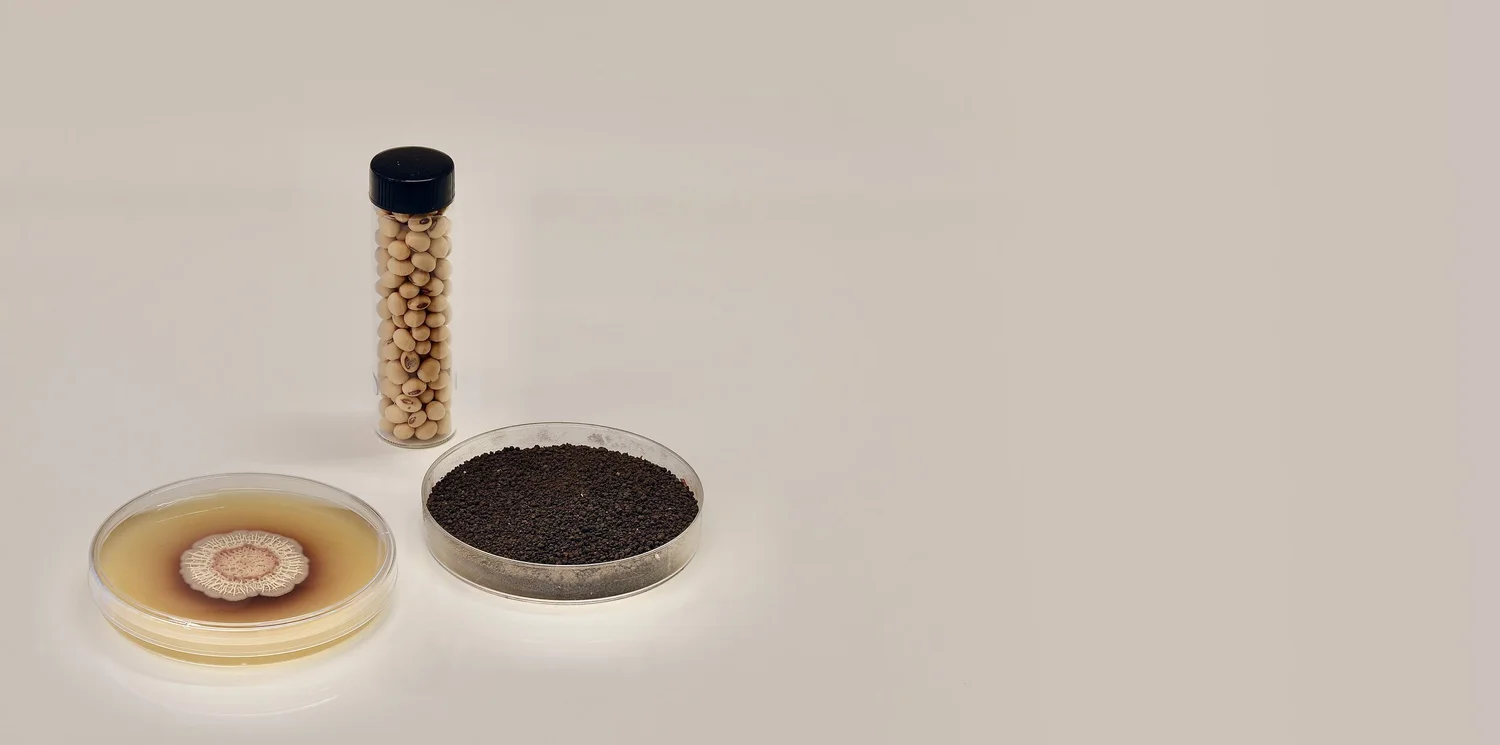
A climate-tech company betting that the cheapest, fastest way to pull carbon out of the sky is hiding inside a corn kernel - coated in microbes that turn CO2 into rock-stable soil carbon.
It is planting season in the American Midwest. A tractor rolls down a furrow in Iowa, dropping seed corn that looks exactly like the seed corn the farmer planted last year. Same hybrid. Same equipment. Same routine. The only difference is invisible - a thin coating of naturally occurring soil microbes, shipped from a lab in Alameda, California.
The microbes ride the seed into the ground. They grow with the roots. And as the corn pulls CO2 from the air, those microbes - quietly, chemically, persistently - convert a portion of that carbon into soil inorganic carbon. The stuff that limestone is made of. The stuff that stays put for a thousand years.
That is Andes. A 230-person climate-tech company that decided the world's largest carbon sink was not the ocean, or the Amazon, or some not-yet-built direct air capture plant. It was the working farmland already underneath us - it just needed a microbial assist.
Climate models say we need to remove gigatonnes of CO2 from the atmosphere, every year, by mid-century. The dominant options were each, in their own way, a little embarrassing: forests that burn, direct air capture plants that cost hundreds of dollars per ton, and ocean experiments that no one was quite sure how to measure.
Meanwhile, sitting under our feet, was the second-largest active carbon pool on the planet - soil. Farmers had been managing it for ten thousand years. Microbes had been weathering minerals into stable inorganic carbon for billions. Nobody was charging admission.
The challenge was not nature. Nature had it covered. The challenge was speed, scale, and proof - convincing a corporate buyer in Atlanta that a microbe in Iowa had really, truly, locked carbon into a mineral form that would still be there in the year 3026. And doing it cheaply enough that a farmer would actually say yes.
Co-founder Tania Timmermann had spent two decades studying how bacteria and plants talk to each other - the kind of unglamorous root-zone chemistry that does not usually win venture-capital pitch competitions. Co-founder Gonzalo Fuenzalida had spent fifteen years in Chilean finance and biotech, and had reached the conclusion that the most undervalued asset class on Earth was the soil microbiome.
They started Andes in 2016, originally as a way to use microbes to make crops more productive while using fewer synthetic fertilizers. The carbon-removal pivot - applying the same microbial-engineering muscle to the mineralization of CO2 - was a logical extension. If you already understood the microbes that live with plant roots, you also understood the microbes that weather silicates into limestone. You just had to point them at climate.
The bet was contrarian: that the world did not need a new piece of hardware, or a new tract of forest. It needed a better seed coating. And it needed a measurement system rigorous enough to convince a sustainability director in Zurich that the soil under an Iowa cornfield had actually done what the invoice claimed.
Andes manufactures a microbial seed coating that is applied to corn, soybean, canola, and wheat seeds before planting. Farmers do not change their equipment, their hybrids, their tillage, or their schedule. The microbes do.
Pays farmers $10 per enrolled acre to apply the microbial coating. No new investment, no behavior change. Three growing seasons in, 75,000+ Midwest acres are signed up.
Beneficial microbes accelerate the conversion of atmospheric CO2 into soil inorganic carbon via microbial weathering of silicates and pore-water dissolved-inorganic-carbon chemistry.
Carbon removal credits sold to corporates with hard net-zero targets - measured, validated, and certified to Gold Standard methodology with ISO 14064 oversight.
An insetting product aimed at food and beverage value chains - the buyers who actually grow corn into cereal, soybean into oil, wheat into bread.
Carbon removal is a market obsessed with comparisons. Direct air capture vs. enhanced rock weathering vs. forests vs. ocean. Andes' pitch lives or dies on one ratio: cost per ton of durable CO2 removed, against the cost of the buyers' next-best option. The figures below are public benchmarks - not a tidy chart that exists somewhere in a deck.
That is the public-facing line. The private translation is something like: stop treating the soil microbiome as a curiosity, start treating it as climate infrastructure. The science backs them up - Andes' research collaborations with Lawrence Livermore National Laboratory, Rice University, and the University of Colorado at Boulder have produced field-level data on soil pore-water DIC measurement, microbial weathering of silicates, and the long-term stabilization of soil inorganic carbon.
The vision is, by Silicon Valley standards, almost rude: gigatonne-scale CO2 removal achievable in years, not decades. Almost every other CDR company in the world talks in megatonnes by 2040. Andes talks in gigatonnes by, well, sooner.
There are roughly 90 million acres of corn planted in the United States each year. If even a fraction of that acreage runs the Andes coating - and the soil inorganic carbon stays put as long as the chemistry says it does - the climate math starts to look very different. Carbon removal stops being an exotic, expensive add-on. It starts being a line item in a seed bill.
The competitors are real and getting realer. Lithos, Eion, InPlanet, and Mati Carbon all chase enhanced rock weathering through different chemistries. Indigo and Pivot Bio chase microbial agriculture through different mechanisms. Climeworks and Heirloom chase direct air capture through different physics. Andes' bet is that the one product that already ships through an existing distribution channel - the seed bag - is the one that scales fastest.
Back in Iowa, the tractor finishes its row. The seed is in the ground. The microbes are at work. The farmer goes inside for coffee. Somewhere in a sustainability office, an executive prints a quarterly Scope 3 report and finds, on line 14, a number that did not used to exist. Andes is the company quietly responsible for that number.
It is not a glamorous story. Microbes rarely are. But the climate, increasingly, runs on what works.