soil-health
(16)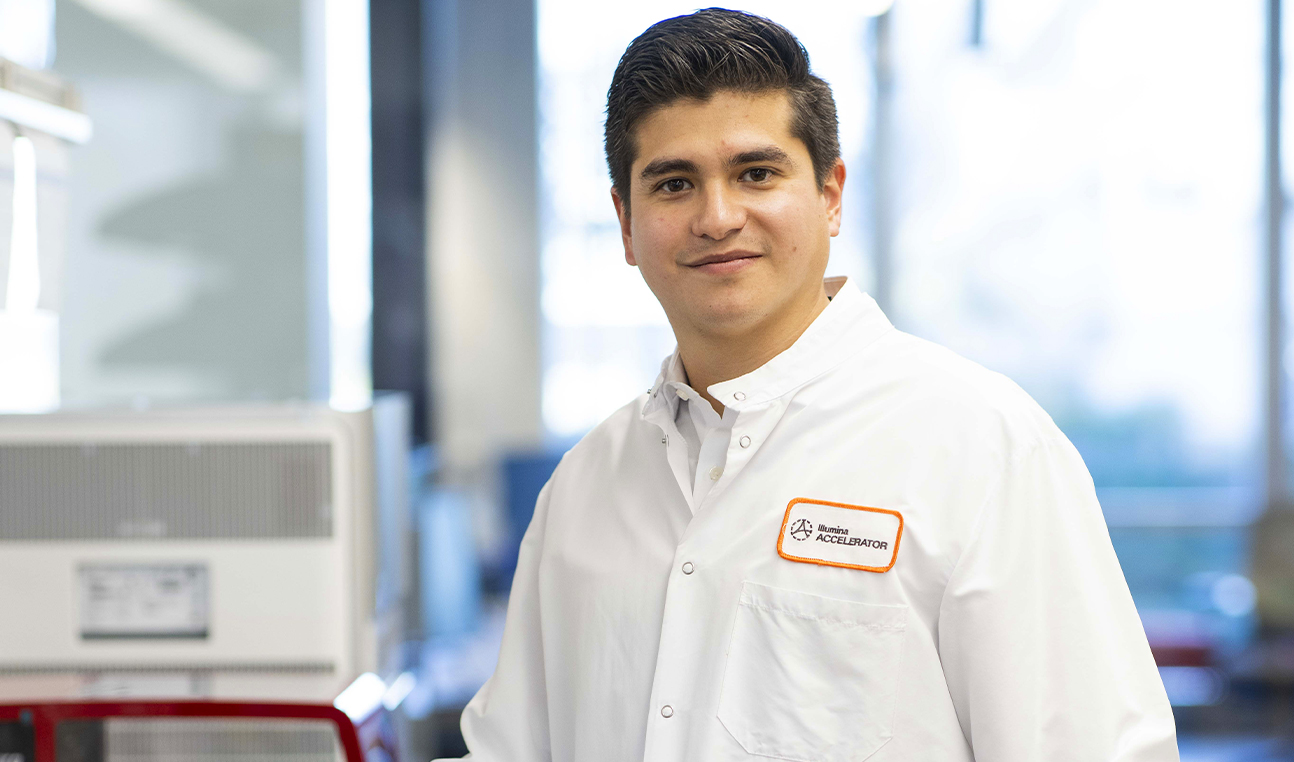
Irving Rivera Is Teaching Agriculture to Read the Soil's Hidden Signals
The Solena co-founder began with a student biofertilizer project. A decade later, he is turning billions of DNA sequences into decisions farmers can use.
The One-Truck Bet That Taught 40,000 Canadian Lawns to Survive Summer
Green Drop started with a newspaper ad, one truck and a phone that would not stop ringing. Forty-seven years later, its most useful lesson is still the same: sell relief from uncertainty, not a bag of fertilizer.
The Dirt Is Cheap. Proving It Is Not: Yard Stick's Bet on Better Soil Carbon Data
Soil can store carbon, but the proof has been slow, costly and easy to distrust. Yard Stick is building the measurement layer that tells carbon-project developers and food companies whether the dirt is actually doing what the spreadsheet promised.
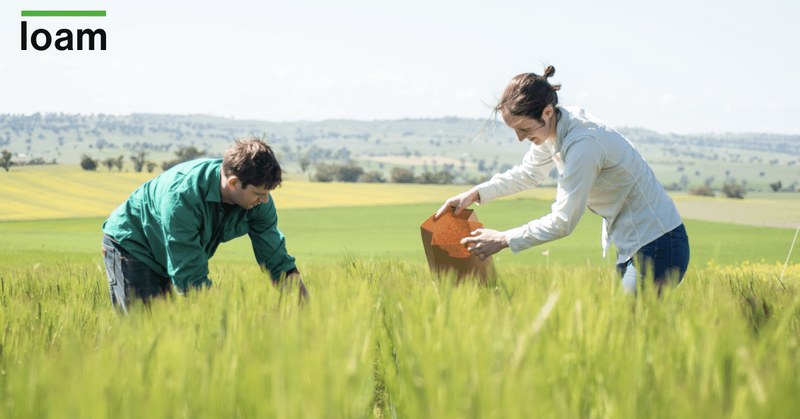
Loam Bio
Loam Bio is an Australian agricultural biotechnology company using naturally occurring microbial fungi to help crops store more stable, long-lasting carbon in soil. Founded in 2019 by a group of farmers and climate scientists, it coats seeds with its CarbonBuilder inoculum so plants pull atmospheric CO2 into recalcitrant, mineral-bound soil carbon, and pairs the biology with its SecondCrop program that helps growers measure, verify and sell soil carbon credits. Backed by more than US$119M from investors including Lowercarbon Capital, Wollemi Capital and Marc Benioff's Time Ventures, Loam is scaling from its Orange, NSW base into the United States.
Solena
Solena is an agricultural biotechnology company that reads the microbiome of farm soil the way a doctor reads a blood panel. Farmers mail in a soil sample; Solena sequences the DNA of the microbes living in it, scores the soil's biological health with its MISS index, and its Prometheus platform turns that data into AI-driven prescriptions for what to apply, when, and how much. The goal is fewer synthetic inputs, healthier soil, better yields, and eligibility for carbon and regenerative-agriculture incentives.
TerraBlaster
TerraBlaster is a California agtech startup building a rugged, tractor-mounted soil sensor that reads nitrogen, phosphorus, potassium, pH and other nutrients in real time using Laser-Induced Breakdown Spectroscopy (LIBS) - the same laser technique NASA uses on Mars rovers, licensed from St. Louis deep-tech firm Impossible Sensing. Led by CEO Jorge Heraud, who previously co-founded Blue River Technology (acquired by John Deere for $305M), the company aims to replace slow, sparse lab soil sampling with instant, plant-level nutrient maps so farmers can apply exactly the right amount of fertilizer - cutting waste, boosting yields, and protecting waterways.

Terraton
Terraton is a San Francisco climate-tech company that turns agricultural waste into biochar - a stable, carbon-rich material that locks away CO2 for centuries. It packages financing, hardware, and software into a 'biochar business in a box' so agribusinesses in emerging markets can launch carbon-removal facilities, while corporate buyers get verified, high-durability carbon credits delivered at scale. Backed by an $11.5M seed round co-led by Lowercarbon Capital and Gigascale Capital, Terraton already runs facilities in Ghana and Kenya.

Applied Carbon
Applied Carbon (formerly Climate Robotics) builds tractor-pulled machines that turn crop residue into biochar in a single pass across the field. The Houston-based startup converts post-harvest plant waste into a stable form of carbon that improves soil health and locks CO2 underground for centuries, selling carbon removal credits to buyers including Microsoft.
Kula Bio
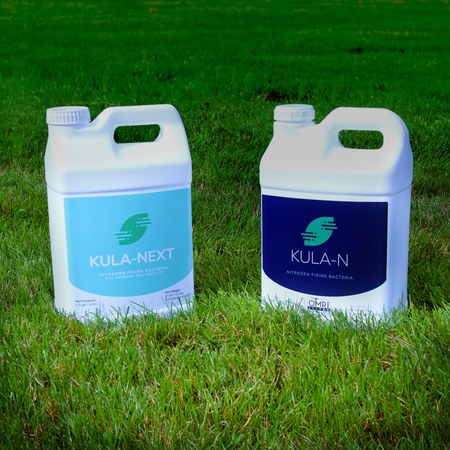
Kula Bio is a Massachusetts climate-tech company turning naturally occurring nitrogen-fixing microbes into living fertilizer factories that run inside the soil. Born from Harvard chemist Dan Nocera's 'bionic leaf' research, the company supercharges Xanthobacter autotrophicus with a renewable-energy carbon source so the bacteria deliver plant-available nitrogen at the root zone, on demand. Field trials show its flagship Kula-N can replace as much as 80% of a farm's synthetic nitrogen use without the runoff or the fossil-fuel footprint of conventional fertilizer.

Harrison Yoon
Harrison Yoon is the CEO of Kula Bio, a Massachusetts agbiotech company turning supercharged nitrogen-fixing microbes into a low-emission alternative to synthetic fertilizer. A chemical engineer by training with a Cornell postdoc and more than 25 years across cell culture, microbial fermentation and bioprocess engineering, he joined Kula Bio in 2020 as President and COO and stepped up to CEO in November 2025 as the company closed its Series A-1 round and launched shelf-stable products into farmers' fields.
Terradot
Terradot is a San Francisco and Stanford-born climate company turning Enhanced Rock Weathering (ERW) - one of nature's slowest permanent carbon-removal processes - into a measurable, global-scale climate solution. By spreading finely crushed basalt across tropical farmland, Terradot accelerates the natural reaction in which silicate rock binds atmospheric CO2 and locks it away for thousands of years, while improving soil health for farmers. The company pairs field deployment with rigorous biogeochemical measurement, and has signed landmark carbon-removal agreements with Google, Microsoft and Frontier totaling nearly 300,000 tonnes of CO2.

Compost Crew
Compost Crew is a Rockville, Maryland-based organics recycling company that collects food scraps from homes, businesses, schools and local governments across the Greater Washington (DMV) area and turns them into nutrient-rich compost. Founded in 2011 and acquired by CEO Ben Parry in 2018, the company has grown from three trucks into a regional operation that has diverted tens of thousands of tons of food waste from landfills. Operating a network of distributed 'Compost Outposts' in partnership with local farms, Compost Crew aims to make food waste recycling a mainstream, everyday habit while rebuilding regional soil health.
Andes
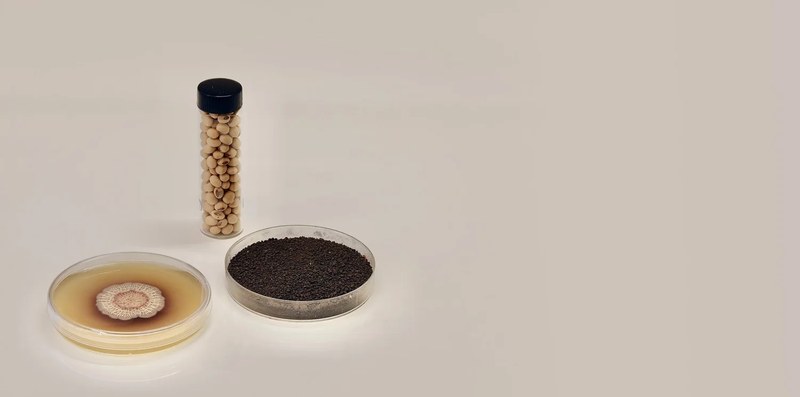
Andes is a climate-tech and agricultural biotechnology company using beneficial soil microbes - applied as a seed coating on corn, soybean, canola and wheat - to convert atmospheric CO2 into stable soil inorganic carbon. Founded in 2016 by Gonzalo Fuenzalida and Tania Timmermann and headquartered in Alameda, California, Andes pairs microbial biology with field-scale measurement to deliver permanent, low-cost carbon removal across millions of acres of working farmland.
Gonzalo Fuenzalida-Meriz
Gonzalo Fuenzalida-Meriz is a Chilean-born entrepreneur and CEO & Co-Founder of Andes, a California-based climate tech company that deploys beneficial soil microbes via seed coatings to permanently lock atmospheric CO2 into soil minerals. A former investment banker turned biotech founder, he led development of the world's first Microbial Carbon Mineralization (MCM) Methodology — validated under ISO 14064 — and has raised $41M+ to scale a platform that simultaneously improves farm yields and generates durable carbon credits.

Pivot Bio
Pivot Bio engineers nitrogen-fixing microbes that live on crop roots and feed corn, wheat, sorghum and small grains directly, replacing a portion of synthetic fertilizer with a biological alternative that does not volatilize into the atmosphere or leach into groundwater.
Jason Aramburu
Jason Aramburu is the cofounder and CEO of Applied Carbon, a Houston-based climate tech company building the world's first mobile, in-field biochar production machines that convert agricultural crop waste into permanent carbon storage - and improved soil - in a single pass. A Princeton-trained ecologist who first encountered biochar during field research in Panama, Aramburu has spent two decades building at the intersection of soil science, robotics, and carbon markets. Before Applied Carbon, he founded re:char (smallholder biochar in Kenya, backed by Gates Foundation) and Edyn (smart irrigation, Y Combinator W14), then invested in AI and energy startups at Baidu Ventures and Saudi Aramco Energy Ventures before returning to his original mission. Applied Carbon raised a $21.5M Series A in July 2024, backed by Microsoft Climate Innovation Fund, Congruent Ventures, and the Grantham Foundation, and won the $500,000 Wilkes Climate Launch Prize in September 2024.