APPLIED CARBON RAISES $21.5M SERIES A WINS $500K WILKES CLIMATE LAUNCH PRIZE 2024 XPRIZE CARBON REMOVAL TOP-20 GLOBAL FINALIST MOBILE PYROLYZER CONVERTS CROP WASTE TO BIOCHAR IN 2 MINUTES BACKED BY MICROSOFT CLIMATE INNOVATION FUND & GRANTHAM FOUNDATION FORBES 30 UNDER 30 • ASHOKA FELLOW • ECHOING GREEN FELLOW DOE CO2 REMOVAL PURCHASE PILOT PRIZE SEMIFINALIST APPLIED CARBON RAISES $21.5M SERIES A WINS $500K WILKES CLIMATE LAUNCH PRIZE 2024 XPRIZE CARBON REMOVAL TOP-20 GLOBAL FINALIST MOBILE PYROLYZER CONVERTS CROP WASTE TO BIOCHAR IN 2 MINUTES BACKED BY MICROSOFT CLIMATE INNOVATION FUND & GRANTHAM FOUNDATION FORBES 30 UNDER 30 • ASHOKA FELLOW • ECHOING GREEN FELLOW DOE CO2 REMOVAL PURCHASE PILOT PRIZE SEMIFINALIST
YESPRESS PROFILE — CLIMATE TECH

JASON
ARAMBURU

PRINCETON ECOLOGIST. KENYAN BIOCHAR PIONEER.
AI VENTURE INVESTOR. NOW BUILDING ROBOTS
THAT LOCK CARBON AWAY FOR A MILLION YEARS.

Cofounder & CEO Applied Carbon Biochar Climate Tech Series A Forbes 30U30
$21.5M
Series A Raised
$500K
Wilkes Prize Won
20+
Years in Biochar
Top 20
XPRIZE Finalist
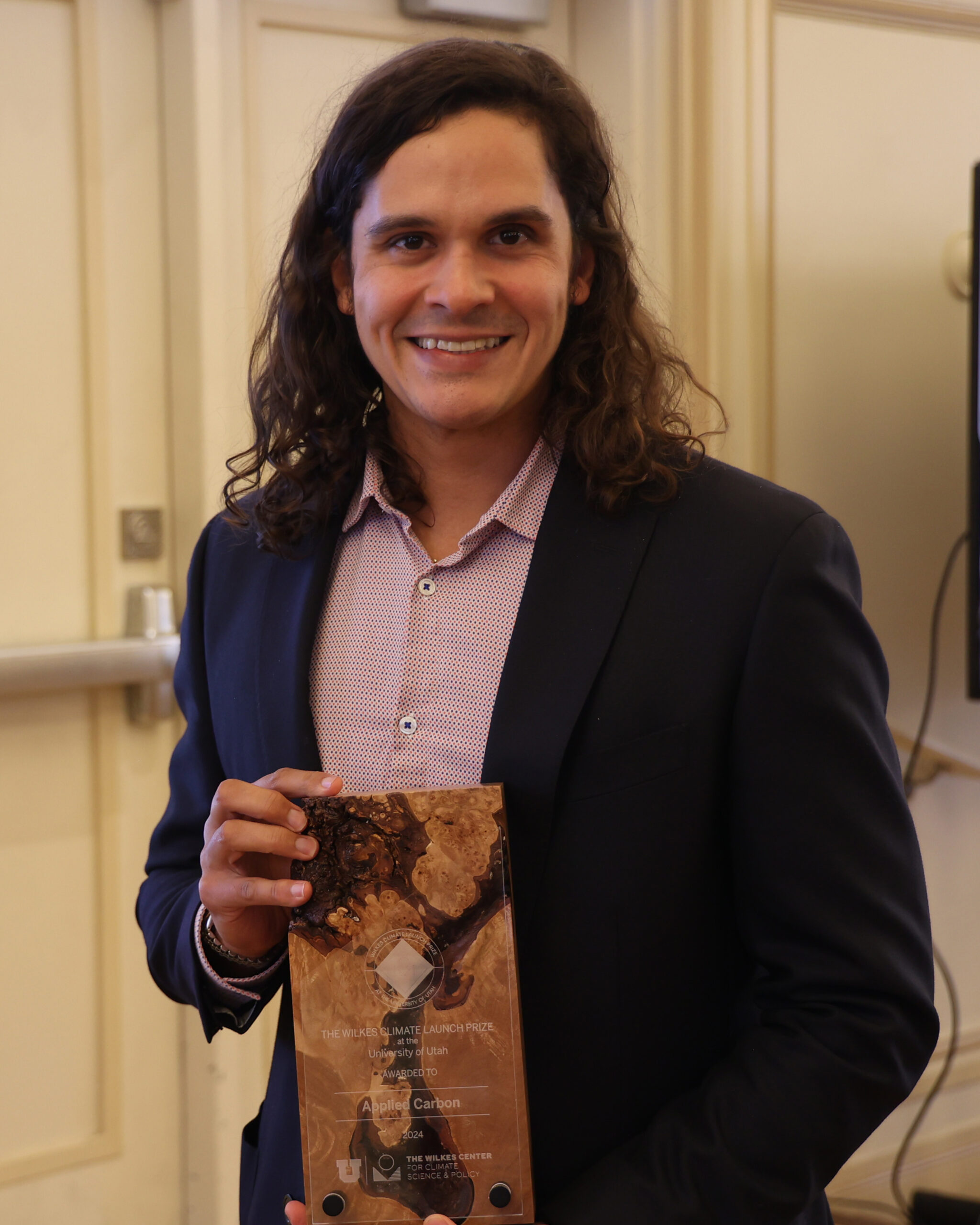
Jason Aramburu, Cofounder and CEO of Applied Carbon

Dirt, fire, and a
20-year obsession

In Panama, an undergraduate was studying how ants pick their nesting sites based on soil composition. He stumbled onto something old - thousands of years old. The indigenous farmers of the Amazon basin had been burying charcoal in their fields long before anyone knew why. The soil they left behind, called terra preta, is still extraordinary today. Jason Aramburu could not let it go.

That Princeton research trip in the early 2000s planted a seed that has now grown into Applied Carbon: a Houston-based climate technology company building the world's first mobile, in-field machines that convert agricultural crop waste into biochar, a stable mineral form of carbon that can remain locked in soil for hundreds of thousands - possibly millions - of years. The machines look like a cross between a combine harvester and an industrial furnace on wheels. They drive through cornfields at 1 to 2 mph, pick up corn stover, heat it to 1,472 degrees Fahrenheit inside a closed, low-oxygen chamber, and deposit biochar back into the soil in a single pass. Total conversion time: about two minutes per batch.

Aramburu did not arrive here in a straight line. After Princeton, he trained smallholder farmers in Kenya how to make biochar with simple locally-made kilns, funded by the Bill and Melinda Gates Foundation. He founded re:char in 2009, bringing charcoal-based soil amendments to thousands of East African farmers. Then he pivoted: Edyn, a Wi-Fi-enabled soil probe and smart irrigation system, sailed through Y Combinator's Winter 2014 batch and blew past its Kickstarter goal in two weeks. Then came a stint at Baidu Ventures investing in early-stage AI. Then Saudi Aramco Energy Ventures, where he rose from investment principal to investment director and closed deals including Energy Vault - a company that went public at unicorn valuation in 2022.

The detour looked like a departure. It was not. When Aramburu co-founded what is now Applied Carbon with Dr. Morgan Williams - a UC Berkeley soil scientist he had first met at a biochar academic conference a decade earlier - he brought the full stack: field ecology, smallholder agriculture, robotics, AI, corporate finance, venture capital. "We don't want to be a huge company running pyrolizers all over the world," he has said. "More like a carbon-negative John Deere."

The machine is already running in Texas and Mississippi. The company rebranded from Climate Robotics to Applied Carbon in June 2024, then in July announced a $21.5M Series A led by TO.VC, with co-investors including Microsoft Climate Innovation Fund, Congruent Ventures, the Grantham Foundation, S2G Ventures, and eight others. In September, Applied Carbon won the $500,000 Wilkes Climate Launch Prize at the University of Utah. By the end of 2025, the plan calls for 20 to 25 units in the field.

Peer-reviewed science backs the play: biochar increases crop yields by approximately 16%, raises soil water-holding capacity by over 50%, and boosts nitrogen retention by 95%. Aramburu's target is larger still. "At scale, we can sequester billions of tons of CO2 annually in the form of biochar," he has said. The scientists agree: the theoretical ceiling is 2 billion tons per year, which would place biochar among the most consequential carbon removal pathways on earth.

Five generations of prototypes stand between the original idea and the current machine. The story of those five generations - of what broke, what burned, what needed rethinking - is the kind of details that Aramburu tends to skip over in interviews. He says simply: "We've been through five generations of prototypes and now we finally have something really scalable." That sentence is doing a lot of work.

At a Glance

Role Cofounder & CEO
Company Applied Carbon
Location San Francisco, CA
Company HQ Houston, TX
Education Princeton '07
Ecology & Evo Bio
cum laude
Industry Climate Tech / AgTech
Latest Round $21.5M Series A
July 2024
Team Size 27 employees
LinkedIn jasonaramburu
Twitter / X @jasonaramburu

Accolades

2024Wilkes Climate Launch Prize
2023Rising Star - Global Venturing
2012Forbes 30 Under 30
2012BusinessWeek Top 25 Social Entrepreneurs
2012Ashoka Fellow
2010Echoing Green Global Fellow
2009Pop!Tech Social Innovation Fellow
GatesFoundation Grantee
By the Numbers

The Scale of the Bet

2B Tons CO2/Year

Theoretical annual carbon removal ceiling for biochar, according to scientists

1M+ Years

How long high-quality biochar can store carbon in soil - longer than human civilization

16% Yield Increase

Average crop yield improvement documented in peer-reviewed studies on biochar application

50%+ Water Retention

Improvement in soil water-holding capacity after biochar application

95% N Retention

Nitrogen retention improvement in soil amended with biochar - less fertilizer, more yield

1,472°F 800°C Process Temp

Temperature inside Applied Carbon's pyrolyzer during thermal conversion - hotter than molten aluminum

~2 min Per Conversion

Time to convert a batch of crop residue into permanent mineral carbon

$41.5M Total Funding

Total capital raised including Seed and Series A rounds across Applied Carbon's history

"Multiple independent studies indicate that converting crop waste into biochar has the potential to remove gigatons of CO2 from the atmosphere each year, while creating trillions of dollars in value for the world's farmers." - Jason Aramburu, Applied Carbon Series A announcement
The Technology

One Pass. Permanent Carbon.

Step 01 Drive In

Mobile pyrolyzer enters the field after harvest, operating at 1-2 mph through crop residue

Step 02 Collect

Machine picks up corn stover, wheat straw, rice hulls - whatever was left after harvest

Step 03 Convert

Thermal pyrolysis at 1,472°F in a closed, low-oxygen chamber converts biomass to biochar in ~2 minutes

Step 04 Apply

Biochar deposited directly back onto the field - permanent carbon storage plus soil improvement

Step 05 Verify

Digital MRV and remote sensing data enable carbon credit certification via Puro.earth and other registries

Career Arc

From Panama to
Production at Scale

2003 - 2007
Princeton University - B.A. Ecology & Evolutionary Biology, cum laude. Senior thesis in Panama, studying how ants choose nesting sites based on soil chemistry. First encounter with terra preta and biochar.
2007 - 2009
Smithsonian Tropical Research Institute & Princeton Carbon Mitigation Initiative - Research in soil science, nutrient cycling, and biomass gasification. Gates Foundation-sponsored work in East Africa training smallholder farmers in biochar production using simple kilns.
2009
Founded re:char - Biochar agriculture systems for climate mitigation and rural poverty alleviation. Adopted by thousands of smallholder farmers in Kenya. Backed by Echoing Green, Gates Foundation, and Doen Foundation.
2010 - 2012
Recognition wave: Echoing Green 2010 Global Fellow, Pop!Tech Social Innovation Fellow, Forbes 30 Under 30, BusinessWeek Top 25 Social Entrepreneurs, Ashoka Fellow.
2013 - 2015
Founded Edyn - Wi-Fi-enabled soil probe and smart irrigation system. Y Combinator W14. Kickstarter campaign exceeded goal 2x in two weeks. Presented at TechCrunch Disrupt SF.
2016 - 2019
Baidu Ventures - Director investing in early-stage AI startups on behalf of Chinese internet giant Baidu's corporate venture arm.
2019 - 2022
Saudi Aramco Energy Ventures - Promoted from Investment Principal to Investment Director. Closed Energy Vault (went public at unicorn valuation in 2022), Rain Neuromorphics, and NEAR Protocol (raised $500M in 2022).
2020
Co-founded Climate Robotics (now Applied Carbon) with Dr. Morgan Williams. Began prototype development of mobile in-field biochar production systems.
2024
Applied Carbon breaks through: $21.5M Series A (July), $500K Wilkes Climate Launch Prize (September), XPRIZE top-20 finalist, DOE Prize semifinalist. 20-25 units targeted by end of 2025.
In His Words

What Jason Says

"When we turn biomass into biochar, we thermally convert the carbon from a fast-decomposing form into a stable, mineral form of carbon. This mineral carbon takes much longer to break down in the soil - anywhere from hundreds to potentially millions of years depending on the quality of your process."

"To bring biochar to corn farms, it needed to be produced on corn farms and produced from material available there."

"We don't want to be a huge company running pyrolizers all over the world... more like a carbon-negative John Deere."

"Since I was a kid people have been saying that we need to phase out fossil fuels... Biochar made intuitive sense to me."

"Programs like the Wilkes Climate Launch Prize are really important to fill a crucial funding gap. The prize is quite catalytic to us right now - it will directly allow us to build out a fleet."

"We've been through five generations of prototypes and now we finally have something really scalable."

"Biochar made intuitive sense to me. Since I was a kid people have been saying that we need to phase out fossil fuels." - Jason Aramburu, Wilkes Climate Summit 2024
Achievements

The Wins That Matter

🏆
$500K Wilkes Climate Launch Prize - Won September 2024 for Applied Carbon's mobile biochar production system
📈
$21.5M Series A - Raised July 2024 led by TO.VC with Microsoft Climate Innovation Fund, Congruent Ventures, Grantham Foundation
🌎
XPRIZE Carbon Removal Top-20 Finalist - Competing for up to $50M against teams removing 1,000 tons of CO2
💪
DOE CO2 Removal Purchase Pilot Prize Semifinalist - Received $50,000 government recognition for carbon removal technology
📚
Forbes 30 Under 30 Social Entrepreneurs - Named 2012 alongside top social innovation leaders globally
🌟
Ashoka Fellow & Echoing Green Fellow - Recognized as a leading social entrepreneur by two of the world's most competitive fellowship programs
🌿
re:char adopted by thousands of Kenyan farmers - Gates Foundation-backed program brought biochar to smallholder agriculture at scale
💰
Energy Vault unicorn deal at Aramco Ventures - Closed investment in company that went public at unicorn valuation in 2022
🔼
Edyn Y Combinator W14 - Smart soil probe doubled Kickstarter goal within two weeks of launch
The Ventures

Three Companies,
One Mission

01
re:char · 2009
Simple, local biochar kilns for smallholder farmers in Kenya. Thousands adopted it. Backed by Gates Foundation and Echoing Green. The proof that biochar could scale - at the small end first.
02
Edyn · 2013
Wi-Fi soil probe that monitored conditions and automated irrigation. Y Combinator W14. A hardware pivot that taught Aramburu the full product development stack - and put $10M+ in investor hands.
03
Applied Carbon · 2020
The culmination. Mobile pyrolysis machines for broad-acre farming. $41.5M raised. Microsoft as a backer. Five generations of hardware iteration. 20 units by end of 2025. Billions of tons of CO2 in the sights.
Watch & Listen

Jason in Action

Princeton Entrepreneurs
Jason Aramburu on Edyn - Smart Garden Technology
This Is CDR Podcast
Ep. 43 - Climate Robotics with Jason Aramburu
Dig Deeper

Six Things
Worth Knowing

01
His Princeton senior thesis studied how ants choose nesting sites based on soil properties - the same obsession with soil chemistry that now drives a $41.5M climate company.
02
Terra preta - the dark, biochar-enriched soil that indigenous Amazonians created thousands of years ago - is still outperforming surrounding soil today. Aramburu found out about it in a Panamanian jungle.
03
Applied Carbon's pyrolyzer heats crop residue to 1,472°F - hotter than molten aluminum - inside a closed, low-oxygen chamber, while the machine rolls through a corn field at walking pace.
04
His career spans three continents and two major corporate venture arms: Baidu Ventures (Beijing) and Saudi Aramco Energy Ventures (Dhahran) - before coming back to biochar with everything he had learned.
05
He and Applied Carbon co-founder Dr. Morgan Williams (PhD soil science, UC Berkeley) first met at a biochar academic conference - more than a decade before they built a company together.
06
The gas released during pyrolysis is captured and used to power the machine itself - a closed-loop energy system that makes the process economically self-sustaining in the field.
Spread the Word

Share This Profile

Link copied to clipboard!