Irving Rivera's business begins where the ordinary farm tour usually ends: below the boots. A handful of soil can look stubbornly uneventful, yet it hosts a crowded biological economy. Bacteria and fungi trade resources, compete, assist plants and occasionally make trouble. Farmers have always read the results above ground. Rivera wants to give them a better instrument for reading the cause below it.
That ambition became Solena, the agricultural biotechnology company Rivera co-founded in Mexico. Its subject is the soil microbiome. Its working material is DNA. Its practical promise is less cinematic and more useful: take an immensely complicated sample, identify meaningful biological patterns, and return guidance that can shape a grower's next decision.
Rivera did not arrive at that idea through a tidy founder myth. His route included a sales-assistant job, research on antioxidant extracts from seaweed, biotechnology engineering at Instituto Politécnico Nacional, an academic exchange in Singapore and a low-cost bioprinter project. The pieces look eclectic from a distance. Up close, they share a habit: pull science out of abstraction and make it do something.
Chapter oneThe laboratory meets the field
Rivera grew up in Sinaloa and left for Guanajuato to study biotechnology. On returning from Singapore, he began his entrepreneurial career in 2015 with a company making biofertilizers by fermenting agricultural residues. Solena emerged from a school project with fellow biotechnology students. The early operation functioned as a laboratory, handling phytopathological analysis, tailored treatments and agricultural advice.
The founding insight was partly an institutional complaint. Biotechnology graduates in Mexico could learn sophisticated science, yet too little of it reached working fields. Rivera and his partners chose the awkward territory between the laboratory and the farm, where elegant findings must answer blunt questions. What should I apply? Where? When? What is harming this crop? Is the soil improving, or merely looking different?
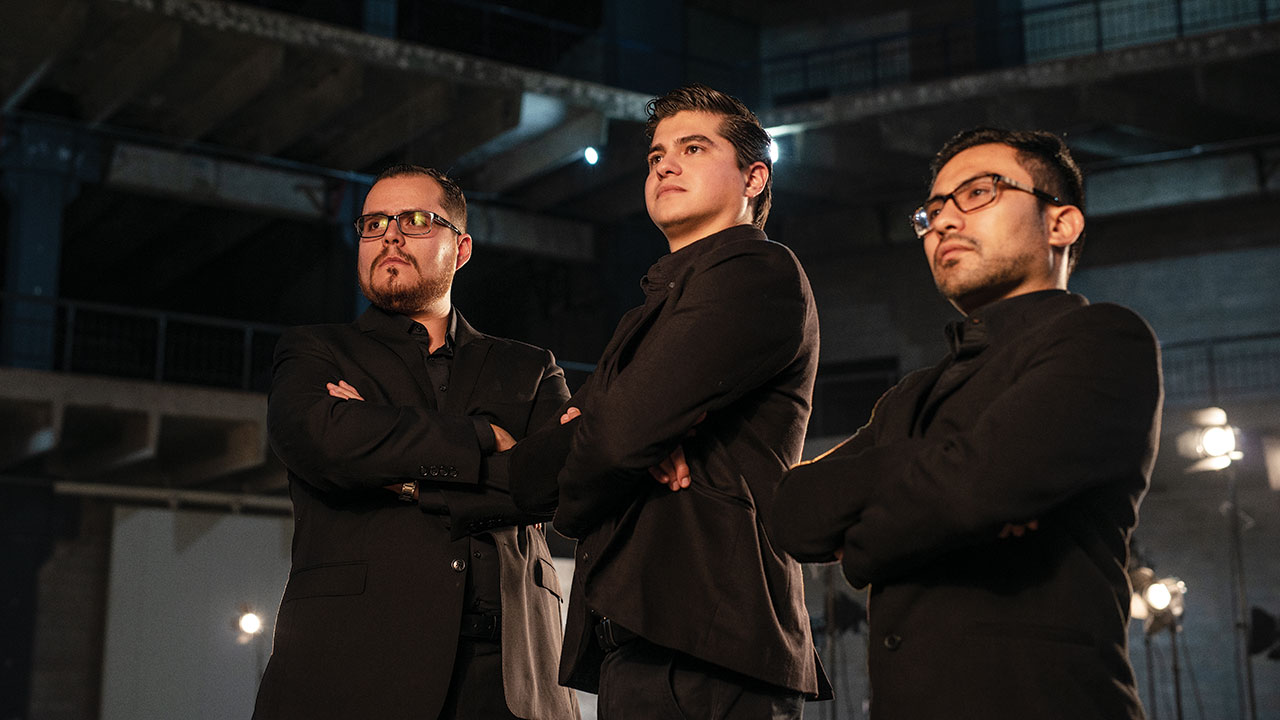
By 2017, the company had focused tightly on soil health. Forbes México profiled Solena two years later, when Rivera was 26, describing a three-stage method: measure beneficial organisms and pathogens, determine which matter in a particular soil, then work toward a better biological balance. At the time, Solena had 24 employees, reported 12 million Mexican pesos in 2018 revenue and named produce growers, a vineyard and a food company among its customers.
It is a revealing sentence. Diversity is the nuisance that ruins generic prescriptions, but it is also the reason a specialized measurement company can exist. A field is not a beige spreadsheet. Its biology changes by crop, climate, history and management. Rivera's task has been to preserve enough of that complexity to be honest while reducing enough of it to be useful.
The translation problemFrom sequence to prescription
Metagenomic analysis lets Solena examine genetic material from the organisms present in a soil sample. The sequence data can indicate what is there and what biological functions may be active. Artificial intelligence then helps detect patterns at a scale no agronomist could tally by hand. None of that matters to a grower unless it reaches the final mile: an understandable recommendation tied to a crop and a field.
How an invisible ecosystem becomes a visible choice
This is where Rivera's mixed education makes sense. Research supplies rigor. Sales supplies translation. Finance supplies the discipline of a customer outcome. His public career moved through all three before Stanford Graduate School of Business added a scaling program in 2022. He also served on the Municipality of León's consultative innovation council, a role that placed technology beside public institutions rather than safely inside a startup pitch.
Rivera has said one of his toughest leadership decisions was giving people outside the founding group seats on Solena's board. It is an unglamorous milestone and therefore a useful one. The student team that can start an experiment is not automatically the governance system that can carry it across countries, investors and years. Growing up as a company sometimes means allowing informed strangers into the room.
In 2025, Rivera announced Solena AI after two years of research and development. He described a platform trained on 120 billion DNA sequences drawn from more than 2,000 soils, 59 crop species and six countries. He reported 89 percent predictive accuracy for selected functions such as phosphorus solubilization. These are company-reported figures, and their importance lies less in their bigness than in the learning loop they suggest. Every difficult sample can make the map more detailed.
Beyond the testA wider map of farm risk
Solena's direction has expanded beyond a laboratory report. Rivera has written about recommendations for precision-agriculture tools, connections to financing partners and support from before the season through after harvest. That is a substantial change in the job description. A soil test answers a question. A decision platform tries to remain present while the question changes.
The logic comes from risk. A grower may understand the value of better data and still be unable to adopt a new practice if the season's economics leave no room for error. Rivera has argued that lowering farmer risk matters to the whole agricultural value chain. Linking biological insight to tools and finance makes Solena's product more complicated, but it also acknowledges the farm as a business rather than a laboratory with tractors.
The measurement is not the finished product. Value appears when a customer can use the evidence to choose, finance and verify a better course of action.
Rivera's public posts show that principle moving crop by crop. In sugarcane, Solena has examined the relationship between soil biology, Fusarium and regenerative practices. Its broader soil-regeneration work has touched potatoes, palm, berries and avocado. Each crop presents a new dialect of the same language, and each field challenges the temptation to make a universal claim.
That crop-by-crop discipline matters because a recommendation has consequences beyond a screen. An unnecessary input costs money. A missed pathogen costs time that a season will not return. A change in practice can alter yield, labor and the conditions a farmer carries into next year. Rivera's preference for biological evidence is therefore not a decorative layer of sustainability language. It is an attempt to narrow uncertainty before the grower commits scarce resources.
The company's early history also offers a warning against polishing away the first version. Fermented agricultural waste, laboratory services and customized advice do not resemble the clean outline of an AI platform. Yet those activities put the founders close to samples, customers and recurring problems. The unscalable work created the vocabulary for the scalable ambition. Before Solena could train software on soil, its team had to learn why growers would care about the answer.
Recognition arrived along the way. Forbes México included Solena in its 30 Promesas of 2019. MIT Technology Review named Rivera an Innovator Under 35 LATAM in the Inventors category in 2020. Those badges tell a neat story of momentum. The work itself remains gloriously untidy: soil in bags, sequences on servers, agronomic context, uncertain weather, input budgets and growers whose livelihoods do not grade on a curve.
What stays constantThe useful patience of a stubborn question
The interesting through-line is not AI. It is Rivera's older question about applied science. Can biotechnology leave the academic poster and improve a decision in a field? The tools have become more computational, the company more international and the dataset considerably larger. The standard of usefulness has stayed close to the ground.
That gives Rivera's story an appealing restraint. He is not asking farmers to replace experience with an algorithm. The farmer already knows that one field behaves differently from another. Solena attempts to give that intuition a biological instrument panel, a way to inspect the living machinery that chemistry alone does not fully describe.
The distinction is especially important in a trade filled with inherited knowledge. Growers notice texture, drainage, vigor and the peculiar corner of a field that never behaves. Genomic analysis adds a new sense rather than erasing the old ones. Used well, it can turn a suspicion into a testable explanation. Used poorly, it would become one more confident report competing with the weather. Rivera's challenge is to keep the technology on the useful side of that line.
There is a quiet business model inside that idea. Agriculture repeats. Seasons return, interventions accumulate and soil changes slowly enough to reward measurement over time. A company that can document those changes may help growers decide what to reduce, what to add and which regenerative claims can survive comparison with the next sample. Carbon and sustainability programs make verification valuable, but the first audience remains the person deciding what happens on the land.
Rivera's aspiration is therefore both technical and almost old-fashioned: understand the ground before asking more of it. The modern stack includes sequencing, machine learning and software. The underlying courtesy is ancient. Pay attention to the soil. It has been keeping the minutes.