The office was a field. The filing cabinet was sometimes a plastic crate in the back of a pickup. The staff directory contained people who moved with the harvest, spoke more than one language and did not have corporate email. For Hannah Freeman, this was not an exotic edge case. It was the daily operating system of American agriculture - and it was asking to be rebuilt.
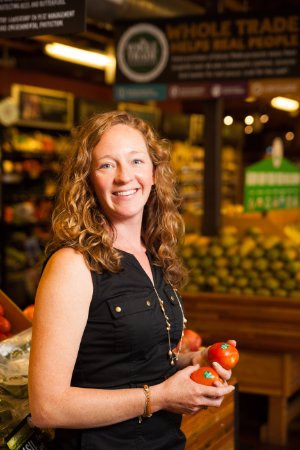
Freeman had earned the right to notice. Before she became a software founder, she spent roughly 14 years at Fair Trade USA, moving through the fresh-produce supply chain from the first Fair Trade banana to partnerships involving growers, workers, retailers and brands. Her work connected farm communities with companies such as Costco, Whole Foods Market, Driscoll's and Dole. It also supplied an education no accelerator can compress into twelve weeks: how a decision made at one end of a food system arrives, altered and amplified, at the other.
In college, Freeman studied in Latin America for a year. She later recalled seeing how the structure of a food supply chain could create prosperity for some people and trap others in poverty. Fair Trade appealed to her as a practical bargain. Better business and better treatment of workers could reinforce each other. The interesting word was not charity. It was system.
A market, spotted from both sides
Over time, Freeman kept hearing two versions of the same complaint. Growers could not reliably find and retain enough people for seasonal work. Farmworkers, especially migrant workers, could not reliably see which jobs were available, what they paid, whether housing was included or how they would be treated. The information was bad in both directions, and bad information has a habit of charging rent.
One encounter stayed with her. In southern Baja California, a young couple named Ana and Eduardo had spent their remaining money traveling to a chili-pepper job. A recruiter had described good pay and housing. When they arrived, the pay was one third of the promise and housing was absent. They slept outside while searching for something else. Nearby, a berry farm offered better pay, decent housing and desperately needed workers. The couple had a smartphone and a tablet. What they lacked was trusted information.
Two willing workers. One nearby employer. Phones in hand. The missing piece was a dependable way for them to find each other.
Freeman and her Fair Trade colleague Sri Artham left their jobs in April 2017 and launched Ganaz's first app in May. The early shorthand was a labor marketplace for agriculture. Growers could reach crews before a harvest; workers could see opportunities with less reliance on the recruiter grapevine. It was a clean idea entering a magnificently untidy world.
Even the name required field research. Freeman has joked that the company's first choice sounded uncomfortably close to an inappropriate expression in Mexican Spanish. Ganaz, the replacement, evokes putting heart and effort into the work. It was a small, useful humiliation: context is not a decorative layer added after a launch. Context decides whether the thing can be trusted.
Designing for Tuesday
Most business software begins with a polite fiction: every worker has a stable identity, a reliable connection and an inbox they check. Agriculture is less obliging. Crews are seasonal and mobile. Connectivity can disappear. Literacy varies. A manager may need to tell a thousand people that rain has canceled work, and the reliable channel is not a calendar invitation. It is a text.
Ganaz followed the behavior already in the field. Its early approach used SMS, Facebook and Messenger. Onboarding and training moved onto tablets that could work offline. Workforce messages could be translated. Sensitive information could shift into a web flow when required. Freeman summarized the design constraint bluntly: the workforce rarely uses email, but it is fluent in WhatsApp and SMS.
That sentence doubles as a product doctrine. Generic HR software treats the field's constraints as exceptions. Ganaz treats them as the specification. A seasonal workforce changes the meaning of retention. Multiple languages change the meaning of a broadcast. Spotty internet changes the meaning of onboarding. No bank account changes the meaning of payday.
The company expanded accordingly. The marketplace grew into a people-management platform with digital onboarding, training, workforce communication and analytics. Ganaz added a Mastercard payroll card aimed in part at workers without conventional bank accounts. Later, it built software and services around H-2A, the federal guest-worker program whose recruitment, travel, housing, paperwork and compliance demands create a small maze for employers and workers alike.
The payday test
Payroll exposed the moral arithmetic inside the business. Paper checks make work for employers and can make payday expensive for workers. Check-cashing, ATM and remittance fees take bites from wages before those wages reach a family. A software company could earn more by increasing some of those fees. It could also make money through ordinary card transaction economics while lowering the burden on the worker.
Freeman has said that tension keeps her up at night. Ganaz incorporated as a public benefit corporation, putting a social purpose beside shareholder value. Governance language cannot settle every product decision, but it gives those decisions a test: does a new revenue line improve the system for employers by quietly making it worse for employees?
The phrase is characteristically practical. Freeman does not present worker welfare as an ornamental promise hovering above the business model. She presents alignment as the model. Employers save time and improve retention. Workers get clearer communication, cleaner records and less costly access to pay. If the loop works, the business grows because the relationship works.
In 2021, Ganaz raised a $7 million Series A led by Trilogy Equity Partners, with Bessemer Venture Partners, Founders' Co-op, Taylor Ventures, AgFunder and Techstars participating. At the time, the company reported 75 employers and roughly 175,000 workers on the platform. Annual recurring revenue and user count had each nearly tripled year over year. By 2023, Ganaz reported more than 250,000 workers and 100 employers, and became one of GeekWire's Geeks Give Back honorees.
Builds the Fair Trade produce and floral market across farms, brands and retailers.
Leaves Fair Trade USA, co-founds Ganaz and launches an initial labor-matching app.
Ganaz joins Techstars Seattle and keeps iterating from weekly field visits.
Raises a $7 million Series A and expands workforce and financial tools.
Brings Ganaz's H-2A experience to a national agricultural-employer forum.
A founder with rain on her commute
Freeman's public answers have an appealing shortage of founder theater. Her favorite life hack is biking to work, even in Seattle rain. Her work hack is Trello. Ganaz's favorite team-building activity is visiting farms because collective inspiration is powerful. When asked what she seeks in hires, she chose intelligent curiosity and passion for the mission. When asked whom she wanted in her corner - Bill Gates, Mark Zuckerberg or Jeff Bezos - she chose Gates for the foundation's work using technology to improve life for vulnerable populations.
Her advice to entrepreneurs is consistent with the company's history: launch before you feel ready, then iterate quickly from the market. This can sound like the standard anthem of software until she adds the boots. Speed without proximity produces very efficient mistakes. The field provides correction.
Freeman also offers a useful picture of what domain expertise is for. She did not spend 14 years around produce so she could recite industry facts at dinner. She learned where trust breaks, which party pays for friction, which tool survives a muddy hand and why a good employer can still lose a crew. Experience became interface.
That conversion continues in Ganaz's H-2A work. The company now combines program visibility with worker recruitment, pre-arrival preparation, onboarding and payroll tools. In late 2025, Freeman appeared on the National Council of Agricultural Employers' labor-forum agenda for a session on reducing the risk of worker recruitment fees. It is the original Ganaz problem in a more mature form: help an employer fill a real need without letting opacity punish the worker.
The alignment business
Years before Ganaz, Freeman said the food system should engage farmworkers as partners, invest in their leadership and create workplaces people want to return to. She told the story of a Mexican farmworker who had once hoped to become an agronomist but left school to support her family. Election to a Fair Trade committee gave the woman a place for her ability and ambition to become visible.
“There is so much latent talent in the fields harvesting our food,” Freeman said. The line explains more of Ganaz than a feature list can. Onboarding, messages and payroll are mundane technologies. Their significance is that they determine whether a person can enter a workplace with clear information, be heard inside it and leave payday with more of what she earned.
Freeman has said she wants vulnerable workers to breathe a little easier, work safely and care for their families. In the same breath, she wants their employers to be stronger and more profitable. The ambition is to align interests that are often treated as enemies.
There is no software switch for justice, and no payroll card can make a complicated labor system simple. Freeman's wager is more grounded: remove the preventable friction, make information travel, give employers better tools and design the economics so dignity is not the fee somebody forgot to disclose. It is a serious project with a wonderfully unglamorous starting point. Find the paper. Find the text thread. Find the person waiting for an answer. Then get some dirt on your boots.