The problem, at h&k, was the sort that rarely gets a conference keynote. Absences, documents, vacation approvals: ordinary requests, handled manually, accumulating in an HR team’s working week. Carlos Cuadrado Barril, the company’s managing director, described an operation overwhelmed by these tasks. In a Microsoft customer story, he reported that using Factorial One cut weekly administrative time by 65%. The interesting word is “weekly.” Paperwork comes back.
- Factorial sells connected software for HR, finance, and IT, chiefly to smaller and mid-sized businesses.
- Charging for the software turned an audience into a business; it reported $100 million ARR in 2025.
- Its next bet is two AI agents working from the same company context.
Factorial has built its business around that recurrence. A holiday request finishes; another arrives. An employee joins; another leaves. The opportunity is to make each event less expensive to handle, then connect the events. A contract, a payslip, an expense claim, and a laptop assignment all concern the same person. Yet companies often treat them as four separate administrative lives.
01 / First came the users. Then came the business.
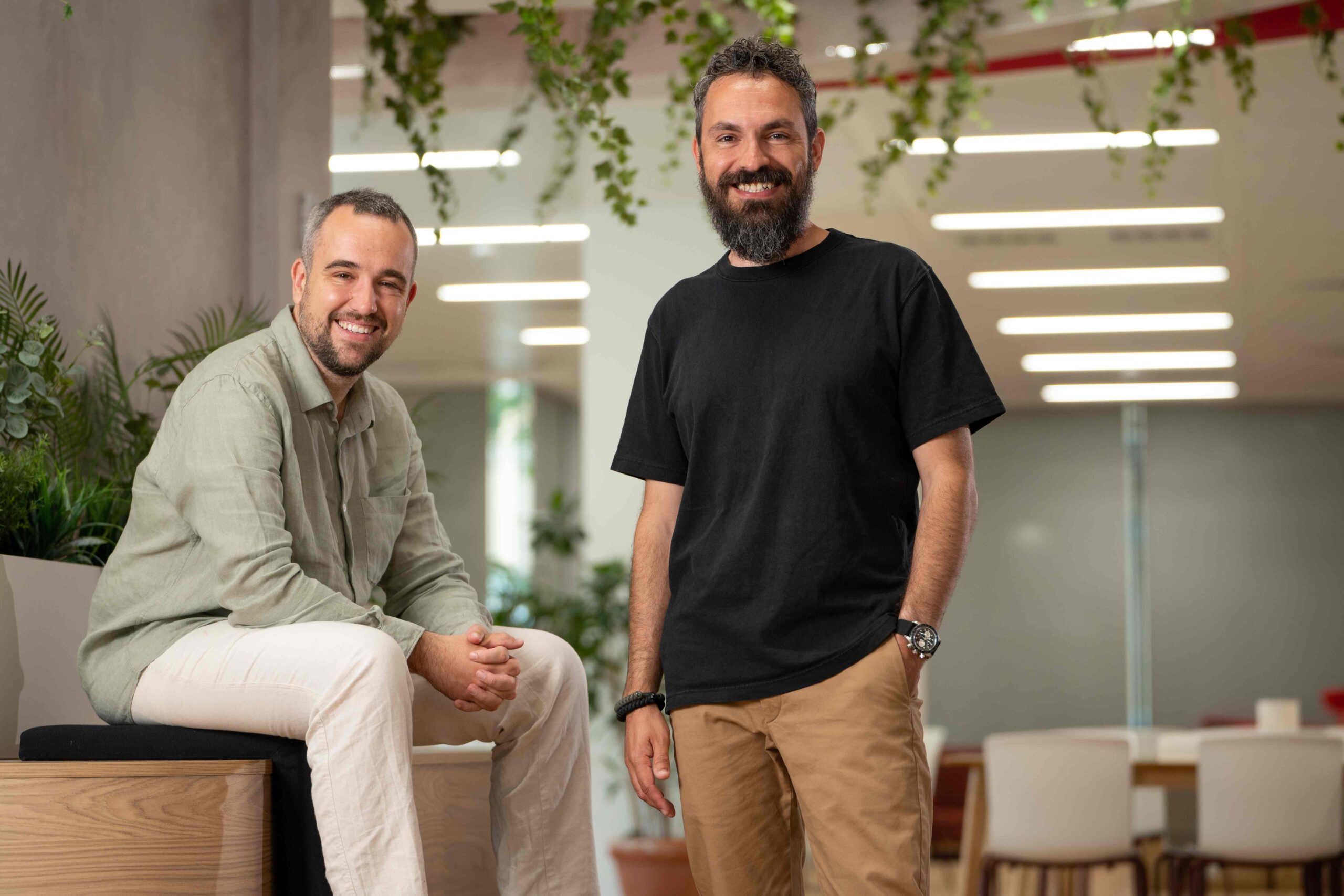
Jordi Romero, Bernat Farrero, and Pau Ramon founded Factorial in Barcelona in 2016. They were engineers who had managed technology companies and encountered the chores themselves. The initial appeal was straightforward: give businesses a cloud tool for employee administration. By October 2018, Itnig reported more than 10,000 customers using its free services, alongside a €2.8 million financing round.
That was an audience. A durable business took longer. Looking back at South Summit in 2023, Romero described the first three years as a struggle to survive without a business. He identified 2019 as the moment demand changed the job from finding customers to serving them. In a later interview, he said that was also when Factorial began charging for software.
The distinction matters. Free tools can demonstrate that a problem exists without demonstrating that solving it pays. Factorial’s turning point was putting a price on the administrative work it removed. The useful lesson is wonderfully unglamorous: people using your product and people buying your product answer different questions. A founder needs both answers.
02 / Follow the employee
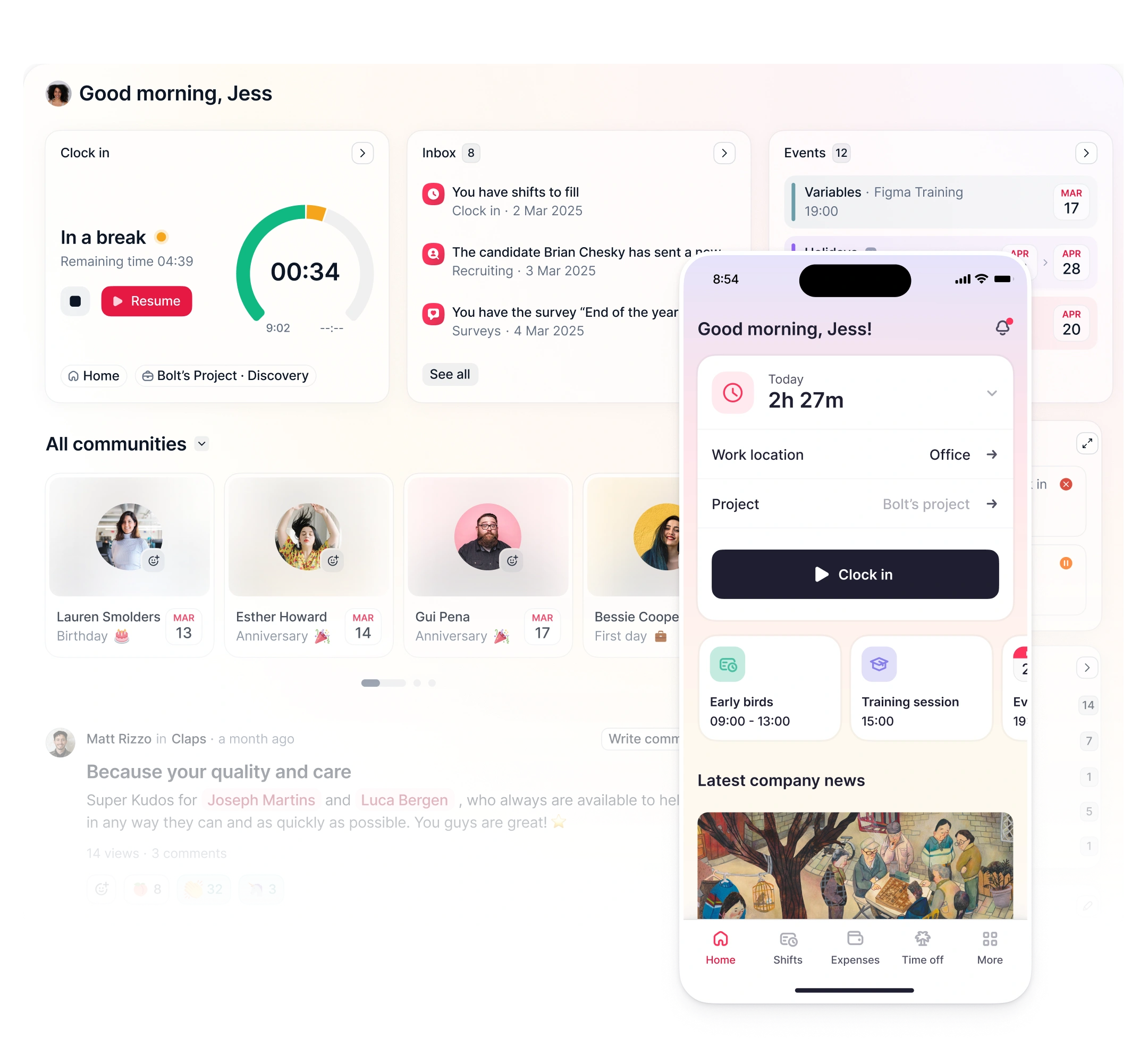
Today, Factorial’s Core package includes an employee directory, onboarding and offboarding, document distribution, and electronic signatures. Businesses add tools for time tracking, leave, shifts, recruitment, reviews, training, expenses, and IT. An employee can request time off; a manager can approve it; the team can keep the decision with the employee’s record. Less searching, fewer messages asking who said yes.
The expansion follows a sensible trail. HR knows when someone joins. IT needs to assign equipment and access. Finance needs to approve spending. Factorial’s expertise lies in putting those transitions into software that managers and employees can use, with payroll connections and integrations where specialist systems remain. Its marketplace lists DATEV LODAS, Silae, Slack, and Microsoft Business Central, among others.
Buying expertise helped widen that scope. Factorial acquired Fuell, the Madrid expense-management business, in 2023, bringing its technology, customers, and team into the company. In May 2026 it announced the acquisition of YepCode, which builds infrastructure for integrations and automation. One deal brought receipts into the picture. The other addressed the difficulty of making different software systems cooperate.
The customers are varied: Factorial publishes stories about hospitality operator Therme Erding, agricultural cooperative FRS Co-op, and technology company Enginy AI. Its current website reports more than 17,000 companies. This breadth makes the market position clearer. Factorial is selling business administration to organizations whose work has outgrown scattered records, including companies much larger than a handful of founders.
Inside the company, Factorial publishes four principles: ownership, partnership, learning and teaching, and fast growth. These are its stated values. A beach photograph makes them look convivial; the work of keeping a growing international team aligned is less photogenic.

03 / Put the money in two columns
Customers buy subscriptions. The US pricing page advertises a starting price of $8 per user per month, with a tailored quote for the chosen tools. At that advertised floor, 50 users means $400 monthly. That arithmetic is an illustration, not a deployment quote: additional modules and local requirements determine the actual bill. Buying a long feature list only makes sense if people use it.
Factorial reported $100 million in annual recurring revenue in September 2025. ARR measures the recurring revenue base; it does not establish annual accounting revenue or profitability. The June 2026 Series D added $150 million in equity at a $2.5 billion valuation, led by General Catalyst with Atomico and Four Rivers participating. Those are separate measures of the business.
Ownership investment
Sales and marketing financing
Commitments are not the same as cash drawn. Keep the columns separate.
General Catalyst also committed up to $540 million in additional Customer Value financing. Factorial’s announcement says this prefinances sales and marketing, with the investor’s returns tied to the customer value that spending generates and capped at a fixed amount. It lets Factorial finance acquisition without another equity sale for that portion. The logic depends on acquisition spending producing valuable customer relationships.
04 / Two agents. A lot to get right.
Factorial’s 2026 proposal for One gives one AI agent the organization’s policies and another the individual employee’s tasks. Its argument is that companies want fewer agents, clearer responsibility, and shared business context. Microsoft describes the underlying use of Azure and Azure OpenAI, plus connections to Teams and Outlook. The company is trying to make the employee record useful as a place to act.
“We’ve reduced our weekly administrative time by 65%”Carlos Cuadrado Barril, managing director, h&k
Customer-reported result in Microsoft’s case study
There is competition. Personio also targets European SMEs moving beyond spreadsheets. Rippling offers another broad operations alternative. Factorial’s distinction is its particular combination of HR, finance, IT, and its two-agent direction; buyers still need to compare local payroll support, permissions, and workflows. A chatbot cannot repair a wrong employee record. A connected suite cannot approve a receipt under a policy nobody has defined.
The practical move is to follow one request through your company before buying anything. Count the handoffs. Identify who owns the data. Test the relevant connector, and measure the time before and after. The h&k result is one customer’s experience, not a universal forecast. Factorial’s story earns attention because it starts with something repeatable: a small task, arriving again tomorrow, waiting for somebody to deal with it.