time-tracking
(25)
Fingercheck Wants to Turn Every Clock-In Into a Paycheck - Without the Payroll Spreadsheets
Fingercheck started with a digital time clock. Now it is chasing a larger prize: making the messy handoff from shift to paycheck disappear for the small businesses legacy payroll software tends to overlook.
Connecteam Found Its $800 Million Idea in Four Words: ‘What Promotion?’
A waiter missed one message from headquarters. Connecteam’s founders saw an entire workforce missing its operating system - and turned a narrow training tool into a three-hub business used from construction sites to restaurant counters.

How a $21-a-Month PowerPoint Add-In Became Lucen Software's Four-Product Bet
Office Timeline spent 14 years making project managers look better in meetings. Now renamed Lucen, it is betting that the same trick can stretch from PowerPoint timelines to planning, process maps, and the awkward question of where everyone's time went.
BQE Had a Hit Billing App. Then It Bet $25 Million on Architects’ Messy Back Office.
The software company began with a garage-built fix for timecards and invoices. Thirty years later, its sharper idea is that architecture and engineering firms should not need a scavenger hunt to learn whether a project made money.

The Best Free Time Tracker Depends on Your Team’s Shape
Toggl Track gives a small team more room before the paywall, while Harvest favors the solo operator and Float starts with planning. The right choice depends less on feature checklists than on who needs to log time together.

Payworks Bet That Payroll Needed a Human Voice - 50,000 Canadian Businesses Picked Up
Barb Gamey carried a desktop computer into sales meetings and pitched a radical idea for payroll: modern Canadian software, backed by a person who knows your name. Twenty-five years later, Payworks is testing how far that service-first playbook can scale.
Agendrix Took 30 Months to Reach $10K MRR - Then a Cabin-Built Time Clock Put 235,000 Workers on Its Schedule
The Quebec SaaS company survived ignored pitches and two years of tiny salaries by solving one dull, expensive problem at a time. Its playbook is useful precisely because it begins with a spreadsheet, not a moonshot.

Your Time Tracker Is Quietly Choosing Your Business Model
Harvest, Toggl Track and Teamwork all turn hours into billable work, but each leaves a different amount of business between the timer and the bank account.
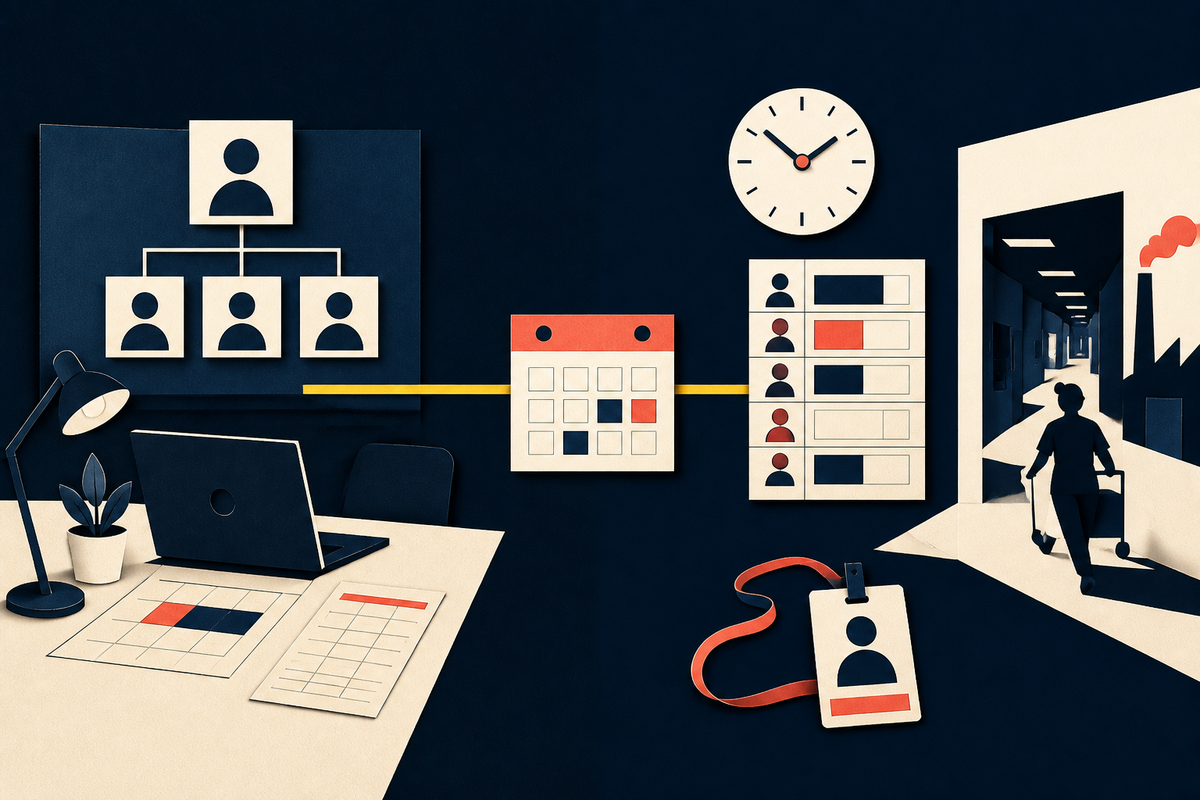
Workday or UKG Depends on How Your People Work
The real HCM choice is not a feature-counting contest. It is a decision about whether your hardest problem lives in the enterprise data model or on the next shift.

Toggl Tracks the Hours. Harvest Gets You Paid
The two time-tracking veterans look similar until the timer stops. Choose Toggl Track for cleaner capture and deeper analysis; choose Harvest when every approved hour needs a short path to an invoice.
Who Is The Report Really For, You Or Your Client
Teamwork.com and Zoho Projects both track tasks and log hours, but they are built for opposite readers. One writes the story for the agency and the client paying the invoice; the other writes it for the team down the hall.

Teamwork Wins Where Project Management Meets the Invoice
For client-service teams, finishing the work is only half the job. Teamwork.com connects tasks, time, rates, expenses and invoices in one workflow, while rivals still ask users to stitch parts of the money trail together.
Trayd
Trayd is a New York-based back-office operating system built for specialty trade contractors, unifying payroll, HR, compliance, scheduling and real-time labor tracking in one platform. It automates the hardest parts of construction pay - union rules, Davis-Bacon prevailing wages, multi-state taxes and certified payroll - cutting weekly processing from 14 hours to 27 minutes while giving workers earned wages days sooner. Founded in 2021 by Anna Berger and Cara Kessler and backed by Y Combinator, Suffolk Technologies and White Star Capital, Trayd has grown revenue 600% year over year.

AlignOps
AlignOps is a Colorado-based construction operations software company that unifies tool and asset tracking, workforce time tracking, jobsite safety and compliance, and fleet/materials management into a single platform. Formed in 2024 by consolidating four established construction-tech brands - ToolWatch, busybusy, Safety Reports, and FleetWatcher - AlignOps helps thousands of contractors gain real-time visibility into where their tools, crews, equipment, and money are going across warehouses and jobsites.

Time Doctor
Time Doctor is a bootstrapped workforce-analytics and time-tracking platform built for remote, hybrid, and distributed teams. Launched in 2012 by Rob Rawson and Liam Martin, it gives managers real-time visibility into how work happens - tracking time, app and website usage, productivity trends, and workload balance - while pairing the data with AI-supported insights. Used by 280,000+ people across 30+ countries and integrating with 60+ tools, Time Doctor turns activity data into fairer policies, better workload decisions, and burnout prevention.
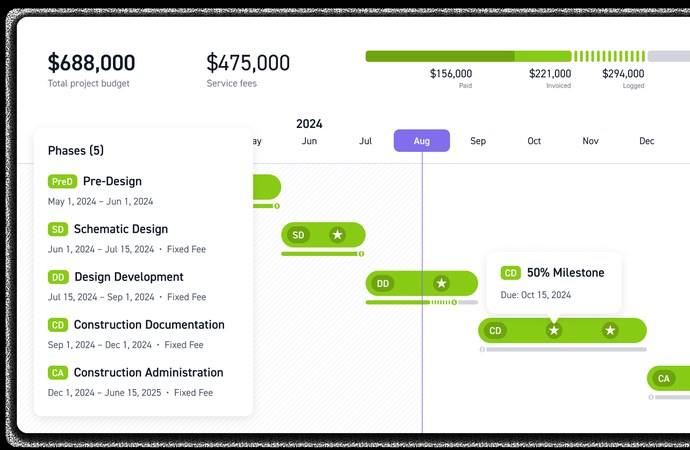
Monograph
Monograph is a San Francisco-based software company that builds cloud practice-operations software for architecture and engineering firms. Its platform replaces spreadsheets with real-time tools for project budgets, staffing, time tracking, invoicing and profitability forecasting, giving design professionals live financial visibility into their work. Founded in 2019 by three architectural designers, Monograph serves thousands of A/E firms and has helped manage hundreds of millions of dollars in projects.

John Waldmann
John Waldmann is the founder and CEO of Homebase, the team-management app built for the people who run local businesses - restaurants, salons, retail shops and the hourly teams behind them. Started in 2014 after watching a childhood friend drown in paper schedules and his sister juggle unpredictable bartending shifts, Homebase now serves more than 150,000 businesses and 3.8 million workers, processing hundreds of millions of shifts a year with scheduling, time clocks, payroll, messaging and earned-wage access. A Stanford GSB grad who once sold tuxedos and started his first online business at 13, Waldmann is an unapologetic believer in accountability over consensus, 'operating velocity,' and the idea that AI will create more small business owners, not fewer.

Homebase
Homebase is a San Francisco-based workforce management platform built for small businesses running hourly teams. Founded in 2014, it combines employee scheduling, time tracking, payroll, HR compliance, and team communication in one mobile-first app. As of 2024, the platform serves over 150,000 businesses and 3.8 million hourly workers, having logged 8 billion hours and processed $3 billion in gross payroll. Backed by $198 million in total funding, Homebase competes by bundling tools that small business owners previously paid for separately - and more recently by embedding AI assistants across hiring, scheduling, and payroll.
Hourly
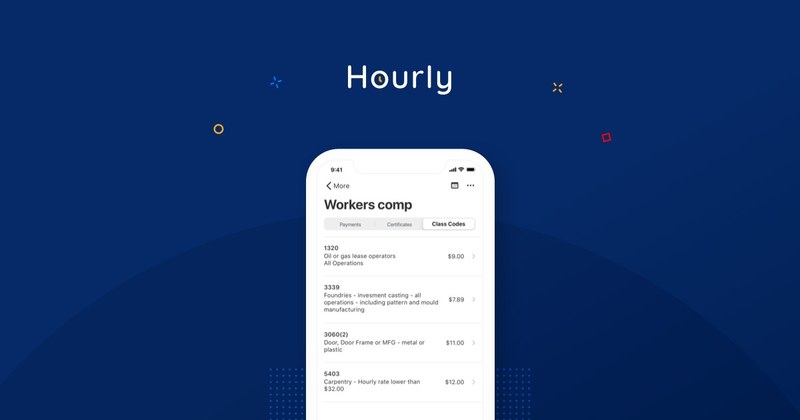
Hourly is a Palo Alto-based fintech platform that combines payroll, workers' compensation insurance, and time tracking into a single mobile-first system built for small businesses with hourly workers. Its pay-as-you-go workers' comp model calculates premiums against actual wages in real time, eliminating year-end audits and helping employers avoid overpaying. Founded in 2018 by Tom Sagi, Shay Litvak, and Amir Faintuch, the company raised $39M+ and serves 500+ businesses across construction, manufacturing, transportation, and similar industries. In July 2025, Hourly was acquired by Israeli insurtech WeSure in a deal valued at approximately $168M.

Lumber
Lumber is an AI-powered construction workforce management platform that unifies payroll, time tracking, HR, safety, compliance, and field productivity for contractors. Founded in 2023 by Shreesha Ramdas and Manish Kumar, the company is building autonomous AI agents for an industry where 41% of the workforce is set to retire in seven years.

Kourosh Zamani
Kourosh Zamani is the Co-Founder of Laurel, the AI-native time platform automating timesheet creation for professional services firms. Starting as Ping Inc. in 2016 alongside co-founder Ryan Alshak - a fraternity brother from UC Berkeley - Kourosh shepherded the company from bootstrapped startup through five funding rounds to a $100M Series C in June 2025, with investors including IVP, Google Ventures, Alexis Ohanian, and Kevin Weil (CPO at OpenAI). Before building Laurel, he ran VP of Business Development at Bailard Inc. and founded the Young Professionals of San Francisco, a non-profit that grew to 8,000+ members. His career arc from investment management to COO to Head of Sales to Strategic Partnerships lead mirrors the evolution of Laurel itself: from scrappy time-tracking app to a platform processing over $5B in gross market value for 100+ enterprise clients.
Rushi Patel
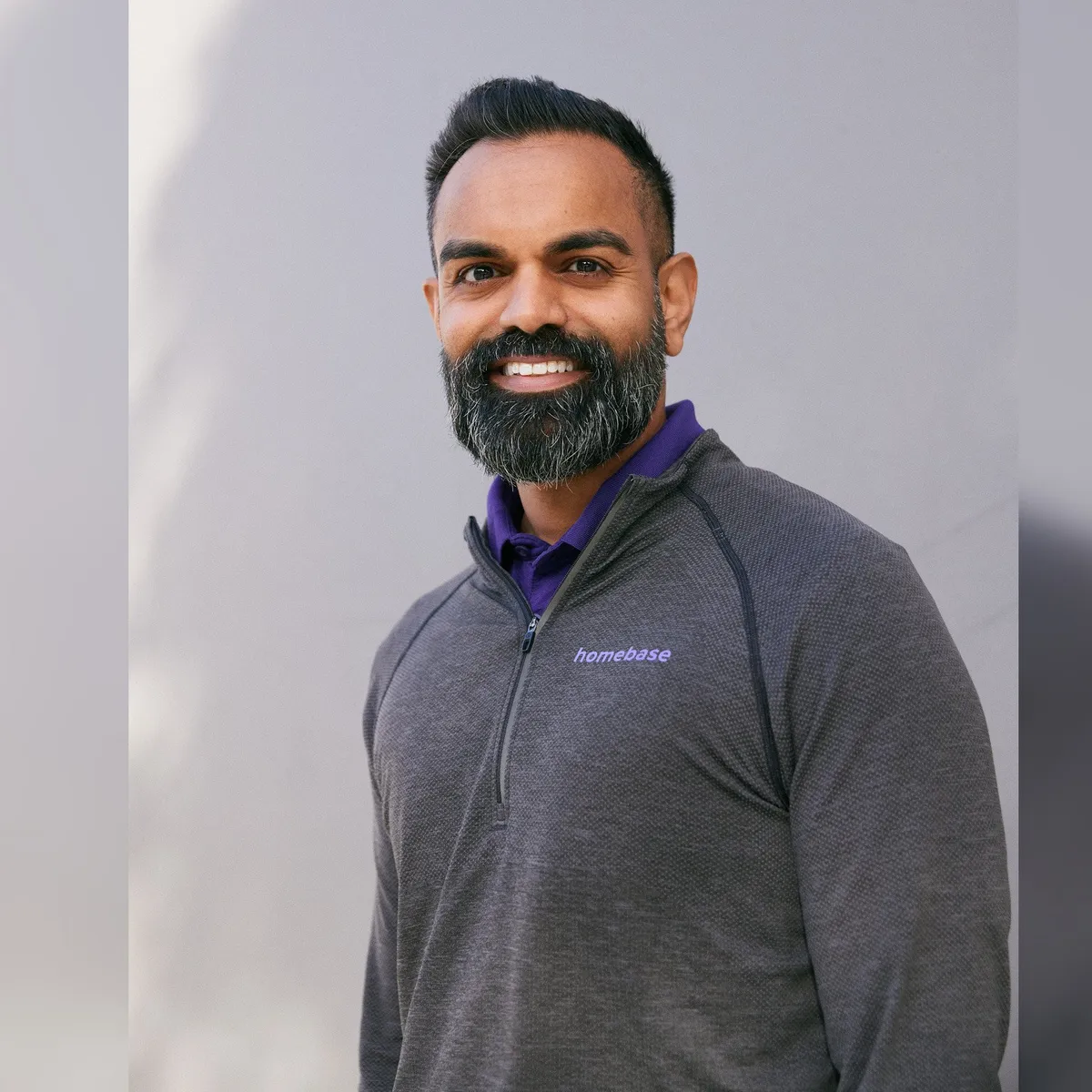
Rushi Patel is the Co-Founder and COO/CRO of Homebase, the all-in-one workforce management platform serving 100,000+ small businesses and 2+ million hourly workers. With a background spanning McKinsey, KKR, and Microsoft, Patel co-founded Homebase in 2014 alongside John Waldmann to give local business owners - restaurants, retailers, and service businesses - the same quality workforce tools that enterprise companies take for granted. Under his leadership, Homebase has raised $198M in funding including a $60M Series D in April 2024, and grown to 1,900 employees while generating approximately $180M in annual revenue.

COR
COR is an AI-powered management platform built for creative and professional services firms — advertising agencies, consulting companies, law firms, and IT shops — that need to understand where their time actually goes and whether their projects are making money. By automating time tracking and layering on predictive analytics, COR gives agency leaders real-time visibility into project profitability, team capacity, and billing gaps before they become losses. Founded in 2017 in Silicon Valley by former agency operator Santi Bibiloni and co-founders Jose Gettas and Gabriel Marin, COR serves clients including Havas, Publicis, Ogilvy, Dentsu, and DDB across 35+ countries, with a reported $6.6M ARR and backing from investors including the founders of DoubleClick, Anaplan, MercadoLibre, and Krux.

Ryan Alshak
Ryan Alshak is the CEO and co-founder of Laurel, an AI-powered time platform that automates timekeeping for lawyers, accountants, and consultants. A former corporate litigator who billed $650 an hour while manually recording every six minutes of his day, Alshak founded the company in 2018 under the name 'Time by Ping' after experiencing firsthand the absurdity of high-value professionals tracking their own time by hand. Laurel raised a $100M Series C in June 2025 at a $510M valuation, backed by IVP, GV, DST Global, Alexis Ohanian, and Kevin Weil, bringing total funding to over $149M.

Santi Bibiloni
Santi Bibiloni is the Co-Founder and CEO of COR, an AI-powered project profitability platform built for creative agencies, consulting firms, and professional services. Born in Buenos Aires and now based in San Francisco, he bootstrapped his first agency Balloon Group to 400 clients across 12 countries before pivoting to solve the profitability problem he lived firsthand. COR has raised ~$7.9M, grown 9% month-over-month, and counts Ogilvy, BBDO, and McCann among clients in 38 countries — backed by unicorn founders and the board member who built DoubleClick.