The truck drivers had done their work. The difficulty was persuading the payroll system to understand it. In one of ProLiant’s published customer cases, a provider could not handle the driver files as required. Someone had to manipulate the data outside the system, then turn it into an import file. The software had acquired an unpaid assistant: the person with the spreadsheet.
ProLiant’s fix was specific. Drivers could enter units and loads on their time cards; real-time calculations used shift premiums. Work that previously needed a detour could be handled inside the time-and-pay workflow. It is a modest story, without a glamorous invention. It is also a useful place to begin. Payroll becomes interesting precisely where the tidy demonstration ends.
- The job: connect recruiting, onboarding, hours, benefits and payroll in a cloud HCM suite.
- The proposition: software backed by a dedicated account manager and US-based support.
- The revealing detail: unusual pay rules can matter more than the appearance of a dashboard.
- The move to copy: bring your most troublesome pay scenario to the vendor demo.
01 / THE WORK BENEATH THE WAGESA paycheck begins long before payday
ProLiant is a payroll and human capital management business with accounting roots. Founded in 1993, it says it began as a CPA firm. Kevin Clayton, its founder, worked as a CPA before launching the company. That background offers a plausible explanation for the emphasis that remains: the arithmetic has to survive contact with an actual business.
Today its products cover applicant tracking, employee onboarding, time and labor management, payroll and tax services, HR and benefits administration, performance management and learning. A manager can approve hours and time-off requests. An employee can retrieve a paystub or update information through self-service. Administrators get reporting tools and configurable approval flows.
The connection between those activities is the point. A new employee arrives with information that payroll needs. Hours become earnings. Benefits elections become deductions. Each handoff is an opportunity for someone to type the same fact again, or type it differently. ProLiant sells tools intended to keep those exchanges inside a connected process.
The trucking example shows why “connected” needs a practical definition. Importing a file is useful. Removing the manual manipulation needed to create that file is more useful. A buyer should ask where the preparation happens, who performs it, and whether the promised automation begins only after somebody has done the difficult part.
02 / THE PERSON BEHIND THE PLATFORMSomeone must answer before the next run
ProLiant’s service model is unusually prominent in its pitch. It describes a dedicated account manager after implementation, a single point of contact, US-based assistance and a backup support line. Training includes group sessions, on-demand videos and individual instruction. The product being sold includes access to people who help a customer use it.
Consider its Container Maintenance case. A vital compliance deduction had been overlooked in calculations, and the client needed the issue resolved before the next payroll run. ProLiant’s account describes less than three days to solve the problem and a response from a dedicated payroll specialist. The useful detail is the deadline. A help request in payroll carries a clock.
Days available to resolve the issue.
ProLiant’s Container Maintenance case describes a deduction problem addressed before the next payroll run.
This is a company-published success story, so it should be read as an example of the service model rather than a measure of every customer’s experience. Still, it identifies the thing a buyer can investigate: who takes responsibility when a calculation needs attention? A feature list tells you what the software is supposed to do. The escalation path tells you what happens next.
“listening more than we talk”
ProLiant’s stated beliefs, About Us
That small phrase from its stated beliefs is a good standard to hold the company to. ProLiant’s careers page likewise emphasizes human conversations, community and learning. These are declarations about culture. Their practical value depends on whether the person handling an account understands the customer’s peculiar payroll, and remains available when that peculiarity becomes urgent.
03 / THE CUSTOMERS WHO RETURNEDThe second sale is more revealing
Two other ProLiant cases begin with customers who had left. In the JKS&K account, a client moved to a competing provider after promises of smoother operations and better benefits administration. The transition brought unforeseen challenges. ProLiant’s return story focuses on financial reporting, payroll processing, onboarding and benefits.
The Peoples Rx case puts the emphasis elsewhere: the sales and implementation teams addressed requirements and concerns, including learning-management integration issues. The account describes timely reports and responsive service after the return. What changed the customer’s mind was presented as a combination of functionality and support.
Neither story establishes that a rival will disappoint everyone. They do suggest a useful purchasing discipline. Compare the work you perform repeatedly: the report due each month, the benefits change that must reach payroll, the training record that needs to connect. A vendor can win the demonstration and lose the ordinary Tuesday.
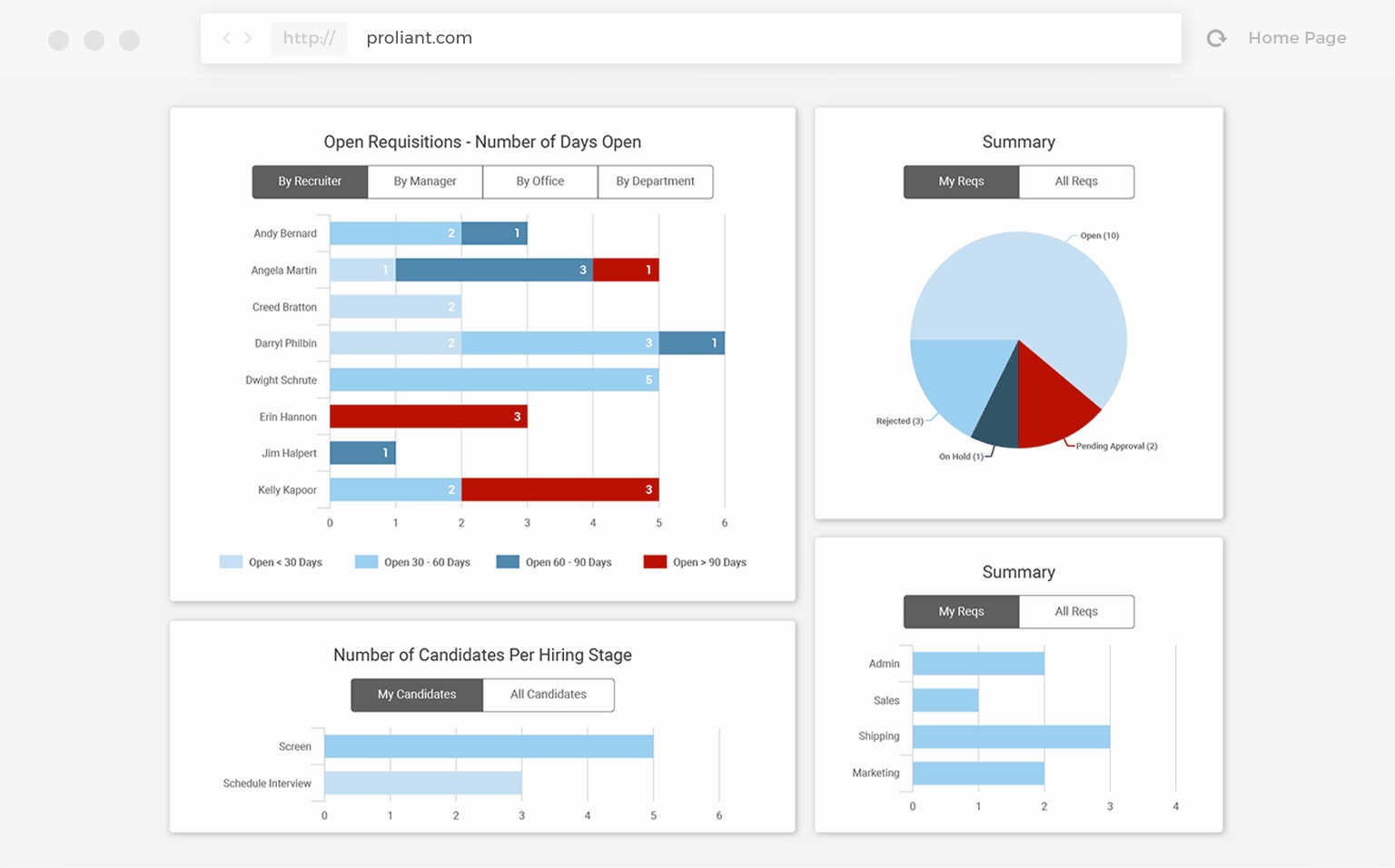
There is a quieter example in restaurant onboarding. ProLiant says Ansara Restaurant Group used its onboarding solution to simplify the process, get employees onboarded faster and eliminate data-entry errors. The promised benefit is familiar to anybody who has copied a new hire’s details between forms: a first day with fewer clerical opportunities for mischief.
04 / THE NETWORK AROUND PAYROLLA platform still has neighbours
ProLiant serves thousands of US employers across all 50 states. Its published examples span restaurants, pharmacy operations and trucking payroll. Its OnShift partnership, announced in November 2022, adds another setting: post-acute care and senior living, where workforce management and payroll need to work together.
Its integration marketplace includes Sage Intacct, Employee Navigator and DailyPay, among other systems. Public API documentation describes company, employee and payroll operations. This matters because employers already have accounting, scheduling and benefits tools. Replacing every system at once can be a much larger project than fixing payroll.
In August 2026, ProLiant announced an expanded Employee Navigator relationship. Employers who do not already receive the benefits platform through a broker can obtain it directly through ProLiant. The arrangement builds on an existing integration with two-way API connectivity and single sign-on. Broker-owned accounts remain broker-led.
The distinction is commercially sensible. A benefits broker has a relationship with the employer; the payroll provider has another. The licensing arrangement gives ProLiant an additional route to provide the software while preserving the broker’s role. For the customer, the practical question is who coordinates support when the benefits and payroll records disagree.
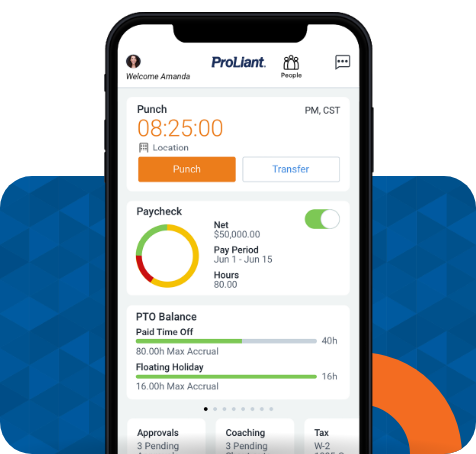
ReadyPay Today tackles a different handoff: the interval between earning wages and receiving them. ProLiant describes early access for hourly and salaried employees, with configurable daily payment thresholds. Employers considering it should establish how access, reconciliation and payment limits fit their payroll process. Faster access changes the timetable; it still requires reliable records underneath.
05 / A BETTER BUYING QUESTIONBring the payroll nobody wants to demonstrate
ProLiant occupies the crowded US payroll and HCM market alongside alternatives such as ADP, Paychex, Paylocity and Paycom. Its positioning combines a broad software suite with personal account support. That proposition makes particular sense for a business whose HR team needs both connected tools and help configuring the exceptions.
The business sells to employers through a sales consultation. Compare the complete quote: the modules, implementation, integrations, training and ongoing service. Then price the internal work the proposed setup still requires. A recurring spreadsheet task consumes time even when it never appears on the vendor’s invoice.
The method to copy is straightforward. Choose an awkward but recurring pay case. Ask the vendor to show the inputs, calculation, approval, payroll result and report. Include the benefits system or timekeeping tool that must exchange data. Ask who owns a failed handoff and how an urgent request reaches that person.
ProLiant’s approach will fit less well when an employer requires a workflow or integration it cannot demonstrate, or when the organisation will not devote time to setup and training. Its published scope centres on US employers; a multinational buyer should assess country requirements separately. Personal service has value when the customer and provider can actually work together.
The truck drivers’ story returns us to a pleasantly unspectacular ambition. Enter the work once. Calculate it correctly. Give the right person a way to fix the exception. Then let payday pass without becoming a meeting.