payroll-software
(26)
Mercans wants payday to be boring. In 160 countries.
A payroll specialist with its own calculation engine, Mercans is selling an escape from the monthly spreadsheet scramble. Its customer stories put a price on the problem.
Frontier Software and the art of getting payday right
For more than four decades, Frontier Software has worked on the unglamorous machinery behind payday. Its story runs from a kitchen-bench design to multinational payroll, with hard lessons about the price of trust.
Cintra wants to give payroll its week back
An 11-day payroll process became two at Ocado, according to Cintra’s customer account. Behind the saving is a Newcastle business pairing its own software with the people who run the numbers.

The 43-Year-Old Staffing Software Firm That Became a Takeover Puzzle
Bond spent four decades turning the messy work of staffing into software. Then a public-market standoff, a £24.1 million sale and two mergers folded its hard-won expertise into Bullhorn.

Christian Kunkel Wants Marketing to Be Useful Before It Is Clever
The Fingercheck CMO began with a prank, once turned location data into a comic book, and now treats customer support calls as required reading. His method is disarmingly plain: make people feel smarter, then get out of their way.

Josh McCullough Learned Marketing from the Revenue Side of the Table
After two decades spanning sales, HR technology, collaboration software, and AI contracts, Greenshades' CMO has a plain conviction: marketing works when it shares a scoreboard with revenue.
Fingercheck Wants to Turn Every Clock-In Into a Paycheck - Without the Payroll Spreadsheets
Fingercheck started with a digital time clock. Now it is chasing a larger prize: making the messy handoff from shift to paycheck disappear for the small businesses legacy payroll software tends to overlook.

The Payroll Company Betting Your Weirdest Pay Run Should Stay In-House
Greenshades spent two decades turning tax software into a control panel for messy American payroll. Its best customers are not looking for fewer knobs - they need the right ones.
Namely Raised $217 Million to Fix HR Software - Then Found Its Second Act Inside a Payroll Empire
Namely set out to make the employee database feel less like a filing cabinet and more like a product people would actually use. A founder crisis, $217 million in funding and a 2022 merger turned that clean software idea into something messier - and potentially more durable.
Asure Sold Half Its Story for $120 Million - Then Built a Payroll Machine for the Businesses Everyone Else Finds Too Small
The Austin software veteran escaped a muddled identity by selling its workspace business and betting on the least forgiving job in a company: paying people correctly. Now it is stitching software, service, tax compliance and AI into one back office for growing businesses.

Asher Adeniyi Turned Payday Into a Product
Before payroll became his product, people were already his business. Asher Adeniyi's path from a shy recruitment founder to Eazipay CEO is a study in second chances, dependable systems and the quiet drama of paying everyone on time.

Paul Kimani Bet the Company on the Boring Part
A profitable consultancy had customers, staff and momentum. Paul Kimani closed it anyway, kept five people, and built Workpay around the overlooked machinery that makes payday feel ordinary across Africa.

Payworks Bet That Payroll Needed a Human Voice - 50,000 Canadian Businesses Picked Up
Barb Gamey carried a desktop computer into sales meetings and pitched a radical idea for payroll: modern Canadian software, backed by a person who knows your name. Twenty-five years later, Payworks is testing how far that service-first playbook can scale.
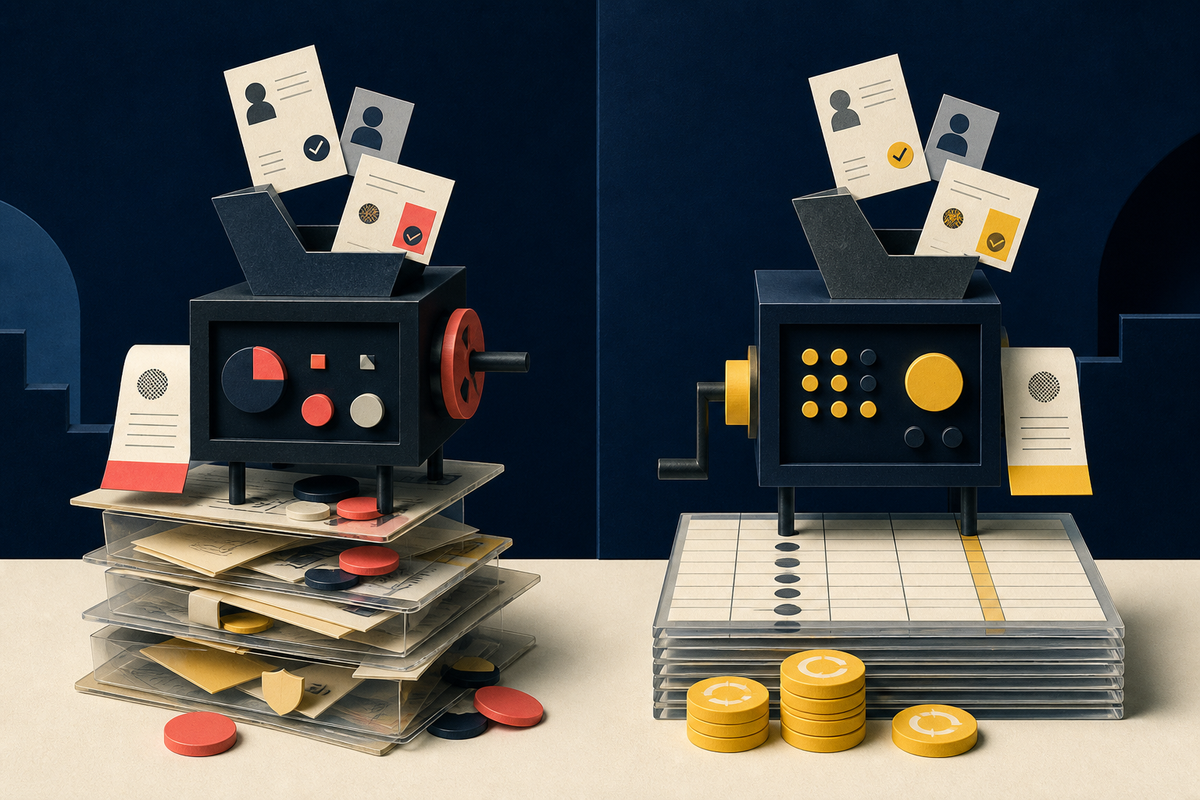
Gusto and Zenefits Made the Same Pitch With Different Math
Both promised to make small-business HR feel simple. Their pricing histories show why the bill you can see is only half the buying decision.
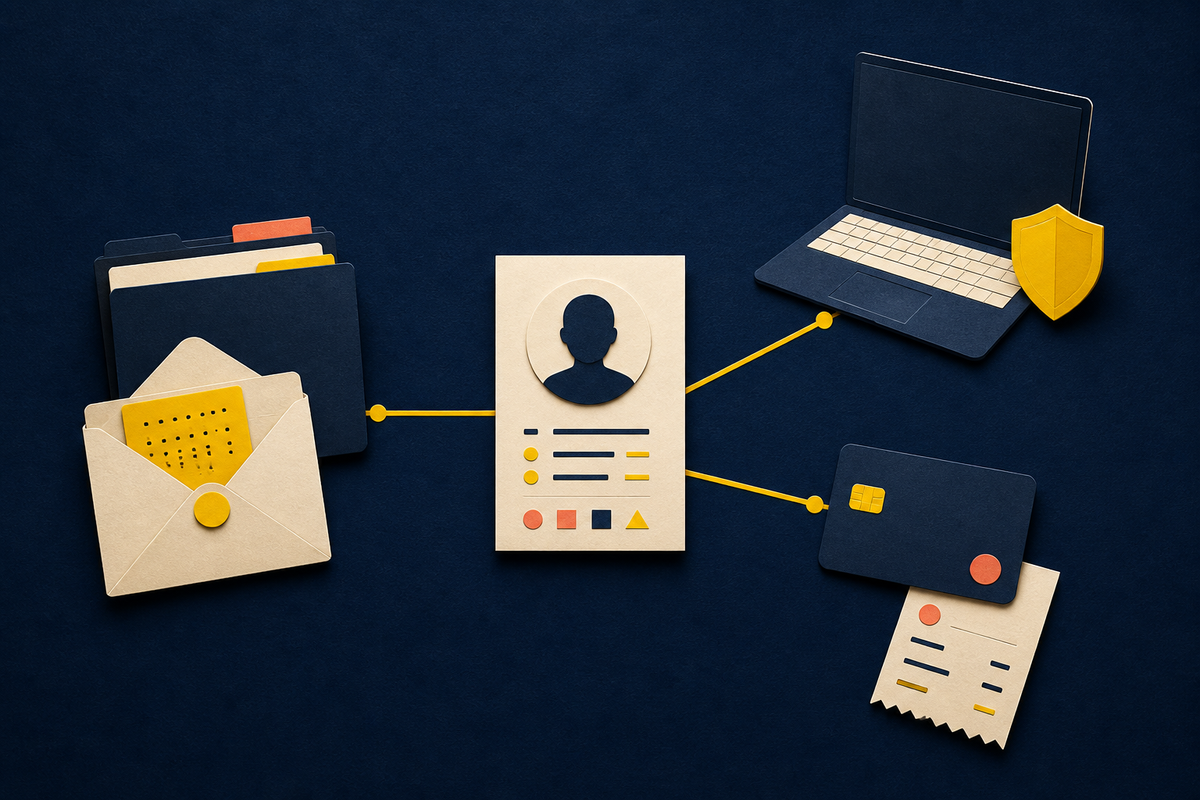
Rippling Wants the Whole Company. Gusto Starts With Payroll
The familiar payroll comparison misses the real choice. Rippling is built to make one employee record run HR, IT, and finance, while Gusto keeps its attention on the small-business people stack.

Gusto and BambooHR Are Racing Toward the Same Desk
One began with the paycheck. The other began with the employee file. Their collision reveals the question every growing company eventually has to answer: which system should run the back office?

The One-Login Bet Behind Southeast Asia's HR Back Office
Payroll rules change at the border. Employee expectations do not. brioHR is building one regional operating layer for both - and betting that service matters as much as software.
The Quiet Company Behind $4 Billion in Healthcare Payments
A.E. Perkins has assembled benefits administration, payroll, direct primary care and payment infrastructure under one long-term owner. Its pitch is less about disruption than about making the machinery of work and healthcare reliably disappear into the background.

Rippling or Justworks Depends on Who Employs Your Team
The dashboards may look similar, but the contract underneath them can move payroll-tax duties, workers' compensation and employer status. Compare the product model before comparing the feature list.

The Payroll Rivals Who Turned Trust Into Evidence
Rippling says Deel bought access to its secrets. Deel confirms a payment but disputes the purpose, leaving a judge, two companies and the payroll industry to untangle what trust costs when every click leaves a record.

BambooHR or Paylocity Depends on Where Your Pain Starts
These HR platforms now overlap, but they still reveal their origins. The better choice depends on whether your hardest problem is organizing people data or running payroll at scale.

The Payroll Choice That Quietly Redesigns Your Company
Gusto makes payroll and core HR easy to price. Rippling asks buyers to assemble a broader operating system - and to get a quote before they know what it will cost.
Sage
Sage grew from a pub-side solution for one printer's paperwork into financial infrastructure for millions of businesses. Its next act is less about replacing the accountant than teaching software to chase invoices, explain anomalies and show its working.

Vijay Yalamanchili
Vijay Yalamanchili is the founder and CEO of Keka HR, a Hyderabad-born HR and payroll software company he built after growing frustrated with the clunky HR tools on the market. An engineer by training with earlier startups behind him, he bootstrapped Keka for roughly six years before raising a $57 million round from WestBridge Capital in 2022, reported at the time as India's largest Series A for a SaaS company. Keka now serves thousands of organizations and processes payroll for millions of employees each month, built around a focus on employee experience and disciplined, profit-led growth.

Keka HR
Keka HR is a cloud-based human resource, payroll and people-operations platform for small and mid-sized businesses. Founded in Hyderabad in 2014 by Vijay Yalamanchili, it bundles payroll, attendance, leave, performance, hiring and employee-engagement tools into a single self-serve system. After bootstrapping for years, Keka raised a $57 million Series A from WestBridge Capital in 2022 - reported as India's largest Series A in SaaS at the time - and now serves thousands of companies while processing payroll for more than a million employees each month.

Jordan Wallach
Jordan Wallach is the co-founder and CEO of Belfry, a New York-based vertical SaaS company building the operating system for physical security firms. A Stanford math-and-computing grad who passed through Microsoft and McKinsey, he bet his career on one of the least glamorous corners of the economy: the back office of America's 8,000 security-guard companies. In January 2025 Belfry raised a $12 million Series A led by Base10 Partners, taking total funding past $20 million, to consolidate scheduling, timekeeping, payroll and billing into a single platform for a roughly $50 billion industry.