
The most important part of an HR platform is rarely the part a salesperson shares on screen. The demo shows onboarding, time off, payroll and a neat employee directory. The consequential bit sits underneath: how the company gets paid, which customer behavior produces more revenue and what happens when that incentive meets a regulated product such as health insurance.
Gusto and Zenefits became shorthand for a friendlier kind of back-office software. Both chased small businesses ignored or overcharged by older systems. Both pulled payroll, benefits and employee records toward one browser tab. Their interfaces made paperwork look light. Their economic histories did not match.
Early Zenefits offered core HR software free and made money when a customer chose it as the insurance broker. The arrangement was clever because the software became distribution. More employers using the dashboard meant more opportunities to manage benefits, and brokerage commissions could support the cost of the free tools. Gusto started with paid payroll software. It later added health benefits, workers' compensation and a wider HR suite, but the core platform came with a visible subscription bill.
This is not a story in which one company earns commissions and the other does not. Gusto's own insurance disclosure says its agency earns commissions from insurance sales and as the ongoing broker. The meaningful difference is that Gusto has not used those commissions to subsidize a free HR-software model. Its current public plans charge a base monthly fee plus a per-person fee. Benefits require an active Gusto payroll account.
Free was a growth loop with a regulator inside it
Zenefits understood something enduring about small-business software: the owner does not want an HR system. The owner wants the forms finished, deductions correct and new hire ready on Monday. Removing the software price reduced one more reason to delay. It also joined the product experience to a brokerage relationship, where licensing and inducement rules vary by state.
Where the money enters
Simplified model based on company disclosures and regulatory records. It describes the source of revenue, not a complete profit-and-loss statement.
The compliance failure that defined Zenefits' 2016 crisis concerned people as much as pricing. California's insurance department said employees transacted insurance without licenses and circumvented pre-licensing education requirements. Its announced penalty was $7 million, half suspended subject to continued compliance. The SEC later said Zenefits and former chief executive Parker Conrad misled investors about regulatory compliance. Zenefits had self-reported issues to state regulators in late 2015 and took remedial steps under new leadership.
Washington posed a separate question: did free software operate as an unlawful inducement to buy insurance? The record is more textured than a single verdict. Washington pursued the issue, while the proceeding noted that regulators in Montana, North Carolina, Arizona and Maryland had concluded the free tools did not violate their anti-rebating rules, in significant part because customers could use them without buying insurance through Zenefits. A national product had run into state-by-state answers.
The feature list tells you what software can do. The revenue model tells you what the company wants you to do.
Gusto sells a clearer bundle, not a simpler job
Gusto's public pricing makes the first calculation straightforward. As of this reporting, its Simple, Plus and Premium tiers each combine a monthly base price with a per-person charge. The tiers move from single-state payroll and basic time-off policies toward multi-state payroll, time tracking, HR tools and dedicated support. Prices change, so a buyer should confirm the live quote rather than preserve a screenshot in a procurement deck.
The transparent bill does not remove complexity. Payroll still crosses tax agencies, bank accounts, employee classifications and deadlines that do not care how clean the interface looks. Benefits still bring carriers, renewals and broker responsibilities into the workflow. A subscription model makes one incentive legible. It does not guarantee perfect service, flawless filings or the right fit for every team.
Gusto's practical advantage is integration around payroll. A company already using its payroll can add onboarding, benefits deductions, time tracking and employee self-service without building as many connections. Gusto says it now serves more than 500,000 businesses. The tradeoff is gravity: the more records and workflows collected in one place, the harder a later migration can become.
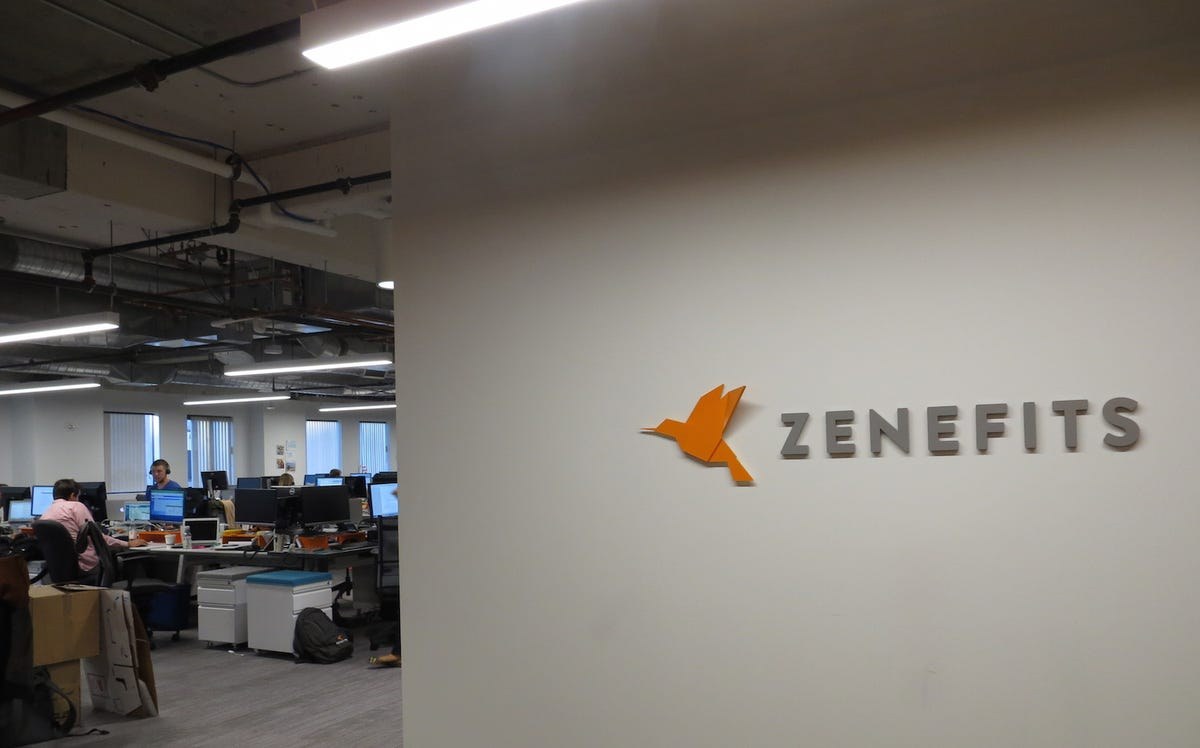
Zenefits is now a product inside TriNet
A current comparison also needs a name correction. TriNet acquired Zenefits in 2022. It first called the business TriNet Zenefits and now presents the software as TriNet HR Platform and HR Plus. Its pages still describe the familiar integrated territory: employee records, onboarding, time and attendance, payroll, benefits administration, performance tools and reporting. Customers can keep an existing broker or work with a TriNet broker partner.
That makes a neat historical scorecard less useful than it appears. A business is not choosing between the 2016 version of Zenefits and today's Gusto. It is comparing Gusto with a TriNet-owned platform whose packaging, support structure and operating controls changed after the scandal and acquisition. The history remains relevant because it reveals how the category evolved, not because it freezes the present product in amber.
The buyer's real scorecard
List subscription, brokerage, payment and add-on revenue separately.
Test one actual payroll, one hire and one benefits change.
Confirm whether you can keep your broker and what changes if you do.
Ask for export formats, timing, fees and historical document access.
What founders can steal from the comparison
First, price architecture is product architecture. If the free tool exists to create brokerage opportunities, product teams will naturally improve the path from HR administration to benefits selection. If payroll subscriptions fund the platform, retention and successful payroll runs carry more direct weight. Neither incentive is automatically improper. Both deserve daylight.
Second, regulated work cannot be treated as a growth-team dependency. Licensing checks, training records and permissions are features. They need owners, automated controls and the power to stop a transaction. The California order is useful precisely because the violations were not abstract. It described who could transact insurance and how training requirements were handled.
Third, compare the ugly day. Demos are built around a clean new hire. Ask each vendor to walk through a retroactive payroll correction, an employee moving states, a benefits termination and a quarter-end tax notice. Find out who answers, how quickly and with what authority. The calm dashboard matters most when the underlying event is not calm.
Finally, insist on portability before signing. Employee data, tax filings and plan records become operational memory. A lower monthly price can disappear against the hours required to leave. Get sample exports, document-retention rules and a migration calendar in writing. The vendor with the best exit may be the one most confident it can earn the next renewal.
Run the comparison on your own payroll
A useful trial starts with a redacted version of the mess you already have. Build a list of employee types, states, pay schedules, deductions, benefit plans and accounting connections. Mark every manual handoff. Then ask both vendors to show which handoffs disappear, which become integrations and which remain your responsibility. A claim such as “all in one” means little until every item has an owner.
Put the quote beside that workflow map. Separate the platform fee, per-person fee, implementation work, paid support, retirement and benefits administration, broker compensation and any software you can retire. Give internal labor a price as well. One hour recovered every payroll cycle may matter more than a modest difference in subscription cost. One unresolved state-tax notice can erase a year of savings.
Then speak with customers that resemble your company today, not the logo at the top of the case-study page. A twenty-person restaurant, a distributed design studio and a venture-backed software team create different edge cases. Ask references what happened during their last correction, renewal or urgent support request. Satisfaction during ordinary weeks is useful. Behavior at a deadline is evidence.
Gusto and Zenefits did make a similar promise: small businesses should not need a large HR department to take care of people properly. The lasting difference is visible in the math behind that promise. For a buyer, following that math is not cynicism. It is procurement.
Sources and useful links
Frequently asked questions
Is Zenefits still a standalone company?
TriNet acquired Zenefits in 2022. The product is now sold as TriNet HR Platform and HR Plus, although some pages still refer to the former name.
Was Zenefits software really free?
Its early model offered core HR tools free and sought revenue when employers selected Zenefits as their insurance broker. It also had paid services.
Does Gusto earn insurance commissions?
Yes. Gusto says its insurance agency earns commissions on sales and as the ongoing broker. Its payroll and HR platform is nevertheless sold through paid plans.
Why did Zenefits face regulators?
California cited licensing and training violations. Washington separately examined whether free software operated as an unlawful insurance inducement.
Which platform should a small business choose?
Choose from current quotes and a real workflow test. Compare payroll complexity, benefits and broker options, support, migration risk and data portability.