employee-onboarding
(34)
Electric sold its old business to escape its success
A billion-dollar valuation could not fix the economics of an IT help desk. Electric’s second act puts software inside payroll, where the work begins.
ProLiant and the art of an uneventful payday
A truck driver’s time card reveals the real test of payroll software. ProLiant’s answer pairs cloud tools with a person who knows what to do when the numbers get awkward.
iSpring Solutions turns PowerPoint into a training department
The familiar slide deck is iSpring’s unlikely advantage. Its tools let the people who know the work build the lessons, then give employers a way to deliver and track them.
Rival and the expensive art of passing a PDF
A new hire can be ready while the paperwork is still wandering. Rival has built its business around the awkward handoffs between HR systems - and is now giving AI a job in the middle.
iSpring MEA and the Secret Life of a Slide Deck
The Arabic-facing iSpring operation has a practical proposition: turn the presentations people already know how to make into training people can actually use. The interesting part is who gets to do the making.
Workable and the trouble with “just email it”
A shared inbox can hire your first employee. Workable built a business around what happens when it has to hire your fiftieth - and now wants to handle the work on both sides of the offer letter.
The Company That Made a URL You Can Say Aloud
GoLinks turned an internal Silicon Valley habit into software for everyone: type go/benefits, find the answer, and let the destination change without changing the name. Its larger bet is that company knowledge should be as easy to summon as a colleague.
Talos360 wants to give hiring its lost days back
Wagamama cut 12 days from hiring with Talos ATS, according to its published customer story. Now Talos360 is taking its recruitment software into the rest of working life.

Joey Greenwald Has Spent a Career Removing the Friction Between People and Software
From social listening to passwordless identity to AI-guided onboarding, the Enboarder CMO keeps returning to one stubborn question: where does software make life harder than it needs to be?
Tovuti Wants to Make the LMS the Last Thing Your Training Team Has to Manage
The Idaho software company built one place to create, deliver and measure workplace learning. Now it is selling something more valuable than another dashboard: less administrative work.
Schoox Is Betting the Next Great Business Metric Is Hiding in the Training Room
Most learning systems can tell a boss who finished the course. Schoox wants to tell them whether the course changed the business - a much harder promise aimed squarely at the frontline.
Viventium Bet the Future of Healthcare HR on the Weirdest Paycheck in the Building
Generic HR software assumes work is tidy. Viventium built around the opposite - then bought its way from first application to final paycheck.

Krishna Dunthoori Built a Career Around the Last Mile of Software
He cleaned snow from German train platforms before dawn, learned enterprise software from the inside, and turned one stubborn question into two companies: why do expensive tools so often fail the people using them?
The $8.50 Fix for HR’s Most Expensive Copy-and-Paste Problem
Insynctive spent years building the connective tissue that legacy HR stacks forgot. Its bet is simple: companies would rather automate the handoffs than replace the systems they already paid for.

Dan Finnigan Has Spent a Career Fixing the Awkward Parts of Work
From newspaper classifieds to social recruiting, skills tests and employee onboarding, Dan Finnigan has kept returning to one question: how can technology make the first days of work feel more human?

The Learning Software That Keeps Getting Out of the Way
Litmos started with one contact center and a stubborn idea: training software should be easy to launch and easier to use. Three owners and millions of learners later, simplicity is still the product strategy.

The Payroll Choice That Quietly Redesigns Your Company
Gusto makes payroll and core HR easy to price. Rippling asks buyers to assemble a broader operating system - and to get a quote before they know what it will cost.
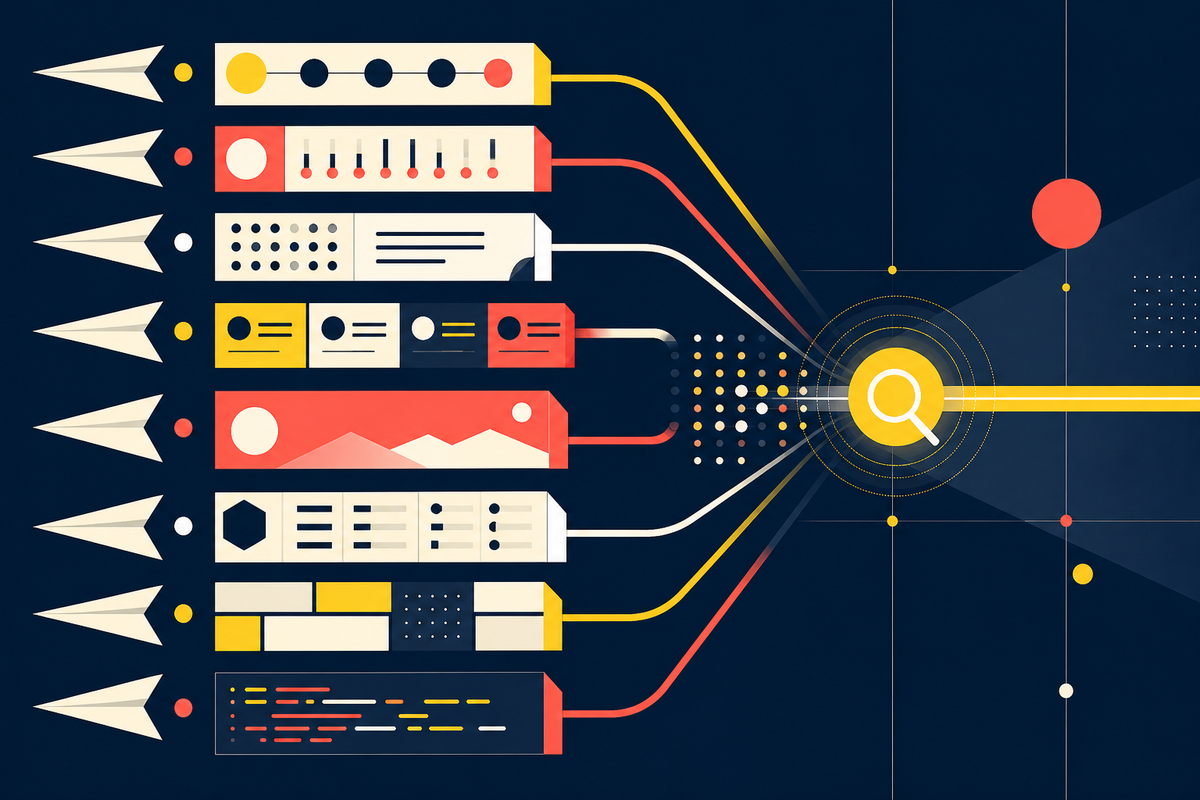
Knowledge Base Software Is Having an Identity Crisis
Eight platforms promise one source of truth, but they are built for very different truths. The useful question is not which product ranks first - it is which workflow you need to make visible.

Trainual
An all-in-one employee training platform that connects knowledge, systems, roles, and processes to deliver instant answers, job-ready training, and confident execution for every employee.

Scribe
The San Francisco startup turned the tedium of writing instructions into a single click - and quietly became the record of how work actually gets done inside 94% of the Fortune 500.

Userlane
The intelligence to see the impact of your software and AI. The assistance to help your people get work done.
Helpjuice
The knowledge base software that actually gets used - turning scattered docs into fast answers, support tickets into articles, and new hires into experts.

ArcLab
ArcLab is a Singapore-based mobile learning SaaS platform built for the frontline deskless workforce - the roughly 2.7 billion workers who don't sit at desks. Organisations use its AI-powered tools to turn documents into bite-sized 'nano learning' modules, deliver them on mobile in any language, and track uptake, compliance and skills gaps. It serves construction, logistics, manufacturing, food & beverage, retail and non-profit teams across Southeast Asia.
Disprz
Disprz is an AI-powered corporate learning and skilling platform that bundles a learning management system, a learning experience platform, a content hub, frontline enablement and analytics into one suite - and now layers an agentic AI product called Turo on top that builds, localises and publishes training content on its own. Founded in 2015 in India as Learntron and renamed Disprz in 2017, the company sells per-learner subscriptions to more than 500 enterprises across 20-plus countries, reaching over 3.5 million learners at employers including Amazon, Petronas, Axis Bank, Starbucks, Carlsberg, GE Aviation and Emirates NBD. Its wedge is the workforce most learning software ignores: the deskless, multilingual, high-churn frontline in retail, banking, logistics and pharma across India, Southeast Asia and the Gulf. Disprz crossed Rs 100 crore in annual recurring revenue in April 2025 and is targeting Rs 200 crore by 2028, having raised roughly $45M-$52M across four disclosed rounds, most recently a $30M Series C co-led by Lumos Capital Group and 360 ONE Asset.
Opus Training
Opus Training is a New York-based, AI-powered mobile training platform built for the frontline, deskless workforce - the servers, cooks, housekeepers, grocery clerks and factory staff who rarely sit at a desk. Founded by CEO Rachael Nemeth, Opus delivers bite-sized, mobile-first lessons and standard operating procedures directly to workers' phones, onboards staff faster, auto-translates content into 100+ languages, and tracks training completion across every location in real time. It replaces binders and legacy LMS tools with training that lives where frontline employees actually work.
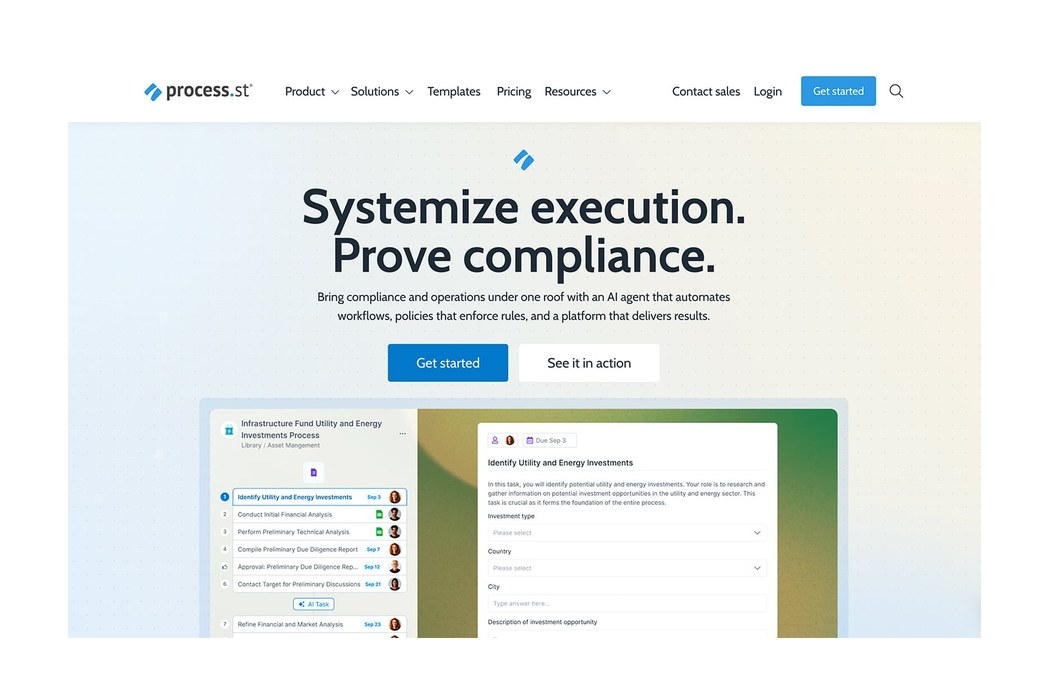
Process Street
Process Street is a San Francisco-based SaaS company that helps teams turn recurring, human-driven work into structured, trackable workflows. Founded in 2014 by Vinay Patankar and Cameron McKay to tame the repetitive processes of their remote marketing agency, it began as no-code, checklist-based process software and has since repositioned as an AI-powered compliance operations platform. Today it lets non-technical teams document policies, run standardized workflows, capture data through forms, automate approvals, and prove control for standards like ISO 9001 and SOC 2 - with AI agents such as Cora monitoring execution and flagging risk.
Apty
Apty is an AI-powered Digital Adoption Platform (DAP) that layers on top of enterprise applications like Salesforce, Workday, Oracle and ServiceNow to guide users through complex workflows, validate their inputs in real time, automate repetitive steps and surface where people get stuck. Founded in 2018 by Krishna Dunthoori as letzNav and later renamed Apty, the Austin-based company helps large organizations - including customers such as Delta Air Lines and Boeing - turn expensive software purchases into actual, measurable adoption and ROI. Apty has raised roughly $12.9M and serves over a thousand enterprise customers and millions of end users.
Enboarder
Enboarder is an HR technology company that builds an experience-driven employee onboarding and 'people activation' platform. Founded in Sydney in 2015 by Brent Pearson, it helps employers design and automate engaging, human-centered journeys for new hires, managers and existing employees across onboarding, transitions and offboarding. In 2025 the company re-architected its product to be AI-native, positioning itself as an 'AI orchestration layer for the employee lifecycle.' More than 400 global companies - including McDonald's, Deloitte, Shopify, Hugo Boss, ING and Eventbrite - use Enboarder, which has raised roughly $50 million in venture funding.
Primerli
Primerli is an edtech company that condenses decades of industry knowledge into engaging, story-based, one-hour video 'primers' that bring any professional up to speed on an unfamiliar sector fast. Built on an 'engagement-first' content philosophy and co-created with subject-matter experts from Fortune 500 companies, its Industry Library is sold to companies, consulting and financial-services firms, and universities on a subscription basis - and reports course-completion rates of 78.6%, far above the 5-10% typical of e-learning.
Refresh
Refresh is a white-labeled employee-experience SuperApp that unifies benefits, wellness, recognition, communication, and onboarding into one branded mobile app. Born in 2007 as Refresh Body, a New York on-demand massage-and-yoga concierge for offices and hotels, it pivoted into HR technology aimed at the deskless and frontline majority of the global workforce. Its orchestration layer connects thousands of existing HR, payroll, and collaboration tools, then delivers the right resource to the right employee at the right moment - so benefits that companies already pay for actually get used.