Picture a meeting in which someone asks where to find the latest benefits document. The answer could involve opening a chat archive, searching a drive, checking a wiki, and asking the person who somehow knows everything. Or someone could say, “go/benefits.” That is the whole trick. The fact that it feels almost embarrassingly small is why it travels so well.
- GoLinks gives a team memorable names for changing workplace URLs.
- Founder Jorge Zamora took an internal tech-company habit and packaged it as SaaS.
- Asana’s reported rollout shows the appeal: fast deployment, then thousands of employee-made shortcuts.
- The company now sells search and employee profiles, too, because a destination is not always the answer.
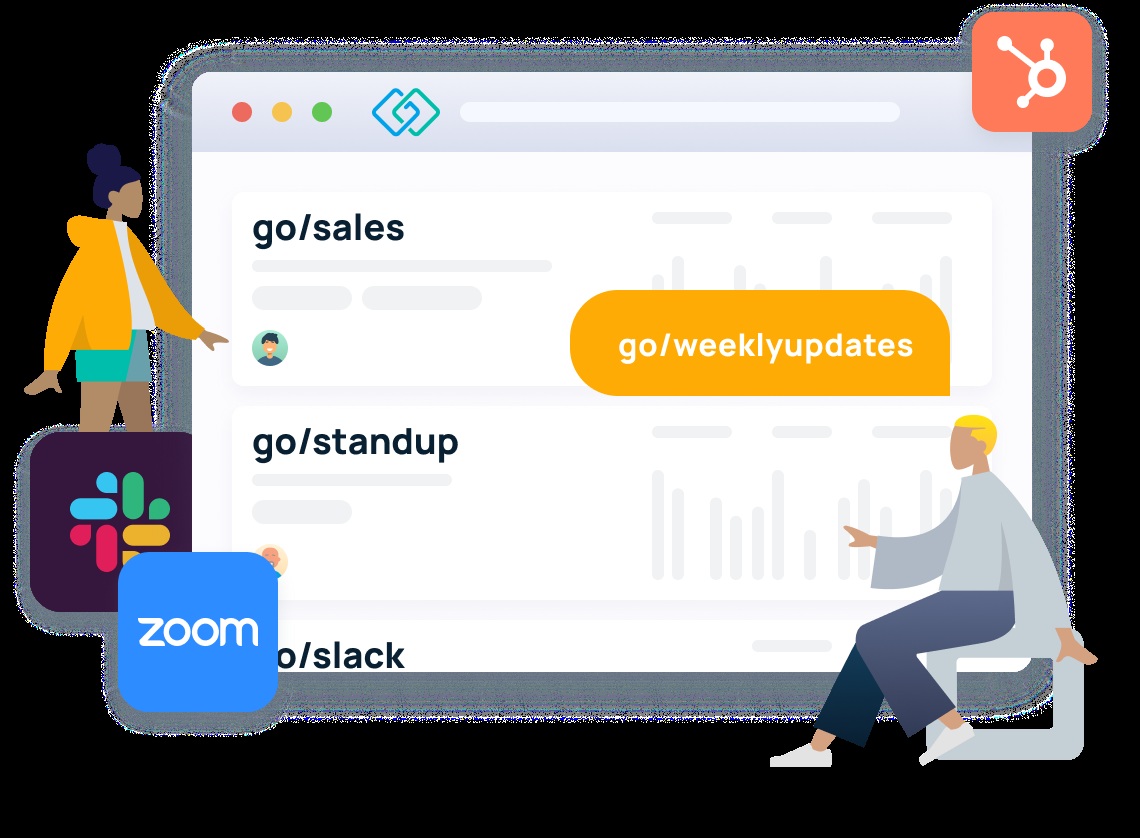
A go link is a shared address such as go/roadmap. It points to a document, dashboard, ticket system or anything else with a URL. The link name is deliberately plain. People can type it in a browser, paste it into Slack or speak it across a room. When the roadmap moves, an owner changes the destination; colleagues keep using the name they already know.
drive.example.com/folders/7f3.../roadmap-v8
The shortcut was already hiding in plain sight
Zamora did not invent the office shortcut. He encountered versions of it while working on internal tools at Yahoo in 2014 and noticed comparable systems at other technology companies. Engineers had built little redirect services for their own colleagues. Their work was useful enough to appear on cafeteria signs and in hallway conversations, yet typically stayed behind company walls. Zamora’s question was commercial and almost impolite in its simplicity: if many organizations need the same small tool, why should each one assign an engineer to rebuild it?
His team released a SaaS version in August 2016. The pitch was to make the system available through a browser extension and a managed service, with company-wide sharing and administrative controls. GoLinks lists 2017 as its founding year; the earlier date marks the product’s first release. It later joined Y Combinator’s Winter 2019 batch. In a later interview, Zamora said his first cold approaches to venture capitalists produced meetings but no investment, and he nearly quit. He applied to Y Combinator the night before the deadline. The company already had a customer connected to the interview panel - a more persuasive demonstration than a polished theory of workplace productivity.

The idea works because it treats language as infrastructure. Most knowledge tools ask people to remember where a file lives. GoLinks asks them to remember what it is called. “Benefits” is a better memory cue than a string of folders, version numbers and access tokens. A useful internal name can become a tiny piece of common speech.
Asana supplied the revealing test
The interesting question is not whether an engineer can write a redirect. Many can. It is what happens when the engineer leaves, the target moves, the name gets duplicated, or the company has to prove who changed a link. Asana had an aging internal short-link tool. Its IT team chose GoLinks, then rolled it out to every employee within an hour, according to GoLinks’ account of the deployment. The story reports that employees created nearly 5,000 go links across IT, marketing, engineering and internal communications.
That customer example offers a better argument than a generic hours-saved estimate. IT can keep a familiar shortcut to its help ticket process even if the ticket platform changes. Internal communications can see whether employees actually open a resource. A person out of office can put a shortcut to contact details in a Slack status. A useful name follows the work rather than the application.
There is a cost to this convenience. The published GoLinks free plan covers up to 20 users; Basic is listed at $2 per user per month, Pro at $4, and Enterprise is custom priced. Basic adds user management and roles; Pro adds private links, aliases, tags and analytics; Enterprise adds controls such as SSO with SCIM, audit logs, APIs and verification. A small team could maintain a few browser bookmarks for nothing. A larger team pays for the boring work that makes a shared naming system dependable.
Then people began asking for the answer
In 2022, GoLinks announced a $27 million Series A led by Anthos Capital, with Mayfield and FundersClub participating. The company had raised money for a neat idea, but a neat idea has a ceiling: sometimes you do not know the name of the link. Sometimes you do not know whether the answer is in a document, a message or a colleague’s head.
“Practically overnight, people stopped wanting links and started wanting answers.”
Jorge Zamora, in a 2026 GoSearch interview
That change in behavior, as Zamora describes it, pushed the company beyond shortcuts. GoSearch, introduced in 2023, searches across workplace applications and offers AI-generated answers. GoProfiles, launched the same year, helps employees find people and recognize one another. Together they give GoLinks three related jobs: name the resource, search the information, find the person. It is a broader wager on workplace discovery, with Glean and other enterprise search products addressing part of the same problem.
The distinction matters. A go link is wonderfully fast when a company already agrees on a name and someone keeps the destination current. Search is more useful when the question is unfamiliar or spans many apps. A profile helps when the answer is a colleague. None of the three saves a company from deciding what its current policy is, who owns it, and who may read it. Software can make a path easier to follow; it cannot make the destination correct by decree.
The small rules that make it work
GoLinks’ March 2026 updates are less glamorous than its AI pitch and perhaps more revealing. Link verification lets creators mark links as current, set review intervals and handle requests when a teammate suspects a page is stale. A tags dashboard helps merge duplicate labels; a user management page centralizes roles and bulk changes. These are the repairs a naming system needs once the initial delight wears off. If go/benefits goes to an obsolete policy, its memorable name makes the mistake more efficient.
The company’s advantage over a homemade redirector is therefore cumulative rather than mystical: browser and chat integrations, shared discovery, security controls, usage data, mobile access and someone responsible for maintaining the product. Its 2026 Asana app even turns typed go links in tasks and comments into clickable links. It is a neat detail. A workplace convention gets stronger when it works wherever colleagues are already talking.
GoLinks’ story is an argument for making the obvious thing reliable. A good address is short enough to remember, plain enough to pass along, and stable enough to outlast the software behind it. That will not solve every search problem at work. But the next time a meeting pauses while seven people hunt for the same document, the humble little word after go/ may look less trivial.