Nobody brags about the software that stores their company's knowledge. It sits below the fold in the budget, gets renewed without a meeting, and only makes the news when it breaks. Which is exactly why almost no one noticed that in 2026 it quietly cracked in half.
Line up the four names most buyers shortlist - GitBook, Bloomfire, Salesforce, MadCap Software - and on paper they look like rivals selling the same thing. Type any two into a comparison site and you'll get a tidy table of pricing tiers and checkmarks. The table is real. It's also the least interesting thing about the market. Because these tools no longer disagree on features. They disagree on what company knowledge is.
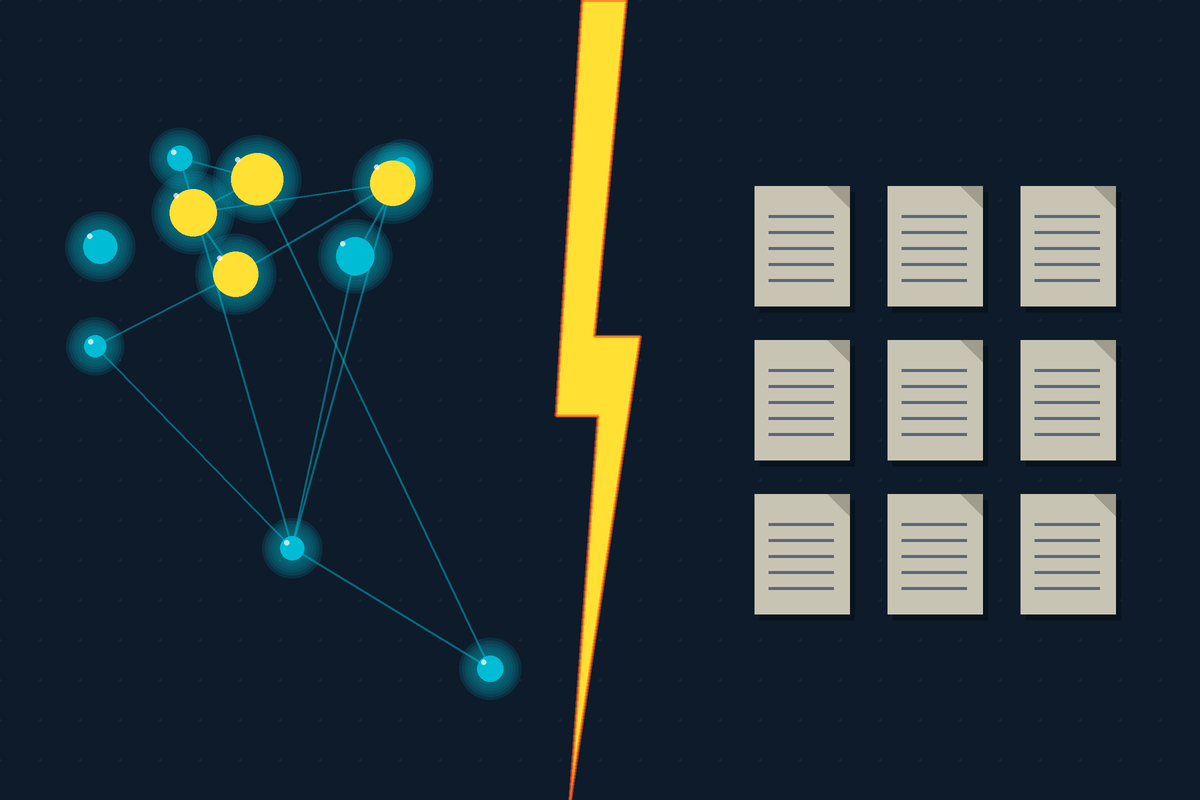
One camp treats knowledge as a living answer - something you ask a question of, and it responds. The other treats it as a published artifact - something you author, structure, version, and ship. Both call themselves "knowledge management." Only one of them is what you actually need, and the whole trick of buying well in 2026 is knowing which.
Camp One · AI-native
- Ask a question, get a sourced response
- Cloud-first, updated constantly
- Search across many connected sources
- GitBook · Bloomfire · Salesforce (Einstein)
Camp Two · Authoring-first
- Author once, publish to many formats
- Structured, versioned, audited
- Built for control, not conversation
- MadCap Flare · IXIA CCMS
The tellThe feature that isn't there
The clearest read on where a vendor stands isn't what it added this year. It's what it refused to add. MadCap Flare, the tool professional technical writers have leaned on for large, structured content libraries for the better part of two decades, ships no AI features at any tier. No content generation. No translation assistant. No intelligent search. In a year when every login screen sprouted a sparkle icon, that reads like a company asleep at the wheel.
It isn't. If your job is publishing a 4,000-page manual for an aircraft, a medical device, or a regulated industrial system, a tool that occasionally invents a plausible sentence is not a feature - it's a liability with a lawyer attached. MadCap's stubbornness is a product decision aimed squarely at buyers who value control over cleverness. The company was quiet about none of it: in 2023, backed by Battery Ventures, it bought IXIASOFT to bolt an enterprise DITA content management system onto the stack. That's not a bet on AI. It's a bet that structured, single-source publishing keeps mattering.
The other campTools that answer back
Cross the divide and the mood changes completely. Bloomfire, founded in Austin in 2010, built its 2026 pitch around an assistant called Synapse. The interesting part isn't that it answers questions - everything answers questions now. It's the leash. Synapse responds only from your certified internal knowledge, with hallucination mitigation built in, and it's designed to say "I don't know" rather than guess. That single constraint is the entire enterprise-AI thesis compressed into one product choice: a confident wrong answer from your own docs is worse than no answer at all.
Bloomfire also does something quietly clever with the plumbing. Instead of demanding you migrate everything into it, it connects to the places knowledge already lives - SharePoint, Google Drive, Confluence, GitHub, and yes, Salesforce - and answers across them. The knowledge base stops being a destination you visit and becomes a layer over the mess you already have.
GitBook plays the same camp from the developer end. Founded in 2014 in Lyon - France, not the Valley - by Aaron O Mullan and Samy Pesse, it's a cloud-native documentation platform that treats docs the way engineers treat code. It carries the certifications enterprises now ask for first (SOC 2 Type II, ISO 27001), and it does it with a team reported at around 44 people. That size is the story. Technical buyers can smell friction from the login screen, and small, opinionated teams keep winning the docs category because they ship the tool their users actually update.
The graphWho's ready for the AI question
If you sort these four by how much they lean on AI to answer, not just store, the field spreads out fast. This isn't a quality ranking - MadCap being at the bottom is the point of MadCap. It's a map of intent.
The quiet winnerSalesforce owns the hallway
Notice who hasn't tried to win by having the best document. Salesforce doesn't really compete to be your authoring tool. It competes to be the hallway everything walks through. Through Salesforce Knowledge and Einstein, support content surfaces inside the workflow where agents already work - and tools like Bloomfire plug straight into it, delivering answers through the same Lightning app and Einstein surface your team never leaves.
It's a good reminder that in software, owning the workflow beats owning the file. You can have the most elegant knowledge base on earth, and it will lose to the merely-adequate one that shows up in the tab your team already has open.
How to choosePick by the verb
Here's the framework no vendor will sell you, because it sometimes points away from them. Don't choose by the feature list. Choose by the verb your knowledge lives on.
If your knowledge must be published - structured, versioned, audited, printed, and certified - buy the controlled authoring tool, and let the missing AI be a shrug, not a dealbreaker. If your knowledge must be answered - searched, updated hourly, pulled from ten sources into one reply - buy the AI-native platform, and make it prove where every answer came from. Then, only then, run the security checklist, because it varies more than the marketing admits: GitBook carries SOC 2 and ISO 27001 but, per 2026 comparisons, lacks audit logs and data residency options; Bloomfire holds SOC 2 and GDPR but not HIPAA or air-gapped deployment. Regulated buyers should read those gaps before the pricing page.
The category label - "knowledge management software" - turns out to be the least useful thing about it. The useful question is smaller and sharper: when someone on your team needs to know something next Tuesday, do they want a document, or an answer? Everything else on the comparison table follows from that.
Go deeper
- GitBookgitbook.com — cloud-native developer documentation
- Bloomfirebloomfire.com — AI knowledge management, Synapse assistant
- MadCap Softwaremadcapsoftware.com — Flare authoring + IXIA CCMS
- Salesforcesalesforce.com — Knowledge + Einstein in the flow of work
- ComparisonBloomfire vs GitBook (2026) — enterprise feature + security breakdown
Reader questionsThe FAQ
What's the difference between a knowledge base tool and technical documentation software?
Knowledge base tools like Bloomfire focus on searching and answering questions across internal content, often with AI. Technical documentation software like MadCap Flare focuses on authoring and publishing structured, single-source content across formats. In 2026 the categories overlap, but the core verb differs: answer versus publish.
Which knowledge base software has the best AI in 2026?
Among these four, Bloomfire and GitBook lead on AI search and answers, and Salesforce delivers AI through Einstein. MadCap Flare ships no AI at any tier by design. "Best" depends on whether you need generated answers or precise, controlled publishing.
Is MadCap Flare outdated compared to GitBook and Bloomfire?
Not exactly. MadCap Flare is a legacy desktop authoring tool, but it remains a professional standard for large, structured content in regulated industries where control and multi-format output matter more than AI features.
How does Salesforce fit into the knowledge management market?
Salesforce Knowledge and Einstein bring knowledge into the customer support workflow, and platforms like Bloomfire integrate with it. Salesforce competes by owning the workflow that content flows through rather than by being the primary authoring tool.
How should a team choose knowledge base software in 2026?
Pick by the verb. If your knowledge must be published, structured and audited, favor a controlled authoring tool. If it must be searched, answered and updated constantly, favor an AI-native platform. Then check security fit: SOC 2, data residency, and HIPAA readiness vary widely between vendors.