technical-writing
(23)
Power PR makes heavy machinery worth reading about
The industrial publicity firm turns customer problems into trade-magazine stories. Its real product is a better explanation of why a buyer should care.

Document360 Turned Documentation Debt Into a $10M Business
Kovai.co built Document360 to solve its own documentation mess. The result is a useful lesson in turning neglected knowledge into customer infrastructure.

Document360 Turns Company Chaos Into Answers
Born in a 14-day hackathon, Kovai.co’s documentation platform has grown into a $10 million ARR business. Its wager is simple: in the AI era, organized knowledge matters more than ever.
Nobody Reads the Docs. Everyone Fights to Own Them.
ProProfs, Docsie, HelpDocs and MadCap are chasing the same unglamorous prize - the pages your customers hit when they are stuck. Here is how four very different tools carved up the market for documentation nobody admits to reading.

Who Owns Your Company's Brain? Inside the Knowledge Base Wars
ProProfs, Slite, MadCap, and Intercom all sell the same promise - a single place for what your company knows. The AI era just turned that quiet market into a fight over who feeds the machine.

How Document360 Turned Boring Docs Into a $10M AI Machine
The Coimbatore-built knowledge base just crossed $10 million in recurring revenue without a rupee of outside money. Now it wants to be the place your AI assistant goes to find the truth.
Knowledge Base Software Is Splitting Into Two Camps
GitBook, Bloomfire, Salesforce and MadCap are chasing the same buyers with wildly different bets. The real dividing line in 2026 is whether your documentation tool thinks for itself.
Paligo
Paligo is the component content management system that gives documentation a single source of truth. The reliability layer humans depend on and AI can actually trust.
KnowledgeOwl
Built for teams who are done fighting Confluence, SharePoint, and scattered docs, KnowledgeOwl turned a shelved side project into a bootstrapped, B Corp knowledge base company that treats customer service as its North Star.
GitBook
The documentation platform that started as an open-source tool for developers now wants to keep the world's product docs honest - for humans and the AI agents reading over their shoulder.

Docsie
Turn videos and files into docs, training, and AI-ready answers.

ClickHelp
The quiet infrastructure behind good software documentation is becoming something more: a searchable, reusable knowledge system for people, products and AI agents.

Archbee
The Y Combinator-backed platform that turns static product docs into instant, AI-powered answers for customers and developers.
Trilyon, Inc.
Trilyon, Inc. is a Cupertino-based, women-owned global workforce and consulting firm that has spent more than 15 years matching skilled technology talent to Fortune 500 and enterprise clients. Built on an 'outcome over output' philosophy, Trilyon delivers SOW-based consulting, contingent and direct-hire staffing, RPO, and managed services across AI/ML, cloud, Salesforce, healthcare IT, life sciences, and technical writing, with delivery teams spanning the US, Canada, LATAM, India, and Europe.

Hashnode
Hashnode is a blogging platform built for developers, engineers, and tech leaders to write, publish, and grow their technical audience. Founded in 2016 by Sandeep Panda and Syed Fazle Rahman, the platform hosts over 60,000 active blogs and attracts more than 4 million developers monthly. Hashnode offers a free-tier blogging experience with custom domain mapping, AI-assisted writing, and a headless CMS powered by GraphQL APIs - letting teams run enterprise-grade developer blogs and documentation without building infrastructure from scratch. Backed by Salesforce Ventures, Sierra Ventures, and angel investors including Naval Ravikant and Guillermo Rauch, Hashnode has raised $9.37 million and employs roughly 260 people across four continents.

Joshua Levy
Joshua Levy is the Co-Founder and CEO of Holloway, a San Francisco-based digital publishing platform that produces comprehensive expert-reviewed guides on professional and entrepreneurial topics. A mathematician-turned-engineer, Levy previously served as a founding engineer at BloomReach and held infrastructure roles at Viv Labs (acquired by Samsung) and SRI International where he worked alongside the original Siri team. He is perhaps best known in technical circles as the creator of 'The Art of Command Line' on GitHub - a guide with over 150,000 stars translated into 14 languages and read by more than 2 million people. At Holloway, he has pioneered a new model of expert-driven digital publishing, raising $4.6M in seed funding from NEA, the New York Times Company, and South Park Commons, and co-authoring guides on equity compensation and technical recruiting that have collectively reached millions of readers.

Amos Wenger
Amos Wenger, known online as 'fasterthanlime', is a Swiss software engineer, open-source author, and technical educator based in Lyon, France. Through their blog, newsletter, videos, and the Self-Directed Research Podcast (co-hosted with James Munns), Amos has become one of the most beloved voices in the Rust programming community - known for long-form, deeply exploratory articles that make the inner workings of computers approachable and fascinating. Founder of the open-source organization bearcove, Amos builds real tools like fluke (HTTP/2 over io_uring), facet (Rust reflection), and rc-zip while funding this work through sponsorships and content creation.
Charlie Guo
Charlie Guo is a Stanford and YC alum who turned a personal obsession with AI into a 23,000-subscriber newsletter and a Developer Experience role at OpenAI. Through Artificial Ignorance at ignorance.ai, he writes at the intersection of software engineering and artificial intelligence - cutting through hype to deliver practical, hands-on insights for builders. He has co-founded multiple startups (ClassOwl, FanHero, Crowdmade), published a book of startup interviews called Unscalable, and created a widely-used Python library for Gmail with 1.8k GitHub stars - all while teaching himself AI engineering through relentless experimentation.

Chip Huyen
Chip Huyen is a Vietnamese-American computer scientist, author, and educator who turned a rejection letter from Stanford into a three-year around-the-world journey, two bestselling Vietnamese travel books, and eventually a second application that got her in. She went on to teach at Stanford, build ML infrastructure at NVIDIA and Netflix, co-found Claypot AI, and write two of the most-read technical books on machine learning systems in production - 'Designing Machine Learning Systems' (2022) and 'AI Engineering' (2025). Her newsletter and blog are required reading for anyone building serious AI products.

Cindy Sridharan
Cindy Sridharan is a distributed systems engineer, O'Reilly author, and influential technical writer based in San Francisco. Known online as @copyconstruct, she wrote the seminal O'Reilly book 'Distributed Systems Observability' and runs the Systems Distributed newsletter on Substack. She is widely respected for her long-form thinking on observability, testing in production, microservices architecture, and engineering culture. She spent years as an engineer at imgix, led the Prometheus user group in San Francisco, and has spoken at major industry conferences including QCon and GOTO. Her Medium essays on monitoring, testing, and systems thinking have shaped how a generation of engineers thinks about building resilient software.
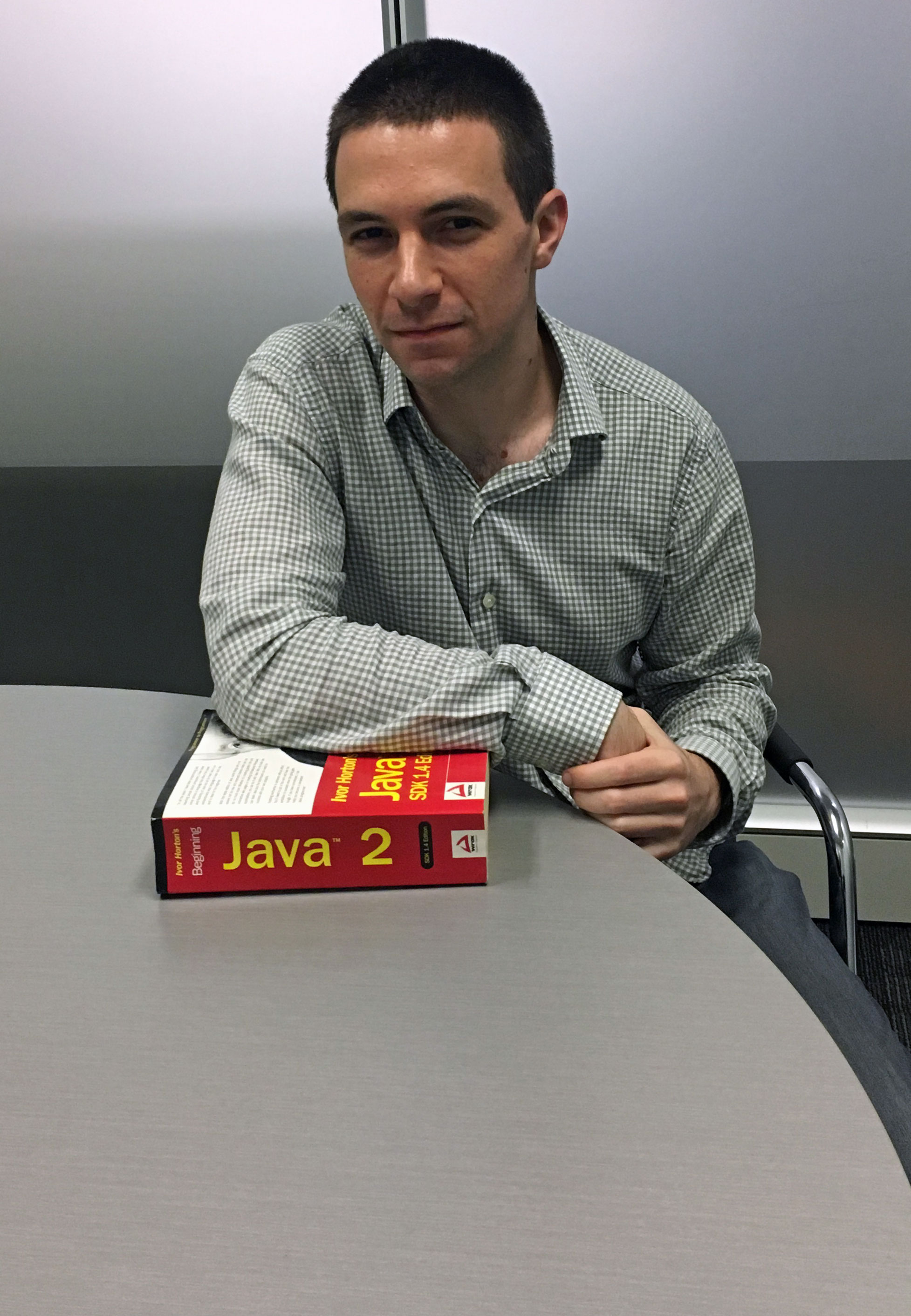
Michael Lynch
Michael Lynch is a bootstrapped solo founder who quit Google after seven years to build software and hardware businesses entirely on his own terms. He grew TinyPilot - a KVM-over-IP device built from a $100 Raspberry Pi kit - into a $1M/year business and sold it in 2024 for ~$600K. He writes with radical transparency about money, failure, and the craft of independent software development at mtlynch.io, and is now writing 'Refactoring English', a book on writing for software engineers.

Thorsten Ball
Thorsten Ball is a German software engineer, author, and technical educator best known for his self-published books 'Writing an Interpreter in Go' and 'Writing a Compiler in Go', which have become go-to resources for developers wanting to understand programming language internals. With over two decades of professional software development experience, he currently works at Sourcegraph on Amp, an AI-powered coding agent. He also writes the weekly newsletter 'Register Spill', covering systems programming, developer tools, and the intersection of AI with software engineering.

Vicki Boykis
Vicki Boykis is a founding ML engineer and one of the most respected voices in applied machine learning. Known for making complex systems legible through rigorous writing and dry wit, she runs the Normcore Tech newsletter, authored a widely-cited deep dive on embeddings, built Viberary (a semantic book recommendation engine), and created Normconf - an unconventional data conference celebrating the unglamorous realities of ML work. She brings an economist's skepticism and a software engineer's discipline to a field that often confuses hype for progress.