Your Company's Knowledge Is Lost. These 8 Tools Want It Back
Glean, Whatfix, Zendesk, Salesforce, Slite, Spekit, Archbee and Nuclino all sell the same promise - that your team will finally find what it needs. Here is how the eight of them actually split the work.
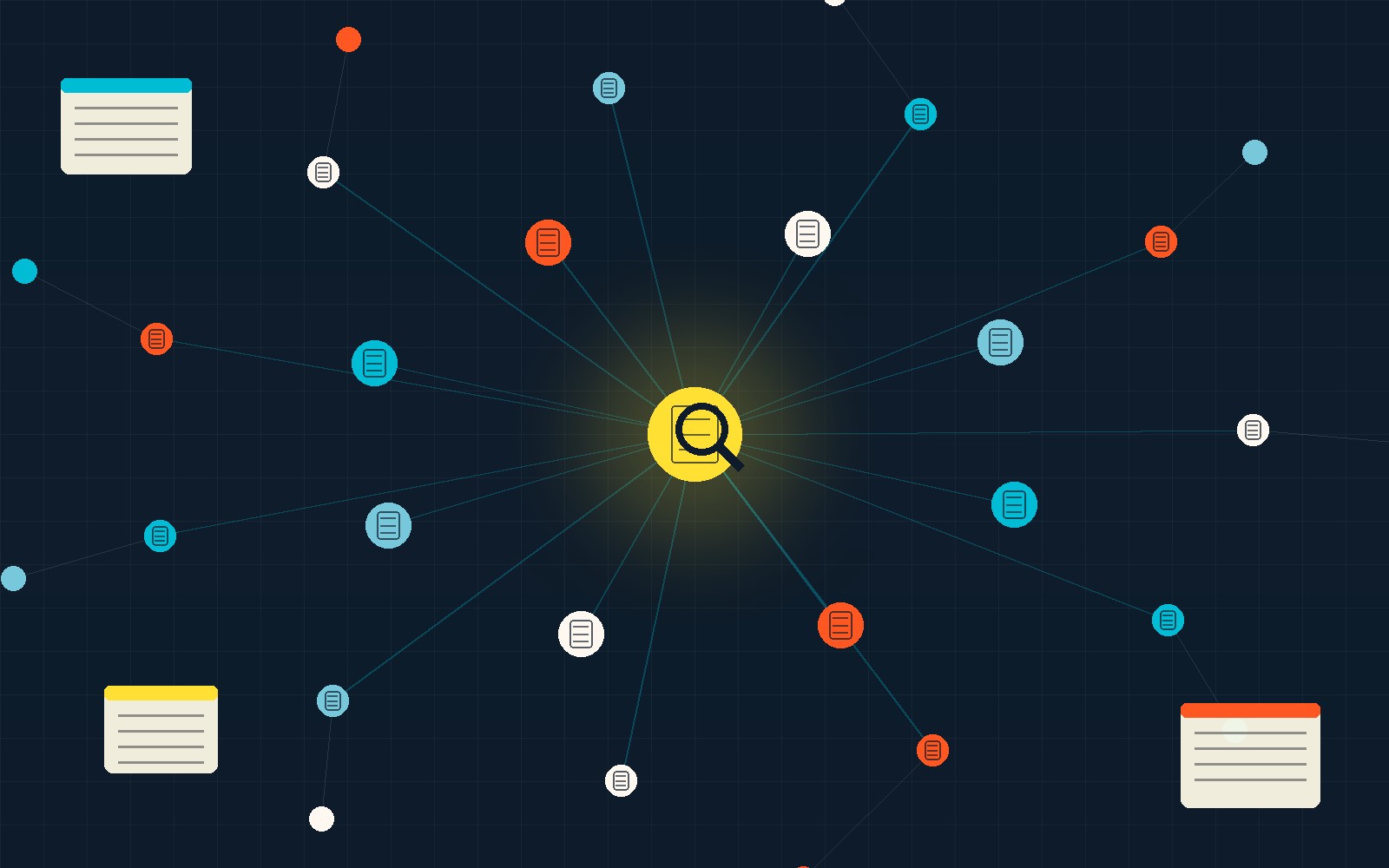
Every company builds a web like this by accident - answers scattered across apps, wikis, tickets and inboxes, with no single place that holds them all. The eight tools below are competing bets on how to untangle it.
Somewhere in your company right now, a person is typing a question into a chat channel that was answered - in full, with screenshots - eleven months ago. The answer exists. It sits in a closed ticket, a Slack thread, a PDF nobody opened twice, or a doc whose author has since left. The knowledge is not missing. It is just unreachable, which for the person asking is the same thing.
That small, daily failure is the entire reason this software category exists. The additional context for this piece named eight products - Glean, Whatfix, Zendesk, Salesforce, Slite, Spekit, Archbee and Nuclino. At a glance they look like eight versions of the same thing. They are not. They are eight different answers to one question: when your organization already knows something, how does the right person get to it at the moment they need it?
01 / The mapThree jobs wearing one label
Before comparing features, it helps to notice that "knowledge software" is really three jobs stacked on top of each other. The first is writing knowledge down - the wiki, the doc, the help article. The second is finding it again across everywhere it might live. The third, quietly the hardest, is getting people to actually use it in the flow of work instead of asking a human.
Most buyers shop for the first job, suffer from the second, and lose money on the third. The eight tools sort cleanly into these lanes once you stop reading feature lists and start asking where your own answers go missing.
Where the eight tools actually sit
Write it down
"We need a place to put what we know."
- Slite
- Archbee
- Nuclino
- Zendesk (help center)
- Salesforce Knowledge
Find it again
"It exists - I just can't reach it."
- Glean
Use it in the app
"Nobody reads the doc anyway."
- Whatfix
- Spekit
02 / Find itThe search bet: Glean
Glean is the clearest example of the second job. Founded in 2019 by engineers who had built search at Google, it does not ask you to move your documents anywhere. It indexes them where they already live - across 100-plus workplace apps - and answers questions against a company-wide knowledge graph, showing each person only what their permissions allow.
The 2026 version of this is an AI assistant that grounds its answers in your own data rather than the open internet. Notably, Glean plugs directly into Zendesk, surfacing past tickets and articles inside the agent's window and even drafting replies. Two names on this list that read like rivals often ship together.
What makes the search bet powerful is also what limits it. Glean does not care whether your documents are tidy - it will find them regardless. But it also cannot tell whether the doc it surfaces is the current one or a draft somebody abandoned in 2023. It ranks and retrieves; it does not curate. For a company drowning in scattered but mostly correct information, that is transformative. For a company whose information is scattered and contradictory, search can just help you find the wrong answer faster.
An answer engine sitting on top of a mess is still an answer engine on top of a mess. Search buys you time; it does not buy you order.
03 / Use itThe adoption bet: Whatfix and Spekit
Whatfix (founded 2014) and Spekit (founded 2018) start from a blunt observation: people do not read documentation. So instead of writing a better manual, they overlay guidance on top of the software people are already using. Whatfix calls this a digital adoption platform - step-by-step walkthroughs, self-help widgets, and analytics that show where users get stuck across desktop, web and mobile apps.
Spekit runs the same play but aimed tightly at revenue teams, delivering just-in-time enablement inside the CRM. When a rep hovers over a confusing field in Salesforce, the definition appears right there. The difference is scope: Whatfix suits enterprise buying committees treating adoption as an operating discipline; Spekit suits sales and service teams that need fast content inside a few core tools.
04 / Write itThe incumbents: Zendesk and Salesforce
Zendesk (2007) and Salesforce (1999) are the heavyweights, and they mostly own the first job at the scale of large support and service organizations. Zendesk turned the customer help center into a category; Salesforce embedded Knowledge into Service Cloud so agents answer from a shared article base. Neither is a wiki in the startup sense, but both already hold something the newer tools envy: structured knowledge tied directly to real customer records. The interesting move in 2026 is not replacing them. It is teaching the rest of your stack to talk to them.
This is why the boundary lines in this category keep blurring. A large support organization might run Zendesk for its help center, Salesforce for the customer of record, Glean to search across both, and Spekit to coach agents inside the tools - four "knowledge" purchases that never actually compete for the same budget. The mistake is treating the list as a bracket where one tool wins. Most of these products assume the others exist. The question is not which one, but which combination matches where your answers keep leaking out.
05 / The wiki laneSlite, Archbee, Nuclino
The final three are where small and mid-size teams actually live. Slite (2016, Paris) is the clean writing choice - polished internal docs and organization for teams that care about the reading experience. Archbee (2019) points at developers, with API references, code samples and versioned documentation, plus SOC 2 for buyers who need it. Nuclino (2015) competes on the opposite end entirely: extreme simplicity, real-time editing, and one of the lowest prices in the category.
The trade-offs here live in the footnotes, which is exactly why they matter.
The fine print buyers skip
Read that chart as a rule, not a ranking. The cheapest tool assumes people will help themselves and that nobody is auditing you. The pricier, higher-touch tools assume the opposite. Both assumptions are correct - about different companies.
06 / The choiceBuy the wound, not the demo
Here is the move that saves teams the most money: stop asking "what is the best knowledge base." Ask "where did we last lose thirty minutes." The answer picks the tool.
If the loss happens in the support queue, the fix is Zendesk or Salesforce Knowledge, possibly with Glean layered on search. If it happens because a rep can't remember a CRM step, that is Spekit. If it happens everywhere at once and you're large and regulated, that is Glean or Whatfix. If you are a small team that just needs a shared brain, Nuclino or Slite will do more than a heavier tool ever could, and for less.
Documentation is a supply problem. Adoption is a demand problem. Most companies buy a supply-side tool for a demand-side wound - then wonder why the beautiful wiki goes unread.
07 / The part no tool fixesSomebody has to care
There is an uncomfortable truth under all of this. The software is maybe 10% of the outcome. The other 90% is whether one stubborn person keeps the knowledge current - archiving what's stale, writing down what only lives in someone's head, correcting the answer that has quietly been wrong since last spring. No pricing page mentions this, because no vendor can sell it.
AI has genuinely moved the needle on the second job. "Ask across all our apps" is no longer a lie, and grounding answers in company data has made assistants useful instead of decorative. But an assistant confidently retrieving an outdated policy is worse than a search box that returns nothing, because at least the empty search box tells the truth. Whatever you buy from this list, budget for the human who keeps it honest.
Eight tools, one collective case of corporate amnesia. The market is worth tens of billions of dollars for that embarrassing reason - organizations are very good at learning things and terrible at remembering them. The right tool narrows the gap between what your company knows and what any one person can reach. It will not close it for you. That part still takes someone who cares whether the answer is right.