Who Owns Your Company's Brain? Inside the Knowledge Base Wars
ProProfs, Slite, MadCap, and Intercom all sell the same promise - a single place for what your company knows. The AI era just turned that quiet market into a fight over who feeds the machine.
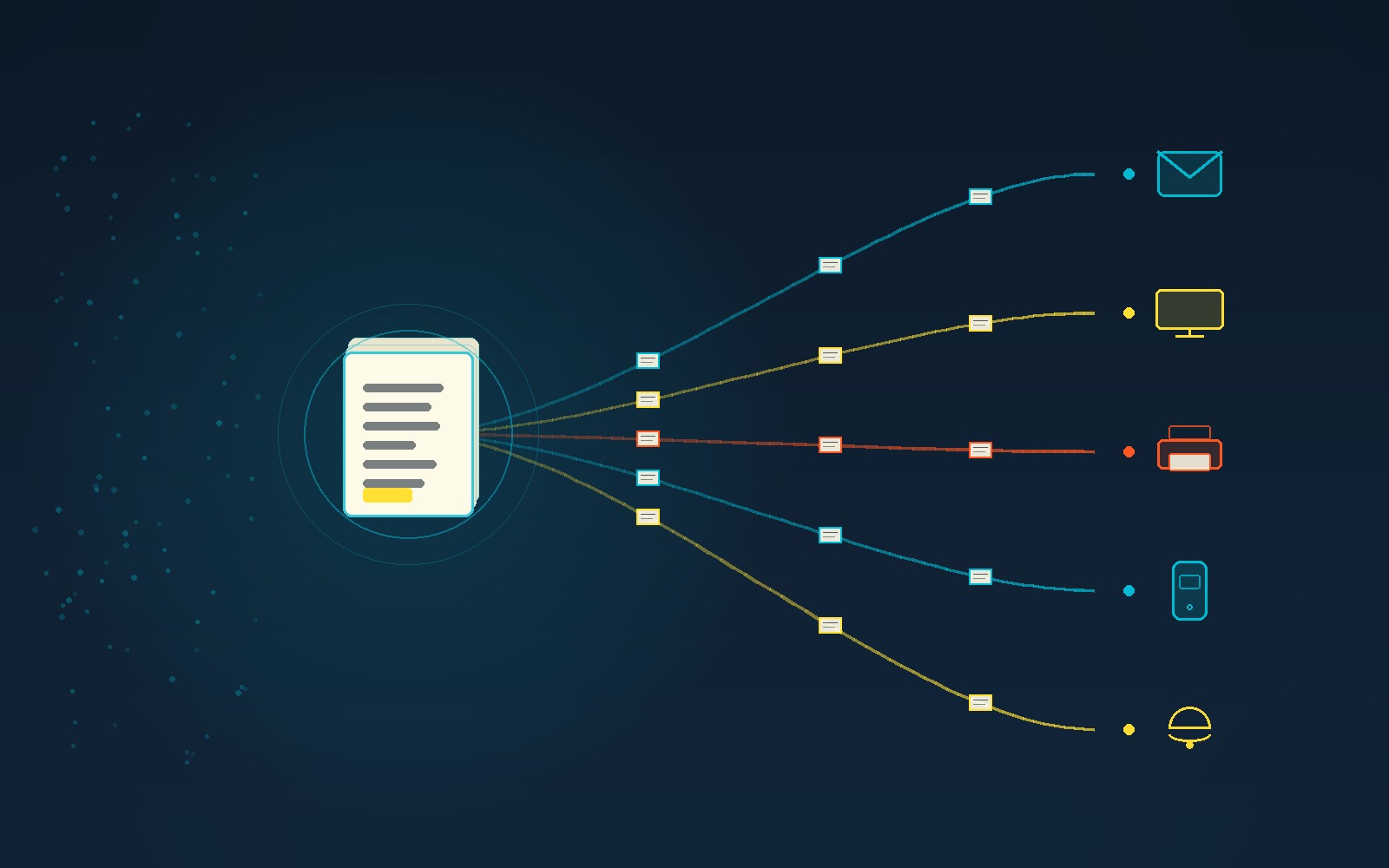
For twenty years, the knowledge base was the most ignored page in software. It was where a support team dumped FAQs, where a product manual went to gather dust, where you landed at 2am trying to reset a password. Nobody bragged about theirs. Then a machine started reading it, and the quietest corner of SaaS became the thing every AI strategy secretly depends on.
Four companies have spent years mapping the same territory - the space between "what a company knows" and "where anyone can find it." They arrived from wildly different directions. ProProfs grew out of a free quiz site in Santa Monica. Slite came out of a Paris startup studio and Y Combinator. MadCap Software was built by the people who made RoboHelp. And Intercom - now renamed Fin and headed into Salesforce - turned the help center into fuel for automation. Same problem. Four answers.
Here is the plain version of why it matters now. An AI support agent doesn't know your product. It reads your knowledge base and answers from that. Feed it clean, current, well-structured docs and it looks brilliant. Feed it a stale wiki and it hallucinates with total confidence. The knowledge base stopped being a filing cabinet and became training data you refresh every day.
Part OneFour maps of the same city
The reason this market is interesting is that nobody agrees on what a knowledge base is. Ask the four leading players and you get four philosophies, each shaped by where the company started.
ProProfs
Started as a free quiz site, grew into a broad, affordable toolkit. Bought HelpIQ in 2015 to enter knowledge base software, then wrapped it with help desk, quizzes and training.
Cheap & broadSlite
The design-first internal knowledge base for teams. Came out of eFounders, went through Y Combinator, then in 2025 launched Super - AI search across all a team's tools.
Beautiful & internalMadCap Software
Flare is the heavyweight for professional technical writers: XML single-source authoring that publishes once to web, PDF, print and mobile. Now reframed around AI-ready content.
Deep & technicalIntercom → Fin
Built the help center as a lever for support automation. Renamed itself after its AI agent, Fin, in 2026, then agreed to fold into Salesforce's Agentforce.
Automated & externalLine them up and the split is clear. Two of them - Slite and, in its own way, ProProfs - are aimed at the knowledge your team reads: process, decisions, onboarding, the stuff that otherwise lives in one person's head. Two of them - MadCap and Intercom - are aimed at the knowledge your customers read: manuals, help articles, the self-service that keeps tickets out of the queue.
The knowledge base stopped being where answers go to die. It became where AI goes to learn.
Part TwoThe origin stories nobody tells
The founder maps here are stranger than the products. ProProfs began, of all things, as a free website where discussion-forum users swapped certification exam questions. Teachers started building quizzes with it. A business grew sideways out of that, and only in 2015 - by acquiring a small tool called HelpIQ - did ProProfs get into knowledge base software at all. It didn't build its first documentation product. It bought it.
MadCap is the best story. It was founded in 2005 by people who had built RoboHelp at eHelp - the classic help-authoring tool - after eHelp was swallowed by Macromedia and then Adobe. So a next-generation documentation tool was built by the exact team behind the last generation, effectively competing with their own legacy. When Flare 1.0 shipped in 2006, co-founder Bjorn Backlund called it "an historic day not only for MadCap Software, but for the help authoring industry in general." Grand words for an XML editor. He wasn't entirely wrong.
Slite is the modern one. Christophe Pasquier founded it out of eFounders in Paris, then took it through Y Combinator's Winter 2018 batch and a seed round led by Index Ventures. Its wedge wasn't a feature - it was taste, plus years of the founder writing in public about how teams actually manage knowledge. Founder-led content turned out to be the growth channel.
Part ThreeWhy AI changed the math
For most of that timeline, knowledge base software was a cost center that sold to other cost centers. Support leaders bought it to deflect tickets. Technical writers bought it because they had to publish somewhere. It was useful, unglamorous, and priced accordingly.
Retrieval-augmented generation broke that quiet. The whole trick of a tool like Fin is that it answers from your knowledge, not the open internet. That design choice is exactly why the knowledge base became strategic: sparse, outdated, or contradictory documentation produces weak answers, and there is no prompt clever enough to fix a bad source. The agent is a mirror held up to your docs.
Directional, not measured - the point is the shape: the base under the bot sets the ceiling.
The agent is a commodity. The knowledge is the moat.
You can watch each company respond to that in its own dialect. Intercom went furthest - it renamed the entire company Fin in May 2026, putting its AI agent's name on the masthead, then agreed to sell to Salesforce for around $3.6 billion and fold into Agentforce. Slite went multi-product with Super, extending from a place you write docs to an agent that searches across everything a team uses. MadCap, the most old-school of the four, started talking about "knowledge activation" and AI-ready content - the same single-source discipline it always preached, now aimed at feeding a model instead of a printer.
Part FourWhat you can actually steal from this
If you run a team, the useful takeaway isn't which logo to buy. It's the order of operations. Everyone wants to bolt an AI agent onto their support. Almost nobody wants to do the boring work first: audit the knowledge, kill the contradictions, write down the process that lives in one senior person's head. The market is finally pricing that gap. If your company's knowledge lives in five tools and a Slack DM, you don't have a knowledge base - you have a liability with a search bar.
The practical split is worth internalizing too. An internal knowledge base (the Slite lane) keeps a team aligned on decisions and process. A customer-facing help center (the ProProfs / MadCap / Intercom lane) deflects tickets and now feeds agents. Different audiences, different permissions, often two systems - which is why "just put it all in one wiki" quietly fails at scale.
And there's a small vindication buried in all of it. Documentation people spent decades being told they were overhead. Technical writers, support content leads, the person who kept the internal wiki honest - all cost, no glory. Then their file cabinet turned into the input for every customer-facing AI a company ships. The least sexy line item in the software budget became the one the whole AI strategy rests on. Nobody saw it coming, which is usually where the interesting money is.
The knowledge base wars were never really about who has the nicest editor. They're about a simpler question that AI made unavoidable: who owns the place your company's answers live - and how much is that worth when a machine has to read them out loud, all day, to your customers.
Go deeper
- ProProfs - knowledge base, help desk and training toolkit
- Slite - team knowledge base and Super AI search
- MadCap Software - Flare and AI-ready content authoring
- Intercom / Fin - AI customer service and help center
- MadCap Software (Wikipedia) - company history and RoboHelp origins
- Salesforce acquires Fin (Salesforce Ben) - the ~$3.6B deal
FAQThe questions people actually ask
What is knowledge base software?
A tool for capturing, organizing and publishing what an organization knows - product docs, FAQs, internal processes and support articles - so employees and customers can find answers on their own. It usually includes authoring, search, permissions and analytics.
How do ProProfs, Slite, MadCap and Intercom differ?
They serve different needs: ProProfs is a broad, affordable toolkit; Slite is a clean internal knowledge base and, more recently, AI search across tools; MadCap Flare is deep technical-documentation authoring for professional writers; and Intercom (now Fin) uses the help center to power customer-support automation.
Why did AI make knowledge base software more important?
AI support agents use retrieval-augmented generation - they answer from your own content, not the open web. If the knowledge base is sparse, outdated or contradictory, the agent gives weak or wrong answers, so clean, current knowledge became the deciding factor in AI quality.
What happened to Intercom?
In May 2026 Intercom renamed itself Fin after its AI customer-service agent, and in June 2026 Salesforce agreed to acquire the company for roughly $3.6 billion, folding it into Agentforce.
Internal wiki or customer help center - which do I need?
Often both. An internal knowledge base keeps teams aligned on process and decisions; a customer-facing help center deflects support tickets and now feeds AI agents. The audiences and permissions differ, so many companies run separate but connected systems.