He wanted to be an inventor. He ended up teaching software to watch you work - and then do it for you.
The Pitch
Ask a lawyer to explain how she runs a client intake and she will do it in ninety seconds. Ask her to write code for it and she will laugh. Alejandro Castellano built a company on the gap between those two answers.
Now
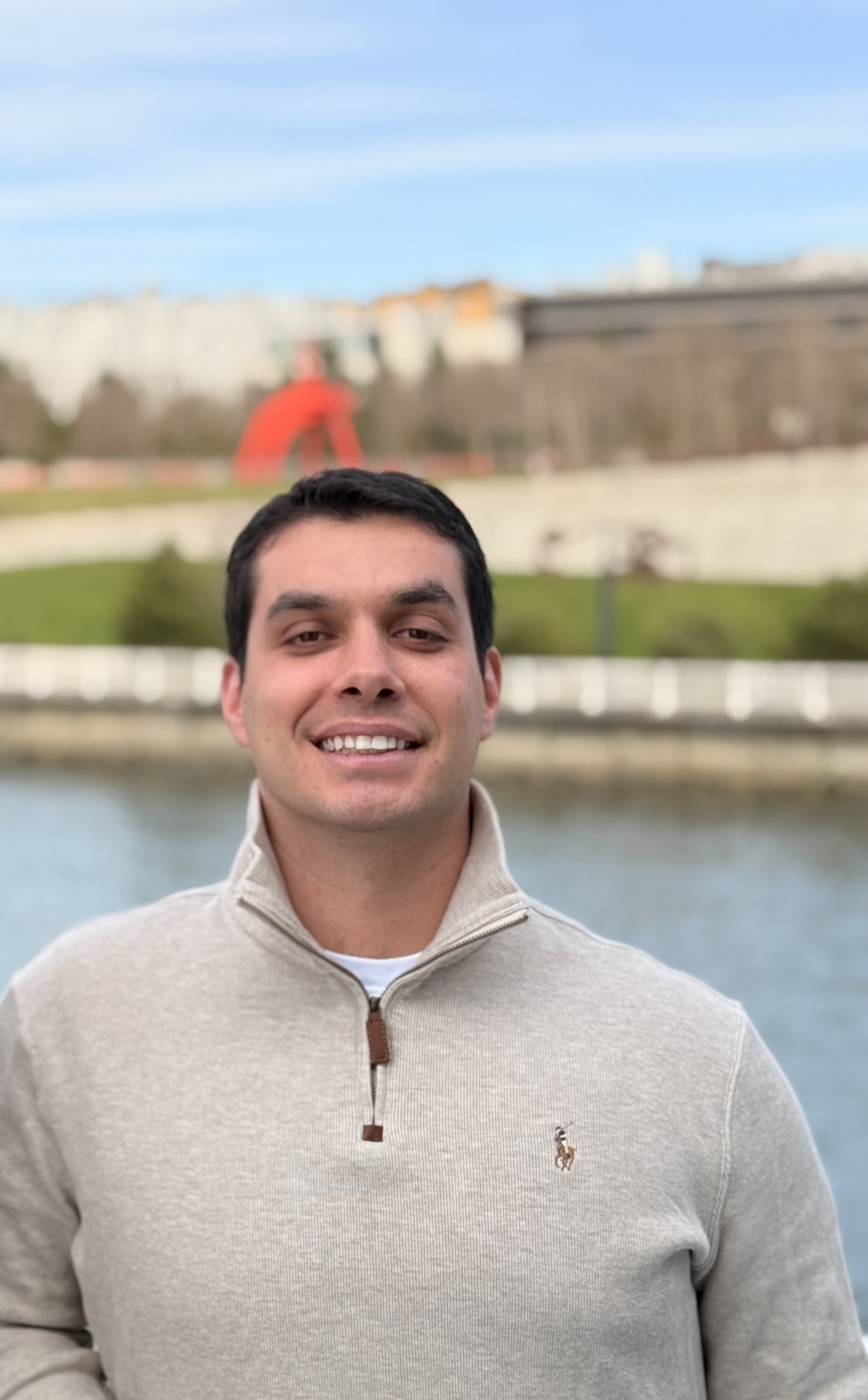
Caddi is the company, and Castellano is its co-founder and CEO. The product has a deliberately humble name and an immodest idea behind it: you record yourself doing a repetitive task - client intake, document filing, an invoice, an email you send forty times a week - and Caddi turns that recording into a real, API-driven automation. The team calls it “record-to-code,” or “automation by demonstration.”
The customers are the people the software industry usually forgets: law firms, accountants, financial advisors, consultants. Professional services. The folks whose billable expertise is buried under back-office admin that no enterprise tool was ever quite built for.
What makes it more than a macro recorder is the bet underneath it. Traditional robotic process automation mimics your clicks; the moment a button moves, it breaks. Caddi tries to understand the intent behind what you did, so the automation survives contact with the real, messy world. That distinction is the whole company.
“Automation by demonstration means professionals can train Caddi just like they would a new hire,” Castellano has said. “No coding, no IT team.” The pitch lands because it inverts the usual order of things. The expert is not the engineer in the corner. The expert is you.
There is a reason this is a hard problem and not just a clever demo. The tasks Caddi targets are the ones that resist clean rules - the judgment calls, the exceptions, the “oh, except when the client is in California” footnotes that live in a senior associate's head and nowhere in a manual. Capturing that tacit knowledge by watching someone work, rather than asking them to write it down, is the part that was impossible until recently. It is also the part Castellano spent a master's degree learning how to do.
And the timing is not an accident. Generative AI made it plausible to read a noisy, human demonstration and infer the structured steps underneath it. The operating experience told him where the pain actually lived. Put a model that can understand intent in front of an industry drowning in repeatable admin, and you have a company. The recording is the spec. The professional is the programmer, whether or not they ever realize it.
How It Works
You do the task once, on screen, talking through it like you would for a new hire. Your voice is part of the lesson.
Caddi reads the intent, not just the clicks - what you were trying to accomplish, step by step, and why.
It converts the demonstration into working, API-driven code that runs on its own. A virtual colleague, not a brittle script.
You are the expert in your topic.Alejandro Castellano · on who Caddi is built for
The Long Way Here
Before the cap table, there was a kid in Lima, Peru, who wanted to be an inventor. That ambition pointed him, sensibly enough, at electrical engineering. It is a tidy origin for someone who now sells a machine that learns by watching.
He did not wait for permission to start building. While still in college he launched an EdTech venture called A Plus Tutoring - his first company, at around nineteen. It was small. It was also the thing that introduced him to business people, which turned out to matter more than the revenue.
That introduction led to a family office, where Castellano spent years managing a portfolio of companies and investments. He calls it his “on-the-streets MBA.” It is the part of the resume that does not photograph well but explains everything: he watched, up close and across many industries, how a business grinds its way from one million in revenue to ten - and exactly how much of that grind is repetitive admin that nobody enjoys and everybody pays for.
The childhood dream had unfinished business. He came to the United States for a master's at Cornell Tech, where he went deep on computer vision and machine learning with an entrepreneurial bent. Two halves of a person were now in the same room: the operator who had seen the busywork, and the engineer who could finally teach a computer to see it too.
He landed at the AI2 Incubator in Seattle - the startup studio spun out of the Allen Institute for AI - as an entrepreneur-in-residence. There, the operator and the engineer shook hands, and Caddi was the result.
Receipts
Starts his first company, an EdTech venture, while still in college in Peru.
Joins a family office, managing a portfolio of companies and investments across industries.
Studies computer vision and machine learning, with an entrepreneurship focus.
Becomes an entrepreneur-in-residence at Seattle's AI2 Incubator; co-founds Caddi with CTO Aditya Sastry in August.
Caddi announces a $5M seed round led by Ubiquity Ventures, with Founders' Co-op and the AI2 Incubator.
Why It's Different
Old-school RPA copies your mouse and shatters when a layout shifts. Caddi aims at what you meant to do, so the automation bends instead of breaking.
No coding, no IT department, no six-month rollout. You demonstrate; it learns. The same way you would onboard a new associate.
Lawyers, accountants, advisors and consultants - the experts whose time is the product, and whose admin is the tax.
Early adopters report roughly 30% off administrative costs and up to 11x ROI from a single automation.
Incubated at the studio spun out of the Allen Institute for AI, then backed by Ubiquity Ventures and Founders' Co-op.
Castellano runs the company; Aditya Sastry, his co-founder, runs the engineering. Two halves, one waterfront photo.
Automation by demonstration means professionals can train Caddi just like they would a new hire - no coding, no IT team.Alejandro Castellano
The Operating System
Castellano describes the founder's job as holding two contradictory things at once. You need, in his words, “a reality distortion field” - the nerve to imagine a future that does not exist yet and act like it is inevitable. And then, the moment a customer opens their mouth, you have to drop the act and be “quite real, quite transparent, and humble.”
It is a tidy summary of someone who has been both the dreamer with the EdTech startup and the operator inside a family office watching the unglamorous numbers. He has seen the reality distortion field from the inside, and he has also seen the spreadsheets that do not care about it.
The thread running through all of it is a refusal to make people feel replaceable. Caddi's stated belief is that technology should empower professionals, not replace them - the platform is built around how people actually work, learning from real workflows and adapting to the tools firms already rely on. The goal is not a smaller team. It is the same experts, freed from the part of the job they would happily hand to a machine.
That positioning matters more than it sounds. The easy, lazy version of an automation startup promises to cut headcount. The harder, more durable version promises to give the headcount you have their afternoons back. Castellano has consistently aimed at the second story, and the early numbers - cost cut without bodies cut - are the kind that let a firm say yes without a fight in the break room.
It also explains the choice of customer. He could have chased software teams, the audience that already speaks the language of APIs and automation. Instead Caddi went to the firms that have the most repetitive admin and the least appetite for an IT project: legal, finance, accounting, consulting. These are not industries famous for embracing new tools. They are industries famous for billing by the hour - which means every hour Caddi gives back has a price tag attached, and the math sells itself.
The Other Half
Castellano did not do this alone, and he is quick to say so. He co-founded Caddi with Aditya Sastry, who serves as chief technology officer and has led engineering and product teams at high-growth startups, building scalable AI and data products. The division of labor is the classic one and works for a reason: one founder obsessed with the customer's problem, one obsessed with the system that solves it.
They launched in August, came out of stealth the following March with the $5M round, and put their faces on the company - literally, in a single photograph taken on the Seattle waterfront, two founders squinting into the same future. It is a small detail, but a telling one. Plenty of AI companies hide behind a logo. Caddi decided you should know exactly whose new hire you are training.
Margin Notes
The kid in Lima wanted to invent something that did the work for him. He grew up and built exactly that - then handed the controls to everyone else.
Alejandro Castellano · Co-Founder & CEO, Caddi