field-service
(39)
CompanyCam turned lost job photos into a $2 billion business
A Nebraska roofer wanted to find the right picture. The company he built now helps contractors turn everyday jobsite evidence into reports, customer updates and a shared memory of the work.

Velocitor Solutions: The software company with a spare-parts habit
A fleet platform is only as useful as the devices that survive the working day. Velocitor pairs tracking, cameras, and mobile software with the people who install, support, and replace the hardware - and its owners have added a routing specialist to the mix.
XAPT and the art of making 700 things agree
A heavy equipment dealer sells a machine once, then spends years keeping it useful. XAPT’s NAXT365 puts that long relationship into one system - and asks the dealership to change with it.

Skedulo and the fortune hiding between appointments
A missed visit looks like a calendar problem. Skedulo’s bet is that the spaces between appointments can explain a much larger business: who gets care, who wastes a journey, and when a company needs to hire.
Appify and the Curious Case of the App Nobody Wanted to Build
The enterprise app builder learned an awkward lesson: customers did not want a box of digital parts. They wanted the repair job finished before the technician left.

The Shortest Route Is Rarely the Right One
OptimoRoute sells a deceptively practical idea: a schedule is only efficient if the right person, vehicle and promise arrive together. Its software turns the daily mess of deliveries and service calls into routes that can survive real life.

The CRM That Followed the Patient Past the Sale
Servis.ai began as FreeAgent CRM. Its more interesting bet now is that healthcare's hardest work happens after a lead becomes a patient: referrals, visits, staffing, supplies, and the handoffs between them.

The Name on the Truck Is the Deal
PipeDreams buys plumbing and HVAC businesses, but leaves the old name on the van. The interesting purchase is the trust that name has already earned - and the hard work of making the phone ring, the technician arrive and the customer call again.

On Device Solutions takes SAP off the desk and onto the factory floor
More than 800 paper forms at one car manufacturer tell the story. On Device Solutions builds mobile software for the people doing the maintenance, counting the stock and keeping the machinery moving.

Quickbase Built a $200 Million Business Fixing the Work Your Big Software Forgot
Quickbase lives in the awkward gap between a spreadsheet that cannot scale and an enterprise system that will not bend. Its wager: the people closest to the work should be able to build the missing software - without giving IT a governance migraine.
Connecteam Found Its $800 Million Idea in Four Words: ‘What Promotion?’
A waiter missed one message from headquarters. Connecteam’s founders saw an entire workforce missing its operating system - and turned a narrow training tool into a three-hub business used from construction sites to restaurant counters.

Limble Took 30 Months to Earn $12 - Then Built the Maintenance Playbook Every B2B Founder Should Steal
A failed pharmacy startup taught Bryan Christiansen to interview before he built. Two hundred maintenance conversations, one $12 customer and roughly $113 million in funding later, Limble's best lesson is still the cheapest one: make the frontline want to use the software.

Prateek Chakravarty Left the Oil Field. He Never Stopped Thinking Like a Field Engineer
Before he sold enterprise software, Prateek Chakravarty filed reports from remote oil rigs. Now the Zinier CEO is betting that useful AI begins with muddy boots, thick gloves and the stubborn details of work in the field.

SiteCapture’s $350-a-Month Fix for the Most Expensive Photo a Solar Crew Forgot to Take
A forgotten inverter label can cost a solar installer a truck roll and a financing delay. SiteCapture built a business around catching that mistake while the crew is still on the roof.

The App That Wants HVAC Reps to Close the Deal Before They Leave Your Driveway
Sales Builder Pro turns the messy kitchen-table HVAC quote into a five-minute, signed, financed proposal. A look at how a small Ohio software company built a business inside one stubborn trade.

The paperwork was killing the crew. Connixt handed them an app instead.
A 15-person, self-funded team in Cerritos built the maintenance app that field crews actually open - and got LA Metro, Metrolink and a Canadian grocery giant to trade their clipboards for it.

When Heavy Machines Break, Elevāt Makes Them Talk Back
The Seattle startup wires up off-highway equipment - tractors, cranes, fire trucks - and hands technicians an AI that reads the machine's mind before anyone opens the panel.

Devasena Rajamohan
Devasena Rajamohan is Corporate Vice President of Dynamics 365 Customer Experience Applications at Microsoft, leading global teams of product managers, engineers, and data scientists driving innovation across Customer Insights, Sales, Customer Service, and Copilot. With a career spanning over two decades in enterprise CRM and cloud software—including senior leadership at SAP and early engineering roles at TATA Infotech—she has shaped how large organizations deliver AI-powered customer engagement. Under her leadership, Microsoft earned recognition as a Leader in both the 2025 Gartner Magic Quadrant for CRM Customer Engagement Center and The Forrester Wave Customer Service Solutions Q1 2026.

KMS Lighthouse
Give your team an AI-powered knowledge management system, so your customers get AI-speed service.

Winston Chi
Winston Chi is the co-founder and CEO of NOSO Labs, a Y Combinator (Summer 2025) startup building AI agents that help home-services field technicians diagnose problems, close sales, and handle paperwork. A two-time founder focused on vertical AI, he previously started Butter Technologies, a food-wholesale software platform acquired by GrubMarket in 2024. With NOSO he is aiming the same playbook at the trades, starting with HVAC.
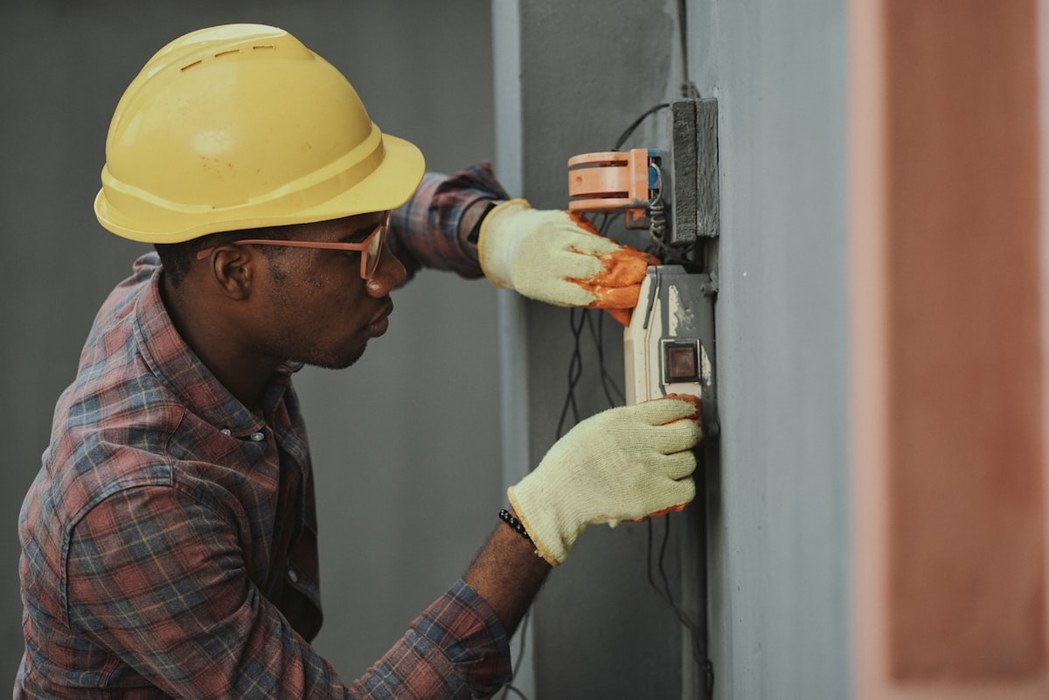
Why Everyone Is Building the HVAC Chatbot
Five AI-native startups and every major field-service platform are racing to build the same product: an AI assistant that sits in a technician's pocket and answers questions about the air conditioner in front of them. The technicians are a proxy. The real contest is whether a thin AI layer on an underserved dataset can survive once the platform that already owns the customer relationship copies the feature for free. HVAC is the smallest, clearest test of a question every vertical AI founder is asking: does depth beat distribution?

NOSO LABS
NOSO LABS builds AI agents for field-service technicians in home-services trades - starting with HVAC, plumbing, electrical, and pest control. Its agents automatically follow up on unsold estimates over text, sync notes to the CRM, and route complex jobs to a back-office dashboard, aiming to recover revenue that would otherwise slip through the cracks without adding headcount. Founded in 2025 by Winston Chi and Alex Xi, the San Francisco company is part of Y Combinator's Summer 2025 batch.

Pairio
Pairio is an AI mobile app that helps factory technicians fix broken machines. A technician speaks into their phone or snaps a photo of a faulty machine, and Pairio searches thousands of pages of OEM manuals and past repair records to return step-by-step fixes on the spot. After each repair, the technician talks through what they did and Pairio structures the learnings into shareable know-how, so institutional knowledge outlives the workers who retire. Founded in 2025 by Tim Zinkl and Matthias Wolf and backed by Y Combinator (P26), Pairio is already cutting repair times by roughly 25% across four manufacturing plants in Germany.

Munjz | FM & PM Technology
Munjz is a Riyadh-based proptech company that builds cloud-native facility- and property-management software for the Saudi market. Founded in 2017 as a consumer maintenance marketplace, it pivoted to B2B SaaS in late 2021 and now runs Munjz Connect, an Arabic-first CAFM and PMS platform that unifies work orders, assets, vendors, tenants, and finances for property operators, government bodies, and chains such as McDonald's, Dunkin', and DHL. The company raised a $5 million Series A in 2023 led by regional proptech and real-estate investors.

Thomas Cottereau
Thomas Cottereau is the CEO and co-founder of SightCall, a San Francisco-based platform for AR-powered live visual assistance used by enterprises in insurance, manufacturing, healthcare and utilities. A telecom engineer who helped build early internet infrastructure at UUNET and MCI WorldCom, he started SightCall in 2008 in a friend's basement and spent five years turning a video prototype into an enterprise SaaS platform, later moving his family to the Bay Area and winning HP as an early flagship customer. Under his leadership SightCall raised roughly $58 million and grew into a global company serving customers across every continent.
Aquant
Aquant is a New York-based enterprise AI company that builds agentic AI purpose-built for servicing complex equipment. Its platform turns an organization's service data and expert knowledge into AI agents that guide field technicians, call-center agents, customers and service leaders in real time - improving first-time fix rates, cutting repeat visits and closing the service skills gap across industries like medical devices, industrial machinery and manufacturing.

TechSee
TechSee is an Israel-based enterprise software company that uses computer vision, augmented reality and multimodal generative AI to add sight to customer service. Its Sophie AI platform lets customers and technicians point a smartphone camera at a device so the system can recognize the product, diagnose the issue and guide a step-by-step fix - either fully self-service or as an assist for a human agent. Founded in 2015, TechSee works with global brands such as Verizon, Vodafone, Orange and Telus to raise first-call resolution and cut costly truck rolls.
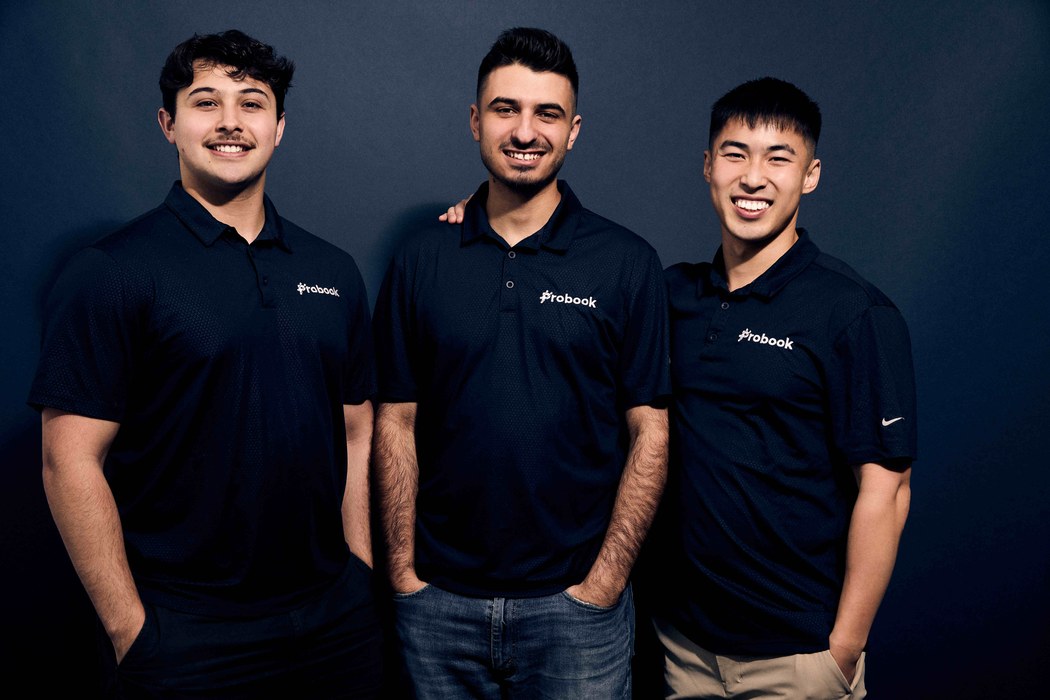
George Eliadis
George Eliadis is the co-founder and CEO of Probook, a New York based company building an AI operating system for home services businesses such as HVAC, plumbing, and electrical contractors. A 24-year-old Wharton graduate who spent six summers pressure washing homes in upstate New York with his father, he started Probook to fix the operational problems he lived through in the field. In June 2026 the company raised a $40 million round, combining a $34 million Series A led by Andreessen Horowitz and a $6 million seed led by Sequoia Capital, and it now serves hundreds of clients across more than 35 states.
KonaWare
KonaWare was a Menlo Park mobility-software company founded in 1999 that built a platform and development tools for putting mission-critical enterprise applications into the hands of mobile field workers. Its suites covered transportation, logistics and field service - dispatch, proof-of-delivery, electronic driver logs, vehicle inspections and asset tracking - and were engineered to keep data intact whether devices were connected or not, running across laptops, PDAs and early smartphones. Backed by Draper Richards and Western Technology Investment, the company was an early bet on enterprise mobility years before the smartphone made it mainstream; its field-service assets were acquired by ServicePower in 2008.

SightCall
SightCall is a San Francisco- and Paris-based enterprise software company that turns a customer's or technician's smartphone camera into a live support channel. Its cloud platform blends real-time WebRTC video, augmented-reality annotations, and multimodal generative AI so that a remote expert - or increasingly an AI agent - can see what someone in the field sees, guide them through a fix, and automatically document the session. Used by brands like Ford, Allianz, GE HealthCare, Deutsche Telekom and Lavazza, SightCall targets field service, insurance claims, customer service and healthcare, aiming to resolve problems on the first contact and cut unnecessary truck rolls.