Walk into any rail yard, power substation or refrigerated grocery warehouse and you will find the real operating system of heavy industry: a clipboard. A paper inspection form, a smudged checklist, a work order that gets keyed into a database three days later by someone who was not there. For decades, the software industry's answer was to sell that operation a giant enterprise system - one that took two years to install and that the people in gloves quietly refused to use. Connixt, a self-funded software company in Cerritos, California, built its entire business on the second half of that sentence.
Founded in 2015 by G Satish and Prabu Ekambaram, two industry veterans who had watched too many six-figure rollouts fail, Connixt sells a product called iMarq. It is a mobile-first maintenance platform - native apps for iPhones and Android tablets - that lets field crews digitize inspections, work orders, safety checks and incident reports without touching paper. The trick is not the feature list. It is that the mechanic under the truck opens it voluntarily.
"From real-time data relay to intuitive features like speech-to-text, iMarq has been a game-changer."Mid South Transport
01What Connixt actually does
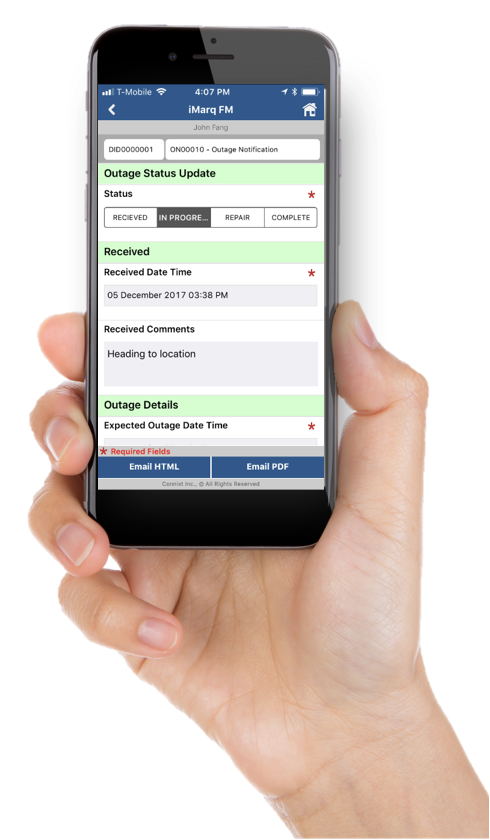
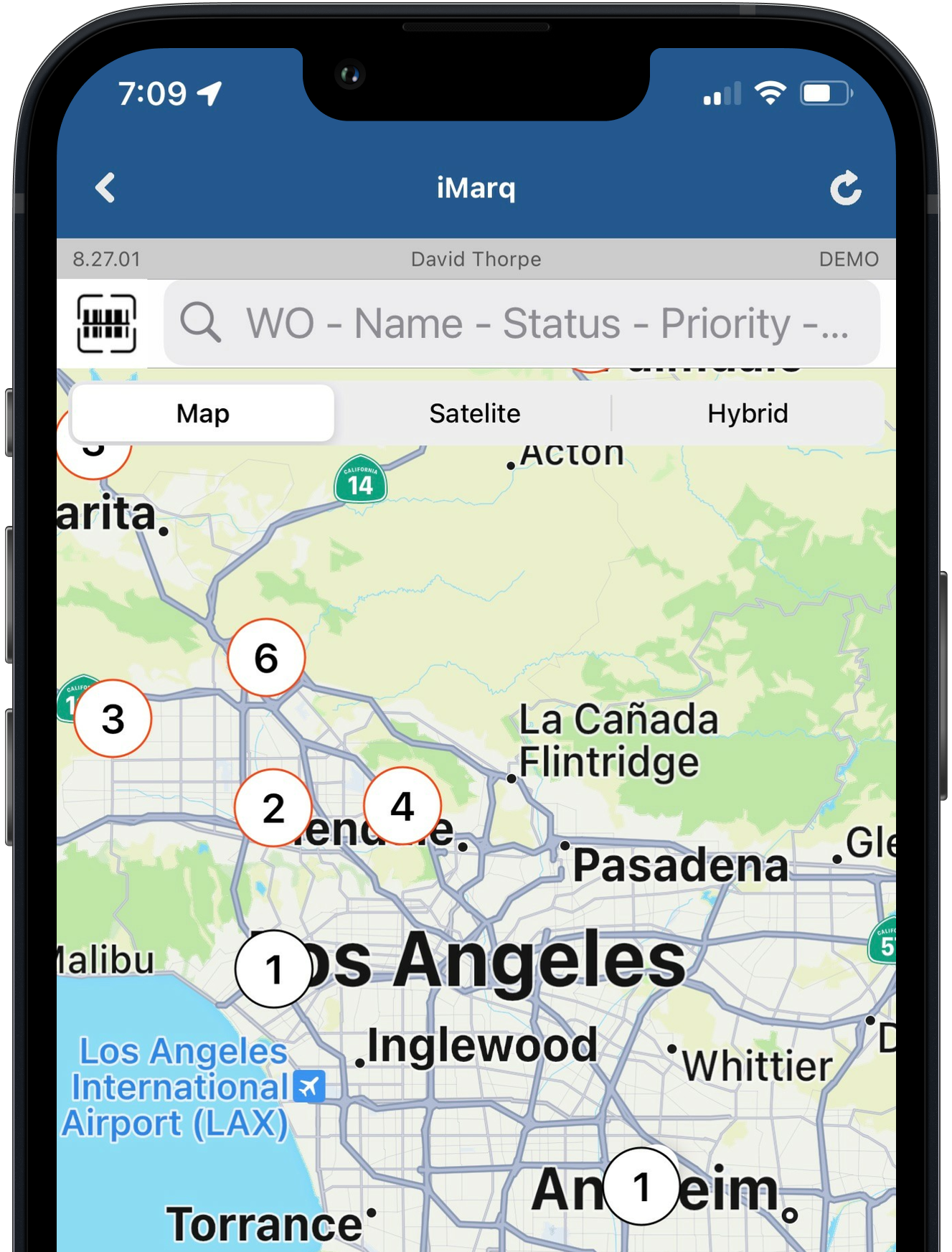
The productiMarq takes the paperwork of maintenance and turns it into an app. Crews fill out configurable forms and checklists, snap photos and annotate them, dictate notes with speech-to-text, scan with LiDAR, drop geolocation pins and run through work queues - all on a phone. The whole thing works offline, which matters more than it sounds: a lineman restoring power during an outage or a tech in a basement pump room has no signal, so iMarq captures the work locally and syncs when the connection returns.
Behind the app, the data flows into the systems companies already run. iMarq integrates with maintenance and asset-management platforms like Trimble TMT, fleet telematics from Geotab, and ERPs including NetSuite and SAP. The crew gets a consumer-grade app; the back office gets clean, structured data instead of a shoebox of forms.
02Who is actually using it
The customersConnixt sells into the unglamorous backbone of the economy: utilities, road and rail and transit agencies, trucking fleets, manufacturers, distributors, grocery chains and oil and gas. The names on the customer list are the kind that keep cities moving - LA Metro, Metrolink and LADOT among the transit agencies, the Canadian grocery giant Loblaw, Black River Electric Cooperative, and a string of trucking and locomotive-repair operators like Mid South Transport, Payne Transportation and Metro East Industries.
The pattern across all of them is the same. LA Metro digitized the inspection and compliance forms for its rolling stock. LADOT modernized its traffic-signal division. A locomotive shop cut administrative time and data-entry errors. Roughly 5,000 field users run about 51,000 transactions a month on the platform.
"iMarq was easily able to meet our language requirements - Arabic in our case. Instead of typing, we just speak to the application in Arabic, saving time."GTC, Saudi Arabia

03The two who built it
The foundersConnixt is the work of two people who had seen the failure mode up close. G Satish, the CEO, and Prabu Ekambaram, the CTO, are described as industry veterans who came to the same conclusion from opposite ends of a deployment: the software was capable, the crews were willing, and the gap between them was where the money died. Their founding goal reads almost like a consumer-app slogan - to make business-to-field integration as easy as downloading an app. That phrasing is a tell. Most enterprise-software founders talk about workflows and compliance; Connixt's talk about whether the thing is easy enough that a busy mechanic bothers.
The company stayed small on purpose. Roughly fifteen people, direct onboarding with weekly check-ins during a rollout, and a product roadmap driven by what crews ask for in the field rather than what looks good in a demo. It is a culture built to keep the founders close to the person in the gloves.
04The problem it solves
Why it existsThe founders started from a blunt observation: end-users hate complex enterprise applications, so deployments are slow, expensive and often dead on arrival. When the people doing the work will not use the tool, the multi-million-dollar system becomes an expensive way to generate the same paper it was meant to replace. Connixt's fix is to attack the two things that kill adoption - difficulty and time. iMarq ships as pre-built, configurable apps that go live in roughly four weeks rather than years, and it is designed to feel like the apps crews already use on their own phones.
05How it is different
The wedgeThe market for maintenance software - CMMS and EAM, in the industry's acronyms - is crowded with capable back-office platforms: UpKeep, MaintainX, Limble, Fiix, Fluke eMaint, IBM Maximo, ServiceMax. Most were built for the manager and the maintenance planner. Connixt built for the person holding the wrench first, and made the back office a beneficiary rather than the buyer it optimizes for.
| Typical enterprise CMMS | Connixt iMarq | |
|---|---|---|
| Built for | Planner / back office | The field crew |
| Deployment | Months to years | ~4 weeks |
| Offline work | Often limited | Full offline, then sync |
| Data entry | Type at a desk | Voice, photo, LiDAR in field |
| Adoption | The perennial struggle | Reported near 100% |
"The onboarding process was smooth, supported by weekly meetings to ensure iMarq's seamless operation."Loblaw
06The AI arrived after the adoption
iBotIn 2024, Connixt added iBot, an AI maintenance assistant built directly into iMarq. The sequencing is the interesting part: the AI came after the app was already something crews used every day, not as the headline feature meant to sell the deal. iBot lets a technician ask a question by voice or text - "what is the status of the HVAC repair scheduled this week?" - and get an answer pulled from the organization's own data.
Its most useful trick is a feature called Pinpoint, which reads OEM manuals, work instructions and technical bulletins and returns cited answers. Ask for a torque spec and iBot replies with the number and the receipt: "45 ft-lb - OEM Manual, Section 4.2, p.118." It also transcribes and translates crew communications across languages and flags anomalies - a temperature spike that hints at an imminent failure - from patterns in the asset's history. The framing Connixt uses is that iBot does not replace the crew's expertise; it removes the twenty-minute PDF hunt between a technician and the answer they already half-know.
07The business, and the boring superpower
The modelConnixt is B2B SaaS, sold as subscription licenses to enterprises with distributed field operations, expanded through seats and add-on modules like iBot and the WMX warehouse-and-inventory extension. What is unusual is the balance sheet: ten years in, the company never raised venture equity. It grew from roughly $88,000 in revenue in 2020 to an estimated $1.5 million by 2024, on a team of about fifteen. A small debt financing was reported in late 2023, but the story is a bootstrapped one.
That constraint doubles as strategy. Without a war chest to burn on sales, Connixt had to make a product that sold itself through use - the reason it obsesses over the crew's experience and the four-week deploy. In a category where rivals raise and spend to acquire customers, "the crew likes it" turns into renewals, and renewals fund the next year. It is a slower curve. It is also a durable one.
"The use of Connixt iMarq reduced paper consumption and increased productivity."Roy Jorgensen Associates
08Where it fits
The marketConnixt is not trying to be the system of record for the entire maintenance department. It sits at the edge - the field, the workshop, the substation - where work actually happens, and feeds the systems of record behind it. In a world of digital-transformation slide decks, its expertise is narrow and practical: getting a phone into a crew's hands and getting them to use it. For utilities, transit agencies and fleets weighing a heavyweight EAM against something their people will actually open, that narrowness is the pitch.
The brand mark says it quietly. Look at the CONNIXT wordmark and you will find a stylized X - the same X that anchors the iMarq app icon. The whole company is built around the point where business software and the field finally cross.