The roof is finished. The crew has packed the ladders. Then someone in the office opens the job folder and discovers the missing shot: no readable serial number on the inverter, no wide angle of the sub-panel, no proof that the equipment matches the plan. The physical installation may be fine. The paperwork is not. A finance partner rejects the milestone, the cash clock stops, and a technician drives back across town to take one photograph.
That small, expensive absurdity is SiteCapture’s market. The Oakland software company gives field crews a mobile app for taking required photos and videos, completing inspections and forms, receiving work orders and messaging the office. The office gets a web portal for quality control, reports, estimates and project oversight. The promise is less romantic than “digital transformation,” and more useful: get the evidence right before everybody leaves.
SiteCapture says its platform has handled more than 10 million projects and 500 million photos. Its customer list spans solar installers, residential property operators and contractors, including publicly named users such as Sunrun, Omnidian, FirstKey Homes, Darwin Homes, Powur and Big Dog Solar. Those customers do not need another camera roll. They need a dependable chain from the person holding the phone to the person approving the job.
The company that bought a name
SiteCapture’s corporate history contains a tidy branding twist. Kamal Shah founded FotoNotes in 2009 after years spent engineering software products for other companies. FotoNotes focused on mobile and cloud workflows for residential property operations. In September 2022, it acquired another company called SiteCapture, a solar field-operations platform founded by Christopher Doyle. Shah stayed CEO; Doyle joined the board. Then the buyer adopted the acquisition’s name.
The choice made sense. “FotoNotes” sounded like a clever photo utility. “SiteCapture” described the larger job: inspections, scope, installation, maintenance, proof and handoff. In 2023, the old FotoNotes apps and web addresses were retired. Existing users moved to SiteCapture-branded versions with the same credentials and, according to the company, functionally identical products. The merger joined FotoNotes’ property-management experience with the acquired product’s solar specialization.
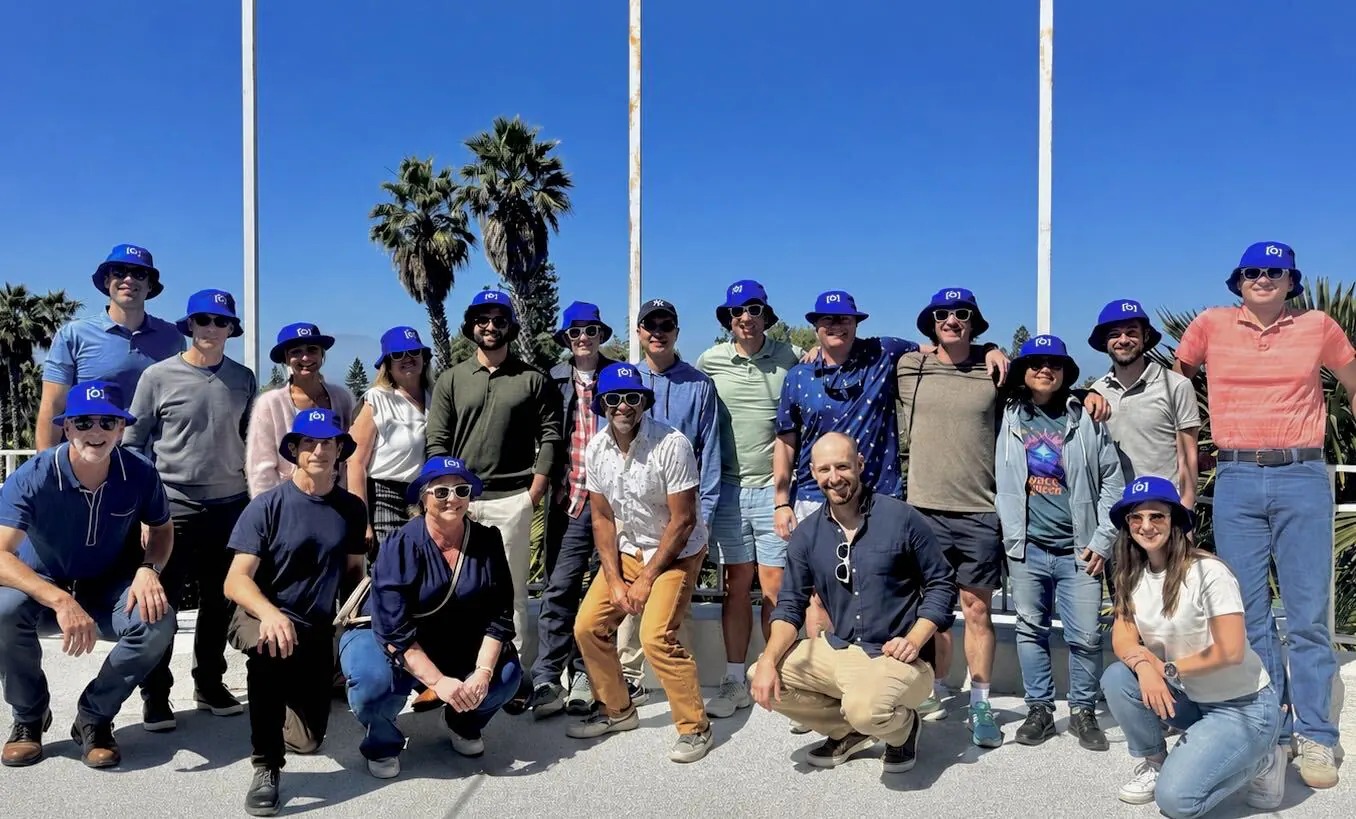
The company remains small. LinkedIn puts it in the 11-to-50 employee band; supplied company data counts about 23 people. Its public culture is similarly compact: “be good humans,” pursue customer success and have fun every day. This is not a culture manifesto polished into fog. The practical evidence is in the implementation stories, where customers repeatedly mention hands-on configuration and support.
What failed first
Before buying purpose-built software, customers usually try the obvious tools. At 1st Light Energy, technicians emailed phone photos or stored them on micro SD cards, then manually uploaded everything from laptops. Information went missing between nine offices and a design team that could be 3,000 miles away. The company moved the survey into custom SiteCapture templates so every submission arrived in one organized system.
Big Dog Solar’s path is more revealing because the first replacement also failed. The team moved from Google Drive to a homegrown Google Form. But crews work across rural parts of the Mountain West, where connectivity is uneven. The form was slow, lacked the conditional logic needed for different systems and offered no useful QC while technicians were on site. Palmetto LightReach financing packages kept coming back over missing or incorrect photos. Each rejection meant another trip.
What changed Big Dog’s mind was not storage capacity. It was control. The company built templates with conditional logic, made key photos required, attached example images that showed technicians the correct angle and added a checkpoint before activation. SiteCapture’s direct LightReach integration then pushed the documentation into the funding workflow. Onboarding took a couple of weeks, followed by several more weeks tuning the site-survey form.
Within its first months, Big Dog reported cutting surveys from roughly two hours to one, improving first-time LightReach approvals by 50 percent and reducing milestone-related truck rolls by about half. It had documented more than 500 surveys and planned to extend the system into installation and service. These are customer-reported results, but they illuminate the economics: the return appears downstream, where complete evidence avoids a rejected package, a delayed payment or a repeat visit.
The workflow worth stealing
The replicable idea is not “buy an app.” It is to treat field evidence like a production process. Decide what a valid submission contains. Show workers what good looks like. Ask only the questions relevant to the equipment in front of them. Check the package before the cost of correction rises.
SiteCapture wraps that loop around customizable inspections, work orders, photo and video management, in-app messaging, branded PDF reports and estimating. Its integration strategy acknowledges that it is rarely the only system in the company. Salesforce can create work orders and receive completed forms. Zapier can send reports to Google Drive, alerts to Slack or emails through Gmail. A REST API and webhooks cover custom systems. A native Palmetto LightReach connection moves solar milestone documentation without the familiar download-and-upload shuffle.
Self-surveys push the loop outside the workforce. A company emails a link and a homeowner or resident follows prompts to submit photos and answers from a phone. A&R Solar used that approach during pre-sales and reported eliminating more than 100 site visits and saving over 850 travel hours. It is a neat inversion: do not dispatch a specialist merely to collect simple evidence that the customer can capture with careful instructions.
Omnidian applied the configurable forms to preventive maintenance. It created check-in and check-out flows, detailed forms and client reports for its commercial solar operation. The company reported completing more than 1,900 projects in 2023, onboarding more than 75 partners and saving over 400 hours per month. EMPWR Solar used tighter documentation to raise first-time milestone approvals to 85 percent and cut a reported 22-day funding cycle to nine days.
AI gets a narrow job
SiteCapture’s latest move is SiteCaptureAI, an add-on positioned as a real-time reviewer. The product is designed to identify equipment and its condition, extract text from labels, summarize photo sets, transcribe video narration, verify required documentation and alert workers while they can still correct an issue. The company says it can check items such as module orientation, inverter models, serial numbers, damaged rafters and finance-partner requirements.
This is a credible place for AI because the task is bounded. A customer defines the workflow; the system checks the evidence against it. The useful outcome is not a lyrical project summary. It is a blunt notification: this label is unreadable, this angle is absent, this equipment does not match the plan. SiteCapture says automated QC can reduce review costs by as much as 50 percent, though buyers should test that claim against their own job mix and error rate.
The buying test: Count the monthly cost of repeat visits, rejected submissions, manual photo sorting and delayed approvals. If that number is not comfortably above the subscription plus rollout time, keep the simpler stack.
Where it fits, and where it does not
SiteCapture sits between lightweight photo apps and broad construction-management suites. CompanyCam, Raken, PlanRadar, Fieldwire, Procore and Autodesk Construction Cloud all overlap parts of the job. A shared-drive stack remains the cheapest alternative. SiteCapture’s distinction is the depth of its field-evidence workflow, especially for solar financing, residential inspections and configurable photo-heavy processes.
Public pricing makes the trade-off visible. Pro is listed at $350 per month and Premium at $800, with Enterprise priced by quote. Self-surveys start at $100 per month for 30 inspections or $350 for 150, with per-inspection overages. The product earns its fee when crews run repeatable jobs, missing evidence is costly and office teams can act on data quickly. A solar installer with lender checklists has an obvious case. A two-person contractor taking a handful of progress pictures may not.
It can also fail when management refuses the work hidden behind “customizable.” Someone must define templates, maintain examples, set permissions, connect systems and train field staff. Self-surveys weaken when customers cannot safely reach the subject, the task requires expert judgment or the evidence is easy to stage. AI verification needs human escalation for ambiguous images and high-stakes defects. Software cannot standardize a process the business itself has not understood.
Still, SiteCapture has identified a durable truth about field operations: the job is not finished when the wrench stops turning. It is finished when the right people can see what happened, approve it and pay for it. Sometimes the entire distance between those two moments is one well-framed photograph.