In affordable housing, the apartment is almost the easy part. The hard part is making a dozen institutions agree that it should exist. Land has to be controlled. A housing agency has to bless the plan. Tax credits, bonds, loans and private equity have to arrive in the right order. A contractor must hold the budget while material prices wander. Then a manager inherits the building and discovers whether every assumption survived contact with a resident.
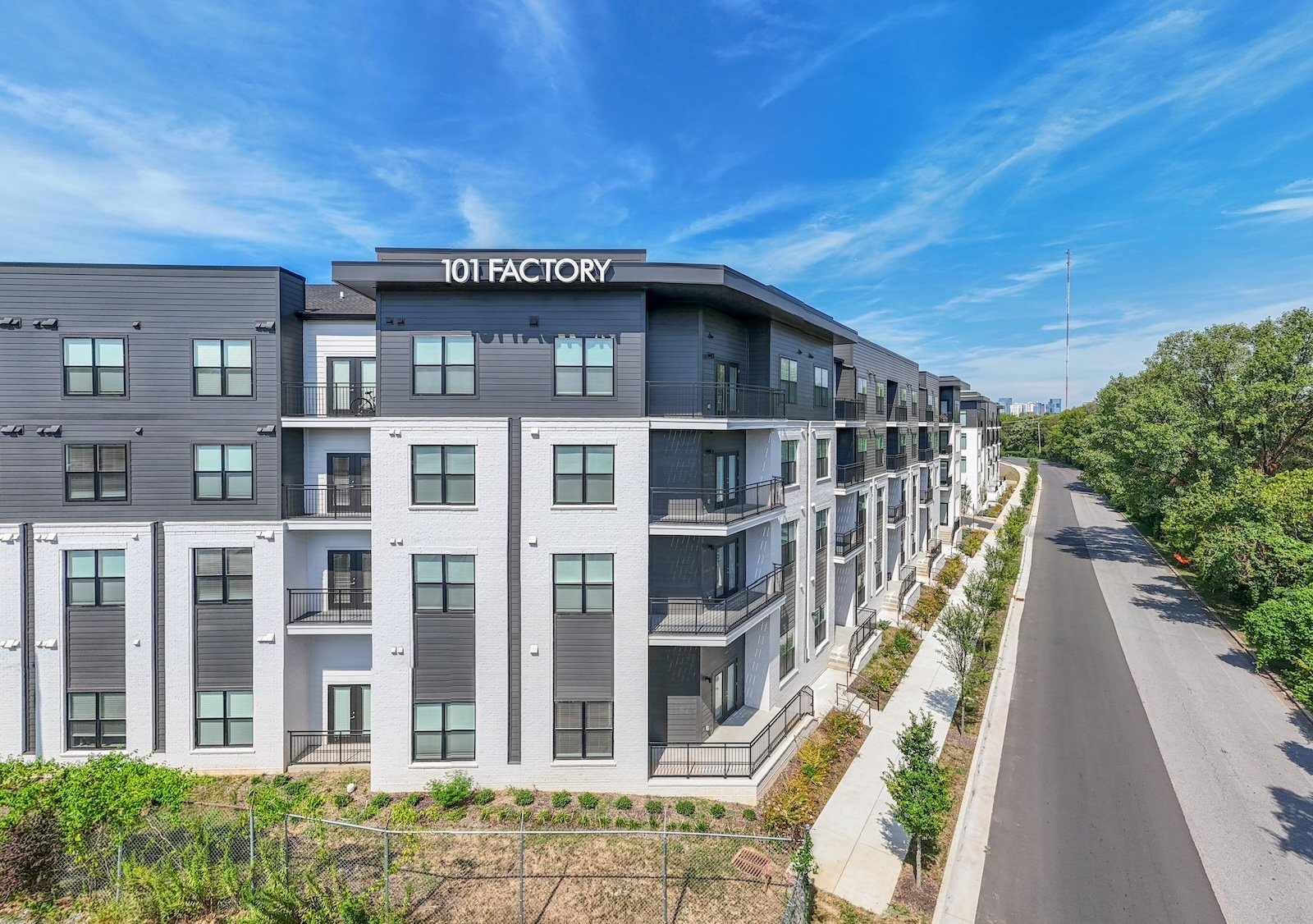
Elmington has spent 16 years pulling those jobs under one roof. The privately held Nashville company develops affordable housing, runs a construction business, owns and operates apartment communities, invests in commercial property and builds or buys higher-end rentals. It is not a tidy one-product company. It is closer to a machine shop for real estate problems - particularly the problems that become expensive when one specialist hands a project to another and walks away.
The scale is material. Elmington says it has completed more than $4 billion in real estate transactions, developed or built more than 16,000 affordable units, and assembled a workforce of more than 1,000 people. Its owner-management arm reports 71 properties and 12,576 units across eight states. The construction unit reports 6,548 units delivered, another 2,700 under construction and $1 billion of total project work. Those figures describe a regional company that learned to behave like infrastructure.
A recession made the first draft
Cary Rosenblum and Ben Brewer founded Elmington Capital Group in 2010, when the Great Recession had turned real estate into a room full of awkward assets and impatient lenders. The original company bought and worked out distressed notes and bank-owned property. Affordable housing was not the master plan. Neither was a management arm. Those businesses emerged as the founders followed opportunities and accumulated the people required to execute them.
That origin matters because it explains Elmington's temperament. This is a finance company that kept walking downstream. Its first affordable project, Crescent Bluff in Memphis, broke ground in 2011. In 2012 it bought Fountain Square, a 596-unit Louisville portfolio, for $22 million. Elmington says it improved net operating income by 63 percent and sold the property in 2021 for $46 million, returning a 7.8-times equity multiple. The formula - unusual sourcing, clever capital, physical work and hands-on operations - became repeatable.
“The useful idea is not to own everything. It is to own the handoffs where information usually dies.”YesPress analysis
The deal is the product
Elmington's affordable-housing customers are not only renters. They are also cities that need homes built, housing authorities that need compliant operators, banks and tax-credit investors that need projects to perform, and neighborhood organizations that want something more durable than a rendering. The company serves all of them with one bundle: site selection, finance, design coordination, construction, lease-up, compliance, maintenance and long-term asset management.
The capital stack is where the business model becomes legible. A 2020 Nashville project called Trinity Flats paired 210 income-restricted units with roughly $16.4 million in Low-Income Housing Tax Credit equity and a payment-in-lieu-of-taxes agreement. Hobson Flats, a 324-unit partnership with the Woodbine Community Organization, was projected to generate about $19.7 million in tax-credit equity. An earlier 8200 McCrory project used more than $24 million in HUD-insured financing. These are not venture rounds. The financing is attached to properties, rules and decades of obligations.
The Elmington loop
Land + deals
Debt + credits
Cost + quality
Lease + maintain
Feed data back
The advantage over a conventional developer is feedback. A construction estimator can hear what maintenance teams repeatedly replace. A designer can see which layouts lease. Compliance staff can flag documentation traps before the next project opens. The commercial arm supplies a different muscle: Elmington reports $675 million in transactions, $225 million of equity raised and 1.4 million square feet of Middle Tennessee commercial space. Its residential group adds build-to-rent homes and opportunistic multifamily acquisitions. Each unit is a separate business, but the shared literacy is capital plus operations.
Look closer and each division has a distinct buyer. Elmington Affordable sells execution to public agencies, finance partners and communities, then houses renters whose incomes fit a project's rules. Elmington Construction sells budgets, schedules and general-contracting work to owners, including its sibling companies. Elmington Living serves residents while protecting the performance of Elmington-owned assets. Residential courts households that want the space and privacy of a house without buying one. Commercial looks for underused offices, retail and industrial buildings where renovation, leasing or better management can lift income. This is why calling Elmington simply a “developer” misses the interesting bit. It can collect a fee, earn recurring management income, hold property cash flow, or realize a gain at sale - sometimes at several points in the same property's life.
That breadth also changes how it competes. A national manager can offer wider geographic coverage. A specialist tax-credit developer may know one state's allocation system more deeply. A local contractor may carry less corporate overhead. Elmington's pitch is coordination: one platform can underwrite the parcel, navigate public finance, pressure-test the design, build the units and stay around for the maintenance calls. The claim is practical rather than magical. Fewer interfaces can mean fewer excuses, but only if internal teams share information instead of recreating the same silos behind one logo.
What failed first: the paperwork
Vertical integration does not abolish friction. It concentrates it. As Elmington's management footprint grew, decentralized leasing and affordable-housing compliance became a bottleneck. On-site teams were simultaneously courting applicants, checking eligibility files, managing residents and keeping buildings moving. Approvals could take around two weeks. Errors created rework and compliance risk. Staff carried the cognitive load.
The response was to centralize specialist work and help shape software around the workflow. Fortress OS began as an internal tool inside Elmington's property-management orbit before becoming a separate software business. In a vendor case study covering Elmington's newer AffordaPortal workflow, Fortress reports that file errors fell 75 percent and approval time dropped to 24 hours. Those are vendor-reported results, not an independent audit, but the operational diagnosis is credible: scarce expertise works better as a shared service than as a part-time duty repeated at every property.
Elmington kept following that logic. In 2025 its management business selected PropUp to standardize maintenance workflows, apartment turns, asset tracking and vendor performance across a national portfolio. In 2026 Elmington Property Management announced a new name, Bedrock, separating the operator's national identity from the broader Elmington platform. Names change; the premise does not. Repeated work should produce shared data, and shared data should make the next property less chaotic.
A 99-year test on Nashville's East Bank
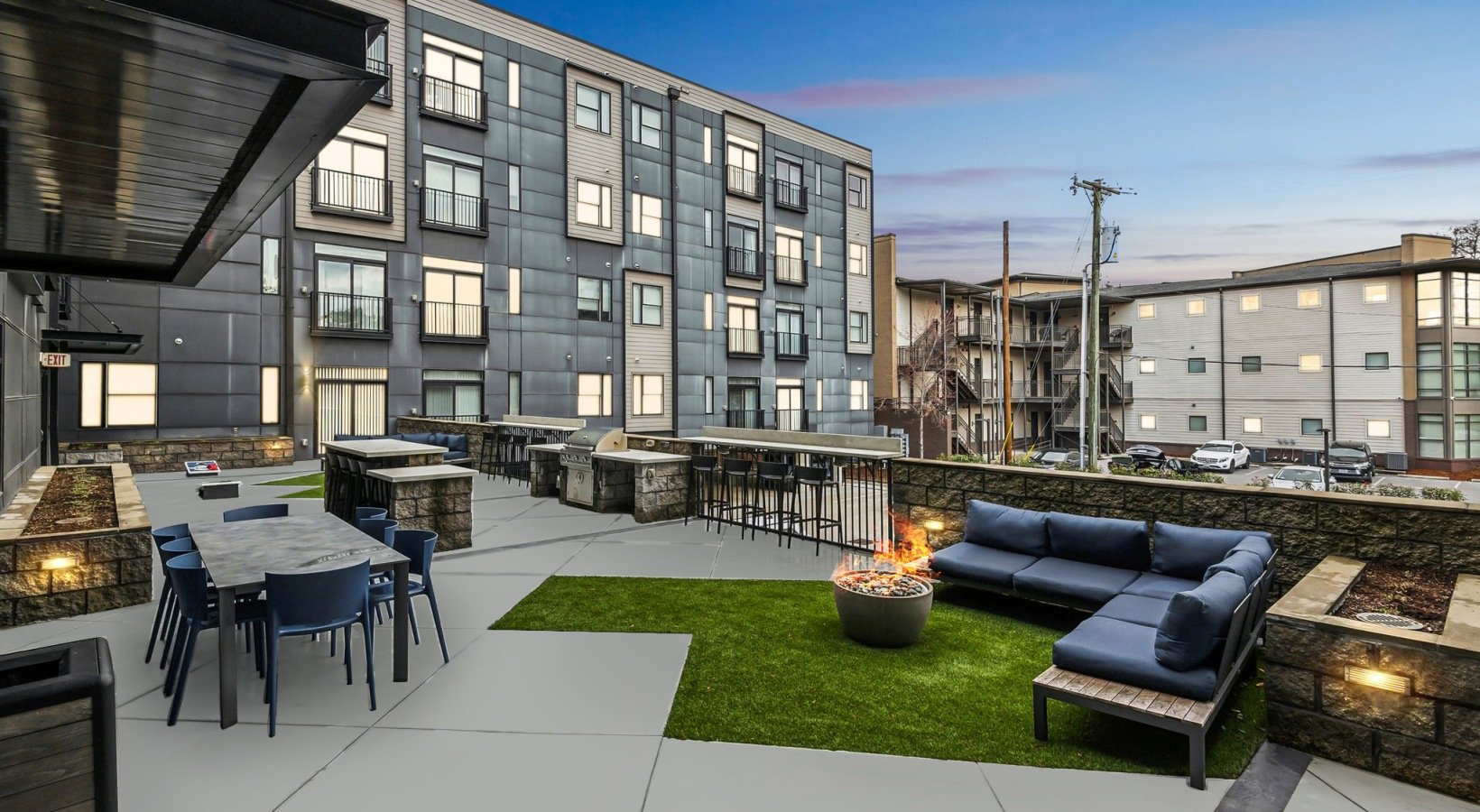
Eastpoint Flats is where Elmington's system meets a larger civic promise. The company and master developer The Fallon Company broke ground in 2026 on 323 fully affordable apartments beside Nashville's new stadium district. Plans add an 8,420-square-foot childcare center and 12,600 square feet of street-level retail. Metro Nashville owns the land. A 99-year ground lease is designed to hold the affordability in place for nearly a century.
What did it cost? The Tennessee Housing Development Agency committed more than $120 million, including $52 million in tax-exempt bond authority and housing tax credits expected to generate over $70 million in equity. A 15-year tax arrangement also lowers the project's property-tax burden, contingent on federal credits. That public support is the point, not an embarrassing footnote. Below-market rents rarely pay for market-rate land, construction and financing on their own.
The project also answers what changed Elmington's mind over time. The founders did not begin with a theory that childcare belonged inside an apartment development or that affordability should be secured for 99 years. They began with distressed assets. Repeated exposure to residents, agencies and operating data broadened the product. Eastpoint adds childcare because rent is not a family's only crippling monthly cost. Lumen Flats targets young adults leaving foster care because a normal lease-up machine does not reach them reliably. The company moved from repairing financial situations to designing around household constraints. That shift is less a conversion story than a feedback story: once you remain responsible after opening day, problems that looked “adjacent” become part of the job.
The hard question
At a public meeting, one East Bank board member asked whether even the cheapest unit would be affordable to a minimum-wage worker. The question exposes the limit of the label “affordable”: eligibility bands tied to area median income can still miss people with the lowest wages. Elmington can execute the approved formula; it cannot, by itself, repair the gap between wages, subsidy levels and construction costs.
That is also where the model would not work. Remove tax credits, patient public land, tax relief or a willing housing authority, and many deeply affordable projects stop penciling. Enter a market without enough deal flow, and in-house construction or centralized compliance becomes overhead. Grow faster than local teams can maintain buildings, and integration turns into correlated failure. The machine needs volume, trust and precise capital - not merely ambition.
What another operator can steal
Map the expensive handoffs
Elmington's best move was not adding divisions for the org chart. It was connecting underwriting, construction and operations where lost information created recurring cost.
Centralize scarce judgment
Compliance experts should handle compliance all day. Pulling specialized work away from overloaded local teams can improve speed without stripping them of resident relationships.
Make constraints a capability
Tax credits, bonds and public approvals look like friction to outsiders. Repetition turns that friction into expertise that is difficult for a casual competitor to copy.
Attach mission to enforcement
A 99-year lease is more persuasive than a 99-word values statement. If impact matters, encode it in contracts, budgets and operating measurements.
There is a cultural version, too. Elmington's favorite sentence is “People are the difference.” The less polished interpretation is that real estate remains stubbornly human. A spreadsheet cannot persuade a city, calm a resident whose air conditioning failed, or spot a subcontractor problem early. Training matters because the company has chosen businesses where judgment compounds. Elmington Construction's EC University formalizes technical learning; the Elevates nonprofit extends the work into resident and youth programs, including Lumen Flats, an 18-unit Knoxville community for young adults transitioning from foster care.
Elmington sits in an unusual middle of the market. It is larger and more integrated than a local developer, smaller and more regionally legible than the biggest national managers, and more finance-minded than a conventional contractor. Its differentiation is not that competitors cannot offer the same services. Giants such as Greystar, Related, Dominium or The Michaels Organization can match pieces of the stack. Elmington's claim is that its pieces still talk to one another.
The next few years will test that claim. Franklin Flats is expected to add 212 affordable homes. A proposed $62 million Southridge Flats project would carry Elmington into Des Moines with 160 units and nearly $3 million in federal housing credits. Eastpoint Flats must turn a celebrated groundbreaking into a functioning mixed-use community. Bedrock must prove a new brand can preserve the operating knowledge built under the old one.
The reader should copy the loop, not the footprint. Start with one painful handoff. Put the people on both sides in the same room. Give them shared data. Measure the delay that disappears. Only then add another capability. Elmington took 16 years to assemble its machine, and the machine still depends on partners. That is the honest payoff: integration works best not as control for its own sake, but as a way to remember what the last building taught you before pouring concrete for the next.