A warehouse can be too much of a good thing. Gaylord Marine, which makes galley ventilation systems for Navy and cruise-ship customers, wanted to leave a 4,000-square-foot space in Sherwood, Oregon. The smallest alternative it could find was 10,000 square feet. Then came a 7,800-square-foot unit at Schnitzer Properties’ Sherwood Commerce Center. For a growing business, those missing 2,200 square feet represent a useful distinction: room to work without quite so much room to pay for.
That is a more revealing introduction to Schnitzer Properties than a skyline photograph. The Portland company buys, develops and operates real estate, with a particular appetite for industrial buildings shared by smaller businesses. These are places for ventilation equipment, truck parts and safety helmets. The business behind the door may be unfamiliar. Its need for a workable address is not.
Schnitzer’s current website puts its holdings above 34 million square feet. Yet the interesting question is what happens inside those square feet. The company has made a substantial business out of serving customers whose space requirements can be awkward for a conventional warehouse. Small tenants bring extra work. Schnitzer has chosen to organize around it.
The space between too small and too large
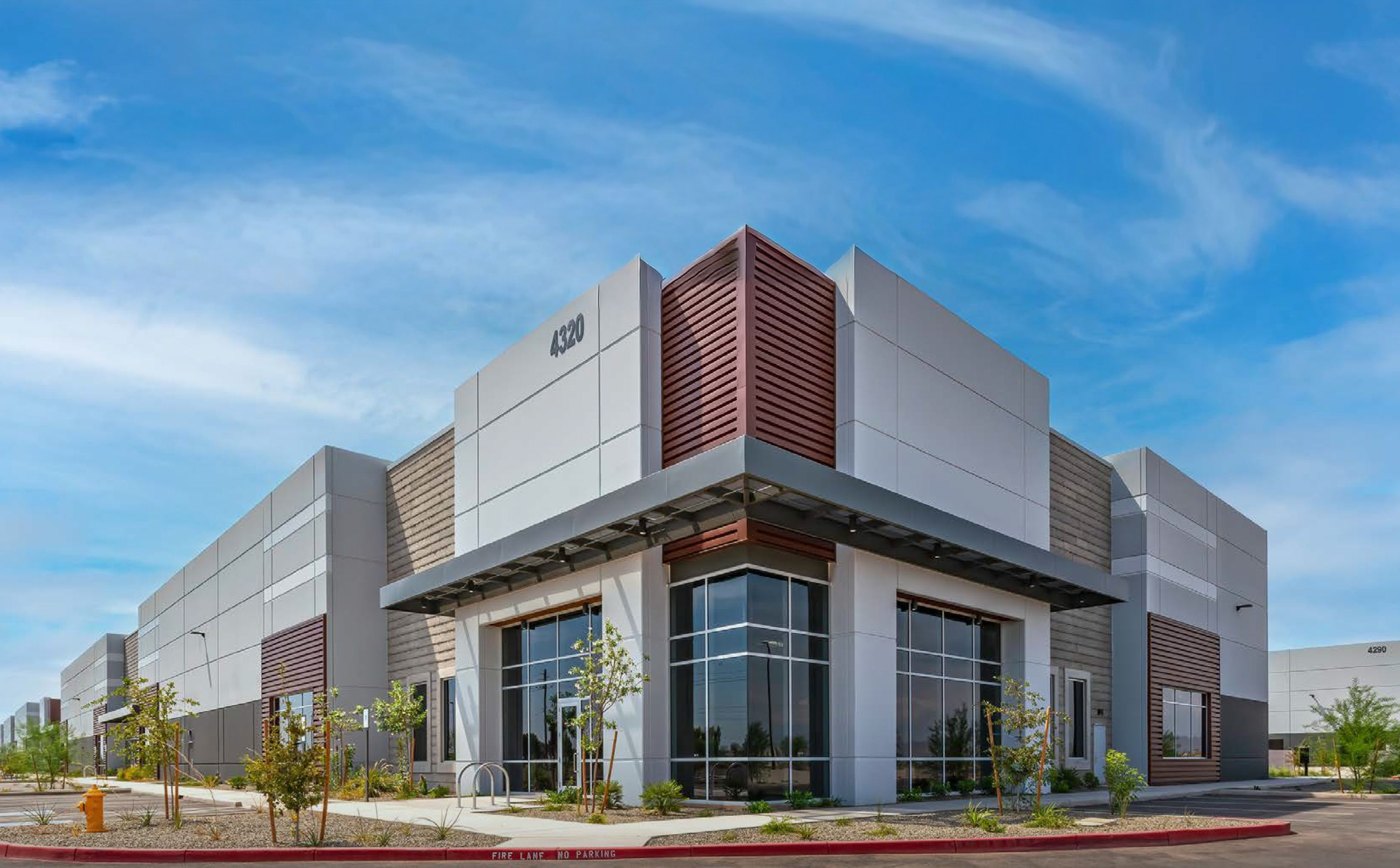
At Sherwood, the first phase’s buildings were constructed as open shells, with individual premises divided as tenants signed. A January 2025 account described units starting at 7,800 square feet. This is the practical meaning of “flex”: the building can accommodate a range of operating footprints, with warehouse space and associated business functions brought together.
For the tenant, the attraction is specific. A company can look for the space its operation needs instead of reorganizing around whatever building happens to be available. For the landlord, subdivision creates more leasing conversations, more relationships and more decisions about how much space to commit to each customer.
There is an important limit to the promise. A divisible building is not infinitely adjustable, and a growing tenant still needs suitable adjoining space or another available unit. The value lies in having options. A landlord with multiple properties in a region has more possible answers when a customer’s business changes.
A family business with a lot of doors
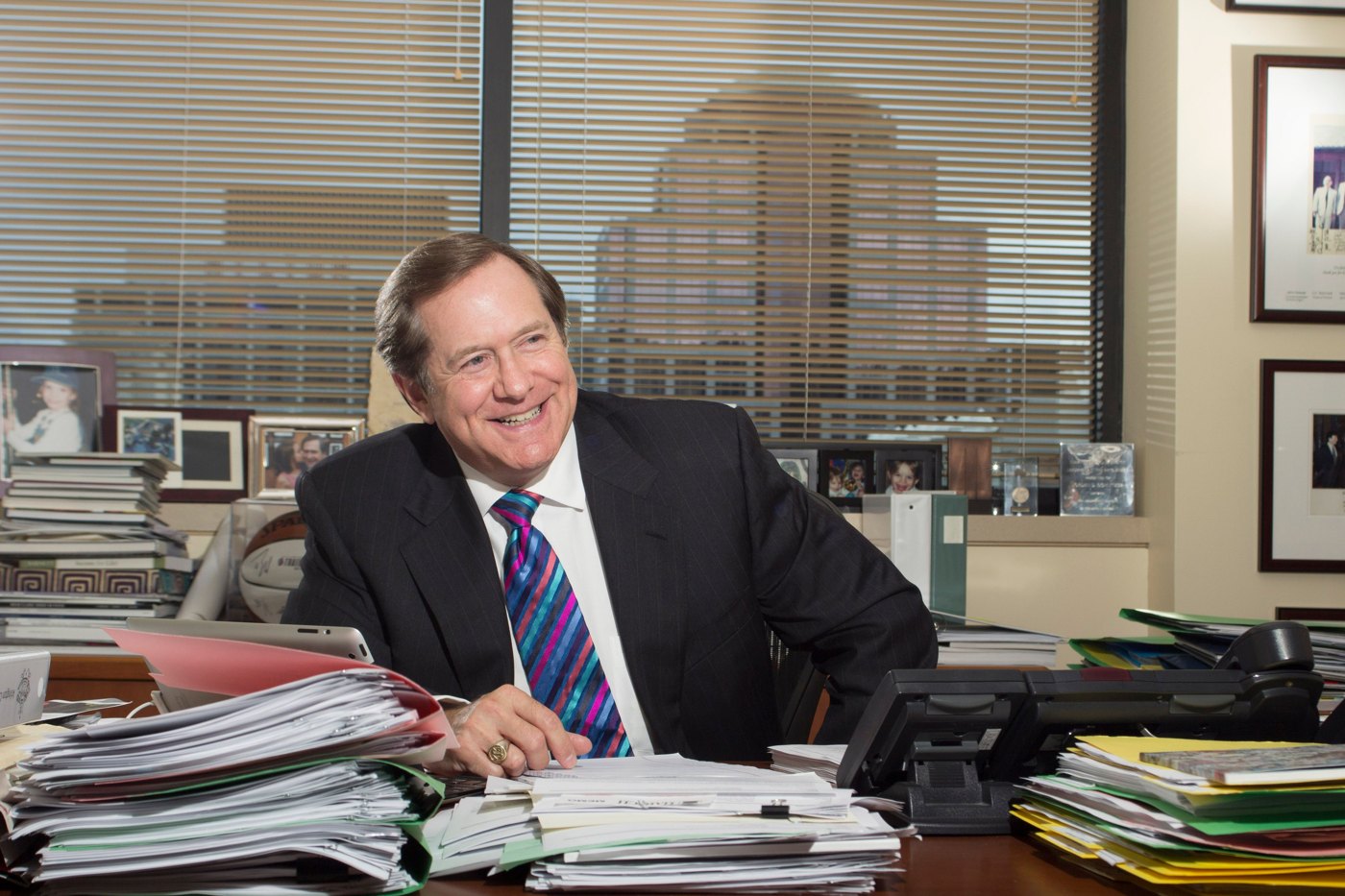
Harold Schnitzer founded the business in 1950 after leaving his family’s steel operation. His first acquisition was Portland’s Ross Building, and an early Department of Agriculture lease helped get things moving. Jordan, his son, began with maintenance and janitorial duties in 1965, then joined full-time in 1976 after college and law school.
The old corporate name, Harsch, stitched together the first three letters of Harold’s first and last names. In January 2022, the company became Schnitzer Properties. Reporting on the change described an effort to make the connection with the family’s philanthropic activities more visible. The family had been in the name all along; outsiders had needed the decoder ring.
Today the company combines development, acquisitions, leasing and property management. It also owns other property types, including retail and multifamily assets, but its operating emphasis is industrial. It is a private family owner, with a stated preference for keeping properties over the long term. Rental income and the continuing usefulness of the buildings sit at the center of that model.
The landlord has to like the work
Industrial real estate contains several different businesses under one label. A large distribution building leased to one company presents a different management task from a park occupied by dozens of smaller firms. Schnitzer competes with other industrial landlords for land, buildings and customers, while emphasizing the second kind of operation.
The distinction should not be mistaken for an exclusive invention. Other owners offer multi-tenant industrial space. Schnitzer’s case rests on its chosen concentration, regional presence and willingness to retain the day-to-day responsibilities that come with ownership. Its customer is often a manufacturer, wholesaler, distributor or service provider whose premises must support several jobs at once.
Anderson Commerce Center in Kent, Washington, makes that concrete. When Schnitzer announced its acquisition in September 2024, the four-building property had nine tenants and 24 roll-up doors. Built in 1988, it offered units suited to businesses needing less than 10,000 square feet. The acquisition involved Colliers brokers Bill Condon and Matt McGregor.
The product here includes access and ordinary operational details. Can goods get through the doors? Can vehicles reach the loading area? Does the space fit the business? These questions lack the glamour of a trophy-office unveiling, but they are the questions a working tenant has to answer every morning.
Seventy-three million dollars buys a serious commitment
Small tenants do not imply small capital requirements. In January 2025, Schnitzer broke ground on two Tucson developments, Corona Commerce Center and Drexel Commerce Center, with a combined announced investment of $73 million. Willmeng Construction was selected for the projects, and the announcement identified CBRE leasing contacts.
The plans offered a range of spaces starting at 6,700 square feet. Sun Corridor Inc., the regional economic-development organization, participated in the announcement. Those relationships help explain the expertise required: acquiring or controlling a site is only one step. A developer also needs construction, leasing and local-market knowledge to turn land into occupied premises.
Combined development investment
Corona + Drexel commerce centers
Schnitzer also buys buildings that are already operating. Connect CRE reported a $33.5 million purchase of Phoenix’s Metro Business Park in January 2022. That five-building property was fully leased at the time. The seller was EastGroup Properties. The deal illustrates a second route to growth: take ownership of an existing group of tenant relationships.
In December 2025, the company announced another Arizona purchase, Warner Commons Commerce Center in Gilbert. The four-building campus had been completed in 2023 and was 83 percent leased at sale. Its tenant roster included Anthropologie Home, Dykman Electrical, Salt River Project and Fat Fender Garage. Acquiring a partly occupied campus leaves a clear piece of work for the new owner: lease the remainder.
The lunch that challenged a banking habit
In a November 2024 conversation on CBRE’s The Weekly Take, Jordan recalled accepting a lunch invitation from U.S. Bank despite his father’s attachment to the family’s existing bank. He established a $2 million credit line for a separate company. Later trouble at the longtime lender made the additional relationship valuable.
By the interview, he said the business worked with seven banks and used insurance companies for long-term debt. The lesson a reader can reasonably draw is about dependence: a familiar institution can develop problems beyond the control of the people handling your account. A good relationship does not remove that exposure.
His phrase for his approach was “aggressive moderation.” It is an awkward-sounding phrase with a practical purpose. Growth has to remain proportionate to the company’s ability to absorb trouble. A project can be appealing and still be too large a commitment for the balance sheet carrying it.
“It’s hard to borrow money for speculative flex investments.”Jordan Schnitzer · January 2025
The financing difficulty is part of the business, rather than a footnote to it. Speculative development requires spending before the tenant list is complete. A landlord needs the capacity to wait, finish premises and manage leasing. Patient ownership still has bills to pay while patience does its work.
Then a baseball business signed a lease
Blue Oaks Commerce Center in Roseville adds a pleasing wrinkle to the customer picture. A January 2026 report said the first phase had finished in late December, with Baseball Addicts and medical-device distributor Verio Healthcare each signing for 11,500 square feet. One tenant helps people practice a swing; another distributes healthcare equipment.
The full four-building development was described as an $80 million project. The completed first phase accounted for roughly 190,000 square feet. Company regional leadership reported stronger-than-expected interest from athletic and entertainment users. That is a useful instance of demand broadening the owner’s assumptions about who might want an industrial address.
For prospective tenants, the lesson is to start with operating requirements. Office needs, delivery access, customer parking and permitted use will shape whether a space works. A recreational business and a distributor may want similar floor area while asking very different things of the same property.
Keeping the people who know the properties
A company built around many tenant relationships needs continuity among the people managing them. Schnitzer’s careers materials describe educational assistance, professional-membership support, service recognition and a family-first culture. The benefits also include matched charitable giving through Benevity and up to four hours of paid volunteer time.
Those are concrete policies behind the cultural language. Their business relevance is straightforward: local knowledge takes time to accumulate. An experienced employee can know the properties, understand a tenant’s history and recognize which spaces may suit a changing operation. Keeping that knowledge has practical value for a long-term owner.
The broader family identity also reaches into arts and community giving. Schnitzer’s website describes company support for the Jordan Schnitzer Family Foundation, the Harold & Arlene Schnitzer CARE Foundation and student grantmaking. That helps explain why the family name matters beyond the lease document, while leaving the tenant’s immediate test refreshingly ordinary: does the building work?
The transferable idea is to take an inconvenient customer requirement seriously enough to organize a business around it. Here, that means smaller premises, changing space needs and continuing management. It requires capital that can tolerate vacancies and teams willing to handle many relationships. Where those conditions are missing, smaller bays can become a collection of expensive chores. Where they are present, the next roll-up door is another chance to keep a business housed.
Open a few more doors
Explore available properties · Company news · Meet the tenants