Consider the least glamorous feature of a $2 billion Manhattan office tower: the route downstairs. At 343 Madison Avenue, BXP is developing a building with direct access to Grand Central’s Madison Concourse. There will be terraces and a club, too. But the passage to the train suggests a useful way to understand this landlord. An office competes for a company’s budget and an employee’s willingness to make the trip. BXP is spending money on both sides of that decision.
- BXP leases and operates offices for companies, with laboratories and other property types alongside them.
- Its bet pairs convenient locations and shared amenities with the capital to build and maintain them.
- Signed leases, occupied space and profitable buildings are three different things. Keep an eye on all three.
The commute is part of the product
In a January 2026 Nareit interview, chairman and CEO Owen Thomas described tenants putting greater weight on transit access and meeting space available when needed. The distinction is practical. A company can rent its own conference rooms all year or choose a building with shared facilities. A landlord that supplies those facilities is selling something beyond floor area: fewer problems for the employer to solve.
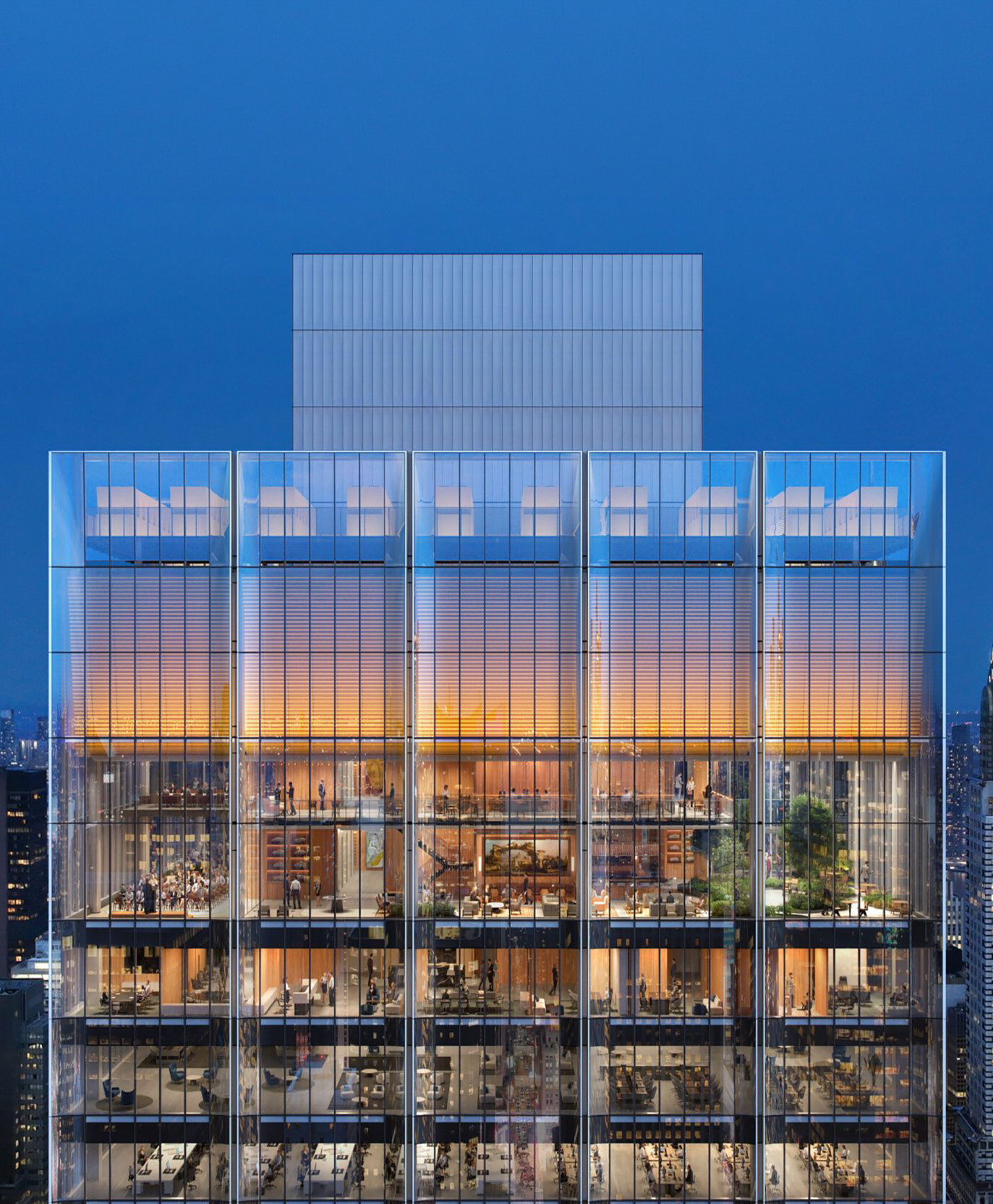
At Madison Avenue, that thinking becomes architecture. Plans include a double-height club, places to eat, bicycle storage and showers. The building’s all-electric design specifies zero on-site combustion. Its customers are already tangible: insurer and investment organization Starr, and law firm McDermott Will & Schulte, have signed leases. By October 2026, BXP reported the project was approximately 56% pre-leased, with completion expected in the third quarter of 2029.
A landlord with a long memory
Mortimer Zuckerman and Edward Linde founded BXP’s predecessor business in 1970. The public REIT followed in 1997. Boston Properties became BXP, Inc. in July 2024, a name change that reflected a business extending across six metropolitan markets. That history matters because this is an organization built to develop, own and manage real estate over years. Designing the building and answering the tenant’s maintenance request belong to the same enterprise.
“We are long-term owners, which guides our strategy and investments.”BXP · stated stewardship value
Its stated culture emphasizes collaboration, client service and stewardship. The commercial proposition is continuity: one organization handling development, leasing and building operations. Revenue comes primarily from rent, with management fees adding another stream. Institutional partners can share ownership while BXP runs a property. For a tenant choosing a long-term home, the operator’s ability to maintain the building deserves attention alongside the lobby tour.
The customer list also complicates the familiar image of office work. AstraZeneca occupies BXP’s 290 Binney Street laboratory property in Cambridge, delivered in 2026. Boston Dynamics signed for roughly 320,000 square feet at Reservoir Place in Waltham, with plans to bring manufacturing, research, training and AI functions together. A laboratory and a robotics facility require space for activities that cannot fit inside a video call.
The skyline has a financing plan
BXP’s specialty sits at the expensive end of the workplace market. Against other landlords, it offers locations, development expertise, operating services and amenities that employers may value enough to pay for. “Premier workplaces” is BXP’s own positioning term; its annual filing says it is not a standardized industry classification. The useful test is whether tenants sign and stay.
Madison Avenue makes the financial stakes unusually legible. The estimated development cost is approximately $2 billion. In July 2026, BXP closed a $1.2 billion construction loan, initially priced at Term SOFR plus 2.50%. In October, AVRS Partners bought a 10.6% equity interest. BXP retained decision-making authority and its development, property and leasing management roles. Sharing ownership reduces the capital BXP must supply while preserving work that generates fees.

The cost of capital is another moving part. In August 2026, BXP’s operating partnership priced $700 million of notes carrying a 6.050% coupon. It intended the proceeds to help repay notes with a 2.750% coupon. Those rates describe different securities, rather than a simple comparison of identical borrowing. They nevertheless show why a landlord can improve its buildings and still face pressure from its financing. A better office does not set the interest rate.
The machinery earns its keep
Some differentiation happens far below the terraces. At 601 Lexington Avenue in New York, BXP connected heating and cooling systems through water-to-water heat pumps, using the tower’s existing steam infrastructure. The Department of Energy’s 2026 project account reports annual steam use fell by more than 30%, with no disruption to tenants. It estimates $1.3 million in avoided steam costs over the first four years. That is projected cost avoidance, not a published installation budget.
reduction in annual steam use
DOE project account, 2026Across its portfolio, BXP reported 2025 energy intensity 38% below its 2008 baseline. It also reported carbon-neutral operations for Scope 1 and 2 emissions. That claim has a defined boundary; it does not erase the carbon involved in constructing buildings or every tenant activity. The steam project offers the more immediately useful lesson: examine the systems already installed, measure their waste and look for improvements that lower operating bills.
Read the gap before the headline
There is friction in this story. BXP’s June 2026 portfolio was 91.3% leased and 88.4% occupied. Signed commitments included space whose leases had yet to begin contributing recognized revenue. The quarter also included a non-cash impairment tied to the anticipated sale of Sumner Square in Washington, DC. Better leasing and a property write-down can appear in the same results. The setback is a reminder to examine individual assets and obligations, even when the portfolio narrative sounds encouraging.
The adaptation is visible in choices: shared amenities, selective redevelopment, property sales and outside capital. Those choices do not prove that every office deserves reinvestment. A premium strategy needs customers with budgets, a location they want and financing that leaves room for a return. Expensive improvements cannot guarantee those conditions.
What can another business copy? Study the inconvenience customers face before they reach your product. Secure commitments before expanding capacity. Distinguish promised demand from money arriving. Then keep measuring the machinery. BXP’s example is useful precisely because its attractive buildings come attached to these less photogenic obligations.