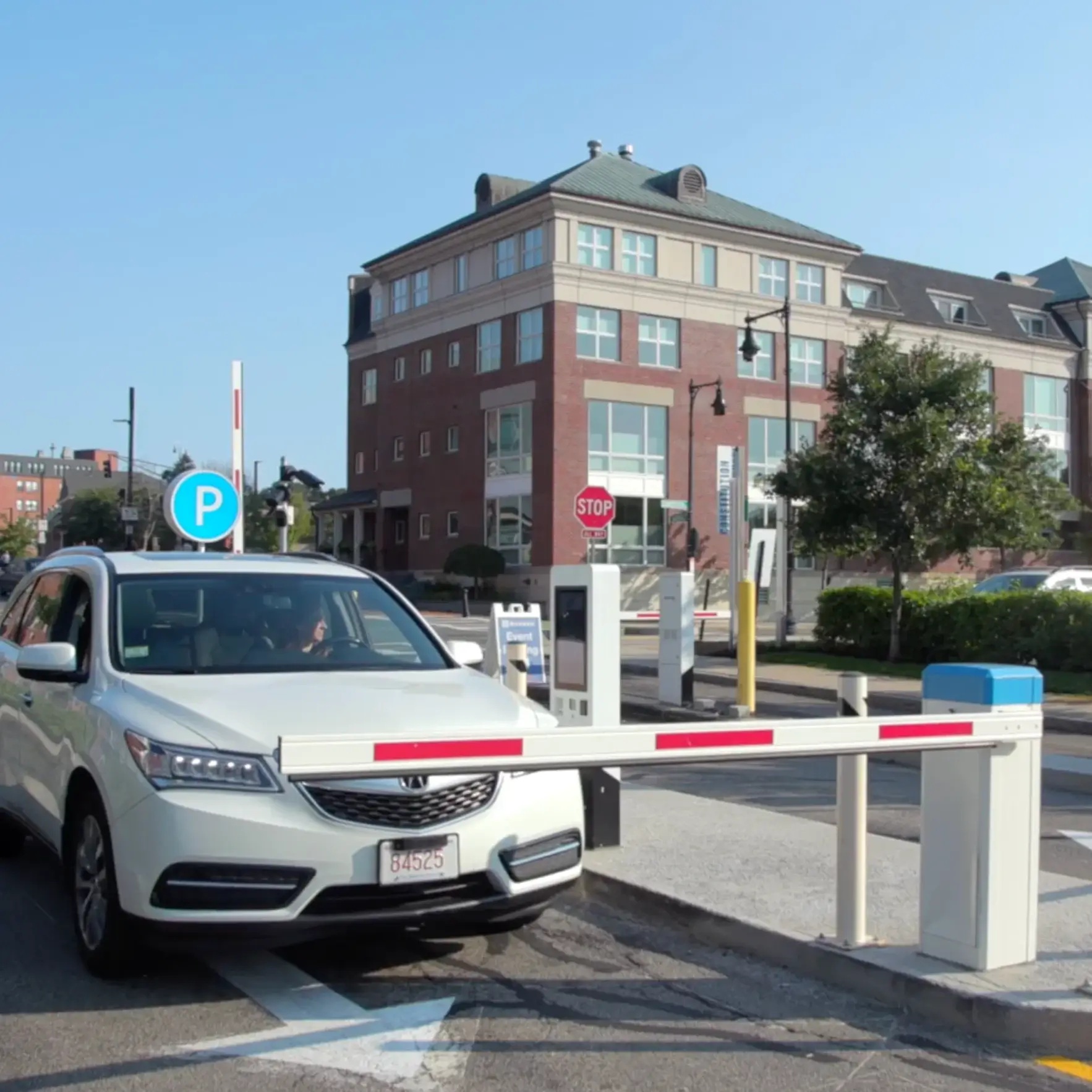
At Constitution Wharf in Boston, the parking improvement involved concrete. Vend Park extended the lanes and helped create a bidirectional middle lane. It also installed cameras, gates and digital displays. This is a useful introduction to a company usually described with the letters AI. Sometimes the path to a better algorithm begins with enough room for a car to turn.
- Vend builds the parking technology and can run the operation.
- Property owners buy access, payments, reporting and service together.
- The interesting gains come from changing how existing spaces are used.
The customer was Jamestown. The property had 420 surface spaces, waterfront offices and a parking system that was expensive to maintain and irritating to use. In Vend’s account, the replacement shortened exits by an average of 23 seconds, removed more than $23,000 in annual maintenance and paper-ticket costs, and lifted transactional revenue by over 10%. An unglamorous asset had become rather more interesting.
The vendor who became the operator
Founded in 2020 by Michael Miele and Karan Singhal, Vend occupies the meeting point between commercial property management, payments and parking operations. Miele is CEO; Singhal is CTO. Its proposition addresses a familiar arrangement: one company runs the garage, another supplies the technology, and the owner tries to discover which company should fix the problem.
Vend’s current origin story says its first approach was to bring automation to established operators. Some were unreceptive. The company’s explanation is pointed: if manual work produces billable hours, removing that work can threaten the operator’s margin. Vend went directly to property owners and built an operations team alongside its software.
The history is less tidy than a conversion story. In 2023, Vend announced partnerships with VPNE and ACE Parking. Constitution Wharf itself involved VPNE. The evidence supports an evolution toward greater responsibility for operations, with operator collaboration along the way. It would be a mistake to turn that into a fable in which every incumbent refused to listen.

Today the company offers installation, staffing, maintenance, enforcement and round-the-clock support. Its published BEAST values include accountability and taking ownership of problems. Those principles have a practical test here: the company selling the camera also has to deal with the driver waiting underneath it.

A ticket with four wheels
The camera reads a license plate. The platform connects that vehicle to a parking session, access permission and payment. At a supported kiosk, a first-time driver registers with a phone number, receives a text and adds payment information. On subsequent visits, recognition can open the gate and charge the saved card. The vehicle becomes the thing you would otherwise keep searching for in your coat.
Vend supports several configurations, including gates with kiosks, gates without kiosks, and gateless access. A tenant can distribute employee passes and validate a visitor’s parking through a dedicated portal. Flex passes let businesses share an allocation across employees, a useful response to offices where attendance changes by the day.
- 01 Recognize
License plate - 02 Apply rules
Pass or rate - 03 Settle
Payment - 04 Learn
Usage data
The property team gets the Command Center: revenue, occupancy, tenant billing and vehicle activity across locations. Vend says it captures more than 80 data points per transaction. That matters when an owner needs to distinguish a full garage from a busy garage. Cars arriving and leaving throughout the day offer a different opportunity from cars occupying the same spaces all week.
Twenty-three seconds, and a different kind of return
Constitution Wharf’s changes included digital validation, flexible passes and better reporting as well as equipment. Vend’s case study says the property received the new hardware and maintenance without an upfront equipment bill. The time saving is tangible. The more consequential improvement may be seeing who uses the spaces, when they use them and whether their bill matches their use.
“The Vend system helped us use parking data to drive more revenue and negotiate a new lease.”Gretchen Sisson · Constitution Wharf property manager
A Dallas-area example makes the commercial logic clearer. Across 12 facilities serving a mixed-use portfolio, guest parking had been free and access depended heavily on manual screening. Vend introduced digital identification, tenant allocations and hourly, daily and event pricing. Its published case study reports $302,000 in parking revenue during the first full quarter.
Dallas portfolio case study. The annual figure is a forecast, not a recorded result.
The same case projects $2 million in annual transient revenue at stabilization and estimates $9 million to $10 million in added portfolio value. Those figures should remain in the future tense. They illustrate the owner’s bet: charge appropriately for demand that already exists, then measure whether the new rules actually collect it.
Who pays for the disappearing ticket?
Vend sells to commercial real estate owners and managers. Named customers include Nuveen, Jamestown, Federal Realty and Harwood International. Its November 2025 announcement disclosed a $17.5 million Series A led by Blue Heron Capital, with Nuveen’s Real Asset Ventures participating. The capital follows a $3.8 million seed round announced in 2023.
Its commercial offer is assembled around each property. Vend says it acts as merchant of record, handling payment processing, tax collection and accounting, with one processing fee per facility. Selected deployments report no upfront capital expense. An owner should still examine ongoing fees, hardware obligations and the operating agreement. A disappearing installation bill does not make the rest of the contract disappear.
Competitors include technology operators such as AirGarage and Metropolis, alongside the traditional combination of operator and equipment supplier. Vend’s distinguishing pitch is responsibility across the operation, plus flexibility across access models. Neither vehicle recognition nor bundled operations belongs to Vend alone. The useful comparison is what each provider will actually undertake at a particular property.
There are practical limits. Vend’s driver guidance says cash is not accepted. At supported kiosks, drivers declining phone registration can choose a PIN. Third-party reservations may require linking a QR code to the parking session. Properties must plan for those exceptions, preserve tenant entitlements and establish whether there is paying demand before treating unused capacity as income.
The lesson travels beyond parking: measure the work, find the incentives that preserve it, and give someone responsibility for the result. A garage can acquire cameras without acquiring discipline. Vend’s bet is that selling both together makes the second much harder to avoid.