A commercial building is easy to locate. The latest version of the deal happening inside it can be rather more elusive. Who toured the vacant floor? What did the tenant offer? Which proposal is current? Hightower built its business around the gap between owning valuable space and knowing, at any given moment, what was happening to it.
- Cloud and mobile tools joined leasing activity, documents and portfolio analysis.
- Owners, landlord brokers and tenant brokers each had a dedicated product.
- Historical broker pricing: $99 a month. Owner pricing followed square footage.
- In 2016, Hightower and rival VTS merged under the VTS name.
The company’s most revealing decision came after it had persuaded customers to change their habits. Hightower then changed its own. Having competed with VTS for the attention of commercial landlords, it agreed to share a future with it. A software company devoted to reducing duplicated effort discovered some duplication in its own neighborhood.
01 / A broker’s unfinished business
Brandon Weber understood the irritation from both sides. His career included commercial brokerage at CBRE and software work at Microsoft. Hightower, founded in 2013 with Niall Smart and Donald DeSantis, brought industry knowledge, engineering and product design into the same company.
Contemporary reporting described an industry full of improvised internal tools and users with different levels of comfort around technology. That made usability a commercial requirement. A broker showing properties needed information on a phone; an owner reviewing a portfolio needed an intelligible overview. Neither benefited much from an elegant system that colleagues neglected to update.
This is the useful way to understand Hightower’s mobile emphasis. The dashboard depended on activity happening elsewhere. Put the working tool close to the broker, and the portfolio view had a better chance of reflecting the actual business.
02 / Three people, one lease
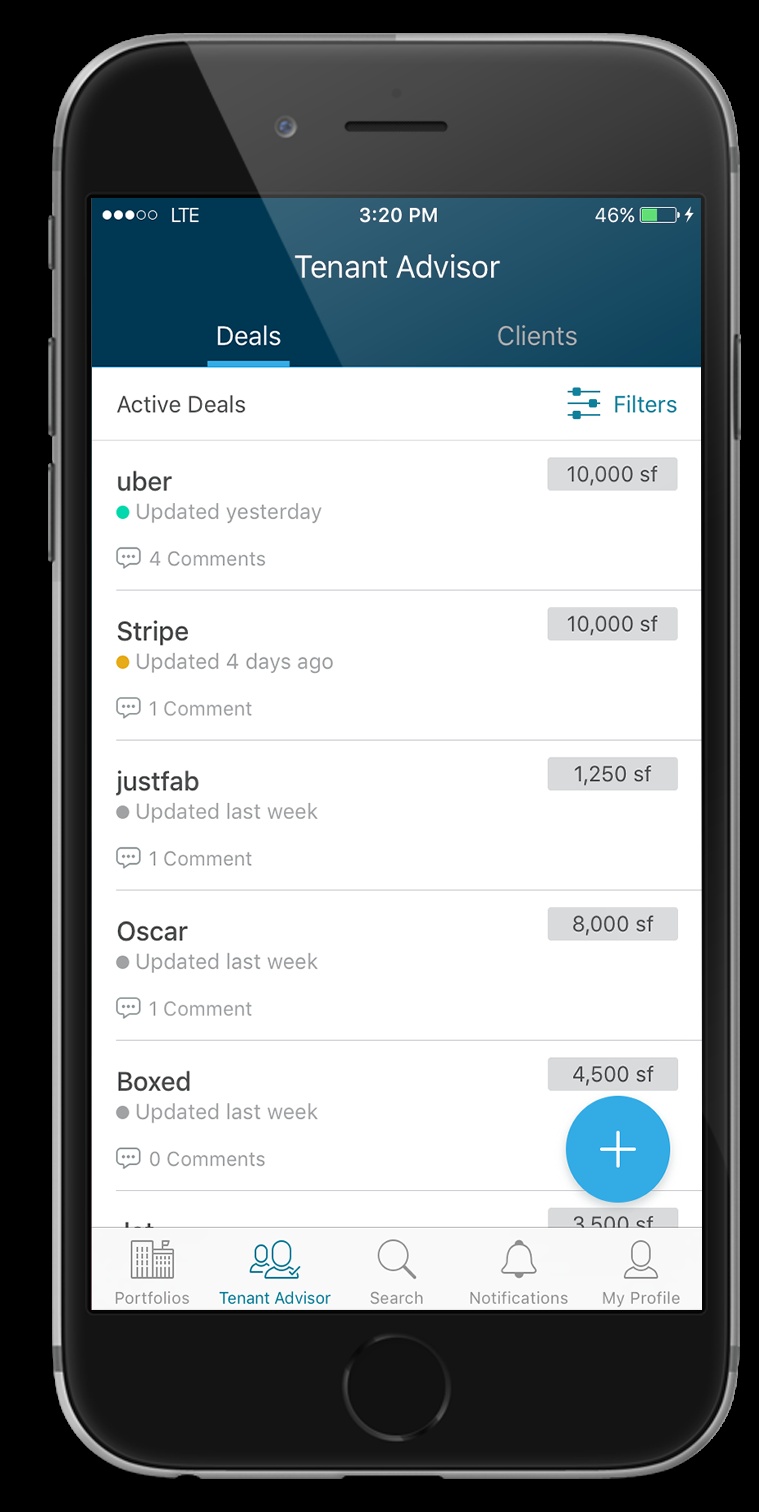
Hightower’s product names were refreshingly literal. Landlord 360 served commercial owners. Landlord Advisor served agency brokers representing those owners. Tenant Advisor served the brokers helping businesses find space. The differences followed the participants’ jobs: oversee assets, market vacancies, or organize a client’s search.
Shared activity → useful portfolio visibility
The 2015 product lineup described these tools as working together. This placed Hightower in the operational layer of commercial real estate software: the place where people tracked the work of leasing, rather than simply browsing available buildings.
Tenant Advisor’s development involved more than 50 tenant representatives over six to nine months. That detail matters. The customer helped define the workflow before the company asked other customers to adopt it. Participation in product development offers more useful evidence than a promise to be customer-centric.
03 / Give the decision its missing evidence
Keeping a deal organized solves only part of a leasing problem. A prospective tenant also has to understand the space. In February 2015, Hightower partnered with Floored to put interactive 3-D tours into the platform, including models showing how unfinished premises could look after renovation.
A floor plan requires a certain gift for imagination. A digital walkthrough reduces the demand for that gift. The Floored partnership addressed a specific obstacle between showing a property and reaching a decision.
Another obstacle was context. An asking rent means more when compared with actual nearby transactions. The April 2016 CompStak agreement proposed bringing those comparisons into Hightower. The arrangement was directional: Hightower’s own platform data would not become available through CompStak.
04 / Two different kinds of money
Customers paid for access. Investors paid for expansion. Confusing the two produces a much prettier story than the accounts justify.
In November 2015, landlord-representative software was reported at $99 per month. Owner subscriptions depended on square footage and other factors. Tenant Advisor launched free, with paid components planned. Those are historical prices, attached to particular products.
The principal announced financing rounds totaled roughly $21.6 million: seed funding, a $6.5 million Series A, and a $13 million Series B. Bessemer and Thrive led the Series A; RRE led the Series B. Expansion plans included engineering, sales and customer support. The company reported use across five countries by May 2015. This was enterprise software with an international customer base, financed to extend its reach.
05 / The rival becomes the roadmap
VTS pursued much the same opportunity. Hightower stressed mobile capabilities; both wanted to become part of landlords’ daily operations. The rivalry encouraged product development, but it also meant two teams courting overlapping customers.
In its merger explanation, VTS argued that combining teams would speed development and connect customers’ technology systems. Hightower and VTS completed the agreement on November 29, 2016. The announcement described customer portfolios collectively exceeding five billion square feet.
“one plus one equals five”Brandon Weber’s description of the merger opportunity, November 2016
The transaction was all-stock, with a reported combined valuation of approximately $300 million. Nick Romito remained CEO; Weber became chief product officer. Hightower surrendered its name and its separate leadership structure. The public rationale was complementary strengths and faster scaling. It offers no reason to invent a story about a failed first product.
06 / Integration had a human price
The subsequent work was less photogenic than the announcement. A 2018 retrospective described VTS’s strong sales methods and Hightower’s more product-focused culture. Combining them involved cutting 35–50 jobs, according to Romito. Shared ambition did not remove duplicated roles.
The practical lesson is narrower than “merge with your competitor.” Start with an operational nuisance that practitioners recognize. Let them shape the tool. Add evidence where a decision occurs. Hightower’s history supports those choices; whether another company should merge depends on its customers, technology and complementary strengths.
There is also a condition beneath the entire proposition. Shared leasing intelligence requires people to keep records current. If a team will not do that, a portfolio dashboard risks becoming a handsome display of yesterday’s business. The skyscraper remains perfectly visible. The deal inside it may still be missing.