Commercial real estate is supposed to be the glamorous business of skyscrapers and ribbon cuttings. B+E built a company on the opposite instinct - that the real money lives in the boring stuff: the Dollar General on the corner, the Starbucks drive-thru, the car wash off the highway exit. These are net lease properties, single-tenant buildings rented on long leases where the tenant, not the owner, pays the taxes, insurance and upkeep. They behave less like buildings and more like bonds. And until recently, they traded like it was 1995.
That was the opening. B+E - shorthand for "Brokers + Engineers" - is a New York brokerage founded in 2017 that treats net lease real estate the way a desk treats securities. It pairs senior human brokers with a proprietary technology platform: dashboards, real-time predictive pricing and what the firm calls an AI-driven exchange, all sitting on what it says is the largest dataset in the net lease industry. The pitch is simple and a little audacious. If you want to buy a Burger King, you should be able to see every Burger King on the market today, compare the pricing, and move - without three weeks of phone tag.
"If they want to buy a Burger King, they can see every Burger King that's on the market today," says co-founder and CEO Camille Renshaw. It sounds obvious. In an industry where comps often lived in a rival broker's inbox, it wasn't.
The originA tech founder who wandered into real estate
Renshaw did not grow up dreaming of triple-net leases. She was, by her own description, a tech geek first. She founded a software company, Dyzco Technologies, and sold it to American Financial Services Corp. With the proceeds she bought two property portfolios - one of them single-tenant net lease assets - and became a landlord almost by accident. The buildings paid reliably. The process of buying and selling them did not.
She went deeper into the industry instead of retreating from it: stops at Colliers International, then the Stan Johnson Company, where she opened the firm's New York office and met a top retail-NNN producer named Scott Scurich. Later she ran sales for Ten-X, the Google Capital-backed online marketplace behind Auction.com. By the time she and Scurich launched B+E in September 2017, Renshaw had closed north of $30 billion in transactions across her career. She had also seen, up close, both halves of the problem she wanted to solve: the deep offline expertise of a great broker, and the crude online tooling of a marketplace that treated commercial deals like eBay listings.
What they builtThe exchange, and why humans stayed in the room
Plenty of founders would have tried to automate the broker out of existence - build "the Zillow of net lease" and let the software close the deal. B+E didn't. Its bet is a hybrid: keep the senior producers, and give them software that makes them dramatically faster. The platform is end-to-end. A seller can list; a buyer can browse every comparable asset by tenant, credit and geography; predictive pricing suggests where a property should trade in real time; and the exchange layer routes interest to the people most likely to transact.
The unglamorous engine underneath is data. Net lease is a deep, repeatable transaction - the same tenants, the same lease structures, over and over - which makes it unusually well suited to a dataset that compounds with every deal. That accumulation is the real moat. A competitor can copy a dashboard in a quarter. It cannot copy years of proprietary transaction data.
Where B+E sits
Two axes that most CRE tools pick one of - B+E argues you need both.
Illustrative positioning, not to scale.
The proofEleven Cabela's stores, one record
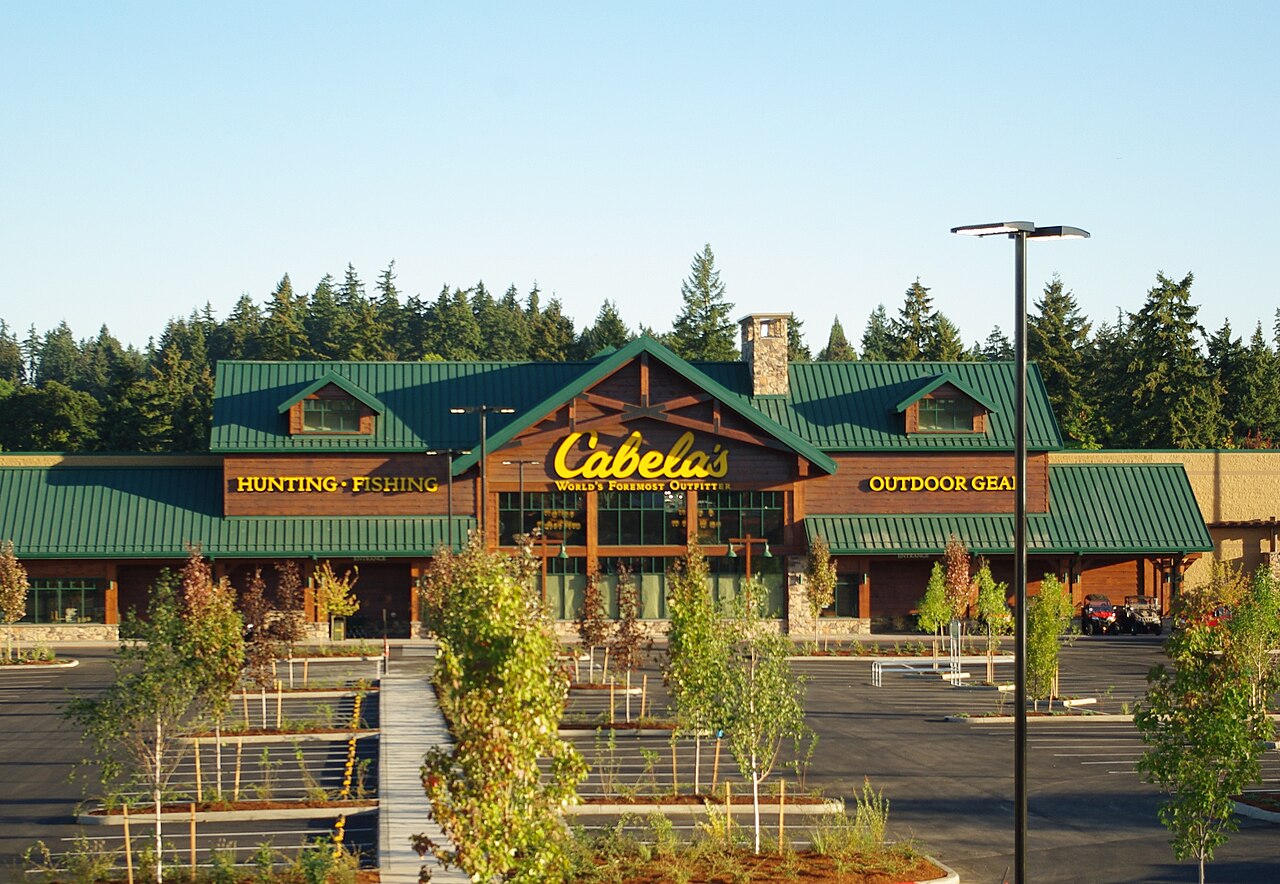
The clearest evidence that the model works is a single transaction. In 2019 B+E brokered a sale-leaseback of 11 Cabela's outdoor stores for roughly $324 million - about 1.6 million square feet of retail space and 277 acres of land, on a 25-year lease term. The seller was Bass Pro Shops, which had absorbed Cabela's; the buyer was a Sansome Pacific joint venture. B+E says it was the largest commercial real estate transaction ever sold through a digital platform. For context, the firm's previous largest deal was a $76 million sale-leaseback. This was more than four times that, closed through software.
A sale-leaseback is a tidy trade if you're an operating company: sell the real estate you own, sign a long lease, stay put, and convert bricks into growth capital. B+E advises on all sides of that - sellers, buyers and owners - and the same logic scales down. The firm has brokered everything from big-box outfitters to a roughly $5 million car-wash sale-leaseback. Different zeros, identical mechanics.
The clockDesigning a product around a customer's worst deadline
If there's one feature that explains why B+E's speed matters, it's the 1031 exchange. U.S. tax rules let an investor defer capital gains by rolling proceeds from one property into another - but the clock is brutal. You get 45 days to identify a replacement and 180 to close. Miss it and the tax bill lands. A slow, opaque search process isn't just annoying under those rules; it's expensive. B+E effectively built its platform around that deadline, turning a frantic scramble through broker contacts into a filtered, priced, browsable inventory.
Sell
List a net-lease asset, or trigger the 1031 clock on a sale.
Search
Filter every comparable property by tenant, credit and geography.
Price
Real-time predictive pricing suggests where it should trade.
Close
A senior broker runs the deal from offer to signature.
The metaphor B+E keeps reaching for is the stock market: a full building leased to a credit tenant on a 15-year term is, functionally, a fixed-income instrument. You are buying a stream of payments backed by Walgreens or Dollar General, not betting on a neighborhood turning trendy. That framing is also why net lease tends to do well precisely when investors get nervous. When markets wobble, capital hunts for boring - fully occupied, strong tenant, long lease, someone else handles the taxes.
The peopleBrokers, engineers, and a push to widen the room
B+E is small - roughly a couple dozen employees - but its composition is the point. The name is a promise about the mix: producers who have each closed hundreds of millions, sitting next to engineers and data staff. Co-founder Scott Scurich, now president, ran the net lease division at Ten-X and closed more than $1.5 billion earlier in his career at Cushman & Wakefield. That seniority is what lets a nine-figure institutional seller trust software with the transaction.
Renshaw has also made a visible cause of getting more women into net lease - not just as brokers but as capital allocators making the buy decisions. Her argument is characteristically blunt and returns-focused rather than sentimental: mixed rooms make better investments. The industry has noticed the operator, too. Commercial Property Executive named her 2020 Innovator of the Year and Net Lease Property Executive of the Year in a peer vote; CREW Network gave her its 2020 Entrepreneurial Spirit Award; Real Estate Forum nicknamed her "The Catalyst."
Funding snapshot
A lean raise for a firm whose revenue comes from commissions, not a burn-to-grow marketplace.
Bars scaled independently for legibility. Sources: PitchBook, Crunchbase.
The takeawayWhat you can actually steal from this
The lesson isn't "add AI to real estate," a sentence that describes a hundred forgettable startups. It's narrower and more useful. Pick one unglamorous transaction that repeats often enough to generate real data. Own that data. Then compete on speed and transparency in a market that has priced neither. B+E did not invent net lease brokerage or the sale-leaseback. It made a slow, relationship-gated market faster, and let the record deal do the arguing.
Where would it not work? The model leans on a deep, standardized, high-repeat transaction and on senior brokers who command trust; drop it into a market of bespoke, one-off assets and the dataset thins out and the speed advantage fades. And a lean, commission-funded firm is exposed to transaction volume - when interest rates freeze deal flow, everyone in brokerage feels it. B+E's answer is the same as its founding thesis: when the market gets scary, boring gets liquid, and boring is exactly what it sells.