The Profile • Real Estate Finance
Briggs Elwell
The real estate veteran building financial infrastructure for the agents who actually move the market.
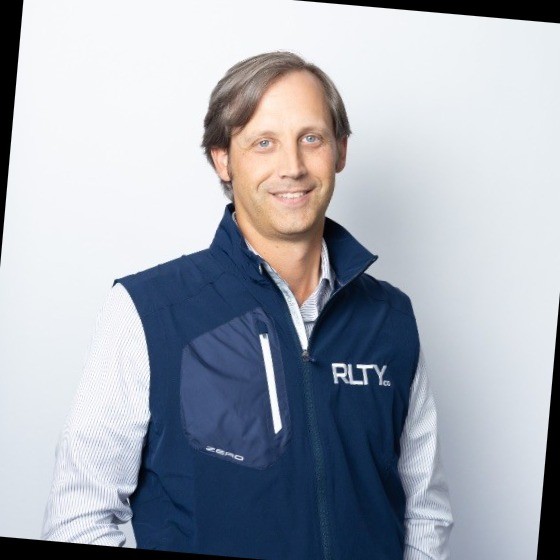
Briggs Elwell • Co-Founder & CEO, RLTYco
The real estate veteran building financial infrastructure for the agents who actually move the market.
Real estate agents do the hardest work of a transaction and then wait weeks, sometimes months, to actually get paid. Briggs Elwell watched that gap up close for more than fifteen years. In 2021 he decided to close it - and built a company around the idea that independent agents deserve the same financial backbone as any salaried employee.
Elwell earned a bachelor's degree in real estate from New York University and went straight into one of the city's biggest names. At The Related Companies he started in sales and asset management, then moved into business development, eventually overseeing that work at both the corporate and brokerage level for more than 7,000 luxury units. It was a front-row seat to how large developers actually run - and to the machinery agents rely on to get paid.
After Related, he became a Managing Partner at OPTIMAR International, a South Florida commercial and residential brokerage, where he established and grew the firm's Northeast business. Two sides of the industry - the developer's and the broker's - gave him a working map of where money moves slowly and where agents get stuck.
In 2021, during the post-pandemic real estate recovery, Elwell co-founded RLTYco with Daniel Kennedy, an attorney licensed in New York, Connecticut and Illinois. The pairing mattered: one founder brought brokerage and finance instincts, the other brought legal firepower. The company launched with a single, sharp product through RLTY Capital - confidential commission purchasing, delivered within 24 hours, with no hidden fees.
The mechanics are straightforward. An agent closes a deal, and rather than waiting for the payout, RLTY Capital advances a large share of the commission - up to 80% of an approved offer - almost immediately. Elwell is quick to note that disputes are virtually nonexistent, because all the paperwork is agreed upon before a deal closes. The risk that scares off traditional lenders, in other words, is mostly a documentation problem RLTYco already solved.
What started as a commission-advance service kept expanding as agents asked for more. Today RLTYco spans four verticals, each aimed at a pain point independent contractors usually shoulder alone.
Same-day commission advances that turn a closed deal into working cash instead of a waiting game.
Planning and tools built for 1099 earners whose income arrives in lumps, not paychecks.
Business formation and LLC setup, drawing on co-founder Daniel Kennedy's legal background.
Insurance access and, via the Zurp acquisition, a rewards engine for discounts and referral income.
In January 2025, RLTYco did two things at once. It closed a $20 million Series A led by Altriarch, with SERHANT. Ventures and other investors joining, and it acquired the rewards technology of Zurp. The logic tied the deal together: rather than making agents stitch together a dozen separate tools, RLTYco would fold everything - including a consumer-grade rewards system - under one brand.
"Troy's team engineered a seamless rewards engine," Elwell said of the Zurp acquisition. "We're leveraging that technology to deliver discounts and referral income opportunities under one RLTY Co brand." Investors framed the appeal in market terms. Altriarch's co-CEO described RLTYco as a rare combination of fintech, insurtech and professional services "with an infinite addressable market given their rate of reoccurring clients."
Most fintech chases the salaried worker with a predictable paycheck and a credit file to match. Elwell went the other direction, toward the independent contractor the banking system tends to overlook. His stated aim is to give 1099 agents the same financial stability a W-2 employee takes for granted - and he has been open about the market's headwinds, from competitive pressure to lower transaction volumes, framing RLTYco's tools as a way for agents to stay competitive through the down cycles.
The company grew its commission funding across New York State and into New Jersey, Connecticut and Florida before pushing nationwide. It entered an alliance with Forbes Global Properties, and Elwell joined the board of the American Realty Association. He has also hinted at a bigger idea: the RLTYco model, he suggests, need not stop at real estate. The broader gig and 1099 workforce faces the same gaps.
Across interviews and podcasts, a consistent picture emerges - a pragmatist who listens to agent feedback and ships solutions, aware that real estate runs in cycles and that infrastructure, not hype, is what carries a broker through the slow years. He is less interested in reinventing the agent than in equipping the one already doing the work.