A parking system has one moment in which to make a good impression: when somebody wants to leave. By then, the meeting has ended, the flight has landed, or the concert has exhausted its last encore. The driver is interested in a raised barrier. The operator is interested in a settled account. A surprising amount of engineering lives between those two wishes.
- The business: parking hardware, management software, payments and service.
- The wager: cloud management backed by people who can fix equipment on site.
- The useful detail: plate-based parking with a physical ticket available when the camera misses.
- The buying lesson: test payment choices and existing credentials before admiring the dashboard.
Amano McGann occupies this small but consequential stretch of everyday life. Its customers run airports, municipal garages, campuses, hotels and office properties. They buy equipment that identifies arrivals, controls access, calculates charges and records what happened. Drivers meet the kiosk. Operators meet the rules behind it.
The bidder who stopped fitting the brief
Consider Lakeland Linder International Airport. In a February 2025 memorandum, city staff described a parking procurement that had changed direction. SP Plus ranked first, then was acquired by Metropolis. The city was subsequently told that the requested multiple payment options would no longer be supported. The second-ranked firm did not respond to an invitation to negotiate. Staff moved to The Car Park, whose proposal specified Amano ONE.
The proposed arrangement put two entry stations and two exit payment stations into service. Equipment and installation came to $111,453.67; cloud software was $720 a month. The operator’s compensation was separate: $0.99 or 5% per paid transaction, whichever was greater. These were project terms in a proposed agreement, not a catalogue price or a statement of eventual expenditure.
The lesson travels beyond parking: a supplier can lead a competition and still cease to fit the job. A payment option can matter more than a polished presentation.
Proposed via The Car Park. Operator fees were additional; these are site-specific figures.
The clockmaker at the garage door
Amano McGann’s industrial ancestry is unusually appropriate. Shuichi Amano founded the parent business in Tokyo in 1931 to manufacture time recorders. Amano established a US subsidiary in 1964 and launched the Parking Master ticketing machine in 1967. In 2007 it acquired Terry McGann & Associates and gave the acquired company the Amano McGann name.
The dates describe a lineage, rather than one uninterrupted parking startup. But the family resemblance is pleasant: measure an arrival, measure a departure, and make the interval legible. A factory time clock and a garage fee computer have more to discuss than their owners might expect.
The company now combines US-based manufacturing and software development with branches and distribution partners. Its expertise spans lane machinery, credentials, revenue records and the mundane work of making several vendors’ equipment communicate. That combination places it in the parking access and revenue control market, usually abbreviated PARCS.
One garage, several sets of rules
A garage that looks simple from the street can contain several businesses. An employee enters with a credential. A visitor pays for a short stay. A hotel guest expects access to follow the reservation. A retailer wants to validate a customer’s parking. An event changes the traffic pattern for a few hours. These are different permissions attached to the same concrete.
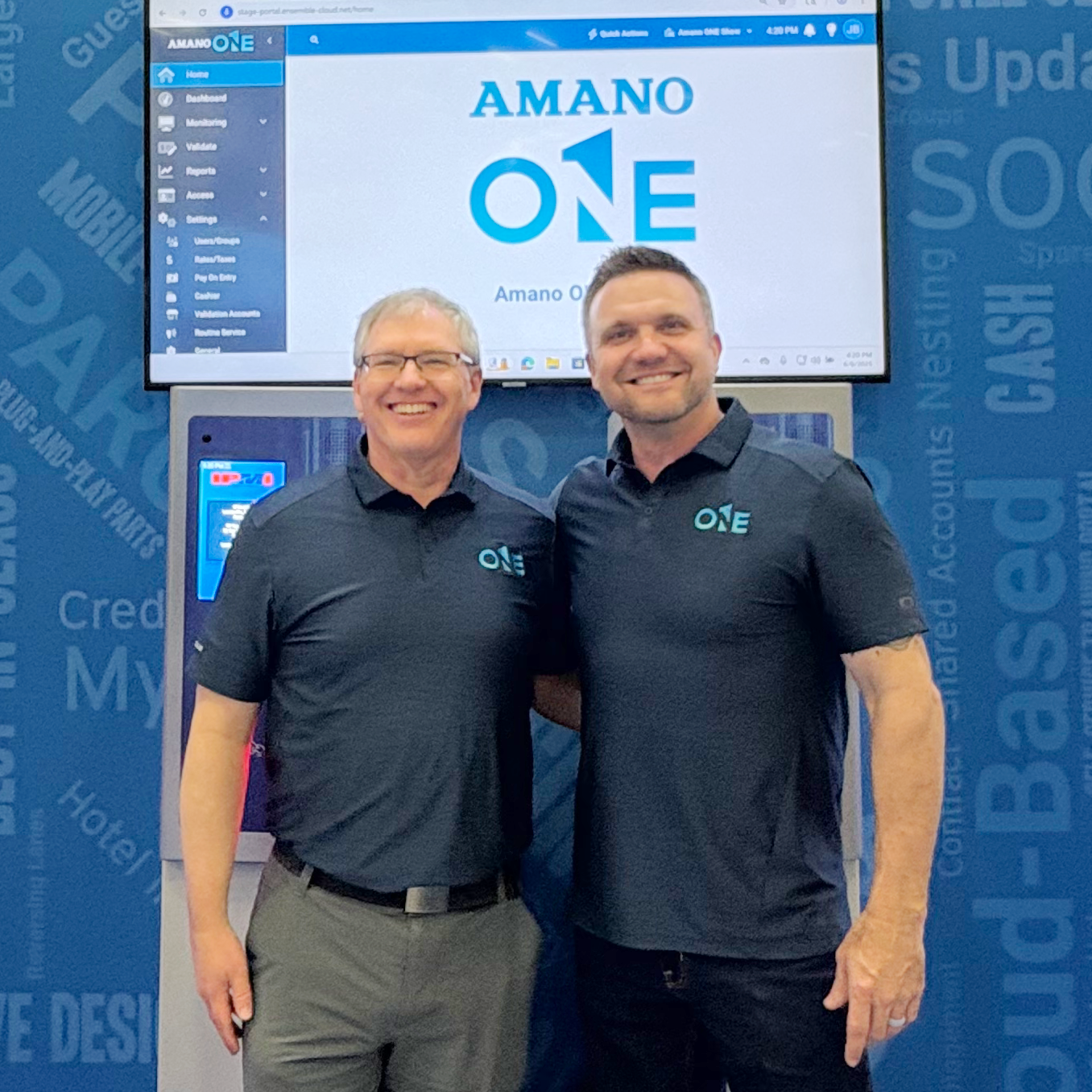
Amano ONE, launched in July 2022, puts management in a browser. Operators can inspect a location or a portfolio, work with reports and monitor activity from different devices. The original launch emphasized automatic updates, responsive design and remote support. The practical appeal is access to the operation without being tied to one office computer.
The wider portfolio is less tidy than a single product badge suggests. Pro+ software communicates with Pro+ and OPUSeries devices; Aria Series One combines self-parking and valet functions on a CVPS-derived platform, with cloud or on-premise deployment options. Supported equipment matters. A buyer needs to establish which software talks to which existing device before assuming an upgrade will be painless.
Thirty-four lanes, and a city still moving
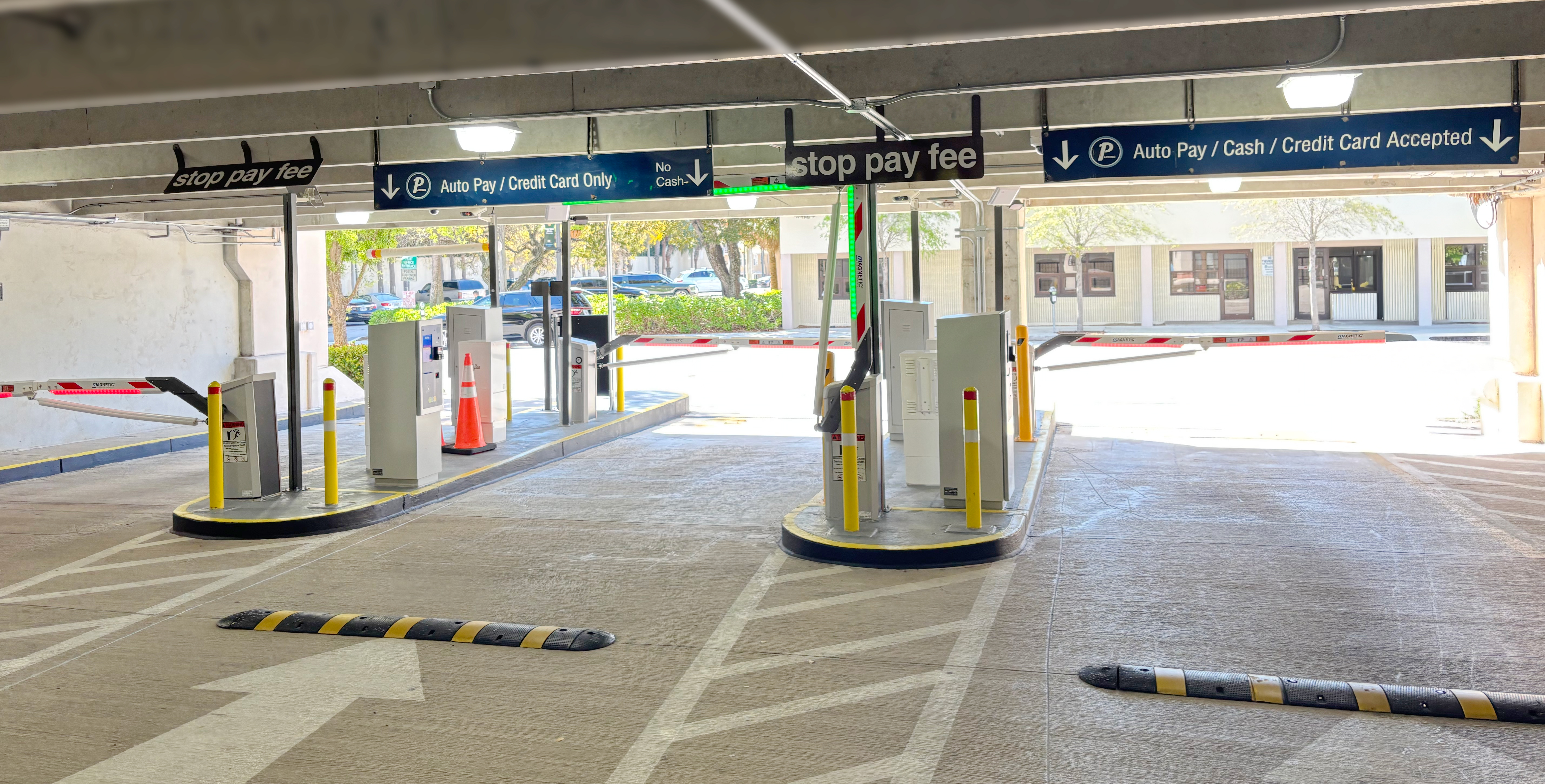
West Palm Beach offers a larger working example. Its replacement of a legacy Amano system covered 34 lanes, with work completed between September 2025 and February 2026. The old installation had seen more than a decade of use. Events continued, infrastructure changed, and some lanes needed reversible traffic arrangements.
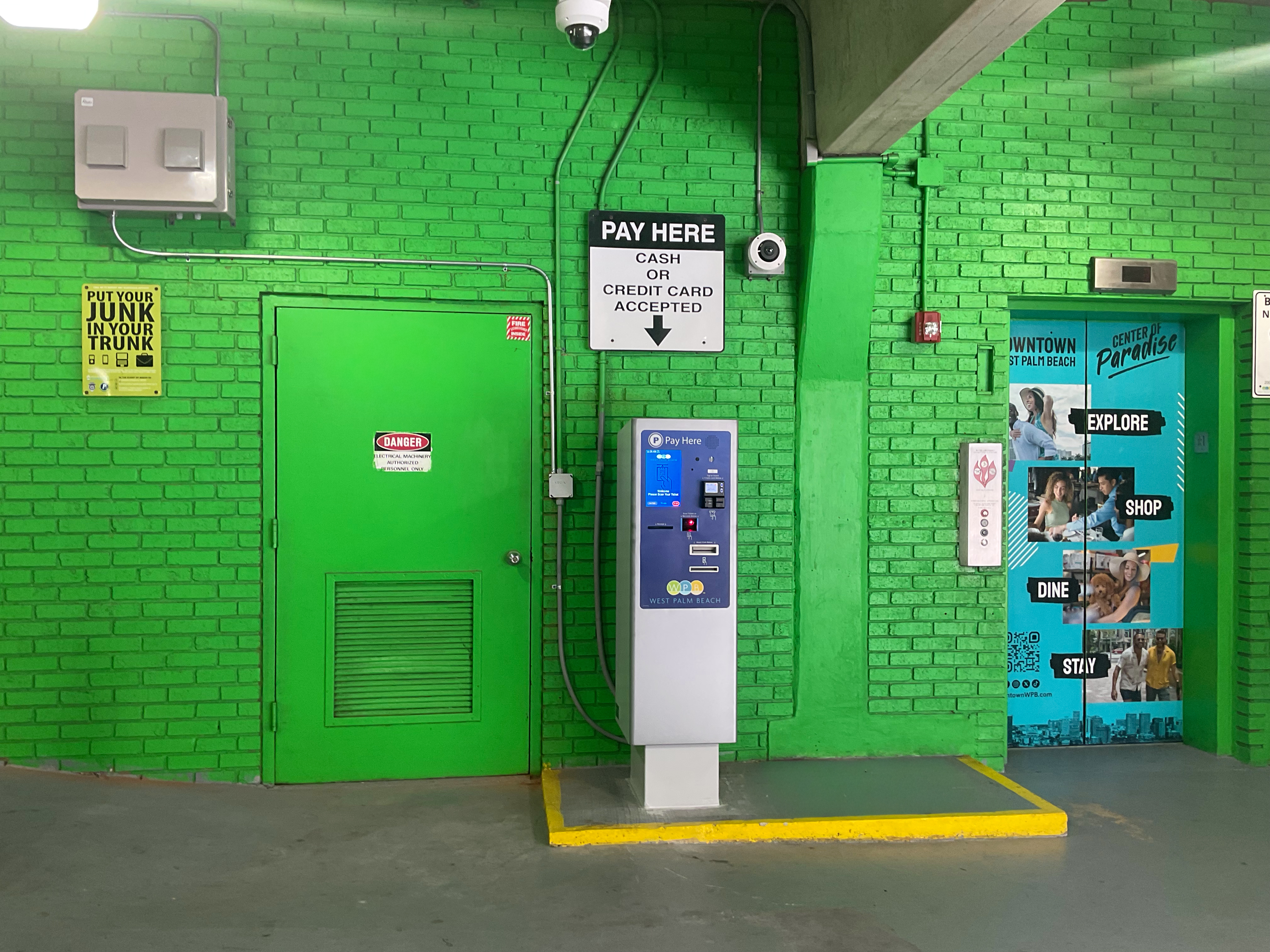
The project included mobile payment, license plate recognition, validation, dedicated network switches and a central video wall. This was equipment and infrastructure work as well as a software change. Operations Superintendent Daniel Giust emphasized the relationship with the nearby Pompano branch and reported better exit speed and increased credit-card use.
“Relationship is critical.”
Daniel Giust
Operations Superintendent, West Palm Beach
There is a useful distinction here. A cloud interface makes distant observation convenient; a local service relationship makes a broken lane someone’s immediate responsibility. Amano’s announcements of Seattle and Las Vegas office moves in July 2025 reinforce its attention to that physical network. Service geography belongs in the purchasing conversation.
A ticketless lane with a ticket inside
On September 23, 2026, Amano announced ONEflex Ticketless LPR. A captured plate creates a virtual ticket at entry; detection at exit allows the platform to calculate the fee. The feature’s revealing detail is its hybrid configuration.
If no plate is read, an Issue Ticket button can appear after a delay defined by the operator. The driver takes paper and continues. Front- or rear-capture arrangements and lane-level configuration accommodate different sites. With Amano ONE Mobile Payments enabled, a QR code leads to a facility-specific payment page where a driver can find the session by plate, without downloading an app.
The fallback gives the operator something useful to design: the next action when identification fails. Buying automation means buying its exceptions, too. A missed read should produce a comprehensible instruction for the person at the barrier.
The old access card gets a vote
At Scottsdale’s Cardone Corporate Center, the argument for change began below the interface. The previous installation was over a decade old, and wire runs and detection loops needed attention. Elevate Parking wanted tenants’ existing proximity cards to work with the replacement.
Amano’s account describes testing those cards, replacing four equipment lanes, upgrading infrastructure and deploying the new system in two days. The familiar credential survived. That is a concrete form of convenience: tenants did not need a new habit simply because management had bought new machinery.
Compatibility also extends outside the property. Amano lists reservation connections, command-center integrations and parking guidance interfaces. Its TagMaster CT-45 integration gives operators another LPR camera option. For hotels, Amano describes Auto-Enroll linking guest plate details from the property-management system to parking access. Integration is valuable when it removes duplicate work from an actual job.
The hardware eventually has the last word
Amano competes with PARCS suppliers such as SKIDATA and TIBA. Its case rests on the combination of equipment, software, integrations and service coverage. None of those components makes the others unnecessary.
Houston’s historical 2017-2021 capital plan illustrates the limit. It called for replacement of an Amano McGann system whose hardware was over 13 years old. Software updates had been maintained, but the equipment no longer supported some desired customer-service functions. Keeping software current had not made the physical installation young.
This is a business with an installation bill and a continuing relationship. Cloud subscriptions, maintenance and equipment compatibility all deserve attention. A platform can accept third-party integrations while its own parts and servicing remain specialized: a January 2026 Amano letter in Boise’s board packet specifies factory-trained personnel for installation and support to maintain warranty.
The copyable habit is simple. Demonstrate the awkward transaction before signing: the tenant’s existing card, the plate that is not captured, the visitor using the required payment method. Establish who repairs the lane and what continues to cost money. A dashboard may win the meeting. The driver at the exit gets the final review.