The payroll report was supposed to be an AI success story. PrismHR’s team had built a tool to bring information about a payroll run into one view and summarize it. Then came the awkward question that ought to follow every impressive demonstration: could the same job be done more efficiently?
- PrismHR sells payroll and HR technology to the providers who serve employers.
- Its advantage lives in the awkward details: client setup, permissions, benefits and handoffs.
- A payroll-audit project became mostly code-driven after repeated rewrites, the company says.
In a September 2026 company interview, Chief Innovation Officer Adam Van Beek described five or six rewrites. The resulting report, he said, was “99% driven by code.” AI helped the team create and improve that code while playing a smaller role when the report ran. The account describes a choice about operating cost and scale, rather than a measured savings figure.
That little reversal makes a good entrance to PrismHR. Payroll is an unforgiving place to fall in love with machinery. An employee awaiting a deposit has limited interest in the architecture behind it. The useful question is whether the system makes a complicated obligation easier to discharge, repeatedly, by Friday.
Code-driven report
Van Beek’s description of the payroll-audit result
A platform with three audiences
PrismHR occupies a particular spot in the HR business. Its immediate customers include Professional Employer Organizations, Administrative Service Organizations and payroll bureaus. These providers use its technology to serve small and midsize employers. Employees encounter the results through portals, pay information, enrollment screens and other everyday transactions.
The arrangement creates three audiences. The provider needs to manage many client companies. Each employer needs useful administration and an intelligible service. Each worker needs a straightforward way to do a small task. A system can please one audience and exhaust another. A beautifully simple employee screen says little about whether a payroll specialist can configure the rules behind it.
This is also the fair way to assess competitors. isolved operates a provider network serving PEOs, ASOs and payroll businesses, so it belongs in the conversation. Buying software for one employer and choosing the operating platform for a service bureau are different exercises. The second requires attention to client administration, invoicing, permissions and the provider’s own sales process.
An armored-car detour
The predecessor business began in 1985 with Fred Davison. In PrismHR’s published oral history, Craig Babigian recalls wanting better labor-cost reporting at an armored-car company. He initially preferred a larger technology shop, then returned to Davison when that route disappointed him. Payroll grew out of a concrete operating problem.

A Florida PEO later offered an appealing proposition: supply the software, keep selling it to others and share the continuing cost of improvement across customers. The company joined NAPEO in 1997. Babigian remembers a chilly first conference reception. The market wanted evidence of commitment. Useful software still needed time to earn a hearing.
In February 2015, F.W. Davison & Company became PrismHR as it introduced its next-generation platform. Its development name had been Vision. The rebrand followed an Accel-KKR investment the previous September. There is a pleasingly practical sequence here: build the replacement, secure resources, then put the new name on the door.
Where the handoff used to fail
Consider Galactic, a customer featured in a PrismHR case study. Setting up a new client involved collecting documents, preparing onboarding and benefits, and arranging workers’ compensation rates and billing. Much of the coordination happened through emails, checklists and reminders. The weakness was the space between people’s responsibilities.
Galactic put those steps into configurable ClientSpace workflows. Completing one task notified the person responsible for the next. When a client asked to bring its first payroll forward by a week, the organized setup made the request manageable, according to payroll account manager Matt Hopkins. The evidence is a customer account published by the vendor, with a specific operational example.
“moving up the payroll date was no problem at all.”Matt Hopkins · Galactic · customer case study
It is an unusually useful software story because the thing improved is visible. A team can inspect a handoff. Who owes the next action? Which missing item holds it up? A faster dashboard helps little when nobody owns the unresolved question. The design lesson is to give the work an address before trying to make it move faster.
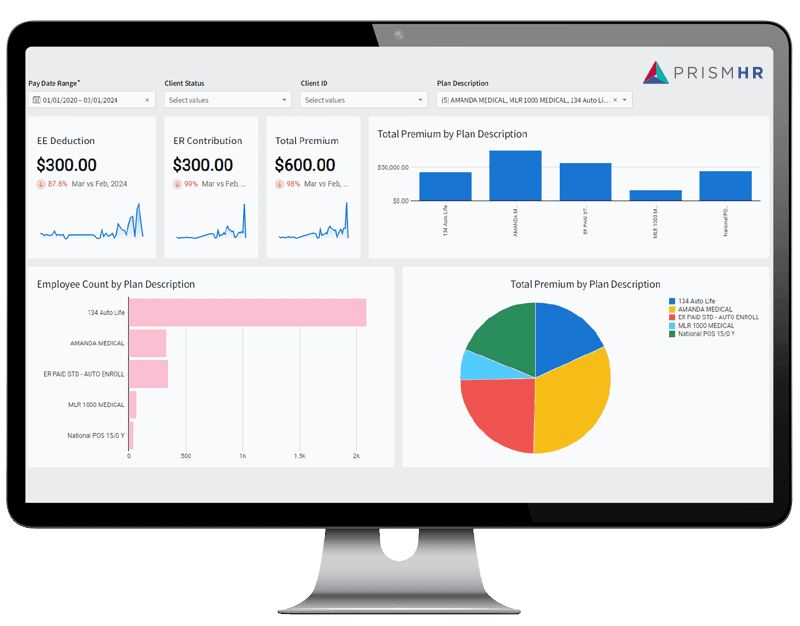
ClientSpace reaches beyond setup into sales, underwriting, client service and risk management. Elsewhere, Workforce Management covers time and scheduling; managed services can supply back-office help with payroll, benefit setup and tax administration. Those products address different bottlenecks. Buying another module makes sense when it removes an identified piece of work, rather than merely adding another place to log in.
A wider offer, a larger owner
PrismHR’s business combines cloud software, enhanced modules, integrations and services. Its Seeds program offers customers customizable marketing materials and sales assistance. One prospect demo per calendar year is free; further demo support is listed at $250 an hour. That is a published support price, not the price of the payroll platform.
The program reveals a supplier that cares about its customers’ ability to sell. A provider needs to explain the technology to employers as well as operate it. Helping with that explanation strengthens the distribution channel. For a buyer, the budget conversation should include implementation, training, selected modules and ongoing operations alongside the software contract.
Summit Partners invested in 2017. Stone Point Capital took a majority stake in December 2019. In September 2022, PrismHR and Vensure Employer Services merged, according to Stone Point’s portfolio account. The combination placed the software business beside a wider set of HR services.
The subsequent offer has expanded. A 2025 Vestwell partnership added pooled retirement solutions. June 2026 brought Insurance Advisory & Benefits Services, combining advice, voluntary benefits, Broker of Record services and administration. These are extensions of the provider’s menu: more things it can offer clients through the relationship it already has.
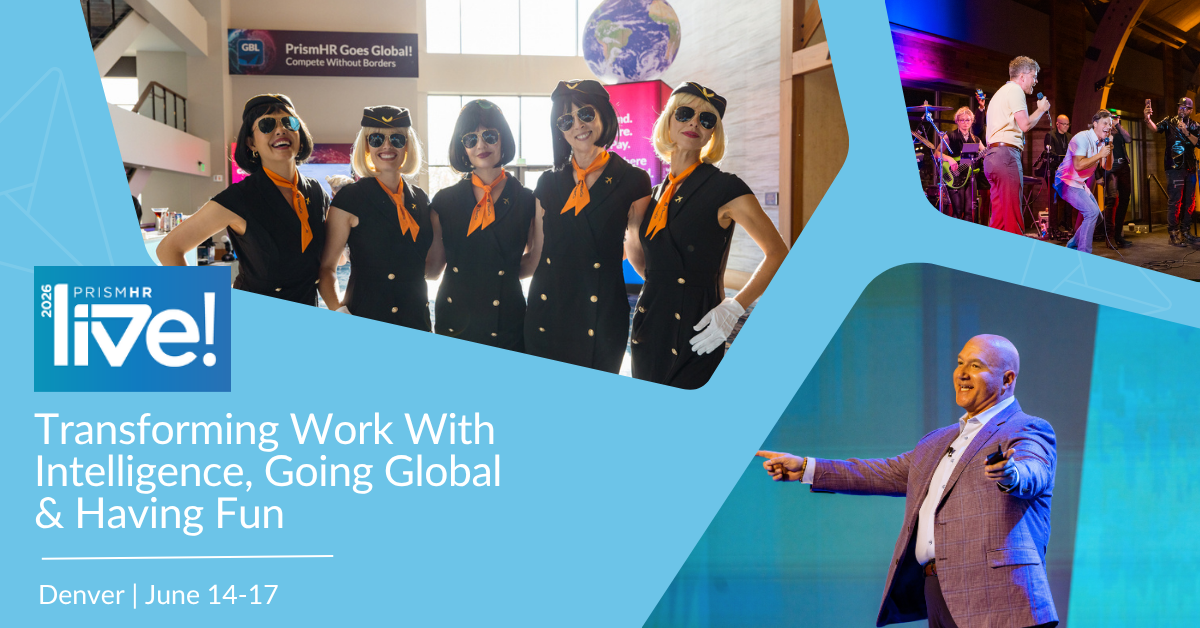
PrismHR Global, announced that June, advertises support across more than 175 countries, including employer-of-record services, contractor administration and global payroll. Its Pi intelligence layer and Prisma assistant arrived in the same month, with announced capabilities across communications, recruiting, onboarding and reporting. These announcements describe the intended scope; implementation still deserves a demonstration using the buyer’s own workflow.
The week availability mattered
There is a harder episode in the history. On February 28, 2021, a security incident affected availability of PrismHR’s HR, payroll and benefits software. Its April statement says the company disabled access to certain systems and brought in a cybersecurity firm. All customers had full functionality restored by March 7, it said.
The same statement outlined movement toward zero trust and changes to cyber disaster recovery. It described recovery environments disconnected from production, with limited internet connections. That is a concrete response to a concrete failure. In August 2026, PrismHR named Michael Lockhart its chief information security officer.
For a service provider, the incident makes an uncomfortable buying question unavoidable: what happens to every client relationship when the shared system is unavailable? Concentrating operations can simplify daily work while concentrating dependency. An honest assessment includes recovery procedures, access to essential records and the division of responsibility during an interruption.
Copy the discipline
A team evaluating PrismHR can borrow three habits from this story. First, map an actual process, from a new client’s information to its first payroll. Second, identify the handoffs that require chasing. Third, ask the vendor to demonstrate those exact steps, including a correction or exception. The company’s August 2026 release, for example, added ClientSpace exports of unemployment-tax rates, workers’ compensation rates and administrative fees into PrismHR. That is a testable integration.
The fit depends on the organization. A bureau serving many employers has reasons to value provider workflows and a broad service menu. A single employer seeking a narrow payroll tool may have fewer uses for them. Nor will a workflow rescue inaccurate inputs, unclear responsibilities or an unsupported international requirement. Those conditions belong in the evaluation before the contract does.
The opening AI story offers the most portable habit of all: keep the outcome fixed while letting the method change. Sometimes the better product arrives after the team abandons its favorite implementation. In payroll, that willingness has a particularly welcome audience - everyone waiting to be paid.
Explore the work
PrismHR website ↗ Marketplace ↗ LinkedIn ↗ X ↗ Facebook ↗
Inside the payroll-audit rewrites ↗ Galactic’s setup story ↗ The Vensure combination ↗ 2021 incident statement ↗ isolved’s provider network ↗ August product changes ↗ Company blog ↗
Watch & exploreWorkforce Management webinar ↗ Customer video on the homepage ↗ Customer interviews ↗ Request a product demo ↗