The sold-out sign is a marvellous little compliment. It tells a hotelier that somebody wanted every room. It says considerably less about whether those rooms were sold to the right guests, through the right channels, at prices worth accepting. A hotel can be busy and still have made a collection of expensive mistakes.
Duetto has spent its life worrying about those mistakes. Its software helps hotels, casinos and resorts decide what to charge, forecast what comes next and judge which business deserves the keys. The interesting part is the unit of attention: a particular kind of guest, buying a particular room, on a particular date. Treat them all alike and the spreadsheet becomes tidy. The business may become less so.
The story in four decisions
- Untie the rates. Open Pricing lets room types, guest segments and booking channels respond independently to demand.
- Look beyond tonight. Forecasting and group analysis help teams weigh tomorrow’s guests against today’s offers.
- Count what survives. HotStats adds profit benchmarking to the conversation about revenue.
- Make the forecast useful. New integrations connect pricing intelligence to distribution and advertising.
01 / The original constraintA ladder is a peculiar way to price a hotel
Consider the traditional best-available-rate ladder. Establish a base price; attach other prices to it through fixed discounts or premiums. Move the base and the attached rates follow. It is an admirably orderly arrangement, provided demand is equally orderly.
Demand has other plans. A suite can be sought after while ordinary rooms languish. A member rate can attract worthwhile business without needing the same adjustment as a public rate. Duetto’s Open Pricing removes the requirement that all these prices march together. The revenue manager can respond to each pocket of demand rather than close a channel simply because its usual discount no longer makes sense.
Open Pricing / Four independent decisions
This is more specific than the familiar promise of “dynamic pricing.” The room rate can move dynamically and still drag a set of ill-fitting rates behind it. Duetto’s proposition concerns the relationships between prices as much as their speed of movement.
02 / Before the softwareTwo hotel men and a third pair of eyes
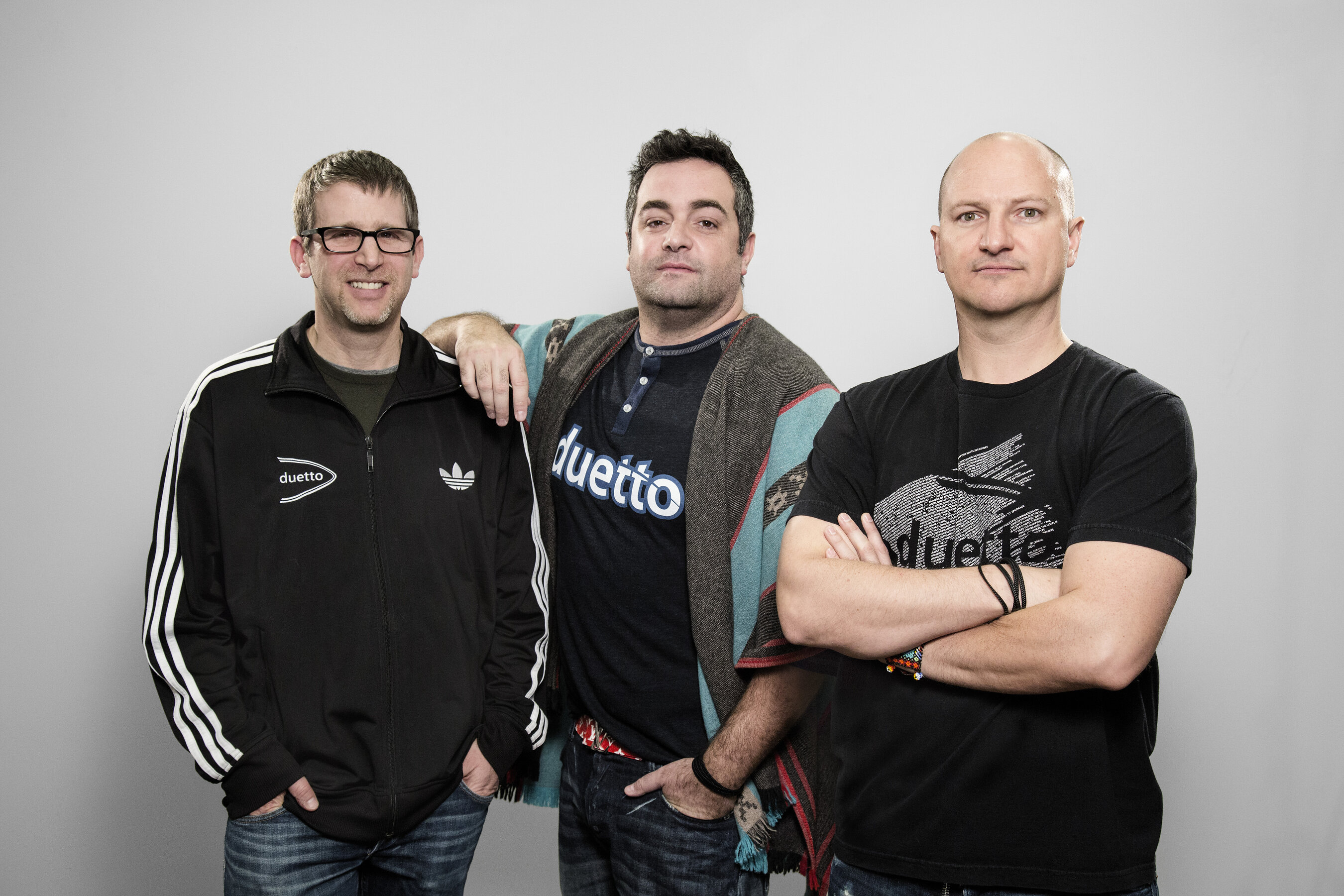
In 2010, Marco Benvenuti and Patrick Bosworth left Wynn Resorts and started a consulting business. They were working on hospitality’s distribution and profitability problems with spreadsheets. In 2012, Craig Weissman, formerly Salesforce’s chief technology officer, joined them. Duetto marks March 12 that year as the anniversary of its first line of code.
The combination matters. Hotel practitioners knew the awkward decisions. A cloud-software veteran could help turn their methods into something more hotels could use. The founders’ expertise was an understanding of both the hotel’s commercial problem and the machinery needed to act on it.
The brand had a small automotive joke tucked into it. Its original logo borrowed curves from the Alfa Romeo Duetto, a car Benvenuti admired. A company selling better hotel arithmetic had allowed itself a little Italian longing.
03 / A customer changes the rulesNH’s problem was the business it kept accepting
NH Hotel Group offers a revealing example. Duetto’s account of the turnaround describes a company near bankruptcy in 2012, with too much lower-rate business from flight crews, tour operators and negotiated corporate contracts. The problem began before the rate recommendation: in the mix of business the company had agreed to take.
NH replaced major hotel systems across 400 properties over two years, introduced GameChanger and reworked segmentation. It released one million room nights from less profitable business, doubled its revenue-strategy team and trained the wider company. Software entered a programme of organisational change.
“We had to change the mentality of the sales force.”
Fernando Vives / Chief Commercial Officer, NH Hotel Group
NH Hotels / Reported change, 2017 vs. 2016
The copyable lesson is to question the contracts and habits behind a number before celebrating its improvement. A full room-night ledger can conceal business that a hotel would be better off replacing.
04 / The working machineryPrice it. Forecast it. Decide whether to take it.
GameChanger is the pricing engine. It sets independent rates and distributes them through connected systems. AutoPilot executes within the hotel’s chosen parameters; managers can intervene. The useful promise is less repetitive work with room for judgement.
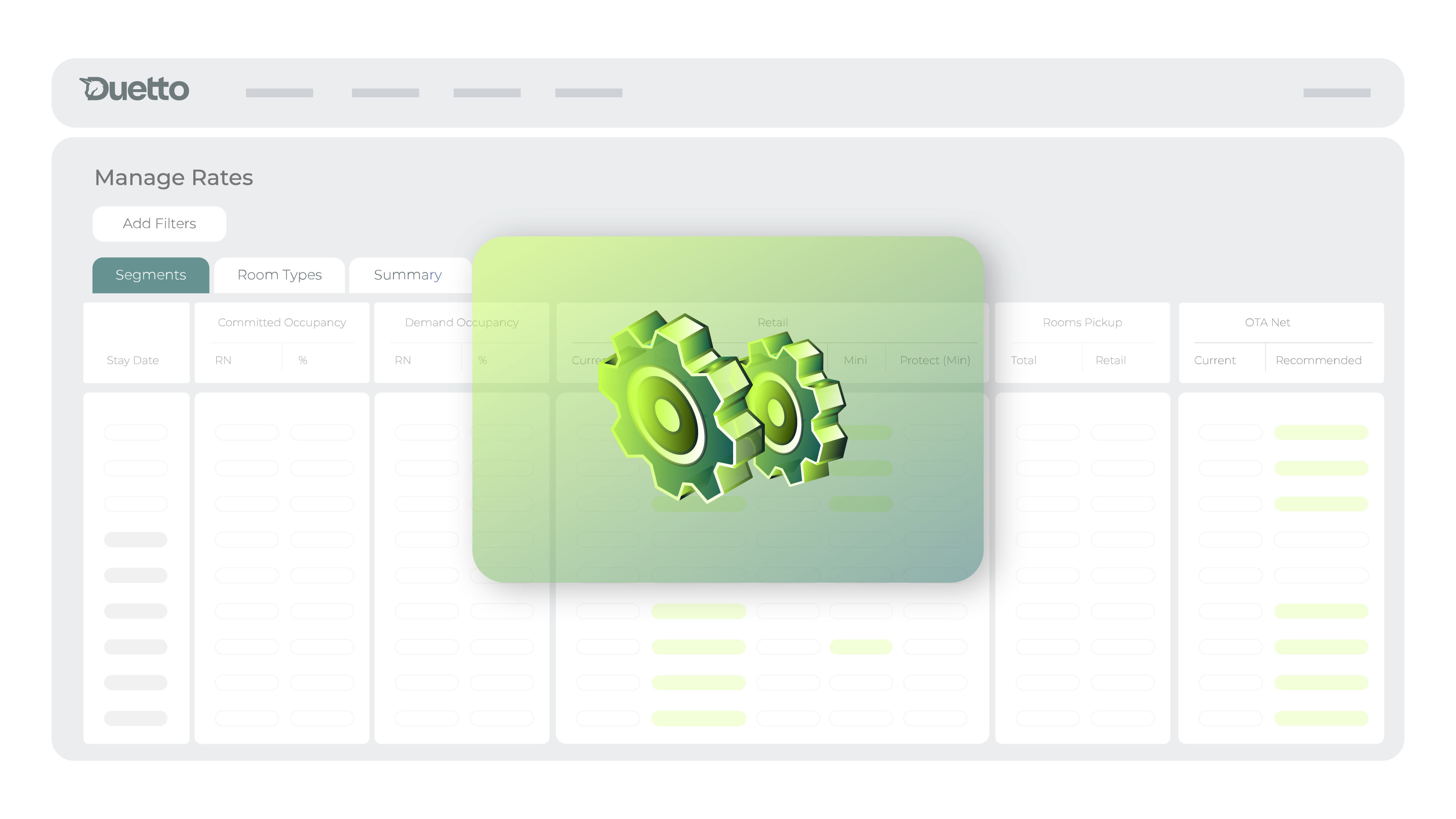
ScoreBoard handles forecasts and reporting. It turns monthly goals into daily views, lets managers compare a portfolio with individual properties and incorporates guest-spend information. Advance adds external demand signals and AI-driven recommendations. These products address a familiar hotel inconvenience: the market keeps moving while the team is preparing the report.
BlockBuster tackles a different argument. A group wants rooms. Sales wants the booking. Revenue management wonders who else might have paid more. Displacement analysis puts the prospective group beside the individual business it could crowd out, while considering spending beyond bedrooms. Its two-way Amadeus Delphi integration moves booking details and rate recommendations between the systems.
Casino resorts add another twist. A discounted room for a valuable player can make commercial sense even when its room revenue looks unimpressive. Duetto supports player-value segmentation and complimentary-room logic. A bed can be part of a much larger purchase.
The suite also has a simpler branch. Launched in June 2025, GameTime serves select-service and limited-service hotel brands with lean teams. Predefined segmentation and controlled automation reduce the work of configuring a complex system. There is commercial wisdom in recognising that some customers need fewer decisions to make.
05 / After the saleThe money that remains gets its own product
Duetto raised an $80 million Series D in 2018, led by Warburg Pincus. GrowthCurve Capital acquired it in June 2024. The business then widened through acquisitions: MiceRate brought meetings and events capabilities, and HotStats joined in April 2025 with hotel financial benchmarking.
HotStats compares departmental performance and hotel profit-and-loss figures, rather than stopping at room revenue. Its data is updated monthly. Together, Duetto’s products form what the company calls its Revenue & Profit Operating System. The name expresses a broader ambition: connect the commercial decision with its financial aftermath.
Follow the commercial decision
That ambition is reaching into adjacent workflows. In April 2026, Meliá extended its contract and announced resort co-development with Duetto, beginning with tour-operator management. In June, RateGain became a preferred distribution partner. A Triptease integration followed, using occupancy forecasts to increase Google Hotel Ads spending when bookings fall below a hotel’s chosen threshold.
These are practical connections. A forecast has limited value if marketing never sees it, or if the recommended rate never reaches the booking channel. They also create dependencies: implementation and data consistency become part of the product’s usefulness.
06 / Buying the ideaThe hotel still has to do its part
Duetto sells business software through custom quotes based on property size, chosen products and contract terms. A buyer must budget for the subscription and the work around it: connecting the property management system, validating data, configuring the strategy and training the team.
IDeaS, FLYR Hospitality, Mews RMS and RoomPriceGenie occupy the same broader market. Buyers should compare how each handles their actual rooms, contracts, channels and reporting needs. Duetto’s distinctive case rests on independent pricing, portfolio workflows and the addition of profit benchmarking.
The approach has conditions. A hotel needs reliable data and colleagues willing to change established rules. Automating a poor strategy can repeat it more efficiently. A small, uncomplicated property may value a simpler workflow; a complex resort may need the flexibility of the fuller suite. The right demonstration uses the buyer’s awkward booking, not a vendor’s convenient example.
In August 2026, Duetto announced Benvenuti’s death and remembered his insistence that every voice could contribute, regardless of title. The company he helped build now faces an expanded version of the original question. Once a hotel has sold the room, served the guest and paid the bills, was accepting that business a good decision? The sold-out sign remains charming. It cannot answer.