The last item on the shelf has a peculiar talent: it can exist in several places at once. In the shop, somebody is carrying it to the till. On the website, somebody is adding it to a basket. In the spreadsheet, it is still comfortably available. The physical object behaves perfectly well. Its digital impersonators cause the trouble.
- Cin7 gives product businesses a shared inventory and order system across sales channels.
- Core favors packaged workflows; Omni offers more configuration for complex operations.
- Forecasting, payments and wholesale tools extend the platform. Choosing and setting up the right connections still matters.
A small business can live with this confusion for a while. Someone remembers the delivery. Someone checks the shelf. Someone apologizes to the customer. Add another store, a wholesale account and an outside warehouse, and the memory of one helpful employee becomes a remarkably fragile piece of infrastructure.
This is the territory Cin7 occupies. It sells cloud software to businesses whose products move through more places than their owners can personally supervise. The work is purchasing, production, stock control, orders and fulfillment. The payoff is rather human: being able to answer a customer’s question without disappearing into the back room.
The founder followed the goods
Danny Ing’s explanation of Cin7’s origins was refreshingly practical. His earlier internet development company, Datum Connect, began in 2002. Watching customers expand into ecommerce, he saw retailers acquiring wholesale customers and wholesalers opening online shops. The old categories were getting less useful. The inventory still needed to add up.
“The idea is connected inventory.”
Danny Ing / founder
Ing dated the first users to 2012 and the official launch to 2013. That sequence matters more than the ceremonial birthday: the problem came from watching merchants work. In a later interview, he said he had spent roughly half his time with customers while building Cin7, learning what they needed and which systems they already used.
There is a good product lesson here. Follow a thing that changes hands. A carton goes from supplier to warehouse to shopper; information about that carton goes from purchase order to stock record to invoice. Each handoff creates an opportunity for the accounts to disagree. Cin7 built its business around keeping those accounts in conversation.
Sales channels
The shared record
Fulfillment and accounting
A simplified operating model, not a technical integration diagram.
Two ways to organize the back room
Cin7’s current offering revolves around two platforms. Core brings purchasing, sales, warehouse operations and manufacturing together with familiar accounting and ecommerce connections. A maker can track materials and finished goods; a seller can connect an online order to the stock needed to fulfill it. The attraction is having those activities in the same operational frame.
Omni is the more configurable route for complicated multichannel businesses. Its pitch centers on handling online, physical retail and wholesale activity, with native electronic data interchange and third-party logistics support. EDI is the structured exchange of trading documents with businesses such as large retailers. A 3PL is the outside company holding or shipping your goods. Neither abbreviation becomes less consequential because it is dull.
The distinction is about fit. A manufacturer may care deeply about production workflows. A brand supplying retailers may care more about trading-partner requirements and external warehouses. A demo should follow the actual order through the business, including the awkward bits, rather than hop pleasantly between attractive screens.
Packaged operations
Purchasing + production
Inventory + accounting links
Configurable workflows
Multichannel coordination
Native EDI + 3PL support
Cin7 has built some of this breadth through acquisition. In February 2021 it bought DEAR Systems and Orderhive, adding capabilities across manufacturing, shipping, warehouse management and automation. DEAR became the foundation of today’s Core. The resulting business has more than one operational inheritance, which helps explain why picking a product deserves more thought than picking a logo.
The connection that needed another look
AQ Outdoors, a Canadian paddle-sports retailer, offers a revealing example. As online demand accelerated during the pandemic, its existing setup struggled with inventory and purchase orders. Core improved visibility. But another POS system proved troublesome for returns, exchanges and products sold before arrival.
“It didn’t fit,” owner Simon Coward recalled in Cin7’s customer account. Implementation partner Waypoint subsequently helped move the business onto Core’s native POS. Coward said he would have engaged a partner sooner, avoiding a year of inventory-control issues.
The resulting setup connected two stores and four Shopify websites to Core, with QuickBooks Online and ShipStation handling their respective jobs. Coward reported zero errors in the first month after the POS change. That is a customer’s account of a particular period, rather than a promise every buyer should expect.
The lesson is wonderfully copyable: test a return, an exchange and a preorder before signing off on an integration. A connector can exist and still mishandle the transaction that matters to you.
The bill behind the dashboard
Cin7 makes its money from subscriptions and optional extensions. In October 2026, published Core prices are $349 a month for Standard, $599 for Pro and $1,199 for Advanced, in US dollars before tax. Omni requires a quote.
Standard includes five users, two ecommerce and app integrations, and 6,000 sales orders a year. Higher tiers raise those allowances; forecasting and several other modules can add cost. Published subscription prices therefore give a starting point for the budget, rather than the whole project.
The sensible comparison is with the work a business needs done. Zoho Inventory also handles multichannel orders and fulfillment. Katana combines inventory with manufacturing and shop-floor management. Larger ERP systems extend across more of an organization. Cin7’s position is the busy middle: product operations that have become too involved for disconnected tools, while the buyer still wants connected specialist software.
For a simple seller with few stock movements, the subscription and setup work may be hard to justify. For a business with unusual production or compliance requirements, the deciding issue is whether the exact workflow is supported. More software is an expense until it removes a specific problem.
Buying tomorrow’s stock
Once the count is trustworthy, another question becomes possible: how much should we order? In May 2024, Cin7 acquired Inventoro, a forecasting and replenishment specialist. Its technology became part of ForesightAI, moving the proposition beyond recording what happened toward recommending what to buy.
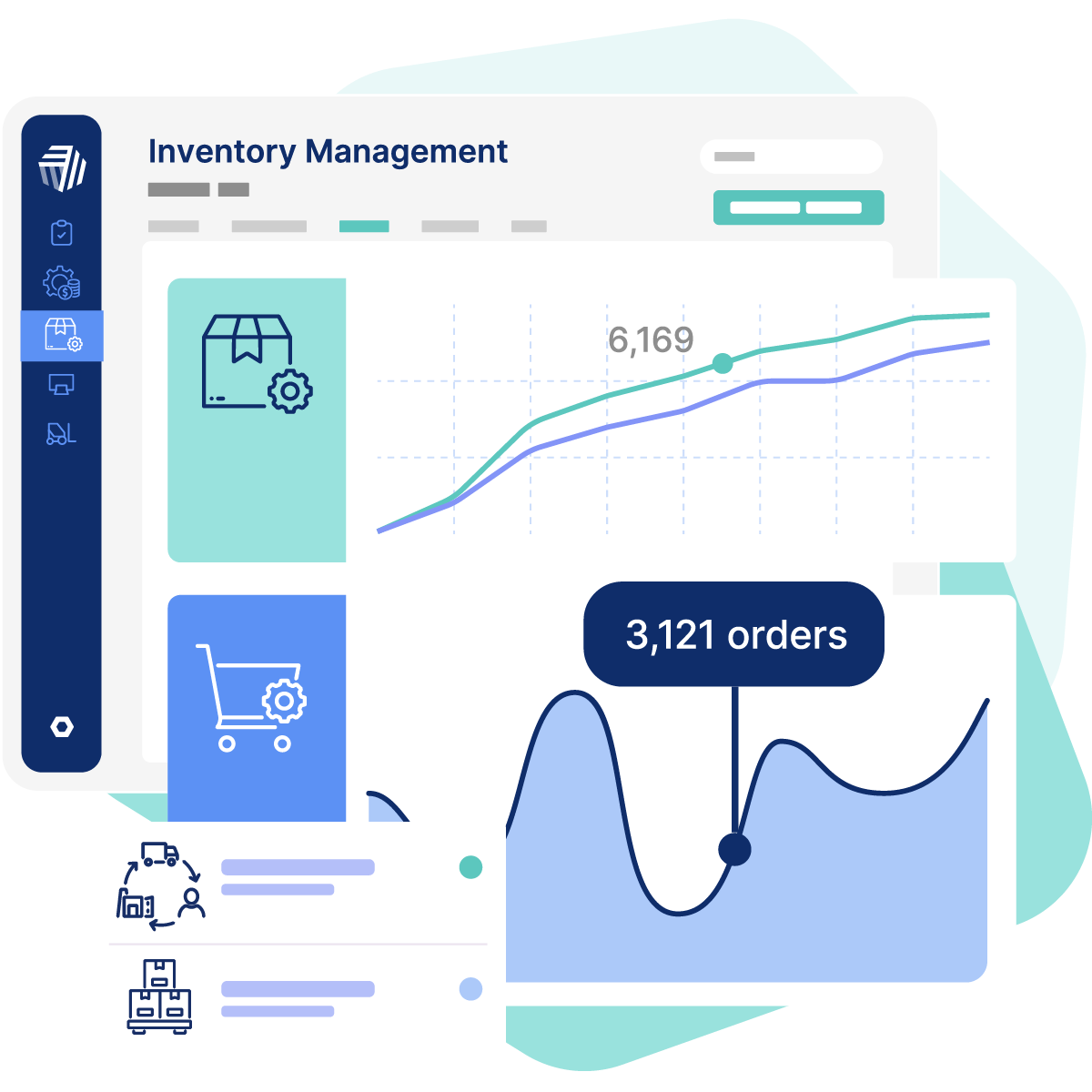
ForesightAI is an add-on for Core and Omni, rather than a separate purchase. Cin7 advertises forecasts up to 24 months ahead and recommends at least six months of historical sales data. The Omni documentation describes analyzing sales history every 12 hours and identifying overstock, stockout risks and products that drive revenue.
The conditions deserve attention. A forecast drawn from sales history is a reason to examine that history carefully. A supplier delay, a new product or a changed promotion can require judgment beyond the pattern in previous orders. Treat replenishment suggestions as decisions to review, particularly when the underlying assumptions have changed.
Inventory makes cash look deceptively solid. The unsold carton occupies space and seems reassuringly real, but the money inside it cannot pay an invoice elsewhere. Better purchasing is valuable when it frees that money without leaving the shelf empty. That is the economic argument beneath the AI vocabulary.
The next decision belongs to the operator
Cin7’s newer products suggest it wants to shorten other delays, too. Its May 2026 update introduced AMA, an AI assistant included in Core that answers account-data questions and offers guidance on using the software. It also described 3PL Connect as supporting more than 125 fulfillment partners. The intended effect is getting useful information closer to the person doing the work.
A March 2026 partnership announcement with Rillet outlined a planned connection between inventory operations and an AI-native general ledger. The proposed benefits include less reconciliation and better visibility into margins and costs. The announcement describes what the integration is designed to deliver; it should be read on those terms.

Sheldon Cummings took over as CEO on April 20, 2026. The company’s employer materials describe a hybrid workforce spread across 11 countries, emphasizing collaboration and integrity among its values. That geographic spread is useful context for a company serving sellers across time zones, although an employer’s account of its culture remains its own account.
Cin7’s August 2026 announcement put its customer base above 8,500 businesses in more than 100 countries, processing over 125 million orders annually. Core also won the Australian Small Business App of the Year title in the 2026 Xero Global App Awards. These are signs of an established operating business, rather than a new forecasting experiment with an inventory interface attached.
Its most persuasive test remains small enough to perform in a shop. Ask whether an employee can tell a customer where the product is, whether it is available, and what happens next. When that answer is reliable, the owner can stop being the person every transaction must consult. The last item on the shelf gets to be just one item again.
Follow the stock a little further
Explore the products, watch the founder’s story, or follow Cin7’s latest releases.