An office begins before the elevator. It begins when someone steps off a train, looks for an exit and decides whether there is time for coffee. Around Manhattan’s Penn Station, Vornado Realty Trust has turned that ordinary sequence into a real estate proposition. Renovate the towers, certainly. But also give the person arriving somewhere to sit, something to eat and a street worth walking along. The interesting unit of investment becomes the journey.
- The product: offices, storefronts and advertising space concentrated in Manhattan.
- The wager: better buildings and better surroundings can make the same location more attractive.
- The test: PENN 2 reached 90% leased in June 2026 after a redevelopment budgeted at $750 million.
Vornado is a landlord and developer organized as a publicly traded real estate investment trust. Businesses rent its offices; retailers lease its storefronts; advertisers use its signage. It also owns residential property and operates building services. New York dominates the portfolio, with substantial properties in Chicago and San Francisco. Its particular expertise lies in acquiring, operating and changing complicated urban assets, where a building’s possibilities are rarely obvious from its current appearance.
First, look underneath the shop
The habit has an unlikely origin. Vornado’s history runs through Two Guys, the discount chain founded by Sidney and Herbert Hubschman in 1947. A 1959 acquisition brought the Vornado name, associated with electric fans, into the business. Steven Roth and Interstate Properties became involved in 1980. The stores were struggling. Their sites, with large buildings and parking lots beside busy roads, offered a different opportunity.
Roth’s transformation closed stores and developed the real estate business. That history involved lost retail jobs as well as newly productive property. By 1993, Vornado had converted to REIT status. Its 1997 acquisition of the Mendik portfolio marked its entry into New York office real estate. The recurring question was straightforward: what could this place earn under a different use or a different standard of management?
A 1968 tower gets a second argument
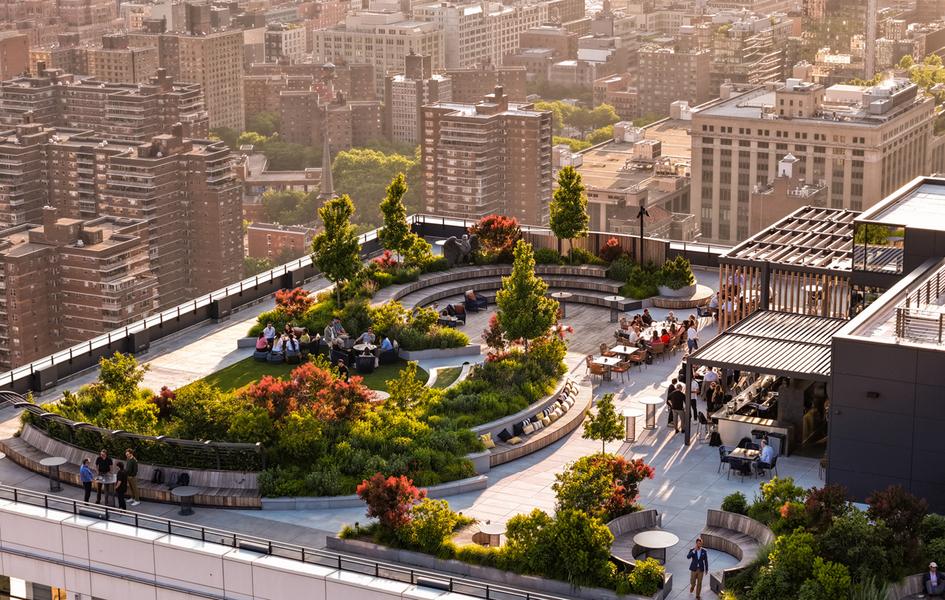
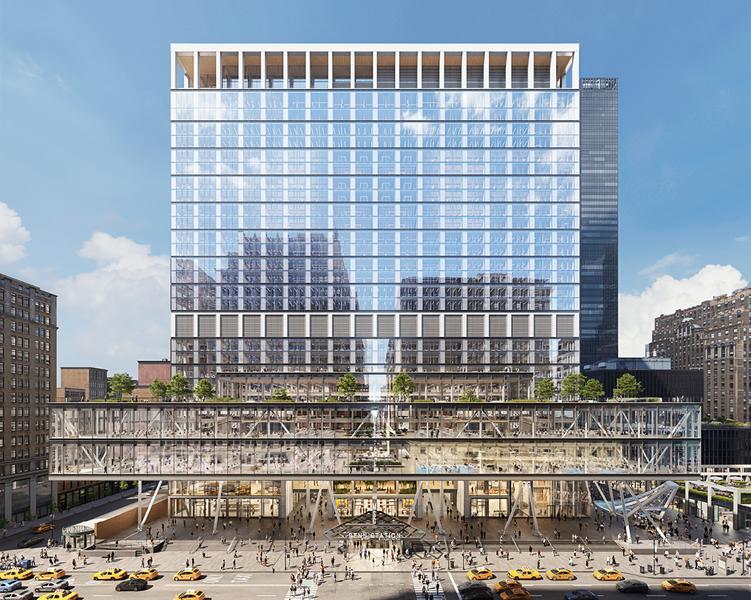
At PENN 2, directly above Penn Station, the answer involved keeping the tower while changing what tenants encountered. The original building dates to 1968. Vornado replaced its exterior curtain wall, added corner loggias and extended the lower floors toward Seventh Avenue. Its property description includes a 280-person Town Hall and a rooftop lounge opening onto 17,000 square feet of outdoor space. These are specific things a leasing team can show a prospective customer.
The reported redevelopment budget was $750 million. PENN 1, nearby, underwent a separate renovation reported at roughly $450 million. Those figures describe two building projects, rather than a single price for remaking the neighborhood. Vornado also budgeted $100 million for districtwide improvements. The scale matters: a pleasant lunch spot is easy to admire, but these investments require years of rent to justify.
The neighborhood piece includes Plaza33. Vornado and New York City’s Department of Transportation first tested the pedestrian space seasonally, then made it permanent. The completed plaza opened in June 2024, with trees, seating and nearby restaurants. A public street became a place to pause. For a company owning neighboring properties, the benefit of that pause can reach more than one lobby.
The customer buys the whole trip
Consider the different customers gathered around the same pavement. An employer needs useful office space and an accessible commute. A restaurant needs people who might stay for lunch. An advertiser needs attention. Vornado can offer each of them a different part of the same location. Its signage holdings in Times Square and the Penn District make the flow of people commercially relevant beyond office rent.
In June 2026, Vornado announced that PENN 2 was 90% leased after agreements with Veeva and Altana totaling about 125,000 square feet. Its tenant roster also includes Madison Square Garden, Major League Soccer and Verizon. These commitments show demand for the changed building. They do not establish the final return on the renovation: lease concessions, fit-out spending and the timing of cash rent still count.
For a prospective tenant, Vornado’s practical offering is accessible through property listings and leasing teams. The competitive set includes landlords such as SL Green and BXP, alongside the developers of Hudson Yards. Vornado’s Penn proposition combines renovated space with transit access and shared amenities across neighboring properties. Whether it wins a particular lease depends on the tenant’s geography, budget and requirements.
The business earns recurring rent, supported by fees and other property income, and reinvests through operations, asset sales and capital markets. Consolidated revenue was approximately $1.81 billion in 2025. Its in-house leasing, development and management teams handle different stages of the same asset’s life. That integration makes the company an operator as well as an investor: keeping a tenant matters after securing a signature.
Then the money changed the timetable
The strategy’s hard limit appeared in financing. In 2023, weak office demand, higher interest rates and difficult capital markets led Vornado to delay planned new Penn-area construction. Renovating existing buildings and financing a collection of new towers were different commitments. On the February earnings call, Roth put access to capital at the center of the problem. The timetable changed when financing became harder to obtain.
“In our business, capital is the essential raw material.”Steven Roth · February 2023
A later transaction illustrates the terms on which new construction can proceed. On October 21, 2026, Vornado, a Ken Griffin affiliate and Rudin closed their 350 Park Avenue venture, a 1.05 million-square-foot Citadel anchor lease and a $3.3 billion construction loan. Vornado owns 36% of that venture. The building is under construction. The anchor commitment and partners make this a different proposition from building first and finding demand afterward.
Copy the question before the concrete
The useful lesson is to examine what customers experience before they reach your product. Vornado can invest in that experience because it owns a cluster of nearby assets. The logic weakens for an isolated building, a location without strong transit or an owner unable to carry renovation costs through a slow leasing period. A better street cannot manufacture affordable financing.
There is also an operating argument for reuse. PENN 2 retained its existing structure, avoiding the waste and disruption of wholesale replacement above a working station. Vornado’s sustainability program gives that approach a broader corporate context. But the investment still faces a plain test: will enough tenants pay enough rent, for long enough, to cover what changed? The train delivers the people. Vornado has to give them reasons to stay.