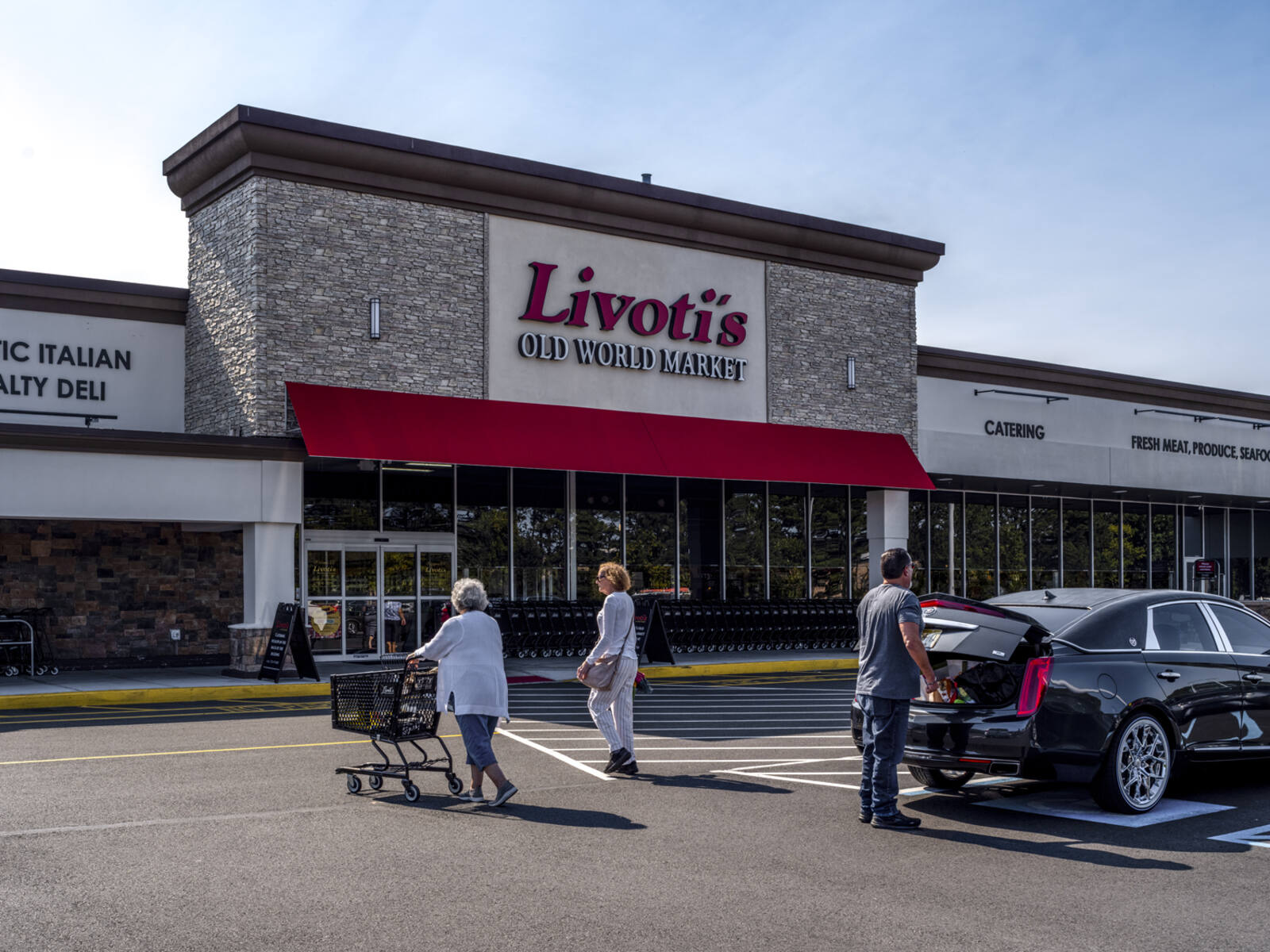
When Pathmark closed at Laurel Square in Brick, New Jersey, it left more than an empty supermarket. It removed a reason to visit. The smaller shops still had doors, signs and parking spaces. What they needed was somebody else’s shopping list. Brixmor Property Group brought in Livoti’s Old World Market, a family-owned Italian grocer. In its account of the project, Brixmor credits the arrival with helping generate 13,000 square feet of follow-on leasing. A useful way to understand this landlord begins with that chain reaction.
- Brixmor rents space to national chains, regional operators and neighborhood businesses.
- Its bet: everyday destinations can make the surrounding storefronts more useful.
- The work costs real money: $183.3 million for projects stabilized in 2025.
The store next door is part of the product
Shopping-center economics has a social side. A grocer attracts someone buying dinner; a nearby restaurant offers another reason to stop. The landlord chooses the neighbors, changes the buildings and collects rent. Brixmor operates in the same broad market as Kimco, Regency Centers, Federal Realty and Kite Realty. Grocery traffic is common territory among these owners. Brixmor’s particular emphasis is extracting more income from properties it already controls.
College Plaza, on Long Island, makes the method visible. Brixmor added Burlington and Five Below alongside grocery anchor ShopRite, bought frontage outparcels and constructed buildings for Aspen Dental and Chick-fil-A. Leasing, land assembly and construction became parts of one project. The expertise lies in coordinating those moves, rather than treating each vacant unit as an isolated problem.
The rent is only the beginning
Brixmor’s paying customers are merchants. They range from TJX, Kroger, Publix and Ross to independent restaurants and service businesses. The public company is a real estate investment trust, trading as BRX. Rental income dominates its revenue, which totaled $1.372 billion in 2025. Shoppers supply the traffic; tenants supply the checks.
For a prospective tenant, the practical entry point is a property search and a conversation with a leasing representative. Brixmor also offers pad sites for stand-alone buildings and temporary space for pop-ups, markets and food trucks. Short-term licenses can run from one day to one year. Existing tenants can access maintenance reporting, construction checklists and property contacts.
The useful discipline is to calculate the whole occupancy bill. Base rent, applicable operating-cost reimbursements, fit-out work and the time before opening all matter. A busy grocery anchor cannot make an unsuitable location affordable. Temporary space offers one way to test a concept before taking on a longer commitment.
A reader can borrow a more modest version of Brixmor’s approach: visit the center repeatedly before signing. Watch who arrives, when they leave and which neighboring stores share your likely customer. Ask what happens during construction and who pays for the work. The property’s average traffic is a starting point for investigation, rather than a forecast of your own sales.
First, the buildings needed breathing room
The capital problem came early. Blackstone’s account of its 2011 purchase of the U.S. Centro business describes a debt-heavy predecessor unable to fund enough maintenance and tenant improvements. Vacancies rose. The new owner supplied capital and the company acquired a new name: Brixmor. Its 2013 flotation, including the overallotment, raised $948.8 million before underwriting costs and other expenses.
A separate failure concerned the numbers themselves. In 2019, Brixmor agreed to a $7 million SEC settlement over manipulated same-property net operating income growth, without admitting or denying the allegations. It also agreed to an independent review of related reporting controls. That history gives investors a reason to examine the machinery behind a tidy performance measure.
A renovation with a denominator
In 2025, Brixmor stabilized $183.3 million of reinvestment projects at an average incremental net operating income yield of 10%. This compares added annual property income with project cost. For intuition, $10 of added annual NOI against $100 invested produces 10%. It is a property-level measure, before corporate financing costs and other items, and should not be read as a shareholder’s guaranteed return.
Simple arithmetic. Construction and lease execution make it difficult.
At June 2026, another $347.8 million of projects was in process, with an expected average incremental yield of 10%. The distinction between expectation and collected cash matters. Brixmor also reported $71.2 million of signed but not yet commenced annualized base rent. A signature creates a pipeline; opening the store turns that pipeline into a rent-paying business.
Leave room for the neighborhood
National relationships help fill large spaces. Local judgment helps decide what belongs around them. At Village at Newtown, Brixmor says more than half the tenants are Newtown residents, including businesses such as Oishi and Rittenhouse Home. Its published cultural tenets favor ideas from people close to the properties and allow constructive disagreement. The operating question is wonderfully concrete: what would make this particular neighborhood come back?
The less visible work includes resource consumption. In its report covering 2025, Brixmor reported a 56% reduction in Scope 1 and 2 greenhouse-gas emissions from its 2018 baseline. That describes specific operational emissions categories; it does not describe every tenant’s footprint. For a landlord, improving the shared infrastructure sits alongside choosing the right merchants.
“The best ideas often come from those closest to the real estate.”
Brixmor’s published cultural tenets
The next 115 centers
Brian Finnegan became CEO in January 2026, retaining his President title. In September, Brixmor and Everview announced a $2.34 billion agreement to acquire Slate Grocery REIT. Brixmor would acquire 23 centers for $636 million; a joint venture would acquire another 92 for $1.71 billion. Brixmor would own 20% of that venture’s common equity and manage its properties. Closing is expected in early 2027, subject to approvals and other conditions.
The transferable lesson is to improve the connections between businesses, buildings and repeat visits. Its limits are equally practical. Weak local demand, an anchor that loses customers, expensive construction or delayed openings can unravel the arithmetic. A landlord can renovate a storefront. The harder task is making it belong on somebody’s route home.