On January 5, 2026, a new employee arrived for work and found a different company name on the signs. Over the weekend, Brookfield’s retail business had become GGP again. The employee thought the company had moved. Kevin McCrain later told the story with the economy of someone who appreciates a practical complication: “He thought the company had moved.”
For a business built around helping other companies establish a physical presence, it was an unusually literal branding problem. The address had stayed put. Three letters had returned. A person standing at the door briefly had to reconsider where he belonged.
McCrain, GGP’s chief executive, was describing something larger than an office surprise. Retailers had kept using the old name even after Brookfield bought GGP in 2018. A corporate identity had remained in everyday circulation. Now the organization was putting it back where people could see it.
The investor behind the storefront
McCrain’s route to that door ran through investment work. He joined Brookfield in 2010 and worked in New York and London. His responsibilities grew to encompass retail investments, portfolios and the global retail sector. Today he is both GGP’s CEO and a Managing Partner in Brookfield’s Real Estate Group.
His education includes a bachelor’s degree from Sacred Heart University and a Juris Doctor from Georgetown University Law Center. His transaction experience includes Center Parcs, Gazeley, IDI, Student Roost and IFC Seoul. Those names describe a career spent across different kinds of property, before his present concentration on the places where people shop.
One part of that earlier career has precise boundaries. He joined the board of Center Parcs’ operating company in August 2015 and resigned in May 2020. Board work puts investment decisions alongside an operating business, with customers, buildings and recurring demands on capital. His later retail role would bring those perspectives into the same job.
In April 2023, he became CEO of Brookfield Properties’ retail real estate business. Asked the following year what he brought to it, he emphasized financing and growth while praising the leasing team’s knowledge of individual centers. “What I bring to the table is an expertise on the capital markets side.” His description gave the role a clear division of labor: support the people finding the right uses, and work out how to fund them.
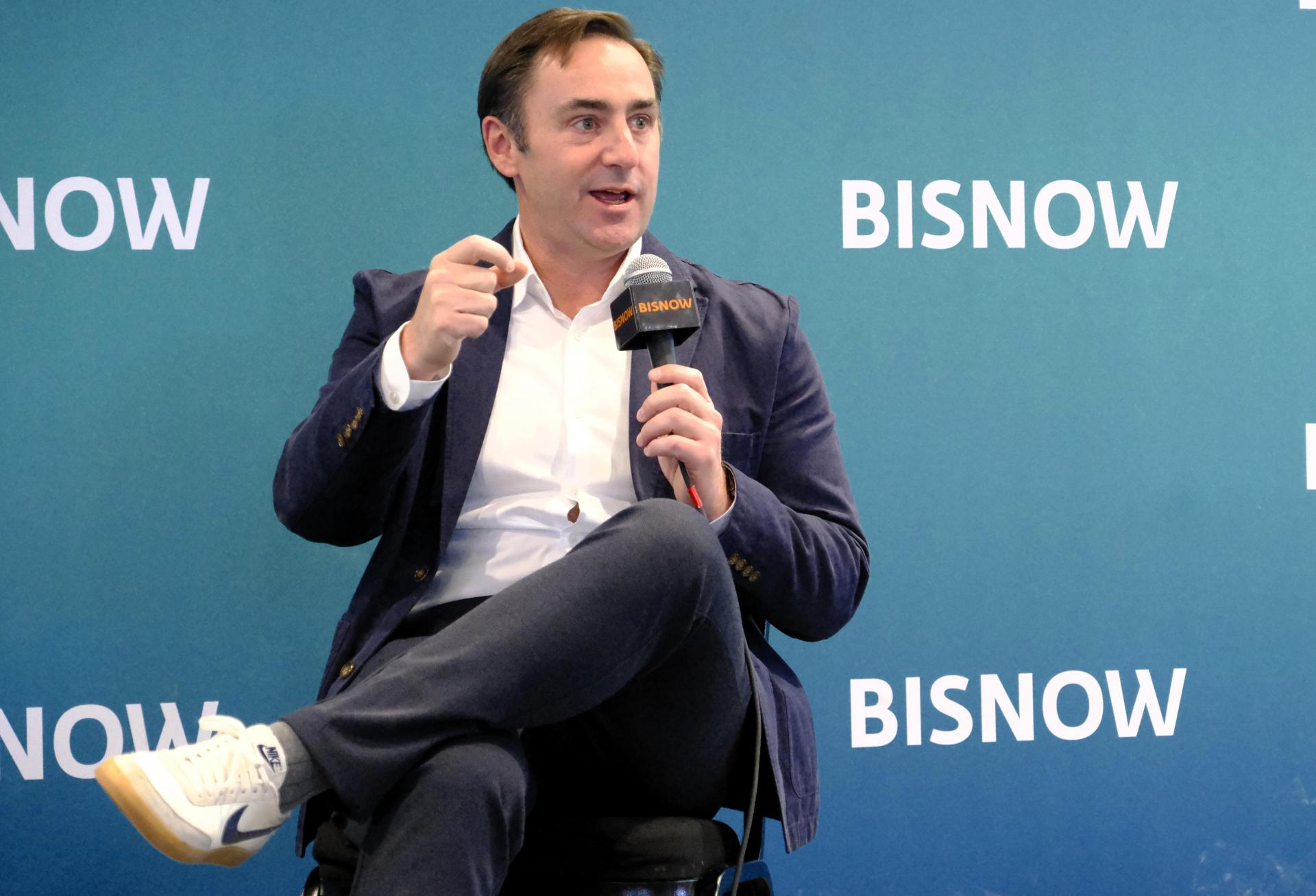
Three letters, still in use
When the GGP name returned in January, the business remained a Brookfield subsidiary. Its Chicago base remained, too. The announcement involved no organizational change. This was a familiar retail identity receiving its own public face again.
There is a useful restraint in that decision. A name already understood by the people signing leases does not require a lengthy introduction. For McCrain, restoring GGP meant drawing on relationships that had continued through the years under Brookfield. The brand had an audience before the signs went up.
A shopping-center operator spends its days thinking about other people’s brands: which ones draw visitors, which can expand, which belong together. In this instance, it was making a choice about its own. The old name could carry a forward-looking business without pretending the intervening years had disappeared.
By May, McCrain was describing a more assertive approach to growth. “We’re on offense now.” The phrase accompanied investment plans and an interest in expanding the business. A restored name is pleasant. Giving it something to do is the next task.
“We’re on offense now.”
Kevin McCrain, May 2026
The numbers have a date
McCrain’s September 2024 presentation to investors supplies a revealing snapshot of his method. He described Brookfield’s core retail portfolio as 97 percent leased, with a weighted average lease term above nine years and sales approaching $1,200 per square foot. He also pointed to $9 billion in total sales during the preceding year.
These were figures for a defined core portfolio at a particular moment. Their value here is in showing which measures he put together. Occupancy describes how much space is committed. Lease duration supplies a view of time. Sales describe the activity that helps a retailer keep paying for its location.
He linked retail sales to the potential for rent growth as leases renewed. It is an investment argument grounded in what tenants can earn. A center full of people is encouraging; a center in which those people support the businesses around them offers a more useful basis for the next financial decision.
At the following year’s investor presentation, McCrain widened the view to Brookfield’s real estate business. He distinguished private-fund investments from balance-sheet investments and argued that returning capital-market activity, together with operating fundamentals, supported its recovery thesis. The distinction matters to a career like his. An investor has to consider where capital sits and how it can be released. An operator has to consider what happens inside the property while that capital is committed. McCrain’s public explanations move between those questions, connecting the experience of a place to the financial structure supporting it.
A national business with local homework
McCrain has consistently argued for matching the tenant mix to the surrounding customer. In his 2024 account of the business, national, regional and property teams worked together. Even a multi-store agreement with a brand required local involvement. The attraction of negotiating at scale did not remove the need to understand the next address.
That is a demanding arrangement. A national relationship can open a conversation, while a local team still has to establish whether the proposal belongs. A restaurant or entertainment concept may work at one center and be an awkward fit at another. Repetition saves effort only when the circumstances deserve it.
His public defense of malls follows that same logic. He sees shopping, food and entertainment as reasons for people to spend time together. He has also argued that younger customers still want to visit malls. His emphasis falls on the mix of reasons to go, rather than the age of the format.
The roof, in his telling, is an expensive distraction from the central question. Taking it off an enclosed mall costs money without necessarily making the destination more useful. The more interesting decisions happen beneath it: what goes into the space, who wants it and what will persuade someone to return.
- 01Understand the marketWho lives nearby, and what gives them a reason to visit?
- 02Choose the mixShopping, dining and entertainment suited to that place.
- 03Commit the capitalTurn a leasing plan into a destination people can use.
Two addresses, two kinds of commitment
Oakbrook Center, outside Chicago, gives the argument a substantial example. In September 2026, GGP affiliates were arranging an $800 million refinancing of the 2.4 million-square-foot property. The transaction was expected to close the following month. The report described sales exceeding $1.2 billion for the twelve months ending in May.
A financing of that size brings the investment side of McCrain’s job back into view. A shopping destination has a second life in loan documents, maturities and funding decisions. Keeping it useful to tenants and keeping its capital structure workable are connected responsibilities, even if visitors encounter only one of them.
Then there is 685 Fifth Avenue. In June 2026, David Yurman leased the building’s entire 23,000-square-foot retail condominium for a planned flagship. McCrain welcomed the agreement as an extension of an existing relationship. The announcement concerned a future store, with the commitment preceding its opening.
The two addresses show different parts of the work. One is an established suburban destination seeking new financing. The other offers a jewelry brand a Manhattan setting. Each requires a specific view of the property and the business using it. A general belief in physical retail still has to survive the details of a particular deal.
Dinner is part of the itinerary
Food has appeared in McCrain’s retail thinking for years. In 2021, he spoke about giving digital restaurant concepts a physical presence as Brookfield invested alongside the restaurant platform C3. It was an early expression of a recurring interest: how an online business and a place people can enter might support each other.
He also sits on the board of Union Square Hospitality Group, the business founded by Danny Meyer. That puts hospitality alongside property in his professional commitments. A shopping trip can contain a meal, an evening out or an unplanned meeting. For an operator, those additional reasons to visit make the destination a more complicated thing to organize.
His own account of the NEXT gathering in 2025 adds another detail. He singled out Magic Johnson’s stories about basketball and leadership. The attraction was the chance to hear someone explain decisions under pressure. At a retail summit, the court briefly became another place to study teamwork.
The next shopper may arrive with software
McCrain’s confidence in stores comes with a question about what happens next. At the 2026 Real Estate Capital Markets conference, he discussed retail alongside Bain Capital’s Martha Kelley, with JLL’s Sher Hafeez moderating. One concern he raised was AI-assisted shopping: software making more of the choices about what people wear and buy.
He questioned whether that change might arrive over five or ten years, and how a landlord should invest ahead of it. This was a question about preparation, with the timetable unresolved. A building lasts long enough to meet customers whose habits differ from the ones its original leasing plan anticipated.
The GGP signs offer a fitting place to leave him. A familiar name helps people recognize a business. The daily work has to give them reasons to keep recognizing it: a useful store, a good meal, a place worth the trip. McCrain’s investment career has brought him to a job where those ordinary decisions carry very large financial consequences.
Keep reading
- GGP / Kevin McCrain
- Brookfield / leadership biography
- Kevin McCrain on LinkedIn
- The GGP return / January 2026
- The Chicago summit / May 2026
- The retail interview / May 2024
- The capital-markets conversation / 2026
- David Yurman’s Fifth Avenue lease
- Oakbrook Center / September 2026
- Brookfield’s 2024 investor transcript