Brian Finnegan has kept his Philadelphia Eagles season tickets. Becoming the chief executive of a New York real estate company has apparently failed to cure him of Philadelphia. When work prevents him from attending, his mother can take the seats. It is a small detail, but a useful introduction to someone whose business depends on understanding why people keep returning to a particular place.
He became Brixmor Property Group’s permanent CEO on January 1, 2026, retaining the presidency and joining the board. By then, he had spent more than twenty years inside the company and its predecessors. His route ran through leasing, redevelopment, asset management, revenue and operations. Long before he was responsible for explaining the portfolio, he was responsible for finding people to occupy pieces of it.
That progression gives his career a practical organizing question: what belongs next door? In a shopping center, the answer affects the retailer, the customer and the landlord. Finnegan has built a working life around the negotiation between those interests. Each new assignment has given him another reason to ask it.
A Philadelphia education, with a summer at the grill
Finnegan was born in Southwest Philadelphia, grew up in Roxborough and attended St. Joseph’s Prep. He credits his work ethic to his parents: his mother’s decades at the legal-services business MCS Group and his father’s long career working in the city’s parks. His own early employment included a summer at Circle Pizza in Avalon, working the grill.
There is something reassuring about a future property executive having once been responsible for lunch. Restaurants make the relationship between promises and execution rather plain. Someone orders; someone has to deliver. It is a useful lens through which to read a career that would eventually involve restaurants as tenants, although Finnegan’s account of his upbringing leaves the larger lesson with his parents.
Philadelphia also supplied the setting for meeting his wife, Katie: a Halloween party in his mother’s backyard in 2009. They now live in Rye, New York, with their three daughters. The family has moved into a different chapter; the football tickets remain stubbornly attached to the original one.
The apprenticeship behind the appointment
After graduating from Duquesne University, Finnegan worked at MCS Group and then at Legend Properties. In 2004, he joined Kramont Realty Trust, a predecessor of Brixmor, as a senior leasing associate. The first line of the career is worth holding beside the current one. A person trying to place a tenant has a different immediate problem from a person running a public company, but both eventually have to answer for the quality of the match.
The responsibilities expanded in stages. Regional leasing leadership preceded redevelopment work; a West-region assignment combined leasing and redevelopment. He became executive vice president of leasing in 2014, chief revenue officer in 2020 and chief operating officer in 2023. The presidency followed in July 2024. He also served two periods as interim CEO before the permanent appointment.
The sequence matters because the jobs ask different questions of the same asset. Leasing asks which business will fit. Redevelopment asks what the property could become. Revenue responsibility puts the consequences into numbers. Operations has to make the arrangements function together. Finnegan’s résumé suggests a chief executive trained to look at a shopping center from several positions around the table.
A neighborhood assembled one lease at a time
Finnegan describes retail property through the relationship between neighboring tenants. It is an unusually domestic description of commercial property, and a fairly precise one. Customers encounter a collection of businesses on a single visit. The landlord’s separate contracts become, for the shopper, one place.
“it really matters who your neighbor is.”
Brian Finnegan
Consider a hypothetical grocery trip. The grocery store supplies the initial reason to leave home. A nearby restaurant may supply dinner; another shop may turn the errand into a second purchase. Each tenant has its own business, yet the usefulness of the whole property can exceed what any single storefront offers. Choosing the neighbors is part of creating that usefulness.
Finnegan’s leasing background makes this a natural way to describe value. The tenant mix has to make sense to people who have alternatives and limited time. A beautifully negotiated lease still leaves an operating question: will customers have a reason to use the business? Property ownership cannot make that question disappear. It puts the owner in a position to influence the answer.
The small shops tell a larger story
The operating figures give that idea something firmer than metaphor. Brixmor’s small-shop occupancy rose from 86.7% in 2021 to 92.2% in 2025, followed by 92.1% in the first quarter of 2026. Progress was substantial, though the line did not rise at every observation. It is worth preserving that little dip: businesses rarely improve with the tidiness of a presentation arrow.
Small-shop leased occupancy · 2021–Q1 2026 · Zero baseline. These company results span several leadership roles.
By the second quarter, the company reported record small-shop occupancy and 5.8% growth in same-property net operating income compared with the corresponding 2025 period. It executed 1.4 million square feet of new and renewal leases. Those are company results, produced by teams and properties whose work reaches back beyond the start of his CEO tenure.
The quarter also resists a single celebratory number. Net income attributable to Brixmor was $0.24 per diluted share, compared with $0.28 a year earlier, while Nareit funds from operations rose to $0.58 from $0.56. The measures describe different aspects of the business. Finnegan’s role requires attention to both the operating progress and the full financial picture. New leases on comparable space carried a 31.3% rent spread; renewals carried a 15.5% spread. Those figures help explain why the leasing desk remains relevant to the executive office: the terms agreed with retailers keep finding their way into the company’s results.
An occupancy chart has its own limits. A leased shop is an agreement about space; it does not describe every part of the customer’s experience. That distinction makes the merchandising question more interesting. Filling a vacancy can improve a percentage immediately. Building a collection of businesses people continue to use asks for judgment about what the place should offer over time. The chart records part of that work without replacing it.
In August, Finnegan described consumers asking more of suburban retail and pointed to brands including Warby Parker, Williams Sonoma and Pottery Barn. He also discussed additional development on parking-lot parcels and a reinvestment program that had already put more than $1.5 billion into the portfolio. The underlying problem remains recognizable: how to get more usefulness, and more business, from land the company already controls.
A bigger canvas, with a closing still ahead
September brought a larger test of the operating platform. Brixmor and Everview Partners announced agreements to acquire Slate Grocery REIT in a transaction valued at $2.34 billion. The plan allocated 23 grocery-anchored centers to Brixmor for $636 million and another 92 assets to a joint venture for $1.71 billion. Brixmor would provide asset management, property management and leasing for the joint-venture portfolio.
Proposed Slate Grocery REIT transaction with Everview Partners. Expected closing: Q1 2027, subject to approvals and customary conditions.
As of October 23, the agreement remained a future transaction, with closing expected in the first quarter of 2027 subject to approvals and customary conditions. An announcement measures an intention. The eventual operating results will measure what the participants make of it.
For Finnegan, the proposed management responsibilities are especially relevant. The plan would extend Brixmor’s work beyond the properties allocated directly to its portfolio. That puts a practical burden on the idea that experience can travel: the knowledge accumulated in one set of centers has to prove useful in another. A career spent moving between functions provides an interesting preparation for that task.
Leaving room for the next arrival
There is another kind of expansion in Finnegan’s 2026 story. He serves as an ICSC trustee and chairs the ICSC Foundation, whose work includes bringing students into the industry. In October, he committed $50,000 personally toward the Matthew Vender Memorial Scholarship, with Brixmor contributing another $50,000. Established through the Foundation and Temple University’s Fox School of Business, it will provide $10,000 annually through 2035. Temple senior Shane Farmer is the inaugural recipient.
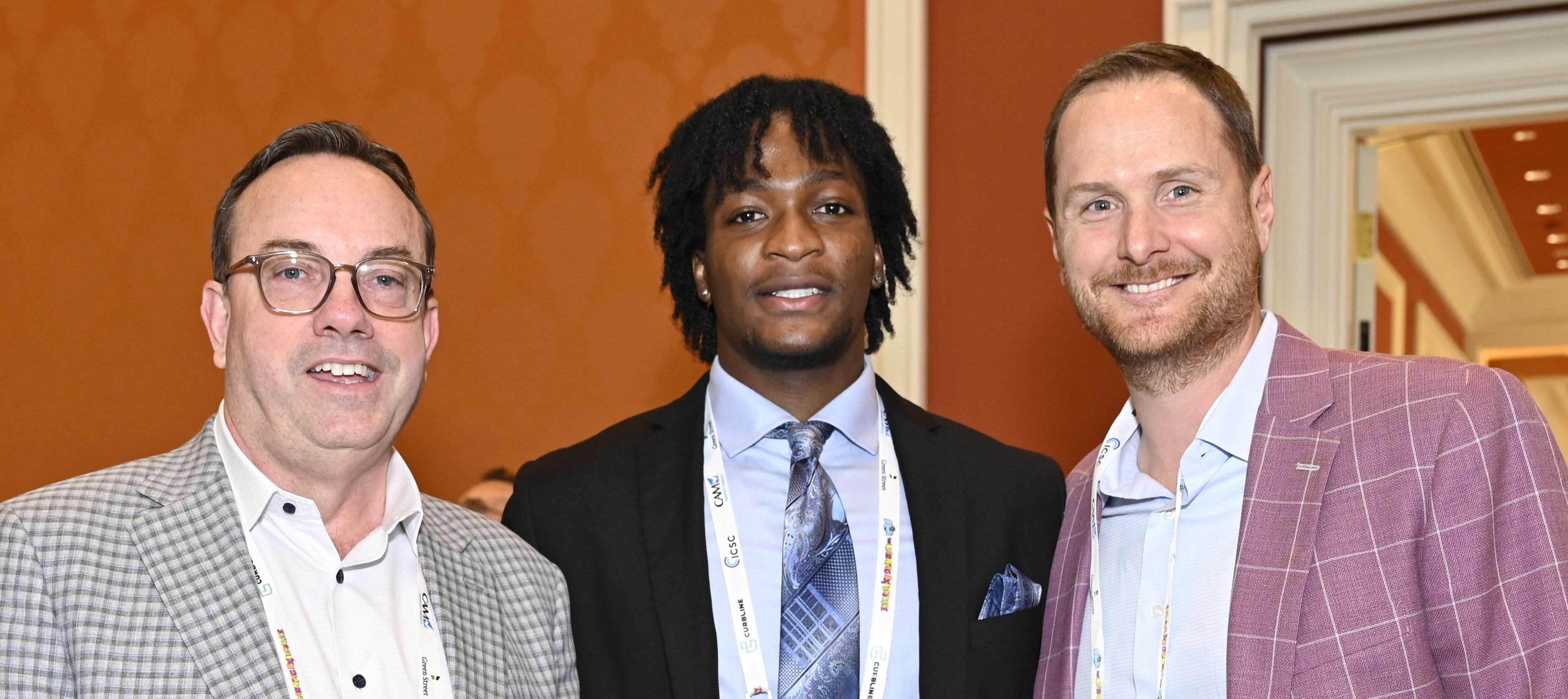
His interest has a personal history. Early involvement with ICSC’s next-generation programs helped him form professional connections. His first brokerage clients included small franchisees, among them Amazon Cafe operators. In other words, the beginning of his career involved the smaller introductions and assignments that can look incidental until they lead somewhere.
A scholarship gives that process a more deliberate starting point. Money helps a student stay in school; access to people can help turn study into a profession. The two belong in the same conversation. For an executive whose working life began close to individual retailers, supporting an individual student is a fittingly specific commitment.
Who gets a chance to play?
Outside work, Finnegan coaches his daughters’ basketball teams and reads nonfiction. In discussing leadership, he has described wanting to win with a team. Coaching adds another setting in which the person responsible for the result cannot do every part of the work himself. Someone else has to take the shot.
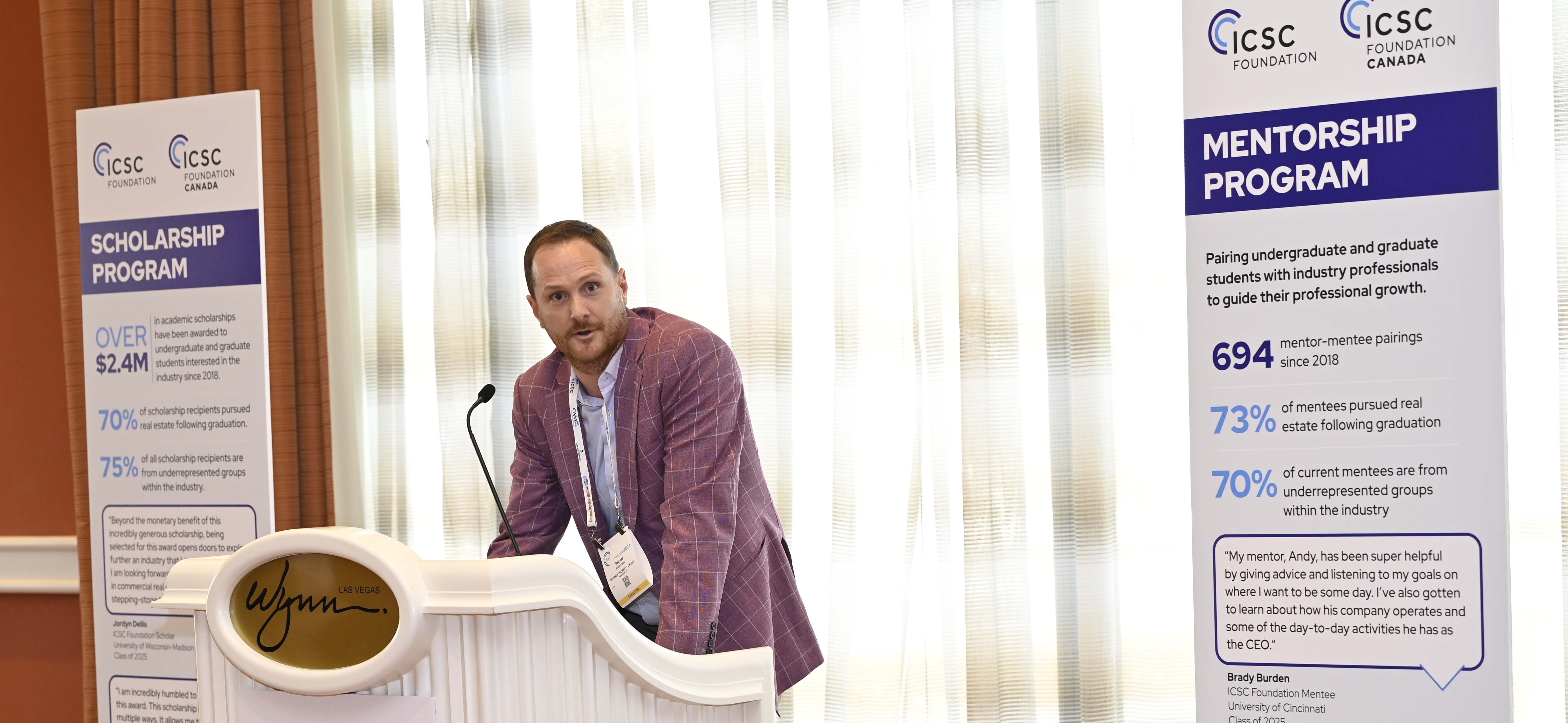
His career is easiest to understand at that human scale. A retailer needs a workable location. A colleague needs enough room to execute. A student needs an introduction. None of those arrangements guarantees a result, but each gives someone a more useful place to begin.
The CEO title increases the size of the responsibility. It also brings him back to a familiar piece of work: deciding which people and businesses can make a place better together. For Brian Finnegan, the neighbors have become a much larger consideration. The question still fits on a leasing desk.