Michael Fascitelli lost his place on a basketball team long before he found his place in New York real estate. As a junior at the University of Rhode Island, he was cut from the varsity squad. The verdict hurt. It also clarified something that the summer games back in North Providence kept confirming: some of the players around him were heading somewhere in basketball. He needed another plan.
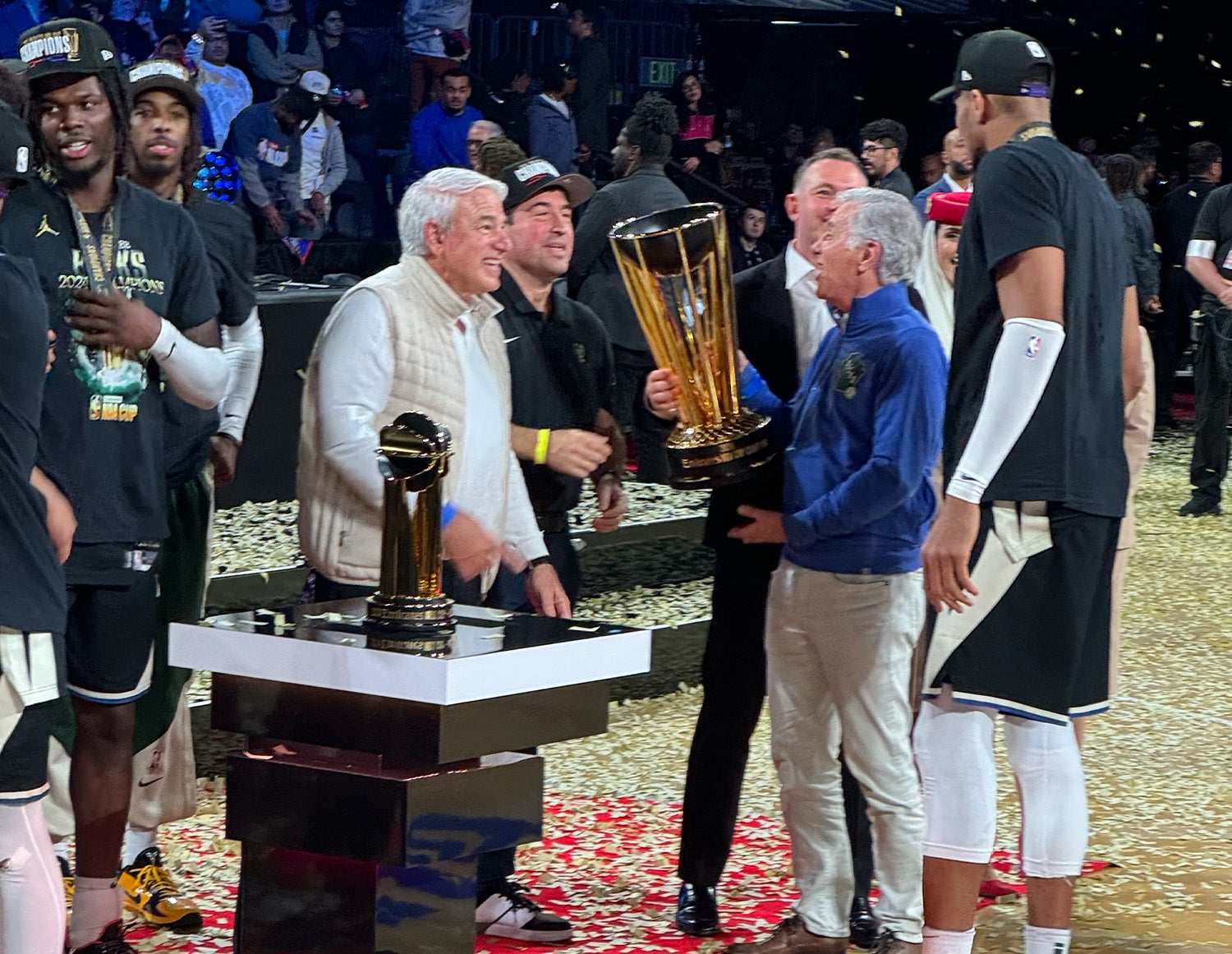
“I saw the writing on the wall.” That is how he remembers it. He concentrated on his grades, graduated in industrial engineering and eventually became a partner at Goldman Sachs, president and CEO of Vornado Realty Trust, and an investor working across property, infrastructure and professional sports. His later relationship with basketball involved a rather different seat: part owner of the Milwaukee Bucks.
There is a temptation to turn such a life into a straight line. A missed shot, a redirected ambition, a Manhattan office. Fascitelli’s actual career has more changes of direction, and more interesting questions. When does an adviser become an owner? What makes a successful executive leave? And what does an engineer see when everyone else is admiring the building?
The public-school kid in the Harvard room
Fascitelli grew up in Rhode Island with Italian immigrant parents, a seamstress and a factory worker. He has described the household as lower middle class. There was work, public school and plenty to eat. The later Wall Street résumé can obscure how far that starting point was from the rooms he would enter.
At Harvard Business School, people heard Rhode Island and assumed Brown. He had attended URI. Recalling his arrival among classmates with Ivy League backgrounds, he offered a wonderfully economical assessment: “I was scared.” He responded by working harder. It is an unusually candid admission from someone whose subsequent profession rewarded the appearance of certainty.
His academic record supplied its own answer. He completed his URI degree summa cum laude in 1978 and earned his Harvard MBA in 1982. Engineering came before finance. Before the transactions and board appointments, there was an education in how parts fit together, and what happens when they do not.
After business school he joined McKinsey. Goldman Sachs followed in 1985, and he became a partner in charge of its real estate practice in 1992. Over roughly a decade, he moved from consulting into a business where buildings and capital markets met. By the middle of the 1990s, he was advising in the field he would soon help operate.
The price of switching sides
In December 1996, Steven Roth recruited him to become Vornado’s president. The employment arrangement gives some sense of the expectations: $5 million in deferred cash, a $20 million convertible obligation and options on 1.75 million Vornado shares, alongside his salary. Hiring an executive could itself resemble a capital transaction.
The structure mattered as much as the headline number. Shares and options connected a substantial part of Fascitelli’s reward to the company’s future value. For a banker moving to the client’s side of the table, that was a consequential change in exposure. Advice could be completed at closing. Ownership would still be there the following morning.
Vornado soon bought Mendik Company, gaining control of seven Midtown Manhattan office buildings. The transaction involved $437 million in cash and securities and the assumption of $217 million in debt. Several million square feet of offices gave the company a much larger position in Manhattan and a new direction for expansion.
Real estate’s physical vocabulary can make its financial machinery seem secondary. The address gets remembered; the balance sheet does the work. Fascitelli’s move joined those two ways of looking at a property. An office building came with tenants and a location, but also a purchase price, obligations and a decision about how much capital to commit.
- 1978Industrial engineering degree, URI
- 1992Goldman Sachs partner
- 1996Vornado president
- 2013MDF Capital begins
Sixteen years, with the losses left in
Fascitelli became Vornado’s chief executive in May 2009. By then he had spent more than a decade working with Roth. The promotion put him in charge during the aftermath of the financial crisis, when an acquisition could look very different depending on which year’s balance sheet you opened.
At his departure, Roth credited the teams Fascitelli led with more than $22 billion in acquisitions, supported by $28 billion in capital market transactions over sixteen years. Those are measures of activity, rather than a claim that every investment succeeded. They convey the scope of the operation: buying property required repeatedly finding the money to own it.
Sixteen-year totals for the teams he led, 1996–2013.
The record included expensive mistakes. Vornado’s investment in J.C. Penney brought losses, and its fourth-quarter 2012 results included $224.9 million in related losses. It is a useful corrective to a career told exclusively through purchases. A real estate investor can understand the property and still be exposed to the fortunes of the business attached to it.
The departure also raised a question about succession. Analysts worried about what Roth’s return meant for the company’s longer-term leadership. A successful partnership between two executives does not automatically produce an obvious next arrangement. Fascitelli’s exit made that problem visible, whatever personal timetable had brought him to the decision.
On February 27, 2013, Vornado announced that he would step down as president and CEO effective April 15. He planned a break, followed by new challenges, and remained a trustee. Leaving the daily job did not require severing the relationship. That distinction would become a recurring feature of the next stage of his career.
A smaller company, another kind of freedom
MDF Capital, his private investment firm, dates to June 2013. Imperial Companies followed, co-founded with Eric Birnbaum, a former Vornado colleague. The change gave Fascitelli more than a fresh business card. A private firm could pursue particular investments without replicating the entire operating structure of the public company he had left.
One early Imperial project was a residential development at 509 West 38th Street in Hudson Yards, undertaken with Shorenstein. The financing arrangements included setting aside 46 of the planned 225 apartments for tenants earning 60 percent of the area median income. The details belong in the story because development is made of such details: a building’s economics and its public obligations arrive together.
The new office was in familiar territory, at Vornado-owned 888 Seventh Avenue. Corporate reinvention sometimes involves considerably less moving than the phrase suggests. Birnbaum brought experience in acquisitions and development; Fascitelli brought the perspective of someone who had run a much larger enterprise. Their shared professional history preceded the new company.
His investments also reached beyond conventional buildings. From 2017 to 2023 he was co-founder and co-chairman of Radius Global Infrastructure. Radius accumulated property interests beneath wireless communications sites and other digital infrastructure. Land, rooftops and the payments attached to them could become an investment business even when the most conspicuous object was an antenna.
In September 2023, EQT and PSP Investments completed an approximately $3 billion acquisition of Radius, taking it private. Shareholders received $15 a share. The transaction value describes the whole acquisition; it does not describe Fascitelli’s personal proceeds. The business extended a familiar real estate question into another setting: who controls the location that something essential occupies?
The board seat after the corner office
Today, his work includes ownership and governance. He is owner and principal of MDF Capital and co-founder and managing partner of Imperial. He remains on Vornado’s board, a relationship that began in 1996, and chairs the board of Invitation Homes, which appointed him chairperson in May 2021.
Invitation Homes places him in the single-family rental business. His board service there followed roles at Starwood Waypoint Homes and its predecessor. Across those appointments, the subject changes from Manhattan offices to houses, while the work still calls for judgments about financing, operations and the management of property over time.
He has also served in investment leadership and advisory roles at Cadre, which merged with Yieldstreet, and previously as a commissioner of the Port Authority of New York and New Jersey. These roles put property beside technology and public infrastructure. They are different institutions with different obligations, connected by decisions about assets, capital and their users.
The breadth is striking, but the job titles need careful reading. A trustee, an investment adviser and a chief executive exercise different kinds of authority. Fascitelli’s present career combines several of those relationships. The Vornado CEO title belongs to 2009 through 2013; his connection to the company continues through its board.
The engineer comes back to campus
In 2019, Michael and Elizabeth Fascitelli gave $10 million to URI’s College of Engineering. Half funded laboratory and research equipment. Half established an endowment for the dean’s priorities. The allocation paired something immediately useful with money intended to keep supporting the institution beyond the opening ceremony.
The Fascitelli Center for Advanced Engineering was part of a $150 million project, supported by state bonds and private philanthropy. The 190,000-square-foot building brought disciplines into a shared setting. Its metal truss system allowed open interiors without internal support columns, giving collaboration an architectural expression rather than leaving it as a line in a prospectus.
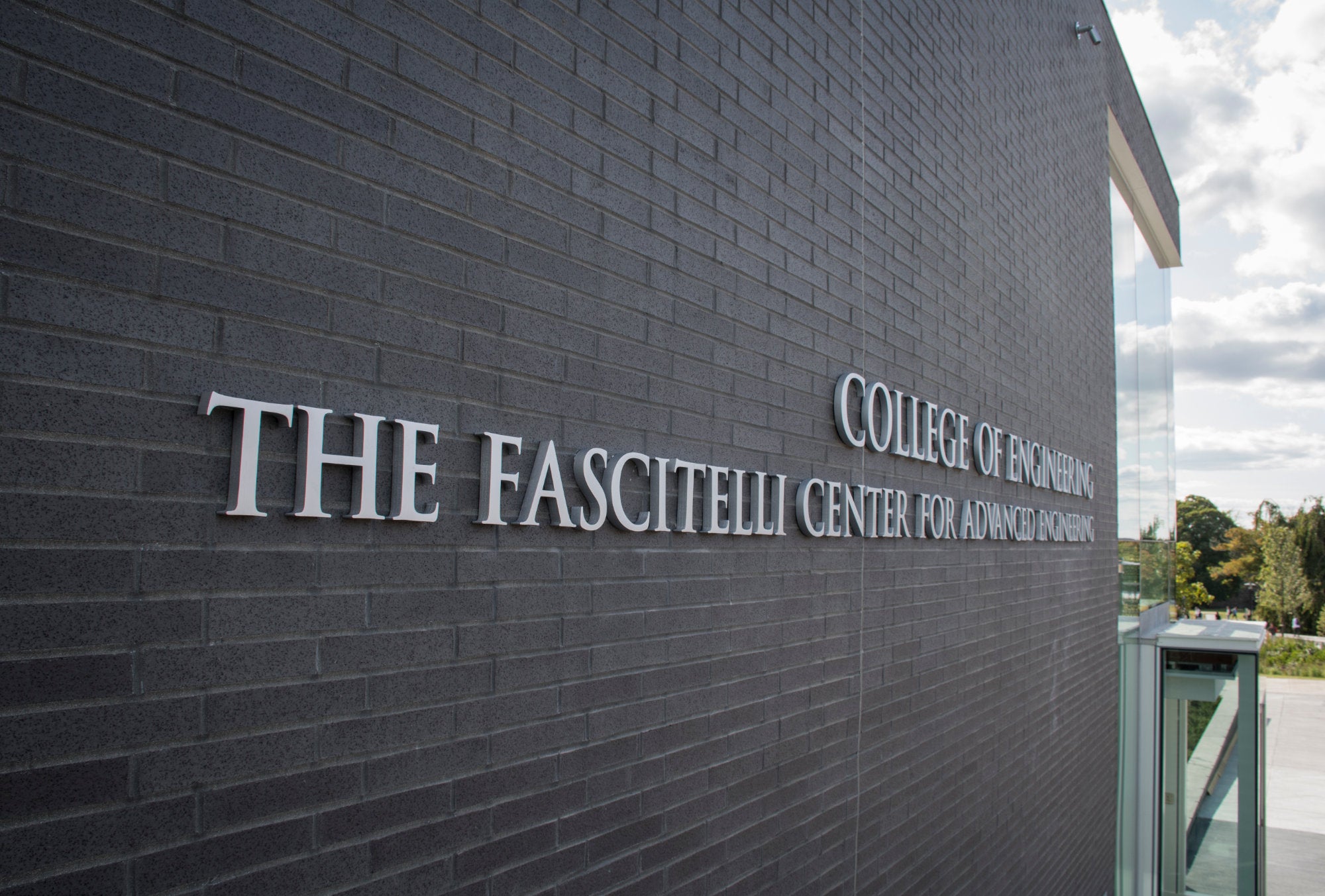
Fascitelli credited Dean Raymond Wright’s vision of bringing departments together. “You really need that cooperation between disciplines.” Coming from someone trained in engineering who built a career in finance and property, the observation has a particular resonance. His own working life had already crossed several departmental boundaries.
“You really need that cooperation between disciplines.”
Michael Fascitelli, on URI’s engineering center
He also serves on URI’s Board of Trustees, with a term listed through February 2027. The connection reaches beyond a name on a building. For a graduate whose career carried him into other institutions, the university remains somewhere to put both money and time.
There is a pleasing circularity here. His first qualification was in engineering. Decades of buying, financing and overseeing assets eventually brought him back to a place where students learn how things work. A building can hold an investment, an office, a laboratory or a fresh start. Fascitelli has spent a career moving among those possibilities.