The maintenance department becomes famous at precisely the wrong moment. A conveyor stops. A ski lift blinks out. A packaging line begins eating five figures by the hour. Suddenly everybody knows the mechanic's name. Limble sells the software meant to make that little burst of fame less frequent: work orders, preventive schedules, asset histories, spare parts, purchasing and reports, gathered in a cloud app that can travel in a technician's pocket.
That description puts Limble in the computerized maintenance management system market, usually shortened to CMMS, and increasingly in the broader enterprise asset management business. The acronym is dry. The problem is not. Maintenance teams still inherit clipboards, whiteboards, mystery spreadsheets and older software that asks a person wearing gloves to become an unpaid data-entry clerk. When the interface loses that contest, the records rot. Then the dashboards lie politely.
The useful failure came first
Founder Bryan Christiansen did not arrive at maintenance through a childhood passion for grease guns. His earlier pharmacy-software startup failed. In a 2025 interview, he connected that flop to a basic error: he had built before validating. Reading The Lean Startup changed the sequence. A meeting at a Marriott exposed the frustrations around maintenance software, and Christiansen began interviewing managers - roughly 200 of them - before deciding the pain repeated often enough to deserve a company.
Limble was founded in 2015. Christiansen coded, marketed and worked part time for his father while the product searched for a buyer. It took about two and a half years to find the first one. The customer paid $12 a month, an amount that barely qualifies as lunch in an airport. Yet it was evidence, and evidence was the thing the previous startup lacked.
“It took me about two and a half years to get the first paying customer.”Bryan Christiansen, founder
Miguel Ramos joined in 2018 after meeting Christiansen through the Startup Ignition program, first as co-founder and operating partner. The company remained frugal long enough to reach roughly $2.6 million to $2.7 million in annual recurring revenue before its first institutional investment, according to accounts from the founder. That order matters. Limble took growth money after customers had already voted with budgets, not while a pitch deck was still pretending to be a product.
A work order is the humble center of gravity
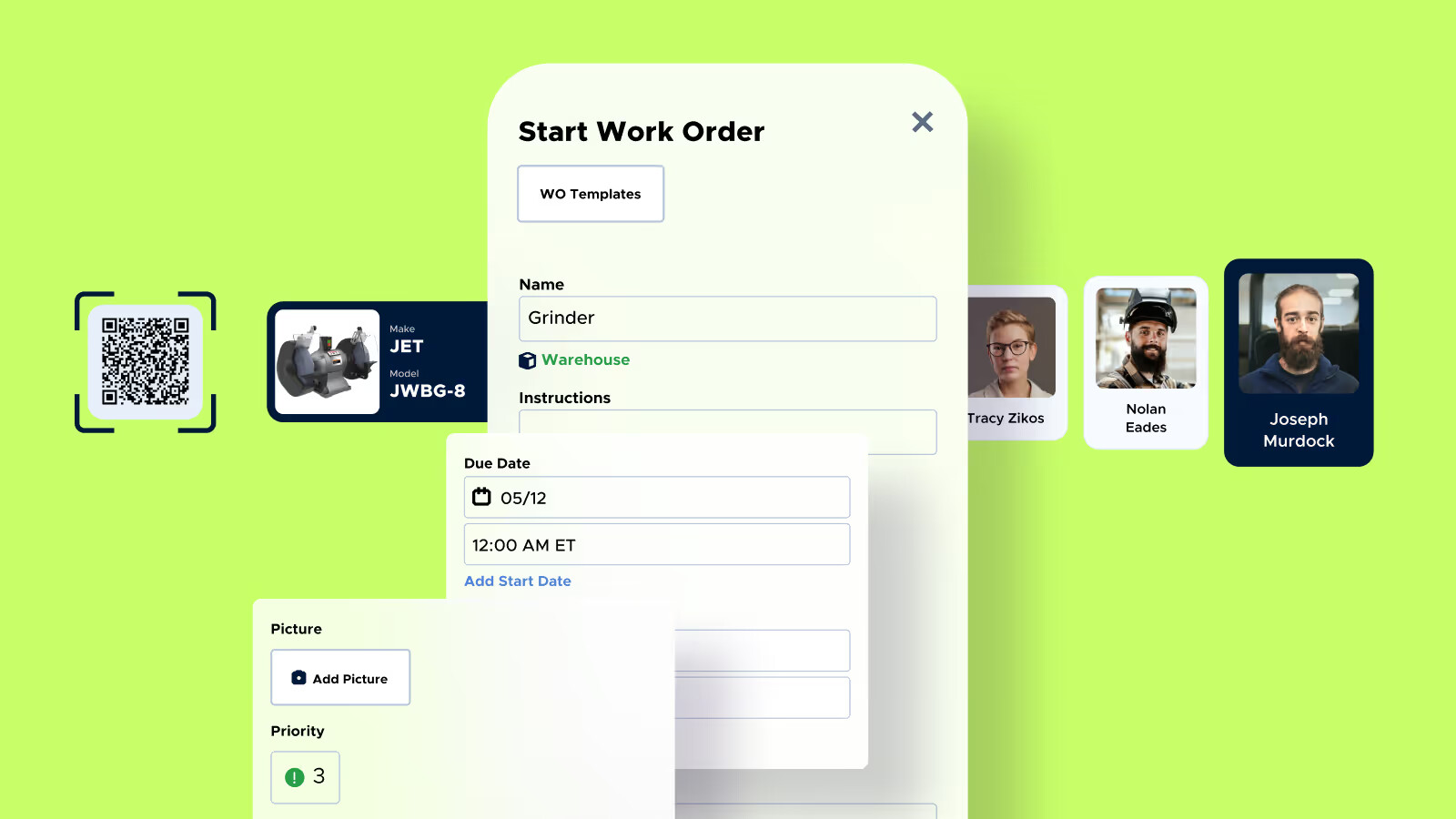
The product begins with ordinary maintenance objects. A worker can start a work order from a dashboard, an asset record, a vendor or a QR scan; attach a photo; assign a technician; add a checklist; and track time, cost and status. Recurring preventive work can be scheduled by date, meter or threshold. Asset records collect manuals, warranties, failure history and downtime. Parts inventory, vendors and purchase orders keep a missing bearing from turning into an overnight shipping bill.
The platform has three advertised tiers. Limble's 2026 pricing guide lists Standard at $28 per user per month and Premium+ at $69, while Enterprise is quoted. Work requesters can be unlimited, so every employee who spots a leak does not require a paid seat. Core plans carry no setup or maintenance fee, though complex implementation, integrations and add-ons can raise the bill. The model is familiar B2B SaaS: land with a maintenance team, then expand across locations, workflows and executive reporting.
The adoption flywheel
The wedge is adoption, not another dashboard
Limble competes with modern CMMS companies such as MaintainX, UpKeep, Fiix, Fracttal and Tractian, plus larger EAM suites including IBM Maximo, eMaint and Brightly. Its most credible distinction is not a feature nobody else can copy. It is a product posture: the technician is the first customer, even when a facilities director signs the contract.
That choice reshapes the sales pitch. The mobile app is deliberately narrower than the desktop product. Technicians get fast access to tasks, assets, notes, photos and offline work; administrators keep the denser configuration and reporting controls on a larger screen. In 2026 Limble rebuilt the mobile app rather than piling more navigation onto the old one. A City of Albuquerque analyst said his team felt confident after one day of training. That is not glamorous product strategy. On a loud floor with unreliable connectivity, it is the whole strategy.
The same logic appears in support. Limble says all customers get U.S.-based inbound support, an average response below 60 seconds and free live training. Fast help is not decorative when one confused shift can poison adoption. The company has also built integrations with SAP S/4HANA, Oracle NetSuite, QuickBooks, Okta, calendars, Slack and condition-monitoring systems. These connections matter because maintenance sits awkwardly between operations, accounting, procurement and the machines themselves.
What the outcomes look like when it works
Vendor case studies deserve sensible caution, but Limble publishes enough named examples to show the operating pattern. Tara Manufacturing began with a downtime rate near 90 percent and no real maintenance program. Four weeks after adopting Limble, it reported early results; its downtime rate later fell to 15 percent, with more than $100,000 saved in the first year. Island Abbey Nutritionals, where an hour of downtime could cost $30,000 to $40,000, reported moving from roughly 50 to 60 percent uptime to 98 percent.
Before and after, selected customer reports
Figures are reported in Limble's named customer case studies. Different baselines, teams and operating conditions make them illustrations, not guaranteed results.At Powder Mountain, technicians put QR access at ski lifts and cut mean time to resolution from six or seven minutes to three. Liberty Safe organized its spare-parts room, reduced expedited shipping and reported 75 percent less downtime on critical water jets. The details differ, but the mechanism repeats: capture the work, attach it to an asset, schedule the repeatable parts, and use the history to argue for repairs or replacement with numbers rather than maintenance folklore.
“Limble has made my life easier. It has given me the data I was seeking.”Brad Moore, Rimex plant manager
The playbook worth copying
Limble's story offers founders more than the usual instruction to “talk to customers,” a phrase broad enough to mean coffee with friends. The company went after a neglected but mandatory workflow, interviewed until the complaints repeated, charged one customer early, and earned the right to add complexity only after the simple loop worked.
Two hundred conversations gave Limble a language map and a clearer buyer than its failed predecessor had.
A $12 payment carried more information than a crowd of people saying the idea sounded useful.
The manager buys the system, but the technician creates the data. Limble builds around that dependency.
Work capture becomes reports; reports become budget arguments; one site becomes a multi-location contract.
The deepest product lesson is equally portable: adoption is infrastructure. Every AI summary, anomaly warning and executive chart depends on somebody accurately recording what happened. A beautiful dashboard sitting above incomplete work orders is a stained-glass window in a shed.
When the Limble formula will not work
A CMMS cannot supply a maintenance discipline that the organization refuses to create. Limble's own implementation guidance says software cannot help if a facility lacks a basic understanding of its problems, equipment and required tasks. Somebody still has to identify assets, clean imports, define ownership and give technicians time to record work. The phone does not lubricate the bearing.
Conditions that break the playbook
- No reliable asset list, maintenance owner or rollout time.
- Leadership wants a dashboard but will not change floor behavior.
- Technicians lack devices, connectivity or permission to capture work.
- The buyer needs a deeply customized on-premise EAM and will not accept cloud SaaS.
There is also a market-fit boundary. Limble is strongest where a modern, configurable cloud product can replace paper or a cumbersome legacy system without becoming a multiyear IT program. An organization with extreme customization, on-premise mandates or a sprawling existing Maximo estate should compare the cost of migration against improving what it already owns. “Easy” is a relative word once procurement, security and integrations enter the room.
AI arrives after the wrench
Limble's newer products follow the data trail. Asset Snap reads a machine nameplate from a photograph and proposes structured fields. Resource Planning uses workload and capacity to suggest task moves. Its read-only MCP layer lets supported AI clients query maintenance context. Smart Parts applies AI to inventory. A 2026 VibeCloud partnership turns condition-monitoring alerts into work orders, closing the familiar gap between detecting a fault and assigning somebody to fix it.
This is where Limble now sits in the market: more ambitious than a mobile work-order app, lighter and faster than the heaviest enterprise systems, and increasingly interested in the bridge from maintenance records to prediction. Verdantix placed it among the Leaders in 2025 evaluations of both industrial and commercial-building CMMS products. In January 2026, former Simpro chief Gary Specter became CEO while Christiansen moved to Executive Chairman and focused on customers and human-centered AI.
The leadership handoff suggests the company has entered the scale chapter. Yet its original insight remains refreshingly small. The maintenance worker who does not use the software defeats the software. Limble spent 30 months earning twelve dollars to learn how much that person matters. Plenty of B2B founders could save themselves a failed startup by learning it before lunch.