A package reaches the wrong trailer. The truck leaves on time. The route looks tidy on a map. Somewhere between those three facts, a perfectly respectable delivery operation has acquired a problem. Finding the vehicle will help. Finding out what went into it would have helped earlier.
That small distinction opens a door into Velocitor Solutions. The Charlotte company builds fleet and mobile software, but its catalogue wanders into places a dashboard cannot reach: loading docks, device configuration benches, installation appointments, repair queues. It sells technology for people whose working day involves moving things, then offers to handle much of the business of keeping that technology usable.
- On the road: V-Track brings together location, vehicle data, video, and driver coaching.
- Before departure: dock tools sort parcels, scan loads, and record trailer inventories.
- Behind the screen: managed services cover hardware preparation, deployment, repair, training, and support.
- The next connection: its owners acquired NextBillion.ai in 2025, adding mapping and route optimization expertise.
01 / The repair queue tells a story
Velocitor reports more than 200,000 mobile assets under management for over 70 managed-services clients across North America. Those are service figures, rather than a count of trucks using V-Track. They are revealing anyway. An asset has to arrive configured, reach the right user, work during a shift, and be dealt with when it stops working. Multiply that sequence by thousands of devices and the backstage operation becomes consequential.
Company-reported managed-services figures; support is offered around the clock, 365 days a year.
The services include staging and kitting: preloading applications, applying settings, and packing devices so they can enter service on arrival. There are spare pools, repairs, replacements, installation, and training. Velocitor’s support packages extend from assistance for users to several levels of technical support. These are ordinary-sounding jobs. Ordinary jobs become interesting when the alternative is a driver waiting for someone to answer a ticket.
The useful insight is that a software purchase has a physical life. Equipment breaks. New employees need instruction. Settings need to match the job. Velocitor makes those obligations part of its offer. For a buyer, the service operation deserves its own demonstration.
02 / A dot on a map needs a job
V-Track is the central fleet platform. It combines GPS asset tracking with vehicle telematics, video, driver scorecards, route analysis, inspections, maintenance management, and electronic driver logs. Velocitor develops its software in-house and presents customization around a customer’s workflow as a core part of the proposition.
The mobile applications show what that means at ground level. Field Services includes scheduling, order entry, route sales, and inventory functions. Courier supports delivery operations and dispatch. Trucking includes trip information and electronic logs. Field Manager gives supervisors access to locations, scorecards, alerts, and coaching. The person holding the device determines which information belongs on the screen.

The prospective customers are transportation and logistics operators, field service businesses, and direct store delivery teams, among others. Their needs overlap without being identical. A courier wants a delivery status. A route salesperson needs an order. A manager needs to understand exceptions across the day. A generic location marker can serve all three, but only up to a point.
Vehicle telematics adds another layer: diagnostic codes, idling, fuel information, battery status, and other engine measurements. The value is the connection between a condition and a decision. A maintenance signal must reach someone who can schedule work; a delivery exception must reach someone who can intervene.
- 01PrepareConfigure devices
- 02VerifyRecord the load
- 03ObserveTrack route + vehicle
- 04ActCoach, repair, adjust
Editorial map of Velocitor’s product and service coverage.
03 / The camera comes with homework
Velocitor’s MV/AI camera system uses machine vision to identify road hazards and driving events. The advertised capabilities include distraction and fatigue monitoring, following-distance and lane-departure alerts, and audio and visual feedback in the cab. Managers can retrieve recorded events, review multiple camera views, and use the information in driver coaching.
The system also connects to vehicle engine data. Velocitor advertises storage for up to 400 hours of HD video, along with over-the-air updates and role-based access to the portal. Those specifications describe tools available to a fleet; they do not, by themselves, establish how much safer a particular fleet will become.
“This complete acquisition aligns perfectly with our mission to empower businesses through innovation.”Richie Pacella, president and co-founder, on the NextBillion.ai acquisition
An alert is the beginning of a management task. Someone must decide which events deserve attention, review the context, and speak to the driver. A practical pilot would measure that workload alongside the usefulness of the recordings. Otherwise, the fleet may acquire a new collection of notifications faster than it acquires a new habit.
Lytx offers overlapping video safety, coaching, and telematics capabilities. The presence of AI therefore cannot carry Velocitor’s whole competitive argument. Its more distinctive proposition is the combination of operational applications, customization, and the services around deployment. Buyers should compare that combination against the actual job they need done.
04 / The loading dock gets a memory
The dock products are a particularly good explanation of Velocitor’s reach. Mobile Dock Companion turns a rugged handheld into a sorting and load-validation tool. Its two modes, Mobile Dock Sort and Mobile Dock Visibility, help direct parcels to load points and confirm what has been loaded. The camera-based MDV Tunnel captures barcodes and supports reconciliation between loaded and shipped items.
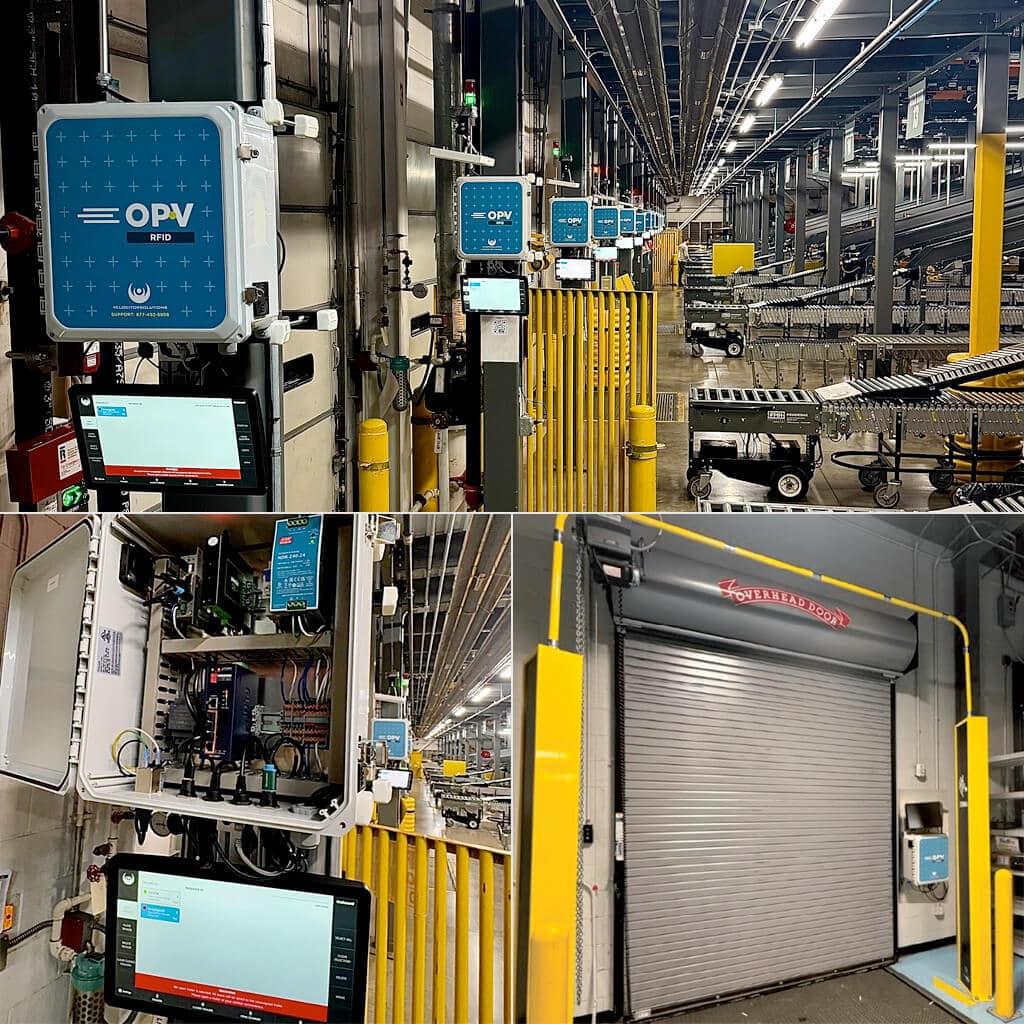
The OPV RFID Tunnel uses tags, readers, antennas, and Velocitor middleware to record package movements during trailer loading. RFID does not require the barcode line of sight used by a camera scanner. These are different approaches to the same operational question: what actually entered the trailer?
ScreenSafe tackles another small but stubborn problem. It restricts a mobile device above a configurable speed threshold while permitting approved navigation applications. There is a useful specificity here. A driver may need directions while other screen activity should wait. The application is designed around that distinction.
FedEx independent service providers form a concrete customer group. Velocitor describes approved offerings for FORGE software, video event data recording cameras, and V-Track telematics, with device procurement and management alongside them. This is a business built around the details of somebody else’s working system.
05 / Buying the route planner
Founded in 2000, with Rich Pacella identified publicly as president and co-founder, Velocitor had spent roughly a quarter-century in enterprise mobility when its owners acquired NextBillion.ai. Velocitor announced the completed acquisition on September 30, 2025; NextBillion.ai published its announcement the next day. The companies said they would initially retain their respective brands.
NextBillion.ai specializes in enterprise mapping, routing, and optimization. Its rationale begins with constraints: a commercial route may depend on driver skills, shifts, service schedules, and requirements that consumer navigation does not express. Connecting that planning expertise with Velocitor’s operational data offers a logical way to compare what was intended with what occurred.
In his public acquisition post, NextBillion.ai co-founder Ajay Bulusu described a potential integration becoming a broader shared undertaking. He cited the Velocitor owners’ commitment to customers and communities as part of the decision to join them. That is his account of the deal. It also suggests how a supplier relationship can widen when both sides see value in owning more of the working system.
06 / Put the whole working day in the quote
Velocitor’s commercial offer spans enterprise software, cloud services, equipment, implementation, and managed support. Its contractor storefront also describes leasing and seasonal rentals. That breadth makes total cost a better buying question than the price of a dashboard alone. A useful quotation would spell out devices, installation, integration, support coverage, replacements, and the work expected from the customer’s own team.
The lesson readers can copy is simple enough to use in the next procurement meeting. Follow one device through its working life. Follow one parcel through its records. Follow one safety alert through the person who reviews it. Those three exercises expose the handoffs on which the larger system depends.
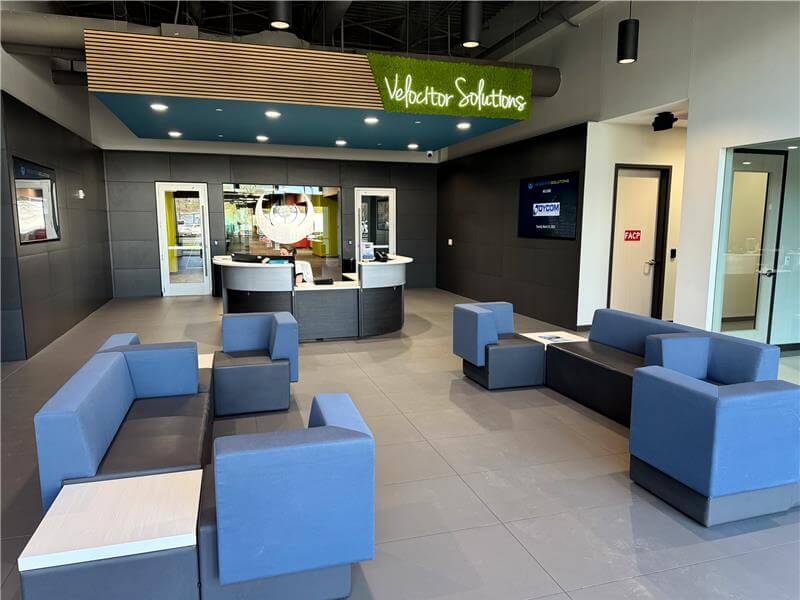
The employer’s own materials give that service business a human scale. They recognize accounting and depot employees for work such as resolving customer issues and keeping tickets current. They also advertise free meals, a gym, a dog-friendly office, and a monthly vending allowance. The revealing detail is the recognition of work that happens away from the sales demonstration.
A broad, customized system asks something of its buyer, too: reliable data, people to act on alerts, and a willingness to fit the software into daily routines. A small operator who only needs occasional location checks may have little use for much of this catalogue. For an operation wrestling with devices, loads, drivers, and disconnected records, Velocitor offers a more substantial proposition. The truck can remain a dot on a map. The working day around it deserves a little more explanation.