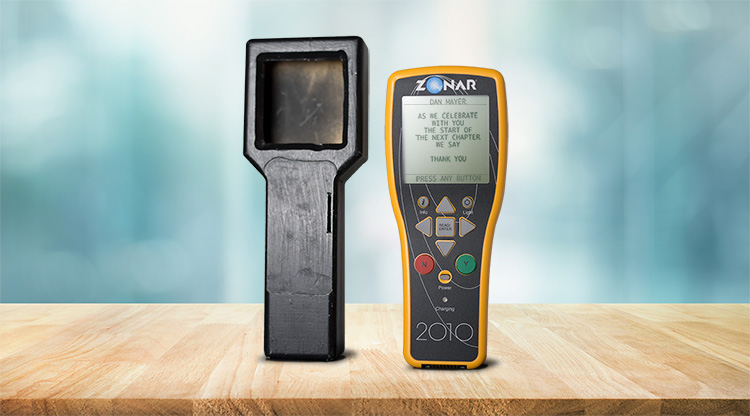
The first customer for Zonar’s vehicle-inspection technology did not deliver freight or take children to school. It went around in loops. In 2002, Brett Brinton stopped in Primm, Nevada, on the way to Las Vegas and struck up a conversation about who inspected Desperado, the local roller coaster. According to Zonar’s company history, that conversation produced its first client. For a business now associated with school buses and commercial fleets, it was an appropriately bumpy beginning.
The original device was a wooden prototype. The underlying question was considerably more durable: how do you know somebody actually inspected the machine? A completed paper form records an answer. Zonar set out to add evidence that the person answering had visited the places where trouble might be hiding.
That question still explains the company better than a catalogue of software features. Zonar sells connected hardware and cloud software to school districts, bus contractors, trucking companies, construction businesses, utilities and public agencies. Its tools locate vehicles, record defects, monitor driving and help dispatchers manage the day. The commercial promise is straightforward: catch small operational problems before they become expensive interruptions.
A checkbox needs a witness
Founded in 2001, Zonar emerged from a combination of operational, business and engineering experience. Eric Manegold supplied the original idea; Bill and Brett Brinton brought business expertise; Mike McQuade and Dan Mayer supplied technical know-how. Their inspection work became EVIR, the Electronic Verified Inspection Reporting system.
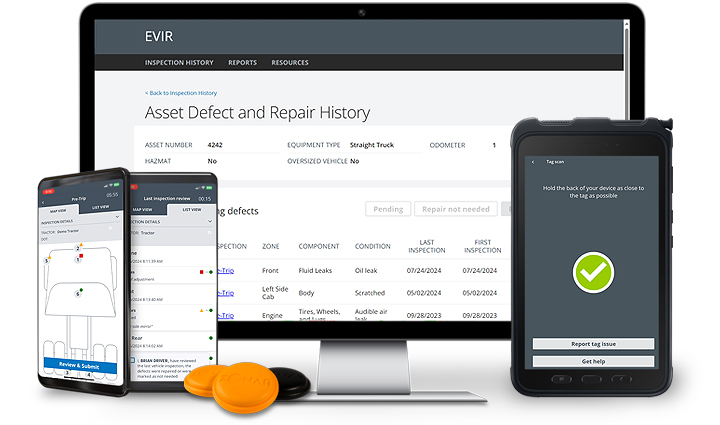
In a tagged EVIR inspection, the driver physically visits designated zones around the vehicle and scans the tags using a compatible device. Findings travel into a digital record. Managers can review defects and prioritize repairs, while inspection configurations can be adapted to different vehicles and tasks. A forklift and a school bus need different checklists, even when they share an owner.
The distinction matters at Scottsdale Unified School District in Arizona. Zonar’s case study describes a fleet of 200 buses serving more than 6,000 students. Under the previous paper process, inspections could be rushed or skipped and work orders could disappear into a box. In extreme heat, a disabled bus was a problem for everyone waiting inside it.
EVIR gave the district timestamped inspections, information about time spent at individual inspection points, and digital notes and photographs of defects. The first weakness was the reporting process: people could not reliably see what had been checked or what needed fixing. Better records gave the maintenance team something firmer to work from.
“Having a system like Zonar [EVIR] has become a necessity.”
David Jacobson
Transportation director, Scottsdale Unified School District
In a Zonar customer case study
- 01VisitScan the inspection zone
- 02RecordLog findings and defects
- 03RoutePut the repair in view
- 04ResolveClose the work order
A digital record earns its keep when someone acts on it.
The money is in the follow-through
Goodfellow Bros., the construction company, offers a useful example of how that action happens. Its Zonar rollout began with GPS equipment on pickup trucks and monitoring through Ground Traffic Control, Zonar’s web application. The company also established regional feedback and local training. In Zonar’s published account, idle time fell by half, producing $56,000 in annual savings.
The result belongs to that customer and that implementation. It is not a forecast for every fleet. But the sequence is instructive: start with a specific behavior, make it visible, train locally and review what changes. Goodfellow then added inspection technology to construction vehicles and used alerts to circulate vehicle information among offices and repair providers.
Goodfellow Bros. case study. Idle-time index: before = 100. Company-reported outcome; not a fleet-wide benchmark.
Atlanta’s MARTA illustrates another cost of paper. Its Zonar case study describes inspection records accumulating in physical storage and maintenance requests at risk of getting lost. Digitizing the process removed the need for additional record-storage space. The useful change was mundane: the inspection could become available to the people responsible for the bus without waiting for a sheet of paper to reach them.
For a buyer, this suggests a better pilot than counting dashboard features. Follow a reported defect from discovery to repair. Measure how long each handoff takes. Review idle time before introducing coaching. Agree who owns an alert. Those are practical lessons from the customer accounts, not a promise that installing a device will produce the same savings.
What the quote needs to cover
Zonar’s business combines vehicle hardware with subscription cloud software and supporting services. Its product pages send prospective customers to a pricing inquiry. A fleet manager evaluating a proposal therefore needs to compare the complete operating setup: devices, installation, software access, connectivity, integration work, training and support.
The distinction between a subscription and an implementation matters. A district may need to configure inspection zones, prepare student records and connect existing workflows before staff can use the system well. The sensible purchasing question is what the proposed deployment will cost over its useful life, including staff time, and which measurable operating expense it is expected to reduce.
Compatibility deserves a live demonstration. Zonar publishes an EVIR API covering users, assets, inspections, defects and repairs, with access arranged through a company representative. An API makes integration possible; a buyer still needs to establish which records will move, which system owns them and who maintains the connection.
A new owner, then a wider dashboard
Zonar’s expansion has attracted industrial and financial buyers. Daimler Trucks North America became a minority investor in 2015. The following year, Continental acquired control. Its 2016 annual report records an 80.58 percent stake purchased for a provisional €239.1 million in cash, effective November 1. The same report puts Zonar’s fiscal 2015 sales at approximately €83 million. Those figures describe a historical acquisition, not today’s valuation.
The automotive connection had a practical foundation. In 2016, Continental described Zonar as the exclusive OEM partner for Daimler’s Virtual Technician remote-diagnostics solution, then installed on more than 200,000 Daimler trucks. That relationship put the technology inside a manufacturer’s vehicle ecosystem, beyond a fleet manager’s aftermarket purchase.
Continental announced Zonar’s sale to GPS Trackit in December 2024. Its stated reason was a broader automotive strategy focused on core strengths and simpler operations. GPS Trackit, backed by investment firm Inverness Graham, brought its own tracking and video-telematics capabilities. The combined businesses now operate as Zonar, led by CEO Charles Kriete.
Ignition, launched in August 2025, is the clearest product expression of that combination. It brings vehicle, driver and third-party information into a cloud platform with an open API, reports and configurable dashboards. The launch described more than 30 detailed reports and alerts for issues including speeding, idling and vehicles leaving their routes. The ambition is to shorten the distance between seeing a problem and deciding what to do.
The school run becomes the product
In September 2025, Zonar acquired ez enRoute and launched Bus Suite, using the acquired company’s routing engine. That move expanded the school-transportation offering from knowing where a vehicle was to helping organize where it should go. Routes, dispatch, field trips and communication with families now sit within the same product story.
Z Pass supplies another part of the picture: RFID-based records of students boarding and leaving buses. Bus Suite combines routing and fleet information with those ridership records when integrated. A parent’s question about a child and a dispatcher’s question about a vehicle require different answers; joining the records helps staff investigate both.
The July 2026 Bus Suite redesign added a field-trip workflow, live-map improvements and a route-utilization dashboard with AI-suggested schedule adjustments based on actual route history. Changes require confirmation before going live. This is a concrete use for AI: help staff spot where a timetable and the road have parted company, then leave an authorized person to approve the correction.
Monongalia County Schools’ transportation director, Tony Harris, described working with Zonar to improve the field-trip module for a district with more than 11,000 students and nearly 1,000 field trips each school year. His account points to a useful product-development habit: let the people managing assignments, approvals and billing shape the workflow.
The hardest feature is a working morning
Zonar operates in a crowded market. Samsara sells tracking, diagnostics, routing, maintenance and driver workflows. Geotab offers connected-vehicle analytics, fleet optimization and an integration ecosystem. A map of moving vehicles is familiar territory. Zonar’s more distinctive case rests on the combination of verified inspections, vehicle-hardware experience and student-transportation operations.
Support is part of that pitch. Zonar advertises a live, in-house team available around the clock. Its careers page describes remote and hybrid work, tuition assistance and values including candid communication and continuous improvement. These are employer-stated commitments; the relevant customer test is whether the team can help when a route or device needs attention before departure.
The limits are equally practical. A scanned checkpoint does not replace a careful inspection. An alert cannot repair a vehicle when nobody has responsibility for it. Routing software cannot supply a missing driver. In Zonar’s July 2026 readiness survey, conducted with School Transportation News among 128 transportation leaders, 77 percent of respondents ranked staffing and route coverage as their top challenge. That is a survey finding, not a census of districts.
A fleet with little capacity to train staff or act on reports may get less value than the product demonstration suggests. Zonar’s own history offers the more useful test: can the system help somebody notice a problem, pass it to the right person and finish the job? From a roller coaster to a school bus, that is still the reason to get out and look.